Empty Leg Private Jet Flights: The Complete Guide to Booking Luxury Charters for Up to 75% Off

0

An empty leg private jet flight is the closest thing in luxury travel to a clearance rack: a fully crewed, fully fueled private aircraft repositioning between charters, with seats available at 30% to 75% off the standard rate. If you have flexibility on dates and routes, an empty leg can put you in a Gulfstream cabin for less than a transcontinental first-class commercial ticket.

This guide explains exactly how empty legs work in 2026, where to find them, what the real trade-offs are, and the questions that separate a great deal from a frustrating one.

What Is an Empty Leg Flight?

Private jets don’t usually live at the same airport you do. When a charter client books a one-way flight — say New York to Aspen — the operator has two choices once the trip ends:

  1. Park the aircraft at Aspen until the next paying client appears.
  2. Reposition the aircraft (with no passengers) back to its home base, or to its next confirmed charter.

That repositioning flight is an empty leg. The operator is paying for fuel, crew, and slots whether anyone is on board or not, so they sell the cabin at a steep discount to recover costs. For the traveler, it’s the same aircraft, the same crew, and the same private terminal experience — just at a fraction of the price.

Real Empty Leg Pricing (June 2026)

A live snapshot of empty leg deals visible across major broker platforms this week:

Route Aircraft Standard Charter Price Empty Leg Price Discount
Teterboro → West Palm Beach Citation CJ3 (light jet, 7 seats) $22,000 $6,500 ~70%
Van Nuys → Las Vegas Phenom 300 (light jet, 7 seats) $9,800 $3,200 ~67%
London Luton → Nice Citation XLS+ (mid-size, 8 seats) €18,500 €6,800 ~63%
Miami → Aspen Challenger 350 (super-mid, 9 seats) $48,000 $18,000 ~62%
Dallas → Cabo San Lucas Hawker 800XP (mid-size, 8 seats) $28,000 $10,500 ~63%

At those numbers, a couple flying NYC to West Palm at $3,250 per person beats a same-day commercial first-class ticket — and skips two TSA lines, the connection, and the public terminal.

How to Find Empty Legs

1. Charter broker platforms

The fastest path is a broker that aggregates empty legs across operator fleets. Villiers Jets publishes a live empty leg marketplace and lets travelers set route alerts. NetJets, XO, and JetSuiteX run similar programs for members.

2. Direct operator newsletters

Sign up for email alerts from operators that base aircraft near you. Operators like Jet Edge, Solairus, and Clay Lacy publish their own empty leg inventories weekly.

3. Mobile alert apps

Apps like XO and Magellan Jets push real-time notifications when an empty leg matching your saved routes appears. Most empty legs sell within 24–72 hours of posting.

4. Time of booking matters

The deepest discounts appear in the final 48–72 hours before departure, because operators would rather sell the seat for $1 than fly empty. The trade-off is availability — wait too long and your preferred date or route disappears.

The Honest Trade-offs

Empty legs aren’t free of strings. Before you book, understand what you’re trading away:

  • Schedule rigidity. The departure time is set by the operator’s repositioning need. A 30-minute shift you’d negotiate on a regular charter is usually a hard no on an empty leg.
  • Route rigidity. The endpoints are fixed. If you want to stop somewhere else en route, you’ll pay for a full charter.
  • Cancellation risk. If the original paying customer changes their plans, the empty leg can disappear. Reputable operators rebook you or refund quickly, but it’s an inherent risk of the product.
  • Aircraft assignment can change. If the originating charter swaps to a different tail, your empty leg may shift to a different aircraft of the same class.
  • Limited luggage. Some empty legs have crew bags or shipped cargo on board already.

None of these are dealbreakers — they’re the reason the price is half of standard. Travelers with truly fixed dates and routes should book a regular charter instead.

Best Routes for Empty Leg Deals

Some city pairs see consistently strong empty leg inventory because of how private aviation traffic flows. Watch for deals on:

  • Florida ↔ Northeast US — Constant repositioning between Teterboro/Westchester and Palm Beach/Miami, year-round.
  • California ↔ Las Vegas / Aspen / Cabo — Heavy traffic from Van Nuys and Burbank.
  • London ↔ South of France / Ibiza / Geneva — Especially in summer.
  • Northeast US ↔ Bermuda / Caribbean — Weekly repositioning during winter season.
  • Aspen / Vail outbound — Sunday and Monday empty legs are common during ski season.

Empty Legs for International Travel

Transatlantic empty legs exist but are rarer and book quickly. The best window is the post-Cannes Film Festival migration (mid-May), the Monaco F1 weekend wash-out (late May), the Davos diaspora (late January), and the post-Art-Basel Miami repositioning (December).

For these international empty legs, you’re typically looking at 50–60% off rather than 70%+, because the operator’s cost basis is much higher and demand is more competitive.

Empty Leg vs. Jet Card vs. On-Demand Charter

Option Best For Typical Discount Trade-off
Empty Leg Flexible travelers, fewer than 10 hours/year 30–75% off Schedule and route rigidity
On-Demand Charter One-off trips with specific requirements 0% (market rate) Highest price per hour
Jet Card (25-hr block) 10–50 hours per year 10–25% vs charter Upfront capital, single operator
Fractional Ownership 50+ hours per year 15–30% vs charter 5+ year commitment

For most luxury travelers flying private fewer than 10 hours a year, a hybrid strategy works best: use empty legs when your dates are flexible, on-demand charter when they aren’t. Read our fractional ownership analysis →

Questions to Ask Before Booking an Empty Leg

  1. What aircraft, exactly? Get the tail number if possible. Aircraft of the same class differ wildly in cabin, range, and amenities.
  2. What happens if the originating charter cancels? Confirm the rebooking and refund policy in writing.
  3. Can the route or time shift? Some operators allow ±2 hour windows.
  4. What’s included? Catering, ground transport, and Wi-Fi vary by operator.
  5. Are there positioning legs from your home airport? A “great empty leg from Teterboro” isn’t great if you live in Boston and have to drive 4 hours.

Frequently Asked Questions

How much can you save on an empty leg flight?

Typical discounts are 30% to 75% off the standard charter rate. The biggest discounts appear when an operator is repositioning at the last minute, often within 48 hours of departure.

Are empty leg flights safe?

Yes — they’re operated under the same FAA Part 135 standards as any other private charter. The aircraft, crew, and operator are identical to a regular booking.

Can you bring luggage on an empty leg flight?

Yes, within the aircraft’s cargo limits. Light jets typically allow 4–6 standard suitcases. Always confirm before booking, especially if you’re flying with ski gear, golf clubs, or pet carriers.

Can you book empty legs for one person?

Absolutely. You pay for the aircraft, not the seat, so the price is the same whether you fly with 1 passenger or 8. Splitting the cost with friends or family is the highest-ROI move in private aviation.

The Bottom Line

Empty leg flights are the smartest way to fly private when your schedule and route are flexible. A motivated traveler who watches broker listings and is willing to act fast can routinely fly a $20,000 charter for under $7,000. Browse current Villiers Jets empty leg deals →

Related reading: How much does it cost to charter a private jet? · Private jet fractional ownership in 2026

Best Luxury Hotels in Turks and Caicos: 7 Top Resorts

Few Caribbean destinations have improved their luxury hotel inventory as rapidly as Turks and Caicos. With Grace Bay‘s 12 miles of powder-soft sand, a barrier reef that runs the length of the island, and a hotel scene that now rivals St. Barts for design and price, T&C has quietly become the Caribbean’s most exciting luxury destination. Below are the best luxury hotels in Turks and Caicos to book in 2026, plus how to pick the right one for your trip.

The Best Luxury Hotels in Turks and Caicos at a Glance

  1. Amanyara — Best for absolute privacy on the west coast
  2. COMO Parrot Cay — Best for a private-island wellness escape
  3. The Ritz-Carlton, Turks & Caicos — Best for big-brand Grace Bay polish
  4. Rock House — Best for cliffside design drama
  5. Grace Bay Club — Best for adults-only Grace Bay beachfront
  6. The Palms Turks and Caicos — Best for residential-style suites
  7. Wymara Resort + Villas — Best for modern design value

1. Amanyara — Aman’s Caribbean Hideaway

Set on a remote stretch of Providenciales’s northwest coast inside the protected Northwest Point Marine National Park, Amanyara remains the Caribbean’s most discreet ultra-luxury resort. Forty pavilions are spread along the coast, each with its own reflecting pond, outdoor shower, and direct path to the white sand. The hotel’s enormous beach club, infinity pool, and sushi bar would be unremarkable in Bali — but in the Caribbean they feel transformative.

Best for: Travelers chasing maximum privacy, exceptional snorkeling, and Aman-standard service.

2. COMO Parrot Cay — Private-Island Wellness

COMO Parrot Cay occupies its own 1,000-acre private island reachable only by COMO’s private boat. The resort’s understated bungalows and stand-alone villas — including the Donna Karan-designed estates favored by repeat celebrity guests — open onto a private beach and the resort’s three-mile reef. The COMO Shambhala wellness program is the best in the Caribbean.

Best for: Wellness travelers and anyone wanting a true private-island experience.

3. The Ritz-Carlton, Turks & Caicos — Grace Bay’s Most-Watched Opening

Opened in 2022 on a prime stretch of Grace Bay, The Ritz-Carlton brought big-brand reliability and 147 spacious rooms (the smallest start at 49 square metres) to T&C. Five restaurants, a 14,000-square-foot spa, an adults-only Club Level lounge, and an oversized infinity pool make it the most amenity-rich resort on the island.

Best for: Travelers wanting Grace Bay with a full-service luxury brand behind them.

4. Rock House — Cliffside Design on Providenciales’s North Shore

The Hartling Group’s Rock House is unlike anything else in the Caribbean: a Mediterranean-style hillside resort with 46 oceanfront villas dropping toward a private cove on Providenciales’s north shore. Three cliffside pools, sea-cliff dining at Stelle restaurant, and a beach club at the base of the cliffs make it the most photogenic resort to open in the region in years.

Best for: Design-led travelers and those willing to trade Grace Bay’s flat beach for cliffside drama.

5. Grace Bay Club — The Adults-Only Beachfront Classic

The original Grace Bay luxury resort, Grace Bay Club still anchors the island’s most desirable beachfront. Three wings — the adults-only Hotel, the Estate suites, and the Villas — share the property’s beach club, four restaurants, and the famously good Anacaona Restaurant. The Hotel side excludes guests under 18 and remains the favorite among couples.

Best for: Adults-only beachfront luxury with locally owned hospitality.

6. The Palms Turks and Caicos — Residential-Style Suites

The Palms built its reputation on full-kitchen residential suites averaging 120 square metres on a quiet stretch of Grace Bay. The property is anchored by a 25,000-square-foot spa, the highly rated Parallel23 restaurant, and a vast central pool flanked by colonial-style architecture.

Best for: Multi-generational families and longer stays.

7. Wymara Resort + Villas — Modern Design Value

Set on the quiet eastern end of Grace Bay, Wymara delivers contemporary architecture, a striking 7,000-square-foot infinity pool, and direct beach access at noticeably better value than its neighbors. Six off-property villas at Turtle Tail offer additional space and four-bedroom buyout options.

Best for: Design-savvy travelers wanting Grace Bay without the premium rate.

Where to Stay on the Islands

Grace Bay (Providenciales): The flat, calm, powder-soft beach that put T&C on the map. Best for first-timers.
Northwest Point / Long Bay: Quieter coasts of Providenciales — Amanyara and Rock House.
Parrot Cay / Pine Cay: Private islands with single-resort exclusivity.
North Caicos & Middle Caicos: Underdeveloped sister islands for repeat visitors.

When to Visit Turks and Caicos

The dry season runs December through April, with the best balance of weather and pre-Christmas rates in early December. The shoulder months of May and November deliver excellent weather at noticeably lower prices. August–October is hurricane season — most properties stay open, but build in flexibility.

Getting There

Providenciales International (PLS) is reached in 90 minutes from Miami, 3.5 hours from New York, and 4 hours from Toronto with direct service. Private jets land at the dedicated FBO with concierge customs clearance.

Final Word

Turks and Caicos has matured into one of the Caribbean’s most well-rounded luxury destinations: ultra-luxury at Amanyara and Parrot Cay, branded reliability at the Ritz-Carlton, and design-led freshness at Rock House. Pick by personality, lock in early for high season, and you’ll come back to a beach that genuinely earns the superlatives.

Comparing Caribbean and Indian Ocean? See our guide to the best luxury hotels in the Maldives for the overwater alternative.

Best Luxury Hotels in Iceland: 7 Top Picks

Iceland has quietly become one of the most exciting luxury hotel destinations in Europe. A new generation of design-led properties now combines geothermal spa culture, dramatic Northern Lights vantage points, and Michelin-recognised tasting menus with the kind of remote-island calm that you simply can’t recreate elsewhere. Here are the best luxury hotels in Iceland to book in 2026 — whether you’re chasing the aurora, a glacier crossing, or a private hot pool with a sea view.

The Best Luxury Hotels in Iceland at a Glance

  1. The Retreat at Blue Lagoon — Best for spa immersion
  2. Deplar Farm — Best for adventure luxury in the north
  3. Hotel Rangá — Best for aurora hunting in the south
  4. The Reykjavik EDITION — Best urban luxury hotel
  5. Torfhús Retreat — Best for Viking-inspired architecture
  6. Hotel Húsafell — Best for west Iceland glacier access
  7. Highland Base — Kerlingarfjöll — Best for highland exploration

1. The Retreat at Blue Lagoon — Spa Immersion at the Edge of a Lava Field

Carved directly into an 800-year-old lava flow on the Reykjanes Peninsula, The Retreat at Blue Lagoon is the most distinctive spa hotel in Europe. The 60 suites — each with floor-to-ceiling windows facing either the lava landscape or the milky-blue lagoon — come with private access to the on-site Retreat Spa and the famous public Blue Lagoon next door. The Moss Restaurant pairs new-Nordic tasting menus with the best wine cellar in the country.

Best for: Travelers who want to maximise spa time and minimise driving. 20 minutes from Keflavík airport.

2. Deplar Farm — Eleven’s Adventure Lodge in the Troll Peninsula

Eleven Experience’s Deplar Farm sits in the Fljót Valley, an isolated stretch of north Iceland’s Troll Peninsula. The 13-room lodge runs as a buyout or by individual booking, with helicopter-accessed skiing, heli-fishing for Atlantic salmon, mountain biking, and a turf-roofed spa with both indoor and outdoor geothermal pools. The food programme is one of the most ambitious of any remote luxury property in Europe.

Best for: Adventurous travelers and family buyouts. Helicopter transfer from Reykjavík.

3. Hotel Rangá — Iceland’s Aurora Specialist

Hotel Rangá sits on the South Coast about 90 minutes from Reykjavík, perfectly placed for the Golden Circle, Vík beaches, Jökulsárlón glacier lagoon — and the Northern Lights. The hotel has a dedicated on-site observatory and wake-up service when the aurora is overhead. The Seven Continents Suites are wildly themed (the African, the Asian, the Antarctic) and remain a guest favorite. Three outdoor hot tubs face the Eyjafjallajökull volcano.

Best for: Aurora chasers who want to combine the Northern Lights with South Coast sightseeing.

4. The Reykjavik EDITION — Iceland’s Best Urban Hotel

Opened in 2021 in the heart of Reykjavík’s old harbour, The Reykjavik EDITION brought Ian Schrager’s brand to a town that desperately needed a true five-star urban hotel. The 253 rooms feature locally sourced Icelandic basalt, oak, and wool, with views over Harpa concert hall and the waterfront. The Tides Restaurant and the Roof rooftop bar are the city’s best.

Best for: Travelers who want to spend at least a night or two in Reykjavík with serious comfort.

5. Torfhús Retreat — Viking-Inspired Turf Houses

Torfhús Retreat is a 14-villa property built in the style of traditional Icelandic turf longhouses near the Golden Circle’s main attractions. Each villa has a private geothermal hot pool fed directly from underground springs, plus a wood-burning stove. The on-site restaurant, helmed by an Icelandic chef who returned from a stint in Copenhagen’s Noma kitchen, delivers some of the most refined Nordic cooking in the country.

Best for: Travelers who want private hot pools and an architecturally distinct stay.

6. Hotel Húsafell — Glacier Country in West Iceland

Set near the Langjökull glacier in the under-touristed west of Iceland, Hotel Húsafell is the gateway to the ice cave tours and the Glymur waterfall hike. The hotel’s geothermal pools, dramatic dining room, and proximity to Hallmundarhraun lava field make it a calm alternative to the South Coast circuit.

Best for: Repeat Iceland visitors who’ve already done the south.

7. Highland Base — Kerlingarfjöll Mountain Resort

The newest opening on this list, Highland Base is a 28-room mountain lodge in the previously inaccessible Kerlingarfjöll geothermal area in Iceland’s central highlands. The lodge runs guided hikes into hot-spring valleys, glacier walks, and stargazing nights with virtually zero light pollution.

Best for: Travelers craving genuine remoteness without giving up serious comfort.

How to Plan a Luxury Trip to Iceland

5 days: Blue Lagoon (1) → Reykjavík (1) → Golden Circle / Torfhús (1) → South Coast / Hotel Rangá (2).
7 days: Add Snæfellsnes Peninsula and a night at Hotel Húsafell.
10 days: Add northern Iceland — Deplar Farm or a Mývatn-area lodge — with an internal flight from Reykjavík to Akureyri.

Best Time to Visit

  • Mid-September to mid-March: Northern Lights season.
  • June–August: Midnight sun, accessible highlands, peak prices.
  • February–March: Best balance of aurora chances and longer daylight.
  • October & May: Shoulder season — fewer crowds, better rates.

Final Word

Iceland’s best luxury hotels go beyond plush bedding and tasting menus — they double as base camps for some of the most distinctive landscapes on the planet. Pair the right hotel with the right itinerary and you’ll come back with stories no other European trip can match.

If your luxury travel year includes a winter escape and a city stay, see how Iceland pairs with our guide to the best luxury ski resorts in the world.

Best Luxury Villa Resorts in Bali: 8 Five-Star All-Villa Stays

Bali has been the Indian Ocean’s reigning luxury destination for the better part of two decades — and the island’s best hotels have kept evolving. Today, the best luxury hotels in Bali range from cliff-top cabanas overlooking the Bukit Peninsula to riverside open-walled villas hidden in the Ubud jungle. Whether you want surf, ceremony, spa, or solitude, the right hotel can make a single visit feel like four different vacations. Below are the eight properties we’d send a friend to in 2026.

The Best Luxury Hotels in Bali at a Glance

  1. Four Seasons Resort Bali at Sayan — Best for jungle drama in Ubud
  2. Bulgari Resort Bali — Best for clifftop Italian glamour in Uluwatu
  3. Amankila — Best for an old-Bali sense of place
  4. Capella Ubud — Best for tented luxury and design
  5. The Apurva Kempinski Bali — Best for big-suite beach resort polish
  6. Six Senses Uluwatu — Best for wellness and Bukit cliff views
  7. Soori Bali — Best for architectural minimalism and rice-paddy seclusion
  8. The Mulia, Mulia Resort & Villas — Nusa Dua — Best for amenities at scale

1. Four Seasons Resort Bali at Sayan — Jungle Theatre

Crossing the elevated wooden bridge into the Four Seasons Sayan lobby — a circular pond suspended above the Ayung River gorge — is one of the great hotel arrivals anywhere. The 60 thatched-roof villas are tiered down the hillside, each with a private plunge pool and views of the rice terraces and dense jungle below. The Sacred River Spa is built on the riverbank itself.

Best for: Honeymooners and design lovers craving Ubud’s spiritual landscape.

2. Bulgari Resort Bali — A Clifftop Italian Fortress

Set 150 metres above the Indian Ocean on the Bukit Peninsula’s southern tip, Bulgari Resort Bali is unmistakably Italian — saddle leather, palissandro marble, and a glass-walled clifftop bar that looks vertically down to the surf. Each of the 59 villas is gated and private, with infinity pools and outdoor showers. The private beach is reached by inclined elevator.

Best for: Travelers who want privacy, glamour, and dramatic ocean views.

3. Amankila — The Original Bali Aman

Aman’s 34 freestanding thatched suites cascade down a hillside in east Bali toward the Lombok Strait, with a three-tiered emerald infinity pool that has become one of Asia’s most photographed hotel images. Amankila remains, three decades after opening, the most authentically Balinese of the island’s super-luxury resorts. It is also the calmest.

Best for: Travelers seeking quiet, ritual, and a less-trafficked corner of the island.

4. Capella Ubud — Tents in the Forest

Designed by Bill Bensley, Capella Ubud is a 22-tent fantasy of explorer-themed canvas suites tucked into a private rainforest a short drive from central Ubud. Each tent — the Photographer’s Tent, the Cartographer’s Tent, the Naturalist’s Tent — has a private plunge pool and a butler. There are no buildings, only paths, hammocks, and a tented restaurant called Api Jiwa that does multi-course tasting menus over open fire.

Best for: Design enthusiasts and anyone who loves a strong narrative.

5. The Apurva Kempinski Bali — Big-Suite Beach Polish

Built into a cliffside in Nusa Dua, The Apurva Kempinski is the most impressive grand-resort opening in Bali in recent memory. The hotel reads like a 17th-century Majapahit palace stretching down to a private white-sand beach, and the suites — most over 65 square metres — are the largest in their category on the island. The signature suite features its own infinity pool overlooking the ocean.

Best for: Families who want big rooms and beach-resort amenities at a luxury standard.

6. Six Senses Uluwatu — Wellness on the Bukit Cliffs

Six Senses Uluwatu sits on a 14-hectare clifftop estate on the southwestern Bukit Peninsula with three pools, four restaurants, and one of the best spa programmes on the island. The 103 suites and pool villas are designed around indoor-outdoor living, with private pools at every category. The hotel runs an exceptional kid’s club and an in-house yoga programme.

Best for: Wellness-focused travelers and families with kids.

7. Soori Bali — Architecture by SCDA

Soori Bali is the brainchild of architect Soo K. Chan (SCDA), whose minimalist villa on the black-sand coast of Tabanan he opened to guests. Every one of the 48 villas has its own pool — some with views of the rice paddies, others of the Indian Ocean. The location, far from the southern crowds, makes it a true escape.

Best for: Travelers who want a quiet, designer-led stay away from southern Bali.

8. The Mulia, Mulia Resort & Villas — Nusa Dua

If you measure luxury in amenities, The Mulia complex on Nusa Dua’s white-sand beach is hard to beat. Three sister properties share an enormous beachfront, six pools, ten restaurants and bars, a 14,000-square-metre wellness centre, and oversized rooms with butler service even at entry tier. The standalone Mulia Villas wing offers private pools.

Best for: Travelers who want everything available without leaving the resort.

Which Area of Bali Should You Choose?

Ubud (inland): Jungle, rice paddies, spiritual culture. Best for first half of your trip.
Bukit Peninsula (Uluwatu/Nusa Dua): Clifftop drama, world-class surf, polished resorts. Best for the second half.
Seminyak/Canggu: Cosmopolitan beach scene, restaurants, surf. Best as a side trip.
East Bali (Candidasa / Amed): Quietest corner of the island. Best for repeat visitors.

When to Visit Bali

The dry season runs May to September, with the most reliable weather in June–August. The shoulder months of April and October deliver the best value-to-weather ratio. Avoid the heaviest rains in January–February unless you’ve booked a heavily villa-focused stay.

Final Word

The best luxury hotels in Bali still deliver an experience that few other Asian destinations can match: world-class hospitality wrapped in genuinely distinctive Balinese culture. Split your stay between an Ubud jungle property and a Bukit cliff-top resort, and you’ll have one of the most varied luxury vacations in Asia.

Considering other tropical luxury escapes? Compare with our roundup of the best luxury hotels in the Maldives.

Best Luxury Tented Camps in Tanzania: 7 Safari Stays Under Canvas

A luxury safari in Tanzania is one of the few experiences left on earth that still feels genuinely rare. Picture sundowners on the rim of the Ngorongoro Crater, a private balloon flight over the Serengeti’s wildebeest migration, or breakfast served from a Land Cruiser bonnet while a leopard slips through the acacia. Tanzania concentrates more megafauna into more dramatic landscapes than almost any country on the continent — and its top camps deliver the comfort and discretion to match. Here are the best luxury safari camps and lodges in Tanzania to book in 2026, plus everything you need to plan a trip you’ll talk about for the rest of your life.

Why a Luxury Safari in Tanzania Beats the Alternatives

Kenya, Botswana, and South Africa are all legitimate choices, but Tanzania has three structural advantages. First, it holds the largest section of the Great Migration — roughly two million wildebeest, zebra, and gazelle moving in a 1,800-mile circuit, with the most dramatic Mara River crossings inside Tanzania’s northern Serengeti from July to October. Second, the country protects 38% of its land surface, more than any other African nation. Third, its top operators run fly-in circuits using private bush planes and exclusive concessions, so even peak-season game drives feel uncrowded.

The 7 Best Luxury Safari Camps & Lodges in Tanzania

1. Singita Sasakwa Lodge — Grumeti Reserves

If money is no object, Singita Sasakwa is the answer. Set on a 350,000-acre private concession bordering the western Serengeti, the lodge’s nine Edwardian-style cottages each include their own infinity pool overlooking the migration corridor. The fleet of vintage horses, private spa, observatory, and on-site equestrian centre mean you can spend a week here and never repeat an experience. Singita’s anti-poaching and conservation programmes are the gold standard.

Best for: Multi-generational families and travelers who want exclusivity at scale.

2. &Beyond Klein’s Camp — Northern Serengeti

Perched on a hillside overlooking a private 25,000-acre concession on the border of the Serengeti National Park, &Beyond Klein’s Camp is the rare luxury property where you can leave the vehicle and walk. The 10 stone-and-thatch cottages have outdoor showers, plunge pools, and unobstructed views toward the Kuka Hills. Night drives — illegal inside the national park — are permitted here, dramatically increasing your odds of seeing the big cats hunt.

Best for: Repeat safari-goers who want walking safaris and night drives.

3. Asilia’s Sayari Camp — Mara River Crossings

Located in the far northern Serengeti within striking distance of multiple Mara River crossing points, Sayari Camp is the camp to book if witnessing the migration is your priority. The 15 tented suites are airy, contemporary, and have outdoor copper bathtubs. Asilia’s guides are widely considered the best-trained in East Africa.

Best for: Travelers obsessed with the Great Migration’s river-crossing drama.
When to go: July to October.

4. The Highlands — Ngorongoro Crater

Asilia’s The Highlands reinvents the Ngorongoro experience with eight glass-fronted, geodesic-dome suites set high on the Olmoti volcano. The lodge’s elevation (8,500 feet) means cool nights, wood-burning stoves, and a view back down toward the crater rim. From here you can descend into Ngorongoro for a day, then track Maasai cattle herds or climb to extinct volcanic craters with a local guide on the way back.

Best for: A high-altitude alternative to the standard crater-rim lodges.

5. Chem Chem Lodge — Tarangire / Lake Manyara

An award-winning private concession between Tarangire and Lake Manyara, Chem Chem Lodge trades the wildebeest crowds for elephant herds, baobab forests, and flamingo-pink lakes. The eight tented suites are some of the most beautifully appointed in Africa, with handcrafted Maasai textiles, copper bathtubs, and private decks.

Best for: Honeymooners and quieter, more intimate safaris.

6. Roving Bushtops — Mobile Migration Camp

Roving Bushtops follows the migration through the Serengeti’s seasons, moving between the southern plains (December–March, when wildebeest calve), the central Seronera (April–June), and the northern Mara River area (July–November). Each of the 12 mobile tents includes a private deck, butler, and copper bathtub. It’s the most authentic way to chase the migration at the highest standard of comfort.

Best for: Travelers who want the migration without the crowds at fixed camps.

7. Greystoke Mahale — Chimpanzees on Lake Tanganyika

For travelers willing to fly deep into western Tanzania, Greystoke Mahale is unforgettable. The six driftwood-built bandas sit on a private beach on Lake Tanganyika, backing onto the Mahale Mountains where roughly 1,000 wild chimpanzees live. Mornings are spent trekking with researchers; afternoons are spent kayaking or sailing on a traditional dhow.

Best for: A bucket-list add-on for repeat safari-goers.
When to go: Dry season, June to October.

How to Build the Perfect Tanzania Safari Itinerary

A textbook 10-day luxury circuit links Tarangire (2 nights), Ngorongoro Crater (2 nights), and Serengeti (5 nights), with bush flights between camps to save road time. Extend to 14 days to add chimpanzee trekking at Mahale or a beach decompress on Zanzibar — the spice island’s white-sand beaches make a perfect post-safari closer.

When to Go on a Tanzania Safari

  • July–October: Dry season; Mara River crossings in the northern Serengeti; peak prices and demand.
  • December–March: Calving season in the southern Serengeti; predator action peaks; better value.
  • April–May: Long rains; many camps close, but prices fall and crowds disappear.
  • June & November: Shoulder seasons; great wildlife, fewer travelers, mid-range pricing.

Getting There

Most luxury safaris start with a flight into Kilimanjaro International (JRO) or Arusha (ARK). From there, bush planes operated by Coastal Aviation and Auric Air connect to camp airstrips. Travelers who want maximum privacy and speed can charter a private jet directly into the Serengeti — a service we cover in our private jet charter guide.

Budget Expectations

A genuinely luxurious 10-day Tanzania safari typically costs $18,000–$35,000 per person, all-inclusive of camps, bush flights, guides, park fees, and most beverages. Singita and the larger Bushtops mobile camps can push that figure significantly higher. Always book through a specialist operator who can secure conservation-fee discounts and complimentary nights on longer stays.

Final Word

The best luxury safari camps in Tanzania aren’t simply hotels with a view of the savanna — they’re conservation outposts with extraordinary guides, exclusive concessions, and standards of comfort that quietly outpace most five-star city hotels. Pair the right camp with the right season and you’ll have the kind of trip that recalibrates what travel can be.

For more African luxury inspiration, see our pillar guide to the best luxury safari lodges in Africa.

Where to Stay in Tokyo: 8 Best Luxury Hotels by Neighborhood

Tokyo’s luxury hotel scene rewards the discerning traveler with a rare blend of imperial heritage and 21st-century precision. From skyscraper sanctuaries with private onsen to ryokan-inspired suites tucked behind unmarked doors, the city’s finest properties deliver service so exacting it has its own word — omotenashi. Below are the best luxury hotels in Tokyo to book in 2026, hand-picked for views, service, neighborhood, and that ineffable sense of arrival.

The Best Luxury Hotels in Tokyo at a Glance

  1. Aman Tokyo — Best for serene minimalism and panoramic city views
  2. The Tokyo EDITION, Toranomon — Best for design-forward travelers
  3. Bulgari Hotel Tokyo — Best for Italian glamour at altitude
  4. Hoshinoya Tokyo — Best for a modern ryokan experience in the heart of the city
  5. Mandarin Oriental, Tokyo — Best for Michelin-star dining and skyline views
  6. The Peninsula Tokyo — Best for old-world service near the Imperial Palace
  7. Four Seasons Hotel Tokyo at Otemachi — Best for business travelers who refuse to compromise
  8. Park Hyatt Tokyo — Best for cinematic atmosphere and Lost in Translation nostalgia

1. Aman Tokyo — The Pinnacle of Urban Calm

Occupying the top six floors of the Otemachi Tower, Aman Tokyo is the brand’s first urban property — and it set a new bar for what a city hotel can be. The lobby’s 33-metre ceiling, washi paper screens, and onsen-style bath complex make it feel less like a hotel and more like a contemporary temple. Rooms start at a generous 71 square metres, every one with floor-to-ceiling windows framing Mount Fuji on a clear day. The basement-level Aman Spa spans 2,500 square metres, with a 30-metre pool that may be the most photographed in Tokyo.

Best for: Travelers who want privacy, ritual, and immediate access to the Imperial Palace gardens.
Don’t miss: An early-morning swim before the city wakes up.

2. The Tokyo EDITION, Toranomon — Designer Cool in the Sky

Ian Schrager and Marriott’s EDITION brand opened its Toranomon flagship in 2020 and the property has only sharpened since. The 31st-floor lobby — a living forest of moss, ferns, and Eames-era seating — sets the tone. Rooms are restrained but rich: bleached oak, crisp white linen, and unobstructed views toward Tokyo Tower. The on-site Jade Room + Garden Terrace by chef Tom Aikens is a destination in its own right.

Best for: Architecture and design enthusiasts.
Don’t miss: A cocktail at the Gold Bar, hidden behind a brass-clad door on the lobby level.

3. Bulgari Hotel Tokyo — Italian Maximalism at 200 Metres

The newest entry on this list, Bulgari Hotel Tokyo occupies the top floors of the Tokyo Midtown Yaesu tower opposite Tokyo Station. Italian travertine, bronze, and saddle leather dominate the interiors, all designed by Antonio Citterio Patricia Viel. The 98 rooms and suites are among the largest in the city, and the 40-metre indoor pool with views toward the Imperial Palace is a quiet showstopper. The Bulgari Suite spans 400 square metres and includes a private terrace.

Best for: Travelers who want Italian dolce vita with Tokyo precision.
Don’t miss: Dinner at Il Ristorante Niko Romito, the three-Michelin-starred chef’s first Asian outpost.

4. Hoshinoya Tokyo — A Modern Ryokan in Otemachi

Strip off your shoes at the entrance and you’re already somewhere else. Hoshinoya Tokyo stacks a traditional Japanese ryokan into a 17-storey tower in the financial district, complete with tatami floors, washi-papered walls, and a rooftop natural hot-spring onsen drawn from 1,500 metres below ground. The service is exquisitely choreographed and almost telepathic. Multi-course kaiseki dinners are served in your room or in the basement Nippon Cuisine restaurant.

Best for: Travelers seeking a deeply Japanese experience without leaving the city.
Don’t miss: A late-night soak in the open-air rooftop onsen.

5. Mandarin Oriental, Tokyo — Two Michelin Stars and a Skyline

Sitting atop a tower in Nihonbashi, Mandarin Oriental, Tokyo is a long-standing favorite of luxury travelers for two reasons: the views (every room sits above the 30th floor) and the food. The hotel houses Sense (Cantonese), Tapas Molecular Bar, and the perennial favorite Signature. The Mandarin Spa is one of the largest in Asia and runs a signature jet-lag recovery treatment that is worth every yen.

Best for: Foodies and travelers chasing Michelin stars without leaving the building.
Don’t miss: Afternoon tea on the 38th floor with views toward Mount Fuji.

6. The Peninsula Tokyo — Imperial Old-World Service

Few hotels do welcome like The Peninsula, and the Tokyo property opposite the Imperial Palace gardens is no exception. The fleet of green BMW 7-Series cars (and a custom Peninsula extended-wheelbase Rolls-Royce on request) airport-collect guests in unmistakable Peninsula style. Rooms are unusually generous for Tokyo, with built-in nail dryers, valet boxes that open from both inside and the corridor, and bathroom radios you can hear from the tub.

Best for: Travelers who value classic service polish over trend-chasing design.
Don’t miss: The signature Peninsula afternoon tea in The Lobby.

7. Four Seasons Hotel Tokyo at Otemachi — Above the Clouds

The 2020-opened Otemachi flagship gave the Four Seasons brand a property worthy of its reputation in Tokyo. All 170 rooms sit on the 30th floor or above, and the property’s signature feature is Est — chef Guillaume Bracaval’s modern French restaurant on the 39th floor with a 360-degree view that includes Mount Fuji on clear days. The hotel’s Spa & Wellness floor includes a private infinity pool and treatment rooms with skyline views.

Best for: Business travelers and guests who want a Four Seasons-level safety net.
Don’t miss: The bar at Pigneto, an Italian terrazza one floor below Est.

8. Park Hyatt Tokyo — A Cinematic Tokyo Classic

Forever stamped on the cultural imagination by Sofia Coppola’s Lost in Translation, the Park Hyatt Tokyo remains one of the city’s great luxury experiences. The hotel reopened in 2024 after a two-year top-to-bottom renovation that preserved its glass-roofed Peak Lounge and the New York Bar & Grill while modernising the 177 rooms and suites. The 41st-floor pool with views toward Mount Fuji is the city’s most atmospheric.

Best for: Travelers seeking a Shinjuku location with serious view credentials.
Don’t miss: Late-night jazz at the New York Bar — exactly as Bill Murray remembered it.

How to Choose the Right Luxury Hotel in Tokyo

For first-timers: Pick a central location near a major JR station — Otemachi, Marunouchi, or Nihonbashi puts you on the Yamanote and Tokyo Station’s bullet-train lines simultaneously.

For repeat visitors: Consider Shinjuku (Park Hyatt) or Toranomon (EDITION) for a different neighborhood feel and an excuse to explore beyond the Imperial Palace.

For a once-in-a-lifetime stay: The Aman Tokyo and Hoshinoya Tokyo are the most distinctly Japanese — they deliver experiences you simply cannot replicate at any other global brand.

When to Visit Tokyo

Late March through early April brings the cherry blossom (sakura) crush — book luxury hotels nine months in advance. Mid-November delivers Tokyo’s most underrated season: brilliant ginkgo and maple foliage, clear skies, and lower rates. Avoid Golden Week (late April to early May) and the August humidity peak.

Final Word

The best luxury hotels in Tokyo aren’t really competing on hardware — every property on this list delivers a faultless room and an exceptional restaurant. They’re competing on character. Pick the one whose story matches yours, book directly or through a preferred-partner travel advisor for upgrades and credits, and let Tokyo do the rest.

Planning a broader Asia itinerary? Pair Tokyo with our guide to the best luxury hotels in the Maldives for a beach-and-city contrast few destinations can match.

Luxury Tanzania Safari: The Ultimate Guide to Lodges, Parks & Costs

0

Tanzania is the beating heart of the African safari. It’s home to the Serengeti’s endless plains, the wildlife-packed Ngorongoro Crater, and the dramatic river crossings of the Great Migration — the largest overland animal movement on earth. Pair that with some of the most refined tented camps and lodges in Africa, and a luxury Tanzania safari becomes one of the great travel experiences money can buy.

This guide covers the best parks, the finest luxury lodges, when to go, and exactly what a high-end Tanzanian safari costs in 2026.

Why Tanzania for a Luxury Safari?

Few destinations concentrate so much wildlife in such spectacular settings. Northern Tanzania alone delivers the Serengeti, Ngorongoro, Tarangire, and Lake Manyara within a single circuit. The country protects roughly a third of its land, the camps are world-class, and the option to finish your trip on the beaches of Zanzibar makes it the ideal “bush and beach” combination.

The Best Parks for a Luxury Tanzania Safari

Serengeti National Park

The crown jewel. The Serengeti hosts the Great Migration of nearly two million wildebeest and zebra, along with exceptional big-cat sightings year-round. Luxury camps follow the migration across the park’s regions seasonally.

Ngorongoro Crater

A collapsed volcanic caldera that functions as a natural enclosure for an extraordinary density of wildlife, including the Big Five and one of your best chances to see the critically endangered black rhino.

Tarangire National Park

Famous for vast elephant herds and ancient baobab trees, Tarangire is quieter than the Serengeti and superb in the dry season when animals concentrate around the Tarangire River.

Selous (Nyerere) & Ruaha

For travelers who want the wild south with far fewer vehicles, Nyerere and Ruaha offer boat safaris, walking safaris, and a genuine sense of remoteness.

The Best Luxury Lodges & Camps

  • Singita Grumeti — a private 350,000-acre reserve bordering the Serengeti, widely regarded as the pinnacle of safari luxury.
  • Four Seasons Safari Lodge Serengeti — a polished lodge with a pool overlooking an elephant-frequented waterhole; excellent for first-time safari-goers and families.
  • &Beyond Serengeti Under Canvas — a mobile luxury camp that moves with the migration for front-row wildlife access.
  • Sanctuary Kichakani Serengeti Camp — refined seasonal tented luxury positioned for the migration’s river crossings.
  • The Highlands by Asilia — striking geodesic-dome suites on the rim of the Ngorongoro highlands.

When to Go: Timing the Great Migration

The migration is a year-round circuit, not a single event:

  • December–March: Calving season in the southern Serengeti (Ndutu) — dramatic predator action.
  • June–July: Herds move north and west; the Grumeti River crossings begin.
  • July–October: The famous Mara River crossings in the northern Serengeti — the most sought-after (and priciest) window.
  • April–May: Low “green season” — lush landscapes, fewer crowds, and lower rates, though some rain.

How Much Does a Luxury Tanzania Safari Cost?

Luxury safaris are typically priced per person per day, fully inclusive of accommodation, meals, game drives, and park fees:

  • Entry luxury: roughly $800–$1,200 per person, per day
  • High-end lodges and camps: roughly $1,200–$2,000 per person, per day
  • Ultra-luxury (Singita and similar): $2,000–$4,000+ per person, per day

A typical 7-night northern-circuit luxury safari for two therefore runs from around $20,000 to well over $60,000, before international flights. Private guides, charter flights between parks, and peak migration timing push costs higher.

Combine Your Safari with Zanzibar

Most luxury itineraries end with a flight to Zanzibar, where boutique beach resorts on the island’s north and east coasts offer the perfect decompression after early-morning game drives. Three to four nights of white sand and the Indian Ocean is the classic finale to a Tanzanian safari.

Tips for Planning

Book 9–12 months ahead for peak migration dates, as the best camps are tiny and sell out fast. Use light internal charter flights rather than long road transfers to maximize wildlife time. Pack neutral colors, layer for cold morning drives, and confirm your yellow fever and visa requirements early. Finally, work with a specialist safari operator who can secure private vehicles and the right camp positioning for the season you’re traveling.

Frequently Asked Questions

How much does a luxury Tanzania safari cost?

High-end Tanzania safaris run roughly $1,200–$2,000 per person per day, with ultra-luxury camps exceeding $2,000. A 7-night luxury trip for two typically totals $20,000–$60,000+ before international flights.

What is the best time for a luxury safari in Tanzania?

June to October offers dry weather and the dramatic Mara River crossings in the northern Serengeti. December to March is excellent for calving season and predator action in the south.

Can you combine a Tanzania safari with a beach holiday?

Yes — Zanzibar is a short flight from the safari circuit and is the most popular way to finish a trip with several nights on the beach.

Dreaming of the Serengeti? Decide your travel window around the migration first — it determines which camps and regions to book — then secure your lodges early, because the best ones are very small.

How Much Does It Cost to Charter a Yacht? (2026 Price Guide)

Chartering a yacht is the most flexible way to experience the world’s great coastlines — the Mediterranean, the Caribbean, Croatia’s Dalmatian islands, the Bahamas — entirely on your own schedule. But “how much does it cost to charter a yacht?” is one of the most common and most misunderstood questions in luxury travel, because the headline price is only part of the story.

This guide breaks down real 2026 charter costs by yacht type, explains the extra fees that first-timers always overlook, and shows you how to get the best value for your week on the water.

The Short Answer

A crewed yacht charter typically costs anywhere from $10,000 to over $1 million per week, depending on the size, age, and prestige of the vessel. Most couples and families chartering a comfortable crewed sailing yacht or small motor yacht should budget $25,000–$80,000 per week all-in, while a true superyacht easily runs into the hundreds of thousands.

Yacht Charter Costs by Type

Bareboat Charter (You Are the Captain)

If you hold the proper sailing qualifications, a bareboat charter lets you skipper the vessel yourself. A 40–50 foot sailing yacht or catamaran typically runs $3,000–$12,000 per week, making this the most affordable way to charter. Popular in Greece, Croatia, and the British Virgin Islands.

Crewed Sailing Yacht or Catamaran

Add a captain and a chef/host and you’re in crewed territory: roughly $15,000–$40,000 per week for a 45–60 foot yacht. This is the sweet spot for families and groups of friends who want service without superyacht pricing.

Motor Yacht (24–40 meters)

Crewed motor yachts in this range typically cost $50,000–$250,000 per week, with a professional crew of 4–8. Speed, space, and amenities (jacuzzis, jet skis, multiple cabins) climb quickly with length.

Superyacht (40 meters and up)

This is where charters become floating five-star resorts. Expect $250,000 to $1.5 million+ per week, with large professional crews, tenders, water toys, and sometimes a helipad. The largest charter yachts in the world command well over $2 million weekly in high season.

Day Charters

Not ready to commit to a week? Day charters of a luxury motor yacht typically run $2,000–$15,000 per day depending on the boat and destination — popular in Ibiza, the Amalfi Coast, Phuket, and the Bahamas.

The Hidden Costs Every First-Timer Misses

The weekly charter fee is rarely the final number. Here’s what gets added:

  • APA (Advance Provisioning Allowance): Usually 25–35% of the base fee, paid upfront to cover fuel, food, drinks, docking, and other running costs. Unspent APA is refunded; overages are billed.
  • Crew gratuity: Customarily 10–20% of the base charter fee, at your discretion based on service.
  • VAT / local taxes: Varies widely by cruising ground — for example, the Mediterranean can add roughly 10–22% depending on the country and days spent in each.
  • Delivery fees: If you want to start and end in different ports, repositioning costs may apply.

As a rule of thumb, budget an extra 40–50% on top of the advertised base fee to arrive at your true all-in cost.

What Drives the Price Up or Down?

Five factors move the needle most: length and type of the yacht, season (July–August in the Med and December–January in the Caribbean are peak), age and brand of the vessel (newer builds from prestige yards cost more), destination (the French Riviera commands a premium over, say, Turkey or Thailand), and crew size and amenities.

How to Get the Best Value

Charter in shoulder season — June or September in the Mediterranean — for excellent weather at 20–30% lower rates. Consider a catamaran, which offers more living space and stability than a monohull of similar length for less money. Cruising grounds like Croatia, Greece, Turkey, and Thailand deliver superyacht scenery at a fraction of French Riviera pricing. And always work with a reputable charter broker or platform such as Boatbookings, which can match you to the right vessel and negotiate on your behalf at no extra cost to you (brokers are paid by the yacht owner).

Frequently Asked Questions

How much does it cost to charter a yacht for a week?

Most crewed yacht charters run $25,000–$80,000 per week all-in for a comfortable mid-size yacht, while bareboat charters can start around $3,000 and superyachts exceed $250,000 weekly.

What is APA in a yacht charter?

APA stands for Advance Provisioning Allowance — typically 25–35% of the base fee, paid in advance to cover fuel, food, drinks, and docking. Anything unspent is refunded at the end of the charter.

Is it cheaper to charter a sailing yacht or a motor yacht?

Sailing yachts and catamarans are generally cheaper to charter than motor yachts of similar length, partly because they burn far less fuel, which lowers the APA.

Do I need a license to charter a yacht?

Only for a bareboat (self-skippered) charter, which requires recognized sailing qualifications. Crewed charters require no license — a professional captain handles the vessel.

Thinking about a week on the water? Decide your cruising ground and group size first, then request quotes for both a catamaran and a motor yacht — the value difference often surprises people.

Bora Bora Overwater Bungalows: Best Resorts & What They Cost in 2026

0

If the Maldives is the world’s overwater capital, Bora Bora is its most photographed muse. Ringed by a luminous turquoise lagoon and crowned by the jagged silhouette of Mount Otemanu, this French Polynesian island is where the modern overwater bungalow was popularized in the 1960s. Today its lagoon is lined with some of the most coveted water villas on earth — and a Bora Bora overwater bungalow remains the ultimate honeymoon and anniversary splurge.

Here’s everything you need to know about the best Bora Bora overwater bungalows for 2026, what they cost, and how to pick the resort that matches your trip.

Why Bora Bora Is the Original Overwater Icon

Bora Bora’s lagoon is unusually calm, shallow, and vividly colored, which makes it ideal for stilted villas. Unlike the wide-open atolls of the Maldives, nearly every overwater bungalow here frames a view of Mount Otemanu, the extinct volcano at the island’s heart. That mountain backdrop is the single biggest reason photographs of Bora Bora are instantly recognizable — and why villa placement matters so much when you book.

The Best Bora Bora Overwater Bungalow Resorts

1. Four Seasons Resort Bora Bora

The gold standard. Four Seasons Bora Bora’s overwater bungalows come with private plunge pools, expansive sundecks, and many enjoy direct Mount Otemanu views. The resort’s protected lagoon and sandbar make it a favorite for honeymooners who want polish, dining variety, and that postcard mountain vista. The Four Seasons Bora Bora overwater bungalow is consistently ranked among the best water villas in the world.

2. The St. Regis Bora Bora Resort

Home to some of the largest overwater villas in French Polynesia, the St. Regis offers enormous floor plans, private gardens, and butler service. It’s the pick for travelers who prioritize space and privacy, and its lagoonarium is excellent for snorkeling.

3. InterContinental Bora Bora Resort & Thalasso Spa

Famous for its over-lagoon spa and direct Otemanu views, the Thalasso’s overwater villas are sleek and contemporary. Many travelers consider it the best balance of luxury, view, and value among the island’s top resorts.

4. Conrad Bora Bora Nui

Set on a more secluded stretch of the lagoon, the Conrad’s overwater villas — particularly the Presidential and two-level options — offer privacy and sunset views. A hilltop spa and quieter atmosphere set it apart from the busier central resorts.

5. Le Bora Bora by Pearl Resorts

A more intimate, design-forward option with overwater villas that feel boutique rather than corporate. A strong choice for travelers who want luxury without the largest crowds.

How Much Does a Bora Bora Overwater Bungalow Cost?

Bora Bora is consistently more expensive than most Maldives resorts because of its remoteness and limited room inventory. As a 2026 guide:

  • Entry overwater bungalows: roughly $900–$1,500 per night
  • Premium villas with plunge pools: roughly $1,800–$3,500 per night
  • Top-tier and presidential villas: $4,000 to $20,000+ per night

Add the cost of flights to Tahiti (Papeete) plus the short connecting flight to Bora Bora and a boat transfer to your resort. Most couples budget for a 4–6 night stay rather than a full week, given the nightly rates.

When to Visit Bora Bora

The dry season runs May through October, offering sunshine, lower humidity, and calm seas — this is peak time and the best weather. The wet season (November to April) brings warmer water, occasional downpours, and slightly lower rates. For the sweet spot of good weather and softer pricing, target May or late October.

Bora Bora vs. the Maldives: Which Is Better for Overwater Bungalows?

Both are spectacular, but they suit different travelers. Bora Bora offers the dramatic Mount Otemanu backdrop, a single island hub, and a French-Polynesian culture that feels distinct and vibrant. The Maldives offers a wider range of price points, more all-inclusive options, and far more resorts to choose from. If you’re flying from North America, Bora Bora is generally faster to reach via Los Angeles; from Europe, the Middle East, or Asia, the Maldives is closer. For a once-in-a-lifetime honeymoon centered on a single iconic view, Bora Bora is hard to beat. If you’re still weighing the Indian Ocean, see our guide to the best Maldives overwater bungalows.

Tips for Booking Your Bora Bora Bungalow

Request a Mount Otemanu–facing villa specifically — sunset-facing villas are stunning but miss the mountain. Book 9–12 months ahead for peak dates, as the best villas sell out early. Consider combining Bora Bora with a few nights in Tahiti or Moorea to offset the high nightly rates. And always compare the resort’s direct rate against major booking platforms, where honeymoon packages and free-night offers can meaningfully reduce the total.

Frequently Asked Questions

Which Bora Bora resort has the best overwater bungalows?

The Four Seasons Resort Bora Bora is the most acclaimed for its private-pool overwater bungalows and Mount Otemanu views, with the St. Regis close behind for sheer villa size.

How much is an overwater bungalow in Bora Bora per night?

Entry-level overwater bungalows start around $900–$1,500 per night, while premium villas with plunge pools run $1,800–$3,500, and top suites can exceed $4,000.

Do all Bora Bora overwater bungalows have Mount Otemanu views?

No. Villa orientation varies, so you must request a mountain-view category specifically. Sunset-facing villas look out over open lagoon instead of the volcano.

Ready to wake up over the Bora Bora lagoon? Lock in your villa category and travel dates early — the mountain-view bungalows are the first to disappear.

Maldives Overwater Bungalows with Private Pools: The 9 Best Resorts

0

There is no more iconic symbol of barefoot luxury than a Maldives overwater bungalow — a thatched villa perched on stilts above a glass-clear lagoon, with a private deck, a ladder dropping straight into the sea, and nothing between you and the horizon. The Maldives didn’t invent the overwater villa, but it has perfected it. And at the top of the category sits the ultimate upgrade: a villa with its own private pool suspended over the lagoon.

This guide ranks the best Maldives overwater bungalows with private pools — what each villa actually offers, what you’ll pay, and how to choose the right one for a honeymoon, a milestone celebration, or simply the trip of a lifetime.

What Is a Maldives Overwater Bungalow?

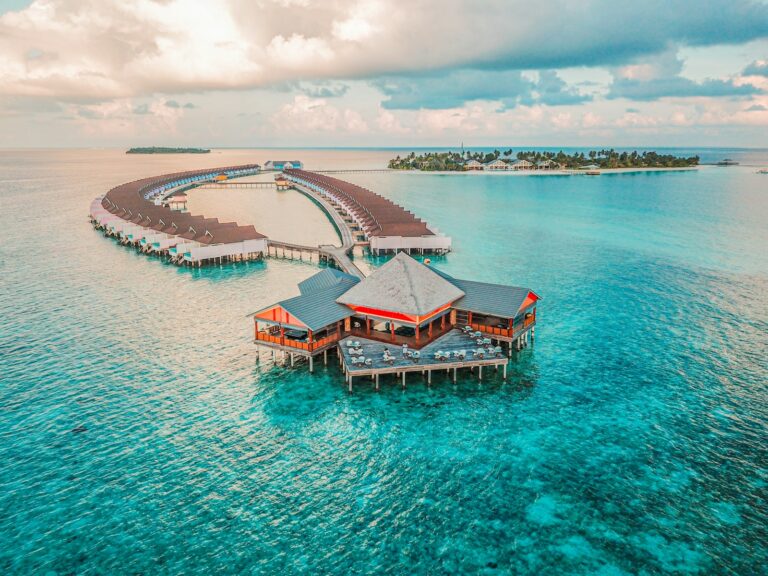
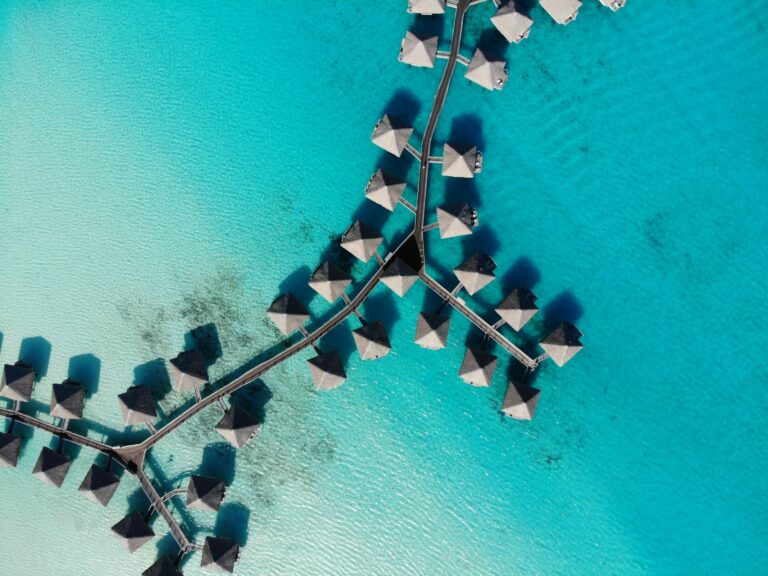
An overwater bungalow (also called a water villa) is a freestanding accommodation built on stilts directly over a lagoon, connected to the island or to neighboring villas by a wooden jetty. The best examples include floor-to-ceiling glass, an over-lagoon sundeck, an outdoor shower, and direct water access. Premium categories add a private infinity pool, a glass floor panel for watching reef fish glide beneath you, and in a handful of resorts, a water slide straight from the deck into the lagoon.

The 9 Best Overwater Bungalows with Private Pools

1. Soneva Jani — Medhufaru Island

Soneva Jani is the benchmark for overwater luxury. Its Water Retreats are among the largest in the country, several with retractable roofs over the master bedroom for stargazing and curved water slides that spiral from the top deck into the lagoon. Expect total seclusion, a “no news, no shoes” philosophy, and an in-villa Mr./Ms. Friday (butler).

2. Cheval Blanc Randheli

This LVMH-owned resort pairs French savoir-faire with Maldivian setting. The overwater villas are minimalist and enormous, each with a private pool and dedicated alchemist (butler). It’s a favorite for travelers who want fashion-house polish over rustic charm.

3. Waldorf Astoria Maldives Ithaafushi

Spread across three islands, Ithaafushi’s Overwater Villas with pools are ideal for couples who want space and a sense of arrival. The resort’s stilted villas open onto turquoise water, and the property is known for its 11 dining destinations and a private-island option that has hosted some of the world’s most exclusive getaways.

4. Conrad Maldives Rangali Island

Home to the famous underwater restaurant, Conrad Rangali offers spacious overwater villas with glass floors. It remains one of the best-value entries into the premium overwater category and a perennial favorite for first-time visitors.

5. Gili Lankanfushi

For barefoot, sustainable luxury, Gili Lankanfushi’s overwater Villa Suites are crafted almost entirely from reclaimed wood. The over-the-top “Private Reserve” is one of the largest overwater residences in the world, reached only by boat.

6. St. Regis Maldives Vommuli Resort

The St. Regis is sleek, design-forward, and famous for its curving Whale Bar. Overwater villas come with private pools and the brand’s signature 24-hour butler service.

7. Anantara Kihavah Maldives Villas

Anantara Kihavah’s Over Water Pool Villas are generous and family-friendly, and the resort’s underwater restaurant and observatory make it a standout for couples and families alike.

8. The St. Regis–rivaling JOALI Maldives

JOALI is an art-immersive resort where the overwater villas double as design statements. Its Luxury Water Villas with pools are made for travelers who want their stay to feel curated rather than cookie-cutter.

9. OZEN Reserve Bolifushi (All-Inclusive)

If you want a true all-inclusive Maldives overwater bungalow, OZEN’s “Indulgence” plan covers premium dining, excursions, and even spa treatments. Its overwater villas with pools deliver luxury without the constant à la carte bill at checkout.

How Much Does a Maldives Overwater Bungalow Cost?

Pricing varies dramatically by resort tier, season, and villa category. As a planning guide:

  • Entry premium resorts: roughly $700–$1,200 per night for an overwater villa
  • Mid-tier luxury with private pool: roughly $1,500–$3,000 per night
  • Ultra-luxury (Soneva, Cheval Blanc, Waldorf): $3,500 to $10,000+ per night

High season (December through April) commands the steepest rates. For the best value, target the shoulder months of May, early June, or late September, when the weather is still excellent and rates can drop 30–40%.

Overwater Bungalow vs. Beach Villa: Which Should You Book?

Overwater villas win on the wow factor, privacy, and that unmistakable “stilts over the lagoon” photograph. Beach villas, however, often offer more space, easier ocean access for swimming, and a better experience for families with small children. Many couples split their stay — a few nights on the beach, then a few nights over the water — to get the best of both.

Tips for Booking the Right Pool Villa

Book a sunset-facing villa for the best evening light. Confirm whether your resort is a quick speedboat transfer or requires a scenic (and pricier) seaplane. Read the villa category carefully — entry-level overwater villas at the same resort often skip the private pool, so confirm the pool is listed before you book. Finally, compare rates across booking platforms like Booking.com alongside the resort’s own site, since all-inclusive and free-night promotions can swing the total cost substantially. For a curated shortlist, see our roundup of the best Maldives overwater resorts.

Frequently Asked Questions

Which Maldives resort has the best overwater bungalows with a slide?

Soneva Jani is the most famous for water slides directly from the villa deck into the lagoon. A handful of other resorts offer slides in their top villa categories, but Soneva remains the standout.

Are there all-inclusive overwater bungalows in the Maldives?

Yes. Resorts such as OZEN Reserve Bolifushi and several others offer premium all-inclusive plans that bundle dining, drinks, and excursions, which can be more economical than paying à la carte at a luxury property.

When is the best time to stay in a Maldives overwater bungalow?

November to April offers the driest, sunniest weather but the highest prices. May, June, and late September provide strong value with mostly good weather, though brief rain showers are more likely.

Planning your Maldives escape? Compare overwater villa availability and rates, then book the season that fits your budget — the difference between high and shoulder season can fund an extra two nights over the water.