
Kenya and Tanzania are the two great luxury safari countries on earth. They share the same Great Migration ecosystem, they invented the modern safari between them, and every serious East African itinerary eventually forces the same choice: Kenya, Tanzania, or both?
The answer is not obvious. The two countries deliver profoundly different safari experiences even though they share a border and a wildebeest herd. Kenya is more concentrated and easier to reach; Tanzania is bigger, wilder, and more expensive. The right pick depends less on which country is “better” than on what kind of safari you’re actually trying to have.
Here’s the honest side-by-side for luxury travelers weighing the two in 2026.
The Short Answer
- Choose Kenya if you want a shorter, easier trip with more property variety, direct flights from more US and European cities, higher-density wildlife viewing in the Masai Mara, and the option to pair safari with a beach week in Lamu or Diani.
- Choose Tanzania if this is the trip of a lifetime, you want the biggest wilderness (Serengeti alone is 6x the size of the Mara), you’re chasing the calving migration in the southern Serengeti, or you want to add Zanzibar for the beach coda.
- Choose both if you have 12+ days and the budget — combining a Masai Mara stay with a Serengeti fly-in delivers the definitive East Africa experience.
Wildlife and Landscapes
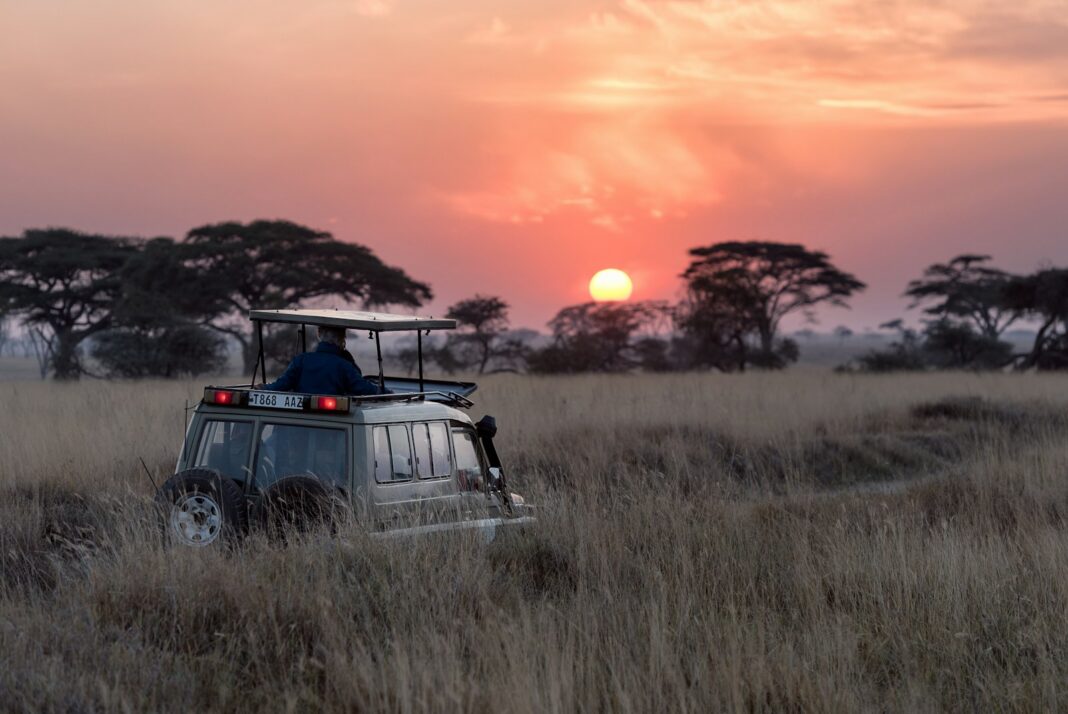
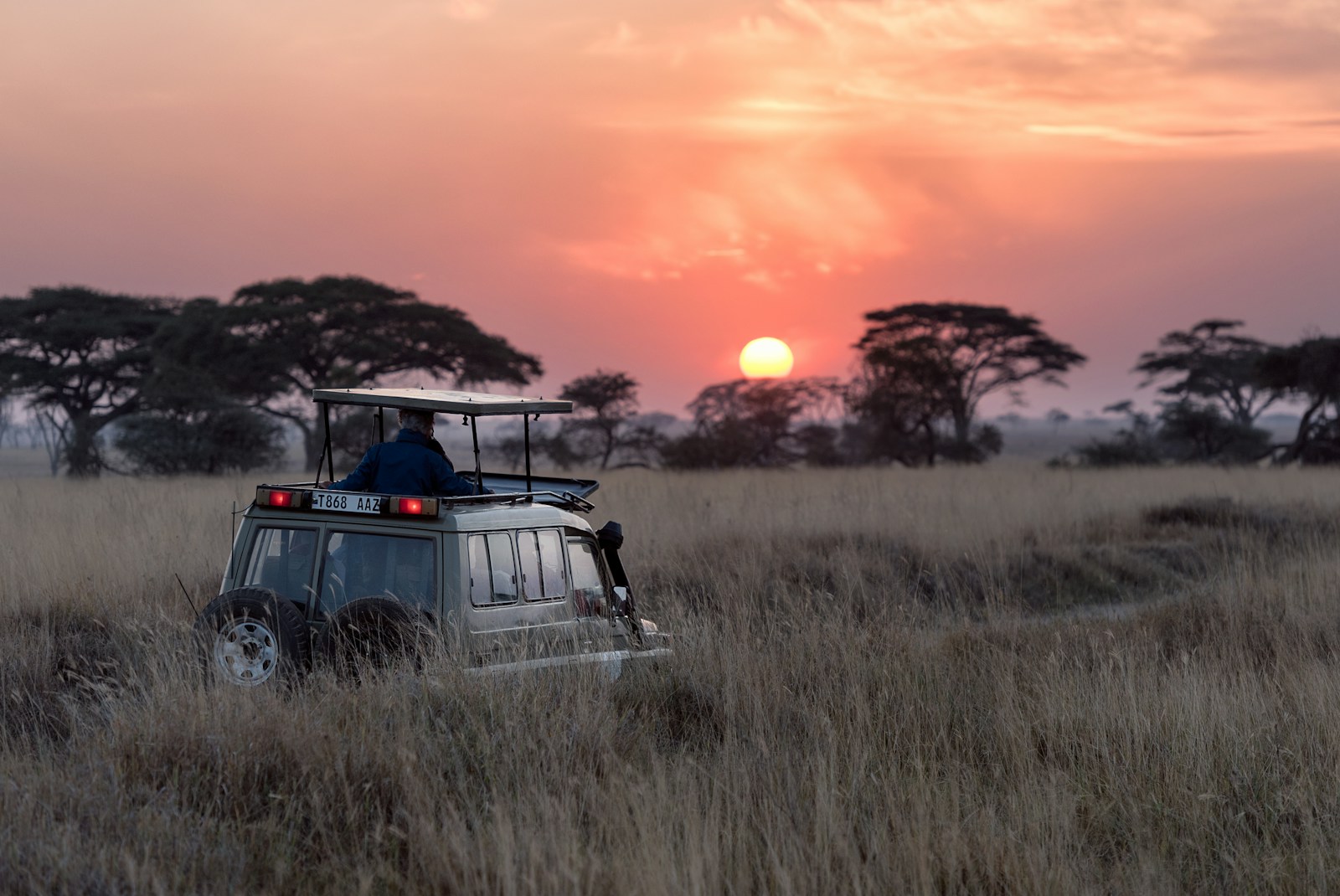
Kenya’s Masai Mara is a 1,510-square-kilometer game reserve that punches far above its size. Wildlife densities are among the highest in Africa — a single morning drive routinely turns up lion prides, cheetahs, elephants, and hundreds of the migration herd depending on season. The Mara is concentrated. That’s the whole appeal. Add in Amboseli (elephants with Kilimanjaro backdrop), Laikipia (private conservancies with rhino and wild dog), and Samburu (northern species you won’t see in the Mara), and Kenya delivers meaningful variety without long transfers.
Tanzania’s Serengeti is a different order of magnitude — 14,750 square kilometers, more than nine times larger than the Mara. The landscapes shift from short-grass plains in the south to woodland savanna in the north. The Ngorongoro Crater delivers arguably the densest concentration of large mammals anywhere in Africa in a single day. Tarangire’s baobab-studded elephant country is a genuine third-park option, and Ruaha and the Selous (now Nyerere National Park) offer wildlife-heavy circuits with a fraction of the vehicles.
Verdict: Density and predictability go to Kenya. Scale, diversity, and remoteness go to Tanzania. If you want to see 40 lions in three days, go to the Mara. If you want to feel like you’re the only humans for 50 miles, go to the southern Serengeti.
The Great Migration — Which Country, Which Month
The migration is a year-round loop, not an event. Roughly 1.5 million wildebeest and 300,000 zebra move through the Serengeti–Mara ecosystem continuously. Where they are on any given month decides which country you should book:
- December–March: Calving season in the southern Serengeti (Tanzania) — the herd concentrates in the short-grass plains around Ndutu, delivering the highest predator action of the year.
- April–May: The herd moves north through the western Serengeti — this is Tanzania’s “green season” and the cheapest luxury pricing of the year.
- June–July: River crossings begin at the Grumeti River (Tanzania).
- August–October: The famous Mara River crossings — herds move between the northern Serengeti and Kenya’s Masai Mara. Both countries deliver this. Kenya’s Mara is easier to reach and camps are more compact; Tanzania’s northern Serengeti sees fewer vehicles per sighting.
- November: The herd tracks south again through central Serengeti.
If the migration is your reason for going, the timing decision drives the country. For calving, Tanzania. For crossings, either country but Kenya wins on access.
Luxury Camps and Lodges Compared
Both countries have world-class camps. The best of each is unimprovable — an Angama Mara sundowner overlooking the Mara triangle is not “better” or “worse” than a Singita Faru Faru dinner in the western Serengeti. But the depth of the market differs.
Kenya’s top tier: Angama Mara, Sirikoi (Lewa Conservancy), Segera Retreat (Laikipia), Cottars 1920s Camp, Great Plains’ ol Donyo Lodge, andBeyond Bateleur Camp. Kenya also has the highest concentration of small-owner-run camps in Africa — many with 10 tents or fewer, private conservancies, and superb guiding traditions. See our full ranking of the best luxury safari lodges in Kenya.
Tanzania’s top tier: Singita Grumeti (three properties on a 350,000-acre private reserve), Sanctuary Ngorongoro Crater Camp, Nomad Tanzania’s Chem Chem, andBeyond Klein’s Camp, Legendary Lodge, and Asilia’s Highlands. Tanzania has fewer camps overall but the ceiling is arguably higher — Singita is the benchmark for luxury safari operations in Africa. Details in our best luxury safari lodges in Tanzania guide.
Verdict: Kenya wins on variety of properties and price-to-quality ratio in the mid-luxury tier ($900–$1,800/night). Tanzania wins at the very top of the market ($2,500+/night), where Singita is essentially peerless.
Cost Comparison
Tanzania is more expensive than Kenya. This is not close.
- Kenya luxury range: $900–$3,500 per person per night, all-inclusive (game drives, meals, drinks, laundry). A 7-night Kenya safari for two typically lands between $18,000 and $50,000 all-in with international flights.
- Tanzania luxury range: $1,200–$4,500 per person per night. A comparable 7-night Tanzania safari runs $25,000 to $70,000+. Singita properties alone can push a week past $50,000 for two.
Why the gap? Tanzania’s park fees are higher (up to $70+ per person per day inside national parks and $250 in the Ngorongoro Crater), inter-camp flights are longer, and the Serengeti’s remoteness makes logistics more expensive. Kenya’s private conservancy model — where beds pay the community directly and avoid park fees — has kept the mid-tier meaningfully cheaper. See our luxury safari cost guide for a full country-by-country breakdown.
Verdict: Kenya delivers 85% of the Tanzania experience at 65–75% of the price for most luxury travelers.
Access and Logistics
Kenya access: Nairobi (NBO) has direct flights from JFK (Kenya Airways), Newark, London, Amsterdam, Paris, Doha, Dubai, and multiple African hubs. From Nairobi, safari camps are 45 minutes to 90 minutes away on light aircraft (Wilson Airport is the safari hub). Total door-to-camp time from New York: about 22 hours.
Tanzania access: Kilimanjaro (JRO) and Dar es Salaam (DAR) have fewer nonstop options — you’ll typically route through Amsterdam, Doha, Addis Ababa, or Nairobi. From Kilimanjaro or Arusha, most Serengeti camps require another 90-minute to 2-hour bush flight, and camps deep in the Serengeti sometimes involve two flight segments. Door-to-camp from New York: 26–32 hours.
Beach add-on: Kenya pairs with Lamu (a UNESCO-listed Swahili island reached by short flight from Nairobi) or the Kenyan south coast. Tanzania pairs with Zanzibar (roughly a 90-minute flight from Arusha or a direct from Nairobi), which has significantly stronger luxury beach inventory — the Zuri, Kilindi, and Xanadu Villas set the benchmark.
Verdict: Kenya on access, Tanzania on beach add-on quality.
Best Season by Country
| Month | Kenya | Tanzania |
|---|---|---|
| Jan–Feb | Good — Mara game, low crowds | Excellent — Serengeti calving season |
| Mar–May | Skip — long rains, many camps close | Skip — heavy rain, though best rates |
| Jun–Jul | Good — Mara dry season builds | Excellent — western corridor crossings |
| Aug–Oct | Excellent — Mara River crossings | Excellent — northern Serengeti crossings |
| Nov–Dec | Good — short rains, green landscapes | Good — southern movement begins |
What About Combining Both?
For a truly definitive East African safari, 10–14 days lets you do both. A typical high-end combination:
- Nights 1–3: Lewa or Laikipia Conservancy (Kenya) — private conservancy, rhino, walking safari
- Nights 4–6: Masai Mara (Kenya) — big cats and migration crossings August–October
- Nights 7–9: Northern Serengeti (Tanzania) — remote, fewer vehicles
- Nights 10–12: Zanzibar — Kilindi or the Zuri for the beach coda
Expect this itinerary to run $45,000–$90,000 for two, all-in. Cheaper if you drop Zanzibar or Lewa; more expensive if you replace either mid-tier camp with Singita.
FAQ
Is a safari in Kenya cheaper than Tanzania? Yes, meaningfully. Expect Kenya to run 25–35% less for a comparable luxury tier because of lower park fees and a strong private conservancy model.
Which country has better Big Five viewing? Both deliver the Big Five reliably, but the northern circuit of Tanzania (Serengeti + Ngorongoro Crater) has arguably the highest sustained Big Five density on earth. Kenya’s Masai Mara comes very close.
Do I need a visa for Kenya or Tanzania? Both require visas. Kenya uses an eTA (electronic travel authorization) that’s easy to obtain online. Tanzania offers e-visa applications in advance or visa-on-arrival — most luxury operators handle this for you.
Is malaria a concern? Yes in both countries. Take prescribed antimalarials and use repellent — luxury camps provide it. Yellow fever vaccination is required for entry into either country if you’re arriving from a yellow-fever-endemic area.
What’s the best month for a first-time safari? August or September. The Mara River crossings are peaking, weather is dry, and both countries deliver.
Can I self-drive? In Kenya, yes with reservations and experience. In Tanzania, effectively no — the parks require guided vehicles. Either way, luxury travelers should use private guided vehicles, not group tours.
Still deciding? Cross-reference with our full luxury safari cost breakdown and the ultimate Tanzania safari guide.