
Updated 2 November 2026.
For five summers, the honest answer to “when should I visit Denali” came with an asterisk: the park road had been severed at Mile 43 by the Pretty Rocks landslide since August 2021, and the western two-thirds of the park — Eielson, Wonder Lake, Kantishna — were reachable only by bush plane.
That asterisk is about to come off. The Pretty Rocks Bridge was completed on 2 September 2026, and bus service to Kantishna at Mile 92 is expected to resume on 8 June 2027. 2027 will be the first full Denali season since 2021. Reservations open on 1 December 2026 — about four weeks from the time of writing.
That single fact reshapes the best time to visit Alaska for anyone who has been waiting. It also sits alongside several other things that most Alaska guides currently have wrong, including when bears actually fish at Brooks Falls, whether the Denali Road Lottery still exists, and whether Fairbanks really gets 24 hours of daylight.
The short answer
- Denali and the interior: mid-June through early September 2027 — and book the moment reservations open on 1 December 2026.
- Bears at Brooks Falls: mid-July or September. August is a genuine lull, not a peak.
- Best weather: June. It is Anchorage’s driest summer month and among Juneau’s driest.
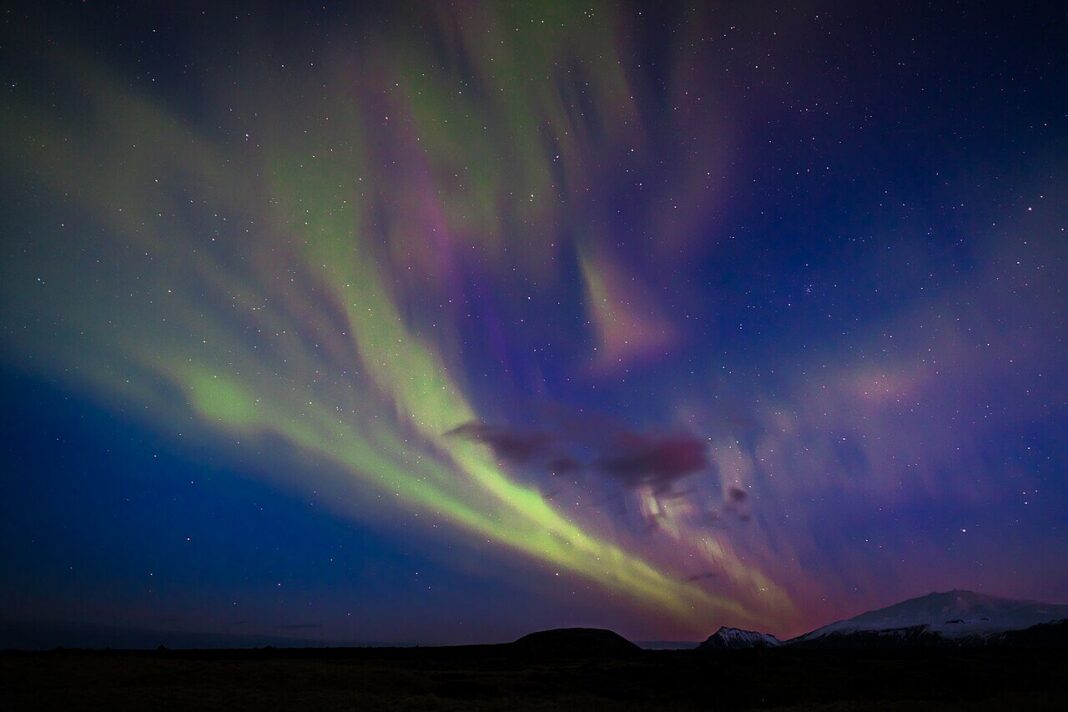
- Aurora in Fairbanks: late August through April — and late August to September is warmer, cheaper and far more comfortable than deep winter.
- Fewest people: late May or the second half of September, when the cruise fleet is thin or gone.
Denali in 2027: what reopens, and what does not
The bridge itself is a serious piece of engineering — 475 feet long, about 50 feet high, steel truss, launched across the slide from the east side in 2025 and anchored with 23 thermosiphons that keep the permafrost beneath its eastern end frozen. Cost: roughly $230 million.
What that buys travellers in 2027:
- Bus service to Kantishna (Mile 92) expected from 8 June 2027, resuming in phases as seasonal road operations come online.
- Wonder Lake Campground (Mile 85, 28 tent-only sites) is expected to reopen.
- Camp Denali, Kantishna Roadhouse and Denali Backcountry Lodge all regain road access after five years of fly-in-only operation.
And the part almost no current coverage mentions: the Eielson Visitor Center at Mile 66 remains closed in 2027, and buses will not stop there for visitor-centre services. “The road reopens” does not mean everything west is back.
Two further corrections worth having before you plan:
The Denali Road Lottery is suspended. The National Park Service page says only: “Road Lottery is currently suspended for the forseeable future.” A large volume of live travel content still instructs readers to enter it. There is nothing to enter.
The road has never opened past Mile 30 to private vehicles, landslide or no landslide. NPS states it directly. Your only private-vehicle windows beyond Mile 15 are April to 19 May, and after transit buses end — the second Thursday after Labor Day — through roughly 15 October.
One naming note, since it causes confusion: following a 2025 executive order, the federal government’s official name for the mountain is Mount McKinley, while the park remains Denali National Park and Preserve. NPS now uses both accordingly.
Climate: Alaska is four different places
NOAA 1991–2020 normals. The contrast between Juneau and Anchorage is the fact that reorganises most itineraries.
| Month | Anchorage high / low | Anchorage precip | Juneau high / low | Juneau precip | Fairbanks high / low |
|---|---|---|---|---|---|
| January | 22.7° / 11.0°F | 0.75″ | 33.1° / 23.8°F | 6.02″ | 0.6° / −17.2°F |
| April | 45.1° / 29.9°F | 0.43″ | 48.7° / 32.9°F | 3.47″ | 45.6° / 21.7°F |
| May | 56.3° / 40.0°F | 0.65″ | 57.6° / 40.3°F | 3.51″ | 62.1° / 38.6°F |
| June | 63.4° / 48.4°F | 1.02″ | 62.4° / 46.8°F | 3.82″ | 71.8° / 50.2°F |
| July | 66.2° / 52.9°F | 1.82″ | 64.0° / 50.1°F | 5.14″ | 72.7° / 53.1°F |
| August | 64.0° / 50.9°F | 2.93″ | 62.9° / 49.1°F | 6.41″ | 66.4° / 47.6°F |
| September | 55.7° / 42.9°F | 3.10″ | 56.1° / 44.1°F | 9.15″ | 55.3° / 36.2°F |
| Annual precip | 16.42″ | 66.99″ | 11.67″ | ||
Juneau receives about 4.1 times more precipitation than Anchorage — and its single wettest month, September at 9.15 inches, out-rains Anchorage’s entire year by more than half again. Juneau averages 230 days a year with measurable precipitation. It is a temperate rainforest, and should be planned like one.
Two more findings that cut against the usual advice:
August is not Alaska’s best-weather month. August and September are Anchorage’s two wettest months. June is its driest summer month at 1.02 inches, and among Juneau’s driest at 3.82.
Fairbanks is the warm one in summer. June and July highs of 71.8°F and 72.7°F beat both Anchorage and Juneau.
Daylight — and the Fairbanks myth
| Date | Anchorage daylight | Fairbanks daylight |
|---|---|---|
| 15 January | 6h 25m | 5h 09m |
| 15 March | 11h 46m | 11h 43m |
| 15 May | 17h 29m | 18h 41m |
| 21 June (solstice) | 19h 23m | 21h 50m |
| 15 September | 12h 56m | 13h 04m |
| 21 December (solstice) | 5h 27m | 3h 42m |
Fairbanks swings 18 hours between solstices. But it sits below the Arctic Circle, so it does not get true 24-hour sun — on the summer solstice the sun sets at 23:48 and day length is 21h 50m, not 24. The “midnight sun in Fairbanks” line is a common error.
Bears at Brooks Falls: two peaks, and an August lull
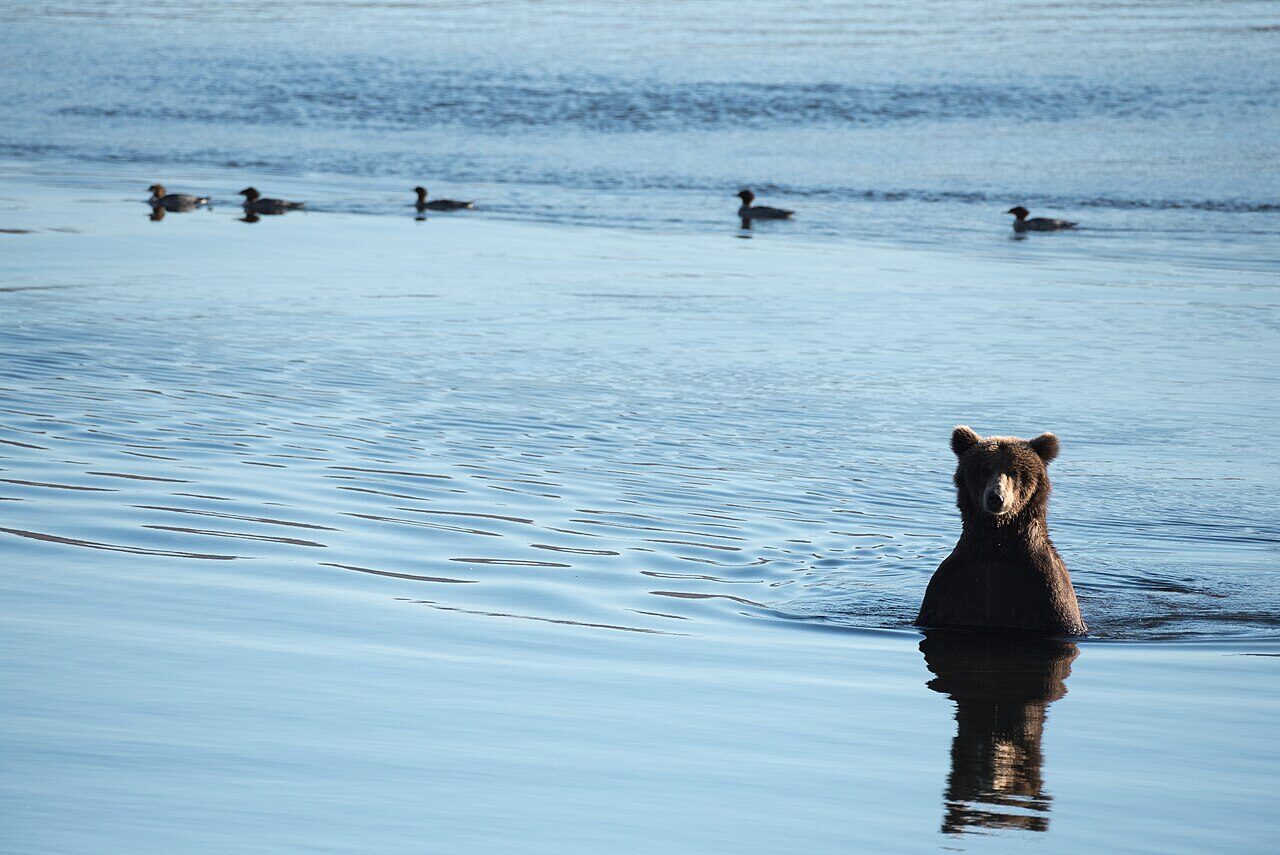
This is the correction most likely to save a reader a wasted trip. The standard framing is “July through September is bear season.” The National Park Service’s own guidance says something more specific, and more useful.
| Period | What is happening | Viewing |
|---|---|---|
| June | Little food available; bears dispersed | Slow |
| Mid-July | Migrating salmon concentrated; the falls act as a temporary barrier | Peak — the largest number of bears |
| August | Salmon spawn in dispersed groups and stay energetic; fishing is hard | “Almost all bears leave” — some days with no sightings |
| September | Salmon weaken and die; bears feed on carcasses in the lower river | Peak — bears present in high numbers |
The mechanism matters because it tells you what you will see. In July the bears are thinner, shedding, and more aggressive toward each other, and the largest dominant animals hold the falls. In September they are fat, in new fur, and far less aggressive. Two genuinely different experiences — and August, sitting between them, is the month to avoid.
Brooks Camp services run 1 June to 17 September, with lodge meals and lodging through 17 September. One trap worth flagging: the Brooks Lodge 2027 lottery is closed. The application window running 1–30 December 2026 is for the 2028 season. Remaining 2027 availability opens to the public on 11 February 2027.
Salmon runs, if you are fishing
Alaska Department of Fish and Game run timing for the Kenai: king salmon early run mid-May to late June, late run early July to the end of July; sockeye mid-July to mid-August; pink mid-July through August; silver/coho late July to mid-October, the longest window of any species. Note that fishing the Kenai for kings in August does not work — the late run closes at the end of July. Note also that pinks are abundant in even years, so 2027 is an off year.
Aurora in Fairbanks, and the solar cycle in 2027
The University of Alaska Fairbanks Geophysical Institute gives the Fairbanks aurora season as roughly 21 August to 21 April — which includes late August and September, when Fairbanks still averages 55°F days and the nights are long enough to work. “Winter only, December to March” leaves the most comfortable third of the season on the table.
Best hours are the three or four centred on midnight, with 9 p.m. to 3 a.m. the highest-probability window. If skies are clear, staying at least three nights makes a sighting highly likely, though never certain.
On the solar cycle: Solar Cycle 25 peaked in October 2024 at a smoothed sunspot number of 160.9 and has fallen steadily — down to 45.7 monthly by October 2026. So 2027 is in the declining phase, not at maximum, and any site telling you 2027 is a peak aurora year is working from stale information. The declining phase still produces strong displays, but set expectations accordingly. (The UAF page itself is out of date here, still describing the next maximum as “expected in winter 2024–25.”)
Crowds: two in three summer visitors arrive by ship
Summer 2025 brought 2,706,900 visitors to Alaska. The breakdown is the most useful crowd statistic in the state:
| Arrival mode | Visitors | Share |
|---|---|---|
| Cruise ship | 1,777,000 | 66% |
| Air | 845,900 | 31% |
| Highway / ferry | 84,000 | 3% |
Because cruise passengers are concentrated in Southeast ports on fixed port-day windows, avoiding crowds in Alaska is mostly a question of geography and time of day, not month. Be out of Juneau’s downtown core by late morning, or be somewhere ships do not call.
And on Juneau’s much-publicised cruise cap: the agreement limits 16,000 passengers a day, 12,000 on Saturdays, and 2026 was its first season. But it is voluntary, counts only lower-berth passengers, and allows case-by-case exceptions — and Juneau still set a record 1,733,016 passengers in 2026, up 2.6%, running at 104% of lower-berth capacity. The cap has not made Juneau quieter. Our guide to the best luxury cruise lines covers the small-ship operators that avoid the worst of this.
Shoulder season: what is actually open
- Spring: the Denali road opens to Savage River (Mile 15), then Teklanika (Mile 30), in April or early May depending on snow. Private vehicles may drive to Mile 30 through 19 May. Transit buses begin 20 May; narrated tour buses about a week earlier. Most area hotels stay closed until early or mid-May.
- Autumn: transit bus service ends the second Thursday after Labor Day. Most area hotels close in mid-September, as does daily train and bus service, and guided activities are not offered in the park in September. The road stays open to Mile 30 until snow closes it, typically through about 15 October.
- Alaska Railroad 2027: Denali Star 12 May to 16 September; Coastal Classic 14 May to 12 September. The Aurora Winter Train covers the other eight months at two departures a week — roughly a 19:1 frequency gap that quantifies “Alaska’s season” better than any other number.
- Kenai Fjords visitor centres run Memorial Day weekend to Labor Day, and Exit Glacier Road is unplowed and closed to cars from roughly October to May.
Lodges, with verified 2027 seasons
Camp Denali: 4 June to 10 September 2027, from $1,200 per person per night all-inclusive, with stays beginning Monday or Friday. Kantishna Roadhouse: 11 June to 11 September 2027, two-night minimum, 2027 rates from $1,200 per person per night plus bed tax, including bus transport, park entrance, meals and guided activities. Both regain road access in 2027 for the first time in five years.
One to flag: Winterlake Lodge is no longer bookable through Within The Wild. It is now Eleven Winterlake Lodge under Eleven Experience, listed as “coming soon” with no published dates or rates. A lot of live travel content still lists it the old way.
Best time to visit Alaska by traveller
| If you want… | Go | Why |
|---|---|---|
| The full Denali road | Mid-June–early September 2027 | Kantishna service expected from 8 June; book from 1 Dec 2026 |
| Bears at the falls | Mid-July or September | Two distinct peaks; August is a lull |
| Driest weather | June | Anchorage’s driest summer month; Juneau’s too |
| Aurora in comfort | Late August–September | Season opens 21 August; Fairbanks still averages 55°F days |
| Fewest cruise crowds | Late May or late September | 66% of summer visitors arrive by ship |
| Midnight sun | Late June | Fairbanks 21h 50m — though not a true 24 hours |
| Silver salmon | August–September | Longest run window; kings close end of July |
Frequently asked questions
Is the Denali Park Road open again?
The Pretty Rocks Bridge was completed on 2 September 2026, and bus service to Kantishna at Mile 92 is expected to resume on 8 June 2027. Buses did not travel past Mile 43 for the remainder of the 2026 season. Note that the Eielson Visitor Center stays closed in 2027.
When do 2027 Denali reservations open?
1 December 2026, through reservedenali.com, for buses and campgrounds. Given this is the first full season in six years, treat that date as a hard deadline rather than a suggestion.
What are the chances of actually seeing the mountain?
The widely repeated “30% club” is bus-driver anecdote rather than a measured figure, and NPS attributes it to days, not visitors: “veteran bus drivers in Denali say that only one in three days offers glimpses of the mountain.” NPS publishes no visibility statistic. It also notes that clear skies are more common in deep winter than in summer.
Is August a good month for Alaska?
It is the weakest of the three summer months on this evidence: Anchorage’s second-wettest, Juneau deep into its autumn deluge, and a genuine lull for bear viewing at Brooks Falls. June and September both make a stronger case.
Do international visitors pay the new $100 national park surcharge in Alaska?
No. The surcharge effective 1 January 2026 applies to 11 named parks and no Alaska park is among them. Denali’s entrance fee remains $15 per person for seven days.
Related reading
- The Best Luxury Cruise Lines in the World
- Inside Alaska Airlines’ New International Business Class Suites
- Best Time to Visit Hawaii
Sources: National Park Service (Denali, Katmai, Glacier Bay, Kenai Fjords); NOAA NCEI 1991–2020 climate normals; US Naval Observatory; Alaska Department of Fish and Game run-timing brochures; UAF Geophysical Institute; NOAA Space Weather Prediction Center; Alaska Travel Industry Association visitor volume report; Alaska Railroad; Camp Denali; Kantishna Roadhouse; Katmailand.
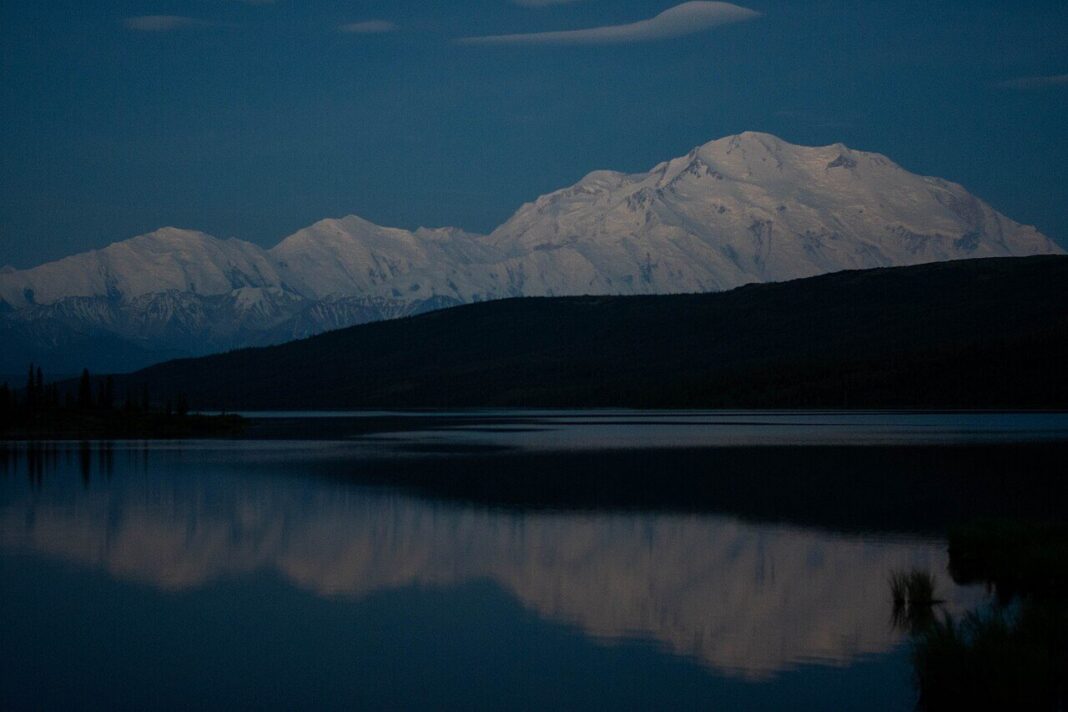
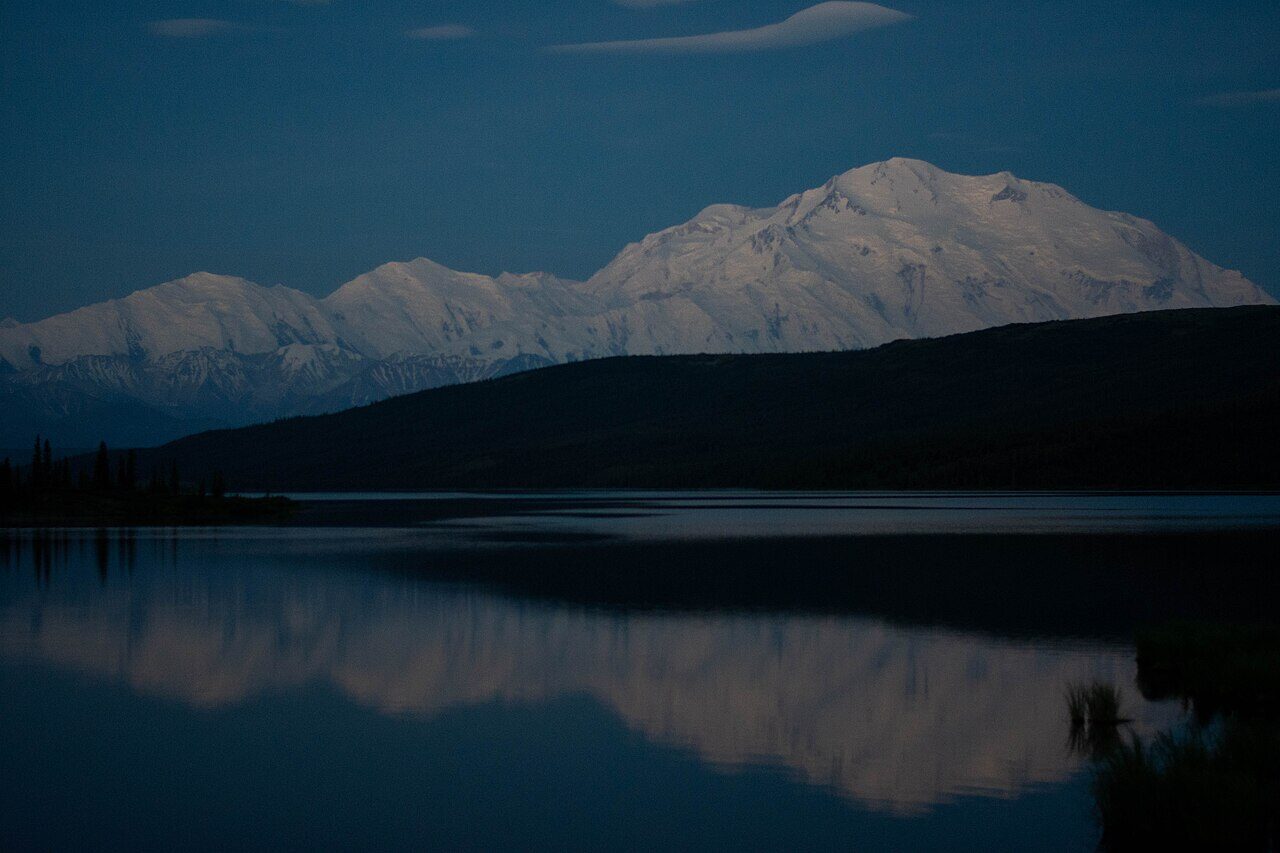
Photos: Denali from Wonder Lake and brown bear on the lower Brooks River, National Park Service, public domain, via Wikimedia Commons.