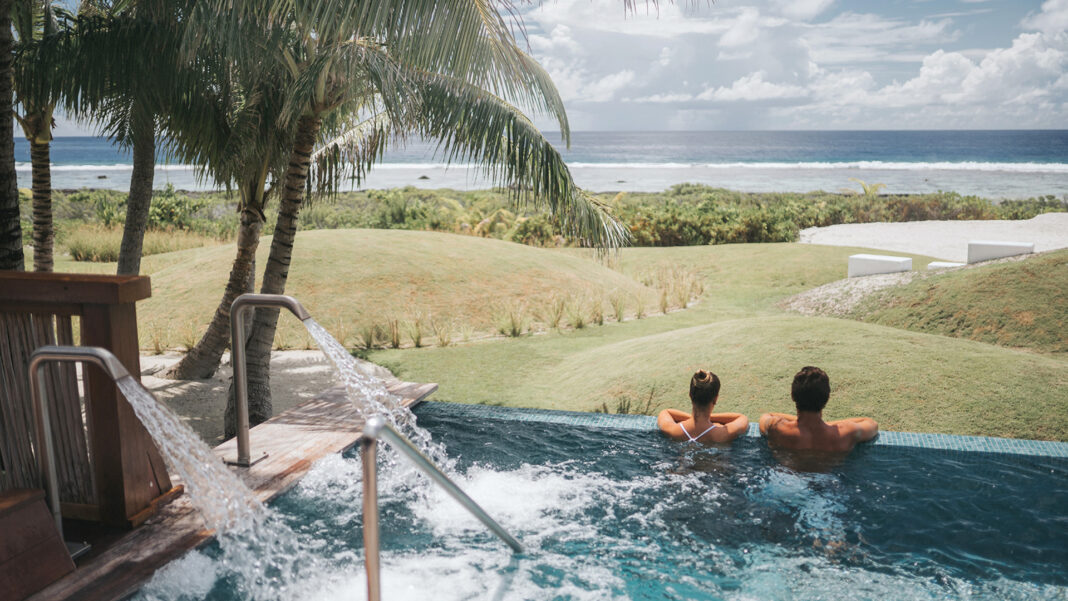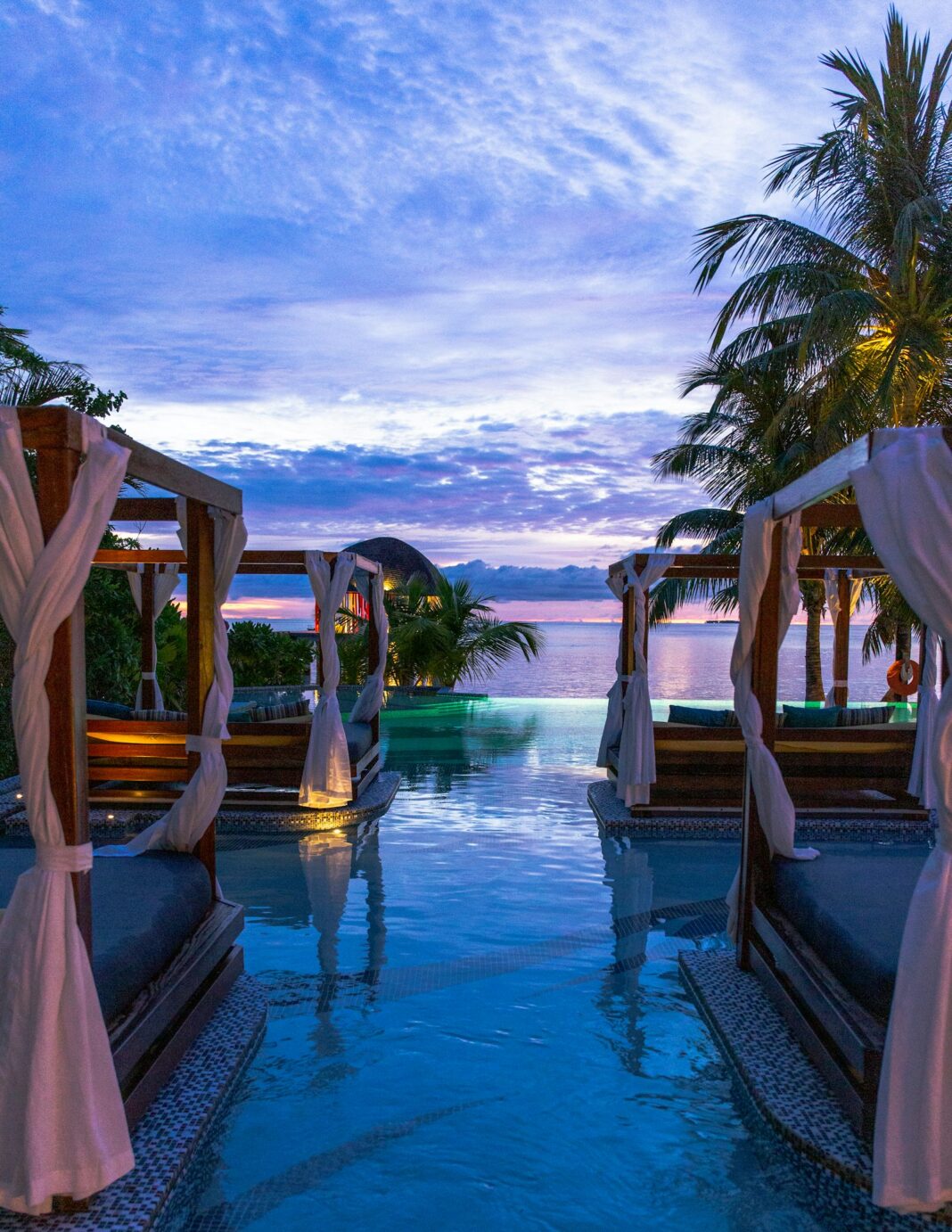

When the conversation turns to the absolute apex of hospitality, two names surface with a reverence usually reserved for grand crus and haute couture houses: Aman and Rosewood. The aman vs rosewood debate is not about which brand is objectively “better” – both operate at a stratum where a nightly rate of $1,500 is considered a starting point and $5,000-plus suites are routine. Rather, it is a question of temperament. Do you want to disappear into a monastic sanctuary carved from Utah sandstone, or do you want to sip a martini in a Hong Kong sky lobby with a Wong Kar-wai film unfolding through the windows? This guide compares the two brands across every meaningful axis so you can book with conviction.
A Tale of Two Founders: Origin and Philosophy
Aman was founded in 1988 by Indonesian-born hotelier Adrian Zecha, who opened Amanpuri (Sanskrit for “place of peace”) on a coconut plantation in Phuket almost as a private retreat that happened to accept paying guests. The formula – roughly 30 to 50 pavilions, no visible branding, muted palettes, contemplative silence – never really changed. Aman today operates 35-plus properties, and the devotion of its guests (self-styled “Amanjunkies”) borders on religious.
Rosewood traces its lineage to 1979 and The Mansion on Turtle Creek in Dallas. The brand was acquired in 2011 by Hong Kong’s Cheng family through Rosewood Hotel Group, and under CEO Sonia Cheng it has become one of the most aggressively expanding true-luxury brands in the world. Rosewood’s north star is its “A Sense of Place” philosophy: every property should feel indivisible from its host city or landscape, in architecture, cuisine, and cultural programming.
What This Means in Practice
Stay at Amangiri in Utah and Amanoi in Vietnam and you will recognize the DNA instantly – the same low horizontals, the same hush, the same way sunlight falls across a reflecting pool. Stay at Rosewood Hong Kong and Rosewood Sao Paulo and you will feel you have visited two entirely different hotel companies. Neither approach is superior; they are opposite bets on what luxury means.
Aman vs Rosewood: The Comparison at a Glance
| Attribute | Aman | Rosewood |
|---|---|---|
| Design philosophy | Unified minimalism, architecture as sanctuary | “A Sense of Place” – hyper-local, distinct per property |
| Service style | Quiet, anticipatory, monastic restraint | Warm, polished, more conversational |
| Signature properties | Amangiri, Amankila, Amanpuri, Amanoi, Aman Tokyo | Rosewood Mayakoba, Rosewood Hong Kong, Rosewood Sao Paulo, Le Guanahani |
| Typical price band | $2,000-$6,000+ per night | $1,500-$4,500+ per night |
| Portfolio size | ~35 properties, mostly resort | ~30 properties, resort and urban mix |
| Best for | Digital detox, wellness, architecture pilgrims | Urban flagships, art collectors, cultural immersion |
Room and Suite Product
Aman pavilions are famous for their spatial generosity. Even entry-level accommodations typically start around 700 square feet, and many include private plunge pools, outdoor showers, and dedicated courtyards. Materials skew earthy: volcanic stone at Amankila in Bali, sandstone and glass at Amangiri, tatami and cedar at Aman Kyoto. Televisions are often hidden or absent by design.
Rosewood rooms are typically more overtly opulent, with layered textiles, statement art, and richer color stories. The brand’s urban flagships punch above the class – Rosewood Hong Kong’s Harbour Rooms feel cinematic, Rosewood Sao Paulo blends Brazilian modernism with tropical botanicals, and the recently restored Le Guanahani in St. Barth’s leans French Caribbean chic. If you like your suite to feel like a curated apartment rather than a meditation cell, Rosewood wins.
Service: Restraint vs Warmth
Aman service is often described as “invisible.” Staff learn your name once and rarely repeat it in earshot; requests are anticipated before you voice them. The pace is deliberately slow. Some first-timers mistake this for aloofness before recognizing it as intentional stillness.
Rosewood service is warmer and more emotionally present. Ratios are similarly high, but the tone is conversational, with a strong emphasis on the local team’s connection to the destination. Concierges at Rosewood Mayakoba, for example, are known for arranging Mayan cenote experiences that no third-party fixer could touch.
Food and Beverage
Historically, Aman treated dining as functional support to the sanctuary experience – beautifully sourced, technically clean, but not a destination in itself. That is shifting. Nama at Aman Tokyo, Arva at Aman Venice, and the omakase counter at Amangiri are now legitimate culinary draws.
Rosewood has always taken F&B seriously as part of “Sense of Place.” Think Chaya at Rosewood Miramar Beach, Holt’s Cafe at Rosewood Hong Kong, or the Cheng family’s investment in Villa Mabrouka in Tangier. If dinner reservations matter as much as the room key, Rosewood generally out-performs.
Spa and Wellness
Wellness is arguably where Aman most clearly leads. The Aman Spa concept – and the newer, deeper Aman Wellness immersions at Amanpuri, Amangiri, and Aman Le Melezin – are structured multi-day programs with physicians, movement specialists, and traditional practitioners. Aman New York’s three-story urban spa is one of the largest in Manhattan.
Rosewood’s Asaya wellness concept is credible and growing, particularly strong at Rosewood Hong Kong, Rosewood Phuket, and Rosewood Little Dix Bay. It is excellent, but it is not the reason people book Rosewood the way wellness is often the reason people book Aman.
Signature Destinations Head to Head
Aman’s Cathedral Properties
- Amangiri (Utah) – the desert monolith that launched a thousand Instagram accounts.
- Amankila (Bali) – clifftop pavilions above the Lombok Strait with the three-tiered infinity pool.
- Amanpuri (Phuket) – the original, and still arguably the most refined beach Aman.
- Amanoi (Vietnam) – Nui Chua National Park, largely undiscovered by American travelers.
- Aman Tokyo and Aman Venice – the brand’s proof it can do urban.
Rosewood’s Standout Properties
- Rosewood Mayakoba (Riviera Maya) – lagoon suites and one of the most consistent luxury resorts in the Americas.
- Rosewood Hong Kong – the new benchmark for Asian urban luxury since 2019.
- Rosewood Sao Paulo – a Jean Nouvel and Philippe Starck collaboration inside the Cidade Matarazzo complex.
- Le Guanahani (St. Barth’s) – the brand’s Caribbean crown jewel, fully rebuilt after Irma.
- Rosewood Sand Hill and Rosewood Miramar – the California power duo.
For a broader benchmark of where these brands sit against the global elite, see our roundup of the most luxurious hotels in the world, and for context on why Aman is frequently placed in a rarefied tier of its own, read what a six-star hotel actually is.
Pricing, Value, and Loyalty
Aman is almost always the more expensive of the two on comparable dates. A base pavilion at Amangiri routinely exceeds $4,000 per night; peak-season Amankila and Amanpuri sit in the $2,000-$3,500 range. Rosewood resort rates typically start $500 to $1,500 lower for a comparable category, and urban Rosewoods can be surprisingly attainable in shoulder season.
Neither brand runs a traditional points program in the Marriott or Hilton sense. Both benefit meaningfully from booking through preferred travel advisors – Aman via the Aman Travel program and Rosewood via its Rosewood Elite and Virtuoso partnerships – which typically deliver breakfast, upgrades at check-in, resort or property credits between $100 and $200, and priority experiences.
Aman vs Rosewood: When to Pick Which
Choose Aman if:
- You want architectural silence and a genuine digital detox.
- Wellness, movement, and sleep are the reason you travel.
- You prefer resorts to cities and are willing to fly to remote locations.
- You value consistency of experience across the brand.
Choose Rosewood if:
- You want each hotel to feel unmistakably of its city or coast.
- You care about serious restaurant scenes and a lively bar culture.
- Urban stays are part of your rotation (Hong Kong, Sao Paulo, London, Bangkok).
- You want ultra-luxury without quite Aman’s price ceiling.
Book Your Stay
Both brands reward guests who book through a luxury-preferred channel rather than direct – the rate is identical, but the amenities are not. If you are still weighing this against another top-tier stalwart, our Aman vs Four Seasons comparison completes the trilogy. For sun-and-sand devotees, our guide to the best luxury hotels in the Maldives covers overwater alternatives to both Amanpuri and Rosewood’s tropical properties.
Final Verdict
In the aman vs rosewood matchup, Aman is the connoisseur’s choice when the goal is to disappear, reset, and be moved by architecture and space. Rosewood is the connoisseur’s choice when the goal is to feel more connected to the place you are visiting, with a livelier social and culinary orbit. Sophisticated travelers rarely pick one and stay loyal for life; they build itineraries that use both – Aman for the sabbatical week, Rosewood for the city stopover and the celebratory long weekend.
Frequently Asked Questions
Is Aman more expensive than Rosewood?
Yes, on average. Aman’s flagship resorts typically start $500 to $1,500 per night above a comparable Rosewood, and Amangiri, Aman Tokyo, and Aman New York can double that gap in peak season.
Which brand has better wellness programs?
Aman leads meaningfully. Aman Wellness immersions are structured multi-day medical and movement programs, whereas Rosewood’s Asaya concept, while excellent at properties like Rosewood Hong Kong and Rosewood Phuket, is more spa-plus than clinical retreat.
Which brand is better for city stays?
Rosewood, in most cases. Rosewood Hong Kong, Rosewood London, Rosewood Sao Paulo, and Rosewood Bangkok are city-defining hotels. Aman’s urban entries in Tokyo, Venice, and New York are exceptional but fewer.
Do either Aman or Rosewood have loyalty programs?
Neither operates a traditional points program. Both offer meaningful benefits when booked through preferred travel advisors and partner programs such as Aman Travel and Virtuoso for Rosewood.
Which brand is best for families with children?
Rosewood is generally the more family-forward choice, with dedicated kids’ clubs at properties like Rosewood Mayakoba and Le Guanahani. Aman welcomes children but the atmosphere is quieter and more adult-oriented, with exceptions like Amanpulo and Amanpuri.
LUXGetaway is reader-supported. When you book through our links, we may earn a commission at no extra cost to you.