The 10 Most Anticipated Hotel Openings of Late 2026

0

The second half of 2026 is shaping up to be the most consequential stretch for luxury hotel openings in years. Venice’s most storied address returns from a top-to-bottom restoration under a new flag. Aman finally plants its flag in Mexico. And London’s Admiralty Arch — the ceremonial gateway between Trafalgar Square and Buckingham Palace — welcomes overnight guests for the first time in its history.

From a crystal-clad palazzo on Rome’s Via Veneto to a remote lodge deep in Botswana’s Okavango Delta, these are the ten openings we’re watching between now and New Year’s Eve, with confirmed dates, opening rates, and booking intel for each.

Late 2026 Hotel Openings at a Glance

Hotel Location Opening
Danieli, a Four Seasons Hotel Venice, Italy August 26, 2026
Waldorf Astoria London – Admiralty Arch London, England Autumn 2026
Amanvari Los Cabos, Mexico August 1, 2026
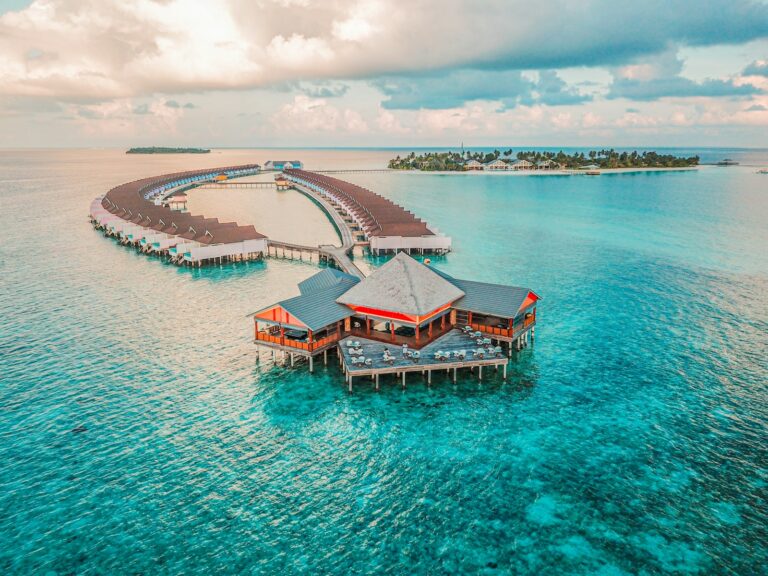
Bulgari Resort Ranfushi Raa Atoll, Maldives Late 2026
Singita Elela Okavango Delta, Botswana December 2026
Baccarat Hotel Rome Rome, Italy Late 2026
The Park Gstaad, a Four Seasons Hotel Gstaad, Switzerland Winter 2026–27 season
The Langham, Custom House Bangkok, Thailand December 2026
The Cape Town EDITION Cape Town, South Africa Late 2026
The St. Regis Costa Mujeres Resort Cancún, Mexico Now open (July 2026)

1. Danieli, a Four Seasons Hotel — Venice, Italy

Opening: August 26, 2026

No opening this decade carries more weight than the return of the Danieli. The 15th-century Palazzo Dandolo has hosted royalty, doges, and Dickens since it first became a hotel in 1822, and on August 26 it begins a new chapter as Danieli, a Four Seasons Hotel. Interiors are by Pierre-Yves Rochon — the designer behind Four Seasons’ George V in Paris and its Florence palazzo — who has restored the famous gilded lobby and its Byzantine staircases while trimming the room count to 120 oversized rooms and suites at opening (176 by 2027). Rooftop institution Terrazza Danieli returns under Executive Chef Adriano Rausa, as does Bar Dandolo, with a three-room Danieli Spa to follow late in the year. Expect it to land immediately on any list of the most luxurious hotels in the world.

2. Waldorf Astoria London — Admiralty Arch, England

Opening: Autumn 2026 (stays bookable from March 1, 2027)

Commissioned by King Edward VII in memory of Queen Victoria and designed by Sir Aston Webb, Admiralty Arch has anchored the end of The Mall since 1912 — but it has never taken an overnight guest. That changes this autumn, when Waldorf Astoria opens 114 rooms, suites, and residences inside the Grade I–listed monument, some looking straight down The Mall to Buckingham Palace. The dining lineup alone justifies the hype: Coreus, a seafood-focused fine-dining room from three-Michelin-starred Clare Smyth, and a rooftop Café Boulud from Daniel Boulud. A subterranean spa adds a hydrotherapy pool, sauna, and steam room. Opening rates start around £660 per night — see where it fits among the best luxury hotels in London.

3. Amanvari — Los Cabos, Mexico

Opening: August 1, 2026

Eight years after it was first announced, Aman’s Mexico debut is finally here. Amanvari sits on the East Cape of Baja California Sur inside the 1,500-acre Costa Palmas community, about an hour from Los Cabos International Airport and a world away from the marlin-boat bustle of Cabo San Lucas. Just 18 standalone casitas — most around 833 square feet — come with private heated pools and terraces facing the Sea of Cortez, supported by Italian, Japanese, and regional Mexican dining, a full spa, and a yoga pavilion. Rates open around $4,500 per night in low season (from $7,000 in peak), with breakfast, in-room refreshments, and non-motorized water sports included — classic Aman math, and classic Aman scarcity.

4. Bulgari Resort Ranfushi — Raa Atoll, Maldives

Opening: Late 2026

The Roman jeweler’s tenth hotel — and its first private-island resort — lands on Ranfushi in the Maldives’ Raa Atoll late this year. Bulgari Resort Ranfushi keeps the count deliberately low: 54 accommodations in all, split between 33 beach villas (each with a private pool), 20 overwater villas, and the flagship Bulgari Villa. Expect the brand’s signature Italian polish — Antonio Citterio Patricia Viel design, an Il Ristorante likely bearing a starred chef’s name, and a Bulgari Spa — transplanted to some of the clearest water in the Indian Ocean. In a destination crowded with five-star flags, this is the most significant Maldives debut of the year.

5. Singita Elela — Okavango Delta, Botswana

Opening: December 2026

Singita — arguably the most respected name in African safari — enters Botswana for the first time with Singita Elela, opening in December on the Santantadibe River in the Okavango Delta. The year-round lodge pairs Singita’s low-density, conservation-first model with exclusive traversing across more than 420,000 acres of private wilderness — mokoro channels, big cats, and some of the highest concentrations of wildlife on the continent. If the brand’s Tanzanian and South African lodges are any guide, expect quiet contemporary design, exceptional guiding, and a wine cellar that embarrasses most capital cities. Safari planners should read our guide to the best luxury safari lodges in Tanzania for how Singita runs a camp.

6. Baccarat Hotel Rome — Italy

Opening: Late 2026

The crystal house behind Manhattan’s glittering Baccarat Hotel brings its brand of high-shine glamour to Rome, transforming the 1889 Hotel Majestic — the first hotel ever built on Via Veneto and a backdrop in Fellini’s La Dolce Vita — into an 87-room jewel box. Backed by more than €111 million in financing, the restoration promises crystal-laden interiors, a rooftop with views across the Eternal City, and a revival of the boulevard that once defined Roman café society. With the Danieli taking Venice and Baccarat taking Rome, Italy owns 2026’s two most glamorous restorations.

7. The Park Gstaad, a Four Seasons Hotel — Switzerland

Opening: Winter 2026–27 ski season

Four Seasons makes its Swiss Alps debut by taking over one of Gstaad’s grande-dame addresses, reopening The Park Gstaad in time for the 2026–27 winter season. The 75 rooms and suites put guests minutes from more than 130 miles of groomed pistes, along with the sledding runs, fondue huts, and famously discreet après scene that make Gstaad the Alps’ old-money capital. Between this and the brand’s Megève chalet across the French border, Four Seasons now brackets the Alps’ two most exclusive villages — a milestone worth noting in our roundup of the best luxury ski resorts in the world.

8. The Langham, Custom House — Bangkok, Thailand

Opening: December 2026

Bangkok’s most anticipated debut in years, The Langham, Custom House restores the neo-Palladian Old Custom House of 1888 on the banks of the Chao Phraya River — a colonnaded landmark that spent decades fading behind fire-station duty before this restoration. The Langham brings its signatures with it: Cantonese fine dining at T’ang Court, afternoon tea service honed since 1865 in London, and the Chuan Spa. In a riverfront arms race that already includes Mandarin Oriental, Four Seasons, and Capella within a short longtail ride, a genuine 19th-century landmark is the one thing money hasn’t been able to build — until now.

9. The Cape Town EDITION — South Africa

Opening: Late 2026

Ian Schrager’s EDITION brand arrives in Africa for the first time with a 142-room hotel inside Cape Town’s V&A Waterfront, the harbor district at the foot of Table Mountain. Expect the formula that made the London and Tokyo outposts scene-defining — sculptural lobbies, a serious spa, and a rooftop pool and bar aimed squarely at Table Mountain — grounded by one of the world’s great city-nature settings. Timed to the Southern Hemisphere summer, it gives Cape Town’s design-hotel scene its biggest jolt in a decade and a natural bookend to a Botswana safari at Singita Elela.

10. The St. Regis Costa Mujeres Resort — Cancún, Mexico

Opened July 2026 — now welcoming guests

The season’s first marquee arrival is already open: The St. Regis Costa Mujeres Resort debuted this July on a quiet stretch of coast north of Cancún’s hotel zone, joining St. Regis Kanai as the brand’s second resort on Mexico’s Caribbean coast. Its 163 rooms and suites all face the sea, with signature St. Regis butler service, three restaurants, and a beachfront pool scene that skews serene rather than spring-break. For more beach options in the region, see our guide to the best luxury all-inclusive resorts in the Caribbean.

How to Book the 2026 Openings

Opening season is the sweet spot: rates are typically at their lowest the first few months, suites are easiest to secure, and staff-to-guest ratios are at their most generous while hotels chase early reviews. The trade-off is soft-opening reality — the Danieli’s spa, for example, arrives a few months after the hotel itself. Book directly or through a travel advisor with brand partnerships (Four Seasons Preferred Partner, Aman’s advisor program, Marriott STARS) for upgrades, credits, and breakfast that online rates won’t match — and if your dates are flexible, aim for the shoulder weeks just after opening buzz fades. For the full landscape of where luxury travel is headed this year, start with our Ultimate Guide to Luxury Travel in 2026.

Late 2026 Hotel Openings: FAQ

What is the most anticipated hotel opening of 2026?

The reopening of Venice’s Hotel Danieli as Danieli, a Four Seasons Hotel, on August 26, 2026 is widely considered the year’s most significant debut — a 200-year-old icon, a multi-year restoration, and Four Seasons’ first address in Venice.

Which new Maldives resorts open in late 2026?

Bulgari Resort Ranfushi in Raa Atoll is the headline Maldives opening of late 2026, with 54 villas including 20 overwater. Mondrian Maldives in Noonu Atoll is also slated to debut before year-end.

When does the Waldorf Astoria Admiralty Arch open?

The hotel is slated to open in autumn 2026, and reservations are already live for stays beginning March 1, 2027. It is the first time the 1912 landmark has ever operated as a hotel.

Lead photo courtesy of Four Seasons Hotels and Resorts.

MERIT Checks Into The Ritz-Carlton: Beauty Carts, Minimalist Martinis, and the Getaway Set Worth Packing

0

The best souvenir of summer 2026 might be a room key. Not a plastic card — an old-school brass fob, diamond-shaped like the ones motels handed over mid-century, stamped with The Ritz-Carlton’s lion and crown. It comes courtesy of MERIT, the Los Angeles minimalist beauty brand, and it’s the calling card of a partnership that goes well beyond a keychain: for the first time in its history, MERIT is checking into hotels.

Announced July 14, The Ritz-Carlton has welcomed MERIT Beauty for the brand’s first-ever hospitality partnership — a limited-time collaboration running through summer and fall 2026 at seven North American properties: Toronto, Santa Barbara, Dallas, Washington, D.C., Naples, Los Angeles, and New York (NoMad).

It’s a natural pairing on paper. MERIT built its following on the idea that a beauty routine should be edited down to essentials that simply work — the “five-minute morning” — while The Ritz-Carlton has spent a century arguing that luxury lives in the details. “MERIT shares our belief that true luxury is found in the details,” said George Fleck, Senior Vice President and Global Brand Leader of The Ritz-Carlton. “This collaboration allows us to introduce exclusive, thoughtfully designed experiences, especially within our Ritz-Carlton Club® Lounges, where guests can engage with the brand in a way that feels personal, elevated, and distinctly Ritz-Carlton.”

MERIT for The Ritz-Carlton — co-branded beauty partnership announcement
The MERIT for The Ritz-Carlton keychain, modeled after the classic hotel room key. Photo courtesy of The Ritz-Carlton × MERIT.

In the Club Lounge: A Beauty Cart Instead of a Bar Cart

The centerpiece of the collaboration lives where Ritz-Carlton loyalists already congregate: the Club Lounge. At participating properties, co-branded beauty carts are stocked with complimentary MERIT essentials — Great Skin Serum, Great Skin Double Cleanse, Clean Volume Mascara, and the brand’s cult Flush Balm cream blush — free for Club-level guests to use and enjoy. At select locations, MERIT beauty educators are on hand for personalized guidance, turning the pre-dinner hour into something closer to a private consultation.

In the Room: Beauty by Room Service

Elsewhere in the hotel, the partnership follows you upstairs. Guests can order curated MERIT bundles through in-room dining — delivered in a custom co-branded pouch, the same way you’d summon a club sandwich — while nightly turndown brings co-branded chocolates and skincare samples to your pillow. Down at the bar, there’s even a signature serve: the Minimalist Martini, paired with a sample of Retrospect, MERIT’s understated fragrance.

The Getaway Set — and That Keychain

For everyone who can’t make it to one of the seven properties before fall ends, the collaboration travels. The limited-edition MERIT for The Ritz-Carlton Getaway Set ($72) gathers the four lounge-cart heroes — Great Skin Serum, Great Skin Double Cleanse, Clean Volume Mascara, and Flush Balm in Postmodern — in a custom co-branded pouch, finished with the exclusive brass keychain. It’s available in-room at participating hotels and online at meritbeauty.com.

  • Great Skin Serum — the hydrating, plumping daily serum
  • Great Skin Double Cleanse — a two-in-one gel-to-oil cleanser
  • Clean Volume Mascara — lengthening, clump-resistant volume
  • Flush Balm in Postmodern — the brand’s signature cream blush
  • Co-branded travel pouch and the exclusive Ritz-Carlton keychain

The keychain is also being offered as a gift with purchase: through the promotion, it ships free with orders over $75 at meritbeauty.com in the U.S., Canada, and Australia, while supplies last.

The limited-edition MERIT for The Ritz-Carlton travel set with co-branded pouch and brass keychain
The limited-edition Getaway Set with co-branded pouch and keychain. Photo courtesy of The Ritz-Carlton × MERIT.

Why It Works

“MERIT creates products that are meant to live with you, especially when you’re on the go, so partnering in the hospitality space is a natural step for us — and who better to partner with than an iconic brand like The Ritz-Carlton,” said Aila Morin, MERIT’s Chief Marketing Officer.

Hotel-brand collaborations are having a moment — but most stop at a logo on a tote. This one is woven into the actual rhythm of a stay: the lounge hour, room service, turndown, the nightcap. For The Ritz-Carlton, with more than 125 hotels in over 35 countries, it’s a savvy way to hand its Club Lounge a fresh reason to linger. For MERIT, it’s a debut in physical hospitality that feels less like a pop-up and more like a residency.

Our advice: if your late-summer plans already include Santa Barbara, Naples, or the NoMad, book Club level and let the cart come to you. If not, the Getaway Set — and that little brass key to nowhere in particular — is the next best thing to a stay.

The Fifty: 11 American Cities, Exactly 50 Picks Each — The Curated City Guide Worth Bookmarking

Search “best restaurants in Austin” and you’ll wade through forty listicles promising thirty-seven essential spots, refreshed quarterly by whoever is winning the search-ranking game that month. Somewhere between the algorithmic roundups and the pay-to-play placements, the actual question — where should I eat tonight? — gets lost. The Fifty is a new editorial project built as a direct response to that noise: every city gets exactly 50 picks. Not 49, not 51. When a spot closes, it’s replaced by a new one, and the list stays at 50.

The constraint is the point. Six categories — Eat, Drink, Coffee, Stay, Experience, Shop — each entry written with an actual point of view, and every pick carrying a “signature” tip: the specific dish to order, the right hour to show up, the thing regulars know that first-timers don’t. There’s real photography for all 550 entries, a map for every city, and no affiliate links or sponsored placements; the guide lays out its standards on a methodology page.

Where to Start

Eleven U.S. cities are covered so far. For travelers who care about where they sleep, the Stay picks skew boutique and characterful: Hotel Saint Cecilia behind the hedges off South Congress in Austin, the century-old Hermitage and the Noelle in Nashville, the Sorrento and the Thompson in Seattle.

The Las Vegas guide is subtitled “Beyond the Strip” and reads like it — Chinatown omakase counters, Arts District wine bars, and the oldest steakhouse in town. Miami gets taken past the velvet rope to Cuban coffee windows and Allapattah galleries. New York, Los Angeles, Chicago, San Francisco, Portland, and Denver round out the current set.

The best way to use it: pull up a city page before your trip, filter by category and neighborhood, and let the list make the decision for you. That’s what it’s for.

Disclosure: The Fifty is a sister publication of LUXGetaway.

Private Jet Charter Cost in 2026: What You’ll Actually Pay (Full Breakdown)

0

A private jet charter isn’t priced like a first-class ticket — it’s priced like renting an aircraft. That single distinction changes everything about how the number is built, and it’s why quotes for the “same” trip can swing thousands of dollars between operators.

In 2026, expect to pay roughly $2,000 to $4,500 per hour for a light jet, $4,500 to $8,500 for a midsize, and $9,000 to $20,000+ per hour for a heavy or ultra-long-range jet like a Gulfstream G650 or Bombardier Global 7500. Below, we break down exactly what those hourly rates cover, what they don’t, and how to book a charter without overpaying.

How Private Jet Charter Pricing Actually Works

Every private charter quote is built around three variables: the aircraft category, the flight time, and the positioning legs required to get the plane where you need it. Most travelers assume they’re paying for one flight — in reality, they may be paying for up to three (the empty leg to your departure airport, your flight, and the return positioning leg back to the aircraft’s home base).

This is why a two-hour flight from Teterboro to Miami on a light jet rarely costs “two hours of flight time.” A realistic charter quote for that route in 2026 lands closer to $12,000–$18,000 all-in, once repositioning, taxes, fuel surcharges, catering, and crew fees are layered on top of the base hourly rate.

Private Jet Charter Cost by Aircraft Category (2026)

Aircraft CategoryTypical Hourly RateSeatsRangeBest For
Turboprop (King Air, Pilatus PC-12)$1,800 – $3,0006–8~1,000 nmShort regional hops
Very Light Jet (Phenom 100, Citation Mustang)$2,000 – $3,5004–6~1,200 nm2-hour trips, city pairs
Light Jet (Citation CJ3, Phenom 300)$2,800 – $4,5006–8~1,800 nmNYC–Miami, LA–Cabo
Midsize Jet (Citation XLS, Hawker 800)$4,500 – $6,5007–9~2,500 nmCoast-to-coast, small groups
Super Midsize (Challenger 300, Citation Latitude)$6,000 – $8,5008–10~3,200 nmTranscontinental, standing headroom
Heavy Jet (Gulfstream G450, Falcon 2000)$9,000 – $13,00010–14~4,500 nmTransatlantic, larger groups
Ultra-Long-Range (Gulfstream G650, Global 7500)$13,000 – $20,000+12–197,500+ nmNYC–Tokyo nonstop, ultimate luxury

Real-World Trip Examples: What You’ll Actually Pay

New York to Miami (Light Jet)

Roughly 2.5 flight hours each way. On a Phenom 300 light jet, expect a total charter cost of $14,000–$22,000 round trip, including repositioning if needed. Same-day return trips are often cheaper because the aircraft doesn’t need overnight crew accommodations.

Los Angeles to Cabo San Lucas (Midsize Jet)

A 2.5-hour hop that’s ideal on a Citation XLS or Hawker 800. Expect $28,000–$42,000 round trip, plus international handling fees and Mexican customs charges of $1,500–$3,000.

New York to London (Heavy Jet)

A classic transatlantic charter. On a Gulfstream G450 or Falcon 7X: $95,000–$140,000 round trip, with additional overnight crew costs if the aircraft stays in Europe. Ultra-long-range aircraft like the G650 run $150,000–$210,000 for the same trip.

Aspen to Van Nuys (Empty Leg)

Empty legs — repositioning flights operators need to fly anyway — can drop by 50–75%. That same midsize jet from Aspen to LA might quote at $28,000 retail but $8,000–$12,000 as an empty leg if the timing works.

The Hidden Costs Almost Every First-Time Charterer Misses

  • Federal Excise Tax (FET): 7.5% on all domestic U.S. charter flights.
  • Segment fees: Roughly $5 per passenger per flight leg.
  • International handling: $1,500–$5,000 for customs, permits, and ground handling on international trips.
  • Overnight fees: $500–$1,500 per night for crew when the aircraft stays over.
  • De-icing: $500–$3,000 in winter at northern airports.
  • Catering: $50–$300 per person depending on the caterer and menu.
  • Ground transportation: Ramp-side car service typically $150–$400 per leg.

The rule of thumb: budget an extra 15–25% on top of the hourly rate to arrive at the true out-the-door number.

On-Demand Charter vs. Jet Card vs. Fractional Ownership

On-Demand Charter

Pay per trip through a broker or operator. Best for travelers flying fewer than 25 hours a year. No upfront commitment — you get a quote, you fly. Brokers like Villiers Jets pull from a global network of 10,000+ aircraft, making them useful for one-off international trips where a single operator can’t match every route.

Jet Cards

Prepaid flight hours at a fixed hourly rate. Typical entry points: 25 hours on a light jet at around $150,000–$180,000. You lock in pricing and guaranteed availability with as little as 6–10 hours notice. Best for 25–100 annual flight hours.

Fractional Ownership

Buy a 1/16th, 1/8th, or 1/4 share of a specific aircraft. Programs like NetJets and Flexjet require $500,000+ upfront plus monthly management fees and hourly rates. Makes financial sense above roughly 100 flight hours per year.

How to Save 20–40% on Your Next Charter

  1. Get three quotes. Never book off a single quote. Rates on the same aircraft type can vary $2,000+ per hour between operators.
  2. Ask about empty legs. If you have flexible dates, empty legs can cut cost by half or more.
  3. Fly out of secondary airports. Choosing Teterboro over JFK or Van Nuys over LAX can shave repositioning costs.
  4. Book round-trip when possible. Round-trips avoid duplicate positioning legs.
  5. Stay overnight instead of same-day. Sometimes cheaper because it aligns with the crew’s next scheduled trip.
  6. Use a broker for international trips. Brokers with global networks find operators already positioned in your destination region.

Is Chartering a Private Jet Worth It?

The math changes at four passengers. A group of four flying business class to Europe on a major carrier can easily spend $25,000–$40,000 in tickets. A midsize charter for the same trip runs $95,000–$140,000 — still more, but the value gap narrows fast. Add the time saved (no TSA, no connections, direct-to-fixed-base-operator arrival) and the case for chartering strengthens the more people fly with you and the more time-sensitive the trip.

For a family of six flying to a wedding, a last-minute business meeting overseas, or a group of executives with a tight window — charter often wins purely on time economics, before you even count the experience.

Frequently Asked Questions

How much does it cost to charter a private jet for a day?

A single-day domestic charter typically runs $8,000–$25,000 for a light jet on a short trip and $30,000–$75,000 for a midsize jet on a longer route, all-in with taxes and fees.

Can you charter a private jet for one person?

Yes — you’re renting the whole aircraft regardless of passenger count. Solo travelers sometimes book jet sharing services or per-seat options through JSX or XO, which can drop the cost to $1,000–$3,000 per seat on select routes.

What’s the cheapest private jet you can charter?

Turboprops like the King Air 350 or Pilatus PC-12 start around $1,800/hour. Very light jets like the Phenom 100 start near $2,000/hour. Empty-leg rates on these aircraft can dip below $1,500/hour when timing aligns.

Do private jet prices include catering and ground transport?

Standard snacks and beverages are typically included. Full catering, alcohol, and ground transportation are extras that are quoted separately and billed at cost plus a small handling fee.

How far in advance do I need to book?

Most charters can be arranged with 4–12 hours’ notice. Peak-season, holiday, and event-driven dates (Super Bowl, F1 races, Art Basel) should be booked 4–8 weeks out to guarantee availability.

The Bottom Line

A private jet charter in 2026 is neither as expensive as most people assume nor as cheap as the “empty-leg deals” splashed across social media suggest. For a realistic domestic trip on a light or midsize jet, plan for $15,000–$50,000 all-in. For international heavy-jet travel, plan for $100,000+. The single biggest lever on your final cost isn’t the aircraft — it’s how well you shop the quote and whether your dates allow for empty-leg positioning.

Want to compare live charter quotes for a specific route? Traveling to a safari destination or heading to a Caribbean island retreat? A charter can turn a full travel day into a three-hour door-to-door trip.

Best Time to Visit Turks and Caicos: Month-by-Month Guide

The short answer: the best time to visit Turks and Caicos is from mid-April to late May. You get post-winter dry weather, water temperatures already in the 80s, low humidity, high-season resort quality — and prices that drop 25–40% the moment the calendar flips past Easter.

The longer answer depends on what you’re trading off: peak sunshine, lowest prices, best diving conditions, quietest beaches, or a specific event. This guide breaks down every window of the year so you can pick the one that matches your trip.

Turks and Caicos Weather at a Glance

Turks and Caicos sits south of the Bahamas and north of the Dominican Republic. That geography gives it three defining traits: consistently warm temperatures year-round (77–89°F), the lowest annual rainfall in the Caribbean (roughly 26 inches), and a location on the outer edge of the Atlantic hurricane belt. The islands see fewer direct storm hits than Jamaica or Cuba, but the risk isn’t zero.

MonthAvg HighAvg LowWater TempRain DaysCrowd Level
January82°F72°F77°F6Peak
February82°F72°F77°F5Peak
March83°F73°F78°F4Peak
April85°F75°F79°F4High
May87°F77°F81°F5Shoulder
June89°F79°F83°F7Low
July90°F80°F84°F7Low
August90°F80°F85°F9Low
September89°F79°F85°F11Lowest
October87°F78°F84°F10Low
November85°F75°F81°F7Shoulder
December83°F73°F78°F6Peak

The Best Time to Visit Turks and Caicos, by Priority

Best Overall Value: Mid-April to Late May

This is the sweet spot. Peak-season weather is still holding, water temperatures crack 80°F, humidity stays comfortable, and the school-holiday crowds have gone home. Resort rates drop noticeably the week after Easter — a Grace Bay oceanfront suite that ran $1,600 a night in February can be $950 in May.

Diving and snorkeling visibility is also at its peak: calm seas, warm water, and the reef is at its most active before summer storms stir things up.

Best Weather: December to March

If you’re coming to escape a Northeast or Midwest winter, this is why you’re paying peak prices. Reliable sunshine, low humidity, comfortable evenings that don’t require air conditioning. The catch: rates are at their absolute highest between Christmas and New Year, when nightly costs at top resorts can triple. February is arguably the highest-quality weather month — warm, dry, and breezy.

Best for Budget: September to Early November

The trade-off is real: this is peak Atlantic hurricane season, and Turks and Caicos does get affected. But statistically, most days are still sunny — you might get one heavy afternoon shower and clear skies the rest of the week. Rates hit their annual lows, sometimes 50% off peak. If you build in flexibility and travel insurance, it’s the cheapest way to experience the same beaches.

Best for Fewer Crowds: Late August to Early September

Grace Bay in September feels close to private. The water is at its warmest (85°F), the beach is essentially empty, and even the top-tier resorts have availability. Weather risk is elevated, but if you’re monitoring the tropics and can be flexible, this is when the islands are at their most peaceful.

Best for Diving and Snorkeling: April to July

The seas are calmest, visibility is at 100+ feet, and water temperatures are ideal. The Turks and Caicos wall — a dramatic drop-off just offshore — is at its most vibrant. Whale watching in the Salt Cay area peaks in January and February, when humpback whales migrate through the region.

Turks and Caicos by Season

Peak Season (mid-December to mid-April)

This is the postcard version of Turks and Caicos. Cloudless days, water temperatures in the high 70s, and a steady breeze that keeps everything comfortable even at midday. Expect crowded beaches at the Grace Bay resorts, restaurant reservations required 2–3 weeks out, and rates 40–100% higher than shoulder season. Christmas week, New Year’s, and Presidents Day/February school breaks are the most expensive days of the year.

Shoulder Season (mid-April to May and November)

The best value windows of the year. Weather is still excellent, resorts are quieter, and rates fall significantly. May in particular is a hidden gem — often better weather than April, with even better prices. November is more of a gamble because it’s technically still hurricane season through the 30th, but by mid-November the tropics have usually gone quiet.

Low Season (June to October)

This is when locals get their island back. Hotel rates drop to their annual lows, and the beaches feel almost private. The trade-off is heat, humidity, afternoon showers, and hurricane risk that peaks in August, September, and early October. If you’re traveling in this window, book resorts with generous cancellation policies and buy travel insurance that covers weather-related trip interruption.

The Hurricane Question, Honestly Answered

Atlantic hurricane season officially runs June 1 through November 30. Peak activity is mid-August through mid-October. Turks and Caicos has been hit by major storms — Irma in 2017 caused significant damage, and Fiona affected the region in 2022 — but direct hits are less common than the calendar might suggest.

Practical advice for low-season travel: book refundable rates or trip insurance, choose a resort with proven storm protocols, and monitor the National Hurricane Center starting 10 days before your trip. Most storms are trackable a week out, giving you time to rebook or shift dates.

When to Book for the Best Prices

  • For peak-season travel (Dec–Mar): Book 6–9 months out. The best oceanfront suites at top-tier resorts sell out first.
  • For shoulder-season travel (April–May, Nov): Book 3–4 months out. You’ll usually see the sharpest resort promotions.
  • For low-season travel (Jun–Oct): Book 4–8 weeks out. Rates are already low and last-minute deals occasionally surface.
  • Award and airline miles: Direct flights from major U.S. hubs (Miami, New York, Charlotte, Dallas, Atlanta) release saver-level award seats 330 days out and again 30–60 days before departure.

What About Events and Festivals?

  • Turks and Caicos Music & Cultural Festival (late July / early August): Live music, local food, cultural showcases on Grace Bay.
  • Fools Regatta (June): A weekend of sailing races and beach parties at Turtle Cove Marina.
  • Conch Festival (late November): Blue Hills celebrates the national dish — expect food stalls, music, and dance.
  • Junkanoo (Boxing Day and New Year’s Day): Colorful Bahamian-style street parades come alive in Providenciales.

Frequently Asked Questions

What is the cheapest month to go to Turks and Caicos?

September is the least expensive month, with average resort rates 40–60% below peak season. Early October is a close second. Both fall inside peak hurricane season, so build in flexibility.

Is Turks and Caicos rainy in the summer?

Summer sees more rain than winter, but “rainy” usually means a brief afternoon shower followed by sunshine. The islands remain the driest in the Caribbean even during summer, with typical rainfall of 3–5 inches per month from June through August.

Are the beaches still nice during hurricane season?

Yes — outside of an active storm, Grace Bay and the surrounding beaches look and feel as picture-perfect as they do in February. Occasional seaweed washes ashore in summer months but is typically cleared quickly at the resorts.

When is water clarity best for snorkeling?

April through July offers the calmest seas and highest visibility, often exceeding 100 feet. The barrier reef along the north side of Providenciales is at its most vibrant in these months.

Do I need a passport to visit Turks and Caicos?

Yes — all U.S. citizens need a valid passport for entry. No visa is required for stays under 90 days. Turks and Caicos uses the U.S. dollar and drives on the left.

Ready to Plan Your Trip?

The best time to visit Turks and Caicos depends less on what the calendar says than on what you’re optimizing for. For the ideal blend of weather, price, and quiet beaches, mid-April to late May is nearly impossible to beat. For peak weather at any cost, February. For the deepest discounts and the fewest people, September.

Once you’ve picked your window, the next question is where to stay. Our guide to the best luxury resorts in Turks and Caicos breaks down the top oceanfront properties on Grace Bay and beyond — including which ones are strongest in each season.

Private Jet vs First Class in 2026: Which Actually Makes Sense (Real Cost, Real Time, Real Experience)

The private jet vs first class question isn’t really about luxury. It’s a math problem — one where the variables are group size, door-to-door time, productivity, and how much you value not spending 90 minutes at security. The wrong answer costs you tens of thousands of dollars; the right answer occasionally costs you less than the first-class seat did.

Here’s the honest breakdown of when each option makes sense in 2026.

The Short Answer

For a single traveler on a routine commercial route (NYC–LA, London–Dubai), first class is almost always the right choice — cheaper, comfortable, and only slightly slower. For groups of 3 or more, for routes commercial airlines don’t serve directly, or for trips shorter than 3 hours where door-to-door time dominates, private jet charter can be surprisingly competitive on cost and dramatically better on time. And if the real question is which commercial cabin to book, our business class vs first class guide tackles that comparison head-on.

Cost: What You’ll Actually Pay

First Class

  • Domestic U.S. first class: $1,200–$3,500 one-way on transcon routes.
  • International business class: $4,500–$9,500 round-trip on premium U.S.–Europe or U.S.–Asia routes.
  • International first class (Singapore, Emirates, Cathay, ANA): $12,000–$28,000 round-trip.

Private Jet Charter

  • Light jet (Cessna Citation CJ3, Embraer Phenom 300): $3,500–$5,500/hour. 4–6 passengers, 3-hour range.
  • Midsize jet (Citation XLS, Learjet 60): $5,500–$7,500/hour. 6–8 passengers, 3–5 hour range.
  • Super-midsize (Challenger 300, Citation Longitude): $7,500–$10,000/hour. 8–9 passengers, transcontinental.
  • Heavy jet (Gulfstream G450/G550, Global 6000): $11,000–$18,000/hour. 12–14 passengers, intercontinental range.
  • Ultra-long-range (Gulfstream G650, Global 7500): $18,000–$28,000/hour. Nonstop U.S.–anywhere.

See our full breakdown of private jet charter costs for real pricing examples.

The Crossover Point

The economics tip in favor of private aviation earlier than most travelers realize. A rough rule of thumb:

  • Solo, transcon (JFK–LAX): First class at $2,000 vs. light jet at ~$25,000. First class wins.
  • 4 travelers, transcon: First class at $8,000 vs. midsize jet at ~$35,000. First class still wins on cost — but the private jet saves 3+ hours door-to-door.
  • 6 travelers, NYC–Aspen (no direct commercial): First class routing ~$3,500 each + connection = $21,000 vs. midsize jet at ~$28,000. Nearly even, private jet is dramatically faster.
  • 4 travelers, NYC–Nantucket: Regional airline seats ~$500 each = $2,000 vs. light jet at ~$8,500. Private jet costs 4x — but saves 4 hours each way and lands at a small airport 10 minutes from destination.
  • 8 travelers, London–Ibiza in season: Business class in peak = ~$5,500 each = $44,000 vs. Challenger 350 at ~$32,000. Private jet wins outright.

Time: The Real Currency

The most-overlooked variable. Private aviation typically saves 2–4 hours per flight day through:

  • FBO arrival 15 minutes before takeoff instead of TSA 90+ minutes before.
  • No connections — direct flights to secondary airports commercial doesn’t serve.
  • Departure and arrival times set by you, not by the airline schedule.
  • Landing at airports closer to your final destination (Teterboro vs. JFK, Van Nuys vs. LAX).

For a business traveler earning $500/hour of billable time, 3 hours saved is $1,500 in productivity value — before you count the ability to work quietly the entire flight in a cabin of 6 rather than a cabin of 300.

Experience: Where Each One Wins

First Class Wins At:

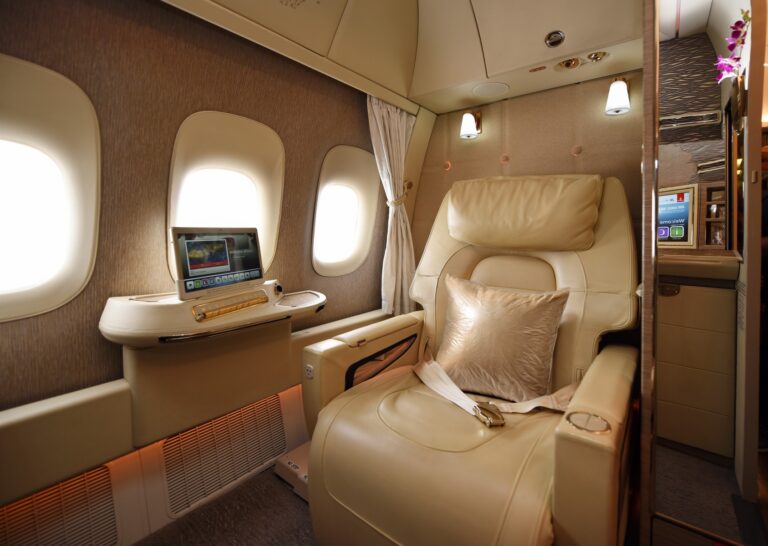
  • Long-haul sleep. Singapore Suites, Emirates First, ANA First — with fully enclosed cabins, full-size beds, and 15-hour range — deliver arrival-fresh better than most private jets can. On a 14-hour flight, the shower on Emirates A380 First matters.
  • Solo international travel. The commercial premium experience is significantly cheaper than chartering an ultra-long-range jet for one person.
  • Peak-luxury food and beverage. Top commercial first-class programs (Singapore, Emirates) match or exceed most charter catering.

Private Jet Wins At:

  • Group travel. The cost-per-seat math flips fast beyond four passengers.
  • Multi-city days. Landing in Aspen for lunch and Miami for dinner is not a commercial itinerary.
  • Secondary airports. Nantucket, Aspen, Sun Valley, St. Barts, Ibiza — every luxury destination has a small airport commercial mostly ignores.
  • Schedule flexibility. Delayed dinner? Push the departure by two hours at no cost.
  • Privacy. Public figures, executives handling sensitive discussions, and families traveling with young children all value the cabin isolation.

The Middle Ground: Jet Cards and Fractional Ownership

Most frequent private-jet travelers eventually consolidate onto one of two structures.

Jet cards (NetJets Card, Wheels Up, Flexjet, Sentient Jet) prepurchase a fixed number of hours at a locked-in hourly rate, typically 25–100 hours. Rates are 5–15% above on-demand charter, but you gain guaranteed availability with 6–10 hours notice. Sensible for 25–100 hours of annual flying.

Fractional ownership (NetJets, Flexjet, PlaneSense) means buying an actual 1/16 to 1/2 share of a specific aircraft, plus paying monthly management fees and per-hour operating costs. Break-even against on-demand charter typically comes above 100 hours/year. See our private jet charter operator comparison for evaluating your options.

How to Decide for Your Next Trip

Three questions cut through the noise:

  1. How many people are traveling? Four or more shifts the math toward charter.
  2. Is the destination served by convenient commercial flights? If it requires a connection or a 90-minute drive from the airport, private aviation likely wins on total time.
  3. How much is your travel day worth? If saving 4 hours produces $2,000+ of value (business or personal), that closes much of the cost gap.

The Bottom Line

Private jet vs first class is rarely a status choice — it’s an optimization. For solo international travel, first class is usually the correct answer. For groups, for secondary destinations, and for anyone whose time carries a real hourly cost, private charter closes the gap or wins outright. The best-informed travelers use both: commercial for the routes where it works, private for the ones where it doesn’t.

The Most Luxurious Hotels in the World: 12 Properties That Redefine Five-Star

0

The phrase “most luxurious hotels in the world” gets thrown around loosely. In practice, only a small group of properties — perhaps 40 to 60 worldwide — genuinely operate at the top tier of the global luxury hotel market: staff-to-guest ratios above 3:1, average nightly rates of $2,500 or more, and a level of anticipatory service most travelers will never actually experience. These aren’t the best hotels for value; they’re the hotels where value has stopped mattering.

Here are the twelve properties that, in 2026, sit at the apex of the category — each representing a different definition of what luxury can mean.

1. Aman Tokyo — Tokyo, Japan

Occupying the top six floors of the Otemachi Tower, Aman Tokyo is a masterclass in urban restraint. Suites average 84 square metres — enormous by Tokyo standards — with washi-paper screens, granite ofuro baths, and views over the Imperial Palace grounds. The 30-metre swimming pool has become one of the most photographed hotel amenities in Asia. From $2,600/night; Aman Suite from $12,000.

2. Cheval Blanc Randheli — Noonu Atoll, Maldives

LVMH’s flagship Maldives property redefined the overwater villa. Each of the 45 villas has its own butler, dedicated infinity pool, and 500+ square metres of interior space. The Owner’s Villa, a four-bedroom private island retreat, includes a helicopter transfer, private chef, and dedicated staff of eight. From $4,200/night; Owner’s Villa around $35,000. See our full guide to the best Maldives luxury resorts.

3. Singita Sasakwa Lodge — Grumeti, Tanzania

Perched above the Grumeti Reserve on the western edge of the Serengeti, Sasakwa’s nine Edwardian-style cottages redefine the safari lodge. Each has a private plunge pool, wraparound veranda, and personal butler. The 350,000-acre concession is one of the largest privately managed wildlife areas on earth — Migration paths cross the reserve for months of the year, and vehicle density is roughly 1 per 30,000 acres. From $4,000/person/night, all-inclusive.

4. Claridge’s — London, United Kingdom

The reigning grand dame of London luxury and, arguably, the world. Claridge’s has hosted royalty for a century, and its Art Deco-restored suites — particularly the Grand Piano Suite and the Royal Suite — remain the benchmark against which every other city hotel is measured. Service is genuinely anticipatory: the doorman remembers your name, the concierge knows your last three visits. From $1,400/night; Royal Suite from $34,000. See more in our London luxury hotels guide.

5. Amanzoe — Peloponnese, Greece

Aman’s Grecian masterpiece sits on an olive-grove hilltop overlooking the Aegean. The 38 pavilions are marble-clad temples with private courtyards and outdoor showers. The Villa collection — freestanding four- to nine-bedroom houses, each with a full staff — pushes the property into the ultra-luxury private-rental category. Pavilion from $2,200/night; Villas from $18,000.

6. The Brando — Tetiaroa, French Polynesia

Located on Marlon Brando’s former private atoll, The Brando is essentially a one-property island. Reached by chartered flight from Tahiti, the resort’s 35 villas are eco-designed sanctuaries with private beaches, plunge pools, and outdoor bathing. Rates are all-inclusive of meals, most beverages, and non-motorized activities. From $4,500/night for a one-bedroom villa; three-bedroom villa around $18,500.

7. Bulgari Hotel Rome — Rome, Italy

Opened in 2023 in a rebuilt 1930s palazzo directly across from the Ara Pacis, the Bulgari Rome is the most talked-about luxury hotel opening in Italy in a decade. Suites feature genuine antique inlay, hand-carved marble, and rooftop terraces looking across the Tiber to St. Peter’s. The Bulgari spa, at 1,700 square metres, is the largest in Rome. From $2,800/night.

8. Amangiri — Utah, United States

Set within 900 acres of Utah’s Colorado Plateau canyon country, Amangiri is a fortress of concrete and glass carved into the desert. The 34 suites and 4 pavilions overlook a swimming pool built around a natural rock escarpment. The adjacent Camp Sarika adds ten large tented pavilions with private plunge pools for guests wanting a slightly wilder experience. From $3,500/night; Amangiri Suite from $8,500.

9. The Peninsula Hong Kong — Kowloon, Hong Kong

The Peninsula Hong Kong maintains what may be the world’s largest hotel Rolls-Royce fleet (14 extended-wheelbase Phantom EWBs), a private helipad, and the standard by which harbour-view suites in Asia are still measured. Suites in the tower extension have private balconies overlooking Victoria Harbour and the Hong Kong Island skyline. From $1,600/night; Peninsula Suite around $20,000.

10. Four Seasons Resort Bora Bora — French Polynesia

The most consistently ranked overwater resort in French Polynesia. The Four Seasons combines the classic Bora Bora overwater bungalow with the scale and service of a full destination resort — three restaurants, a full-service spa, and lagoon views of Mount Otemanu. From $2,400/night; Otemanu Overwater Bungalow Suite from $6,500. See our complete Bora Bora overwater guide.

11. Amanyara — Providenciales, Turks and Caicos

Aman’s Caribbean flagship occupies the most remote, most protected stretch of Providenciales’ north coast. The 40 pavilions are minimalist wood-and-glass sanctuaries facing the Caribbean; the 20 villas are freestanding three- to six-bedroom estates with staff. The neighbouring Nature Reserve means Amanyara has arguably the quietest, most private beach in the entire Caribbean. From $2,800/night; five-bedroom villa around $22,000. Compare Turks and Caicos options in our T&C hotels guide.

12. Bürgenstock Hotel Waldhotel — Lucerne, Switzerland

Perched 500 metres above Lake Lucerne, the reimagined Bürgenstock resort combines four historic hotels into a private mountaintop village. The Waldhotel is its flagship — a Matteo Thun-designed medical wellness retreat where suites open onto a spa complex with cutting-edge medical and cosmetic services. From $2,000/night for the Waldhotel; the Bürgenstock’s Panorama Suite ranges to $9,500.

What These Hotels Have in Common

The properties on this list share a small number of characteristics that separate genuine ultra-luxury from expensive-but-ordinary:

  • Staff-to-guest ratios of 3:1 or higher, with named staff assigned to each guest.
  • Owner or founder attention to physical design — not off-the-shelf hotel interiors.
  • Anticipatory service: needs met before they’re articulated.
  • A physical setting that couldn’t be replicated by another operator.
  • An unspoken understanding that price is not the point.

How to Book These Properties

At this price point, direct booking through a hotel’s website is rarely the right move. Programs like Four Seasons Preferred Partner, Virtuoso, and Bellini Club (for Belmond) offer complimentary upgrades, breakfast, spa credits, and preferred availability — worth several hundred dollars per night at no additional cost. A well-connected travel advisor is genuinely the difference between a $12,000 suite and a $12,000 suite with a $2,000 gift on arrival.

Book 8–14 months out for peak dates; ultra-luxury availability at the top properties is often gone 6+ months in advance for holiday weeks.

The Bottom Line

The most luxurious hotels in the world are not the most expensive by accident. Each earns its rate through a combination of physical setting, service culture, and a founder’s obsessive attention to detail that cannot be replicated at scale. Stay in one for a week and you’ll begin to understand why the guests who can afford them tend to keep coming back to the same handful of properties, generation after generation.

How Much Does a Luxury Safari Cost in 2026? Real Pricing by Country, Camp, and Trip Length

A luxury safari is one of the most difficult trips in travel to price honestly. The most-quoted “$1,500 per person per night” number hides two orders of magnitude of variation — from a $600 tented camp on the edge of the Masai Mara to a $12,000/night private villa at Singita Sasakwa. The real answer depends on country, camp category, whether you’re in a national park or a private conservancy, how you get between camps, and when you go.

Here’s what a 2026 luxury safari actually costs, broken down by the factors that move the number.

The Short Answer

For a properly luxurious safari — private guide, four-wheel-drive vehicle, high-end tented camp or lodge, all meals and premium drinks included, all game drives included — expect to pay between $1,200 and $4,500 per person per night, all-inclusive. A seven-night, two-camp itinerary for a couple typically lands between $28,000 and $95,000 including internal flights, before international air.

The four factors that move you within that range are country, camp tier, season, and location relative to private conservancies.

Luxury Safari Cost by Country

Kenya: $900–$3,500 per person per night

Kenya has the widest range of pricing in Africa. Public-park camps in the Masai Mara during shoulder season can be booked at $900/person/night. The Mara’s private conservancies — Mara North, Olare Motorogi, Naboisho — command $1,400–$2,200/person/night. And the top-tier camps in Laikipia and the Mara like Angama Mara, Cottar’s 1920s, and Sirikoi run $2,500–$4,000/person/night.

See our guide to the best luxury safari lodges in Kenya for a full breakdown.

Tanzania: $1,000–$3,800 per person per night

Tanzania’s Serengeti and Ngorongoro Crater are more expensive on average than Kenya, driven by higher park fees ($82.60/person/day in the Serengeti in 2026) and the country’s tendency toward large permanent camps rather than smaller boutique operations. Migration camps in the Serengeti’s Northern zone during Great Migration season run $1,800–$3,500/person/night. Ultra-luxury lodges like Singita Grumeti and Legendary Serengeti sit at $3,500–$4,500.

Our Tanzania luxury safari guide breaks down the top camps by region and season.

Botswana: $1,500–$4,500 per person per night

Botswana is deliberately the most expensive safari destination in Africa. Its “high-cost, low-volume” tourism policy caps traveler numbers in the Okavango Delta and Moremi and Chobe reserves. There are essentially no budget options. Even entry-level luxury camps like &Beyond Xaranna and Wilderness Safaris’ DumaTau run $1,500–$2,200/person/night in green season. Wilderness Mombo and Vumbura Plains sit at $3,500–$4,500 during peak.

Botswana justifies its pricing through low guest density (typically one game vehicle per 5,000+ hectares), exceptional guide quality, and the ability to combine land and water safari activities across the Delta’s seasonal floodwaters.

South Africa: $700–$3,500 per person per night

South Africa offers the greatest value in luxury safari, largely because the Sabi Sand and Timbavati private reserves along Kruger have exceptional Big Five density in a compact area, cutting down on internal transfer costs. Entry-level luxury camps like Kirkman’s Kamp start around $700/person/night. Mid-tier stalwarts like Londolozi Founders Camp, Singita Ebony, and Royal Malewane run $1,800–$2,800. The top villas — Singita Sweni and the Singita Sasakwa main house — command $4,000–$6,000/person/night.

What Moves the Price Beyond Country

Public Park vs. Private Conservancy

Private conservancies charge higher nightly rates but include benefits public parks can’t offer: off-road driving, night drives, guided walks, and lower vehicle density at sightings. In Kenya’s Mara, a private conservancy adds roughly $500–$800/person/night over an equivalent public-park camp — but transforms the experience.

Season

Peak safari season is July through October across most of East and Southern Africa, when dry conditions concentrate wildlife around water sources. Rates in peak season run 30–50% above green (wet) season, which typically means November through March. Green season is not a lesser experience — birding is exceptional, calving season in the Serengeti runs January to March, and camps are quiet — but the vegetation is thicker and sightings less concentrated.

Internal Air Transfers

The often-overlooked cost. Getting between camps in Africa almost always means chartered light aircraft. A typical two-camp Botswana itinerary requires 4–6 internal flights, adding $2,000–$4,500/person to the trip. In Tanzania, a Serengeti-Ngorongoro-Zanzibar routing typically adds $1,800–$2,800/person. This is baked into most “all-inclusive” quoted rates from top operators but sometimes broken out — always ask.

Guide Type

Group vehicles vs. private vehicles is one of the single biggest experience differentiators — and price differentiators. Sharing a vehicle with 5–7 other guests can cut per-night rates by 20–35% but limits your flexibility. A private guide and private vehicle is standard at ultra-luxury camps and available as an add-on ($300–$800/day extra) at most others. If you’re spending $2,000+/person/night, take the private vehicle.

A Realistic 2026 Luxury Safari Budget

For a 10-night, three-camp trip for two adults in high season, plan on:

  • Value luxury (South Africa Sabi Sand + Cape Town): $28,000–$42,000 all-in.
  • Classic Kenya (Mara private conservancy + Laikipia): $38,000–$62,000 all-in.
  • Signature Tanzania (Serengeti migration + Ngorongoro + Zanzibar): $48,000–$85,000 all-in.
  • Bucket-list Botswana (Okavango + Linyanti + Victoria Falls): $65,000–$120,000 all-in.
  • Ultra-luxury multi-country (Singita Sasakwa + Wilderness Mombo): $150,000+ all-in.

These figures include international business-class air from a U.S. gateway, though not always first-class. Reduce by 40–60% if you fly economy or use points.

How to Actually Book

Direct-with-camp bookings are possible but rarely recommended for high-end safari. The complexity of internal aviation, park permits, seasonal camp locations (mobile migration camps move quarterly), and combining camps under one operator’s ownership umbrella creates real savings that a specialist safari agent can capture. Expect to pay a booking fee of $150–$500/person to a top agent — recovered many times over through negotiated rates and unpublished availability.

Book 9–14 months out for July–October dates. Green-season dates can often be secured 3–6 months out.

The Bottom Line

A luxury safari in 2026 is one of the few remaining travel experiences where the price genuinely reflects what you get. At $1,200/person/night you’re in an excellent camp; at $2,500 you’re in something extraordinary; at $4,000+ you’re in the small handful of properties that have redefined the category. The right budget depends on how many nights you want to be on safari, not how much per night you want to spend. Better to spend six exceptional nights than ten mediocre ones — because at every price point, a great safari camp is one of the great pleasures left in travel.

Best Time to Visit the Maldives: Month-by-Month Weather, Prices & When to Book

The best time to visit the Maldives is late November through April, when the northeast monsoon delivers dry, sunny days, calm seas, and the visibility on the reef that puts every Maldives photograph you’ve ever seen on Instagram. But the two-season simplicity of the archipelago hides a more interesting truth: prices swing by 40% or more between peak and shoulder, whale sharks and mantas are easiest to spot in the “wrong” season, and even the wet months rarely see more than an hour of afternoon rain a day.

This guide breaks down when to visit the Maldives by month, what the weather is actually doing, what you’ll pay at the top resorts, and the surprising windows most travelers miss.

The Two Seasons: Dry vs. Wet, Explained

The Maldives sits just north of the equator, and its climate is defined by two monsoons.

  • Northeast monsoon (Iruvai) — December to April. This is the dry season. Trade winds come from the northeast, humidity drops, seas flatten, and visibility on the house reefs climbs to 30 metres or more. Rain is rare and brief.
  • Southwest monsoon (Hulhangu) — May to November. The wet season. Winds shift, humidity rises, and short but heavy afternoon rains become common. Seas are choppier, especially in June and July.

What most travel guides won’t tell you: the wet season is not washed out. Rain in the Maldives arrives in bursts — a 45-minute downpour, then blue sky again. Total sunshine hours in July are still roughly 7 per day. What changes more meaningfully is water clarity, wind, and price.

The Best Time to Visit the Maldives, Month by Month

January — Peak Everything

Peak dry season. Daytime highs of 29–30 °C, humidity below 75%, visibility on the house reef routinely above 30 m. This is also the most expensive month of the year — the top overwater villas at properties like Cheval Blanc Randheli, Soneva Jani, and the Waldorf Astoria Ithaafushi often list at $6,000–$12,000 per night, and even entry-level five-star resorts push $2,500+.

Book if: you want guaranteed weather and are honeymooning or celebrating something specific.

February — The Sweet Spot

Statistically the driest month in the archipelago, with the calmest seas of the year. Prices ease slightly from January’s peak, but this is still high season. February is when serious divers book — Hanifaru Bay closes to manta feeding until May, but visibility across the atolls is exceptional.

March — Warm and Clear

The last month of guaranteed dry weather before the seasons transition. Temperatures nudge to 31 °C, humidity climbs, and afternoon breezes drop off. Prices at most resorts stay near peak until mid-March, then begin to soften.

April — Shoulder Value Starts

This is the first big value window. The weather is essentially indistinguishable from March in the first half of the month, but resorts drop rates 15–25% as they enter shoulder season. Water temperature hits its annual high of 30 °C — spectacular for snorkeling, less pleasant for anyone hoping the ocean will cool them down.

May — The Transition Month

The southwest monsoon officially arrives. Rain increases sharply — expect 6–8 wet days across the month, mostly in short afternoon bursts. Rates drop another 20–30%. May is when Hanifaru Bay in the Baa Atoll begins its legendary manta ray congregation, one of the greatest marine spectacles on earth. If you want to swim with mantas and whale sharks, May is when you go.

June to August — Wet Season, Best Value

The rainiest and windiest stretch of the year, but also the cheapest. Expect afternoon squalls, choppier seas on the western side of atolls, and reduced visibility for diving. Rates at even the most exclusive resorts fall 30–45% below January. Families with school-age kids favor this window because it aligns with Northern Hemisphere summer holidays.

Pro tip: if you must travel in this window, choose a resort in the Baa or Raa atolls in the west, which see the strongest manta and whale-shark activity, or resorts on the eastern side of any atoll, which get more shelter from the prevailing wind.

September — The Cheapest Month

Statistically the wettest month, but the lowest-priced. If you’re willing to trade one afternoon of rain for a $4,000/night villa at $2,200/night, September is where the value lives. Manta activity peaks in the Baa Atoll.

October and November — The Turnaround

October is a genuine gamble — occasionally spectacular, occasionally soaked. November brings the return of trade winds and dropping humidity. By late November, seas flatten out, prices begin their climb back to peak, and the archipelago hits its stride again.

December — Back to Peak

Christmas and New Year weeks are the most expensive of the entire calendar. Most top resorts require 7-, 10-, or even 14-night minimum stays over the holidays, with premium villa rates 20–30% above their standard January price.

Best Time to Visit the Maldives for Specific Activities

  • Honeymoon: Late January through mid-March. Best light, calmest seas, longest sunsets over the villa.
  • Diving: February for visibility; May to November for manta and whale-shark encounters.
  • Surfing: March to October, with the sweet spot in June to August at breaks like Chickens and Sultans in the North Malé Atoll.
  • Value: Late April to early June, and mid-September to early November.
  • Families: Late July to mid-August, aligning with school breaks; look for resorts with dedicated kids’ clubs and shallow reef entries.

How Much Prices Actually Move

To give real numbers: a beach villa at a leading five-star resort like Soneva Fushi that lists at roughly $3,600/night in January will typically fall to around $2,000/night in July, and closer to $1,700/night at the September floor. Overwater villas move more dramatically — the same resort’s Water Retreat category can swing from $8,500/night in peak to $4,800/night in wet season. Christmas and New Year weeks trade at 15–30% above peak.

If a specific resort matters to you, book 6–9 months out for peak dates. For wet-season stays, 2–3 months out is usually enough to get the villa category you want at the best rate.

Where to Stay Once You’ve Picked Your Window

Once you’ve decided when to go, the next question is where. Our guides to the best luxury hotels in the Maldives and the best Maldives overwater bungalow resorts break down the top private-island properties by atoll, villa category, and what each does best.

The Bottom Line

The best time to visit the Maldives is January through March if weather is non-negotiable. It’s late April, May, or late September through October if value is. And it’s June through August if you want a chance at swimming alongside a whale shark or a squadron of mantas. Whichever window you choose, the Maldives is one of the few destinations where the “off season” still delivers more than most beaches at their best.

Best Luxury Hotels in Santorini: 10 Cliffside Five-Star Stays

0

Santorini has become shorthand for a certain kind of luxury travel — whitewashed cave suites carved into a caldera cliff, a private plunge pool tilted toward one of the world’s most photographed sunsets, and dinner served on a terrace with nothing but ocean between you and Anafi. The island’s five-star category has expanded dramatically over the last decade, and 2026 is a strong year for it: several long-standing favorites have completed major renovations, and a handful of newcomers are competing at the top.

We built this list around the ten properties that consistently anchor the island’s best guest experiences — hotels booked by returning honeymooners, wedding parties and design-minded travelers who want a room that looks the way the destination promises.

Where to Stay in Santorini — Village by Village

Oia is the north-tip village with the most famous sunset viewpoint and the highest concentration of top-tier hotels. Rates are highest here.

Imerovigli sits just south of Oia on the highest point of the caldera — the “balcony to the Aegean” — with elite properties like Grace and Astra Suites.

Firostefani and Fira are the main-town villages, closer to restaurants and shops but with more foot traffic and fewer boutique cave suites.

Akrotiri and the southern coast offer a different, quieter angle — cliff-top luxury with black-sand beaches below and considerably lower prices.

For most first-time visitors, Oia or Imerovigli is the right call. Repeat visitors often move south for the value and privacy.

The 10 Best Luxury Hotels in Santorini

1. Grace Hotel Santorini, Auberge Resorts — Imerovigli

Grace holds Imerovigli’s most dramatic caldera position, with 21 suites terracing down the cliff and a signature infinity pool that has anchored a thousand Instagram feeds. Recently joined by Auberge Resorts, the property offers polished service, a Michelin-praised restaurant (Varoulko Santorini) and one of the island’s best spa programs. Best for guests who want top-tier service in a quieter setting than Oia.

2. Katikies Hotel — Oia

Katikies is the original luxury cave-suite hotel in Oia and still, for many, the defining one. Twenty-eight suites and villas cascade down the cliff, connected by whitewashed passageways. Three infinity pools, an intimate restaurant and a well-regarded spa give the property depth. The location — the western tip of Oia — offers the island’s best sunset views. Best for classic Santorini iconography done right.

3. Canaves Oia Suites — Oia

Canaves Oia’s original 1988 property has been thoughtfully expanded over the years into a small collection (Suites, Epitome, Sunday Suites). The Suites property is the flagship, with 22 rooms carved into a converted 17th-century winery. The service quality is exceptional and the concierge team is particularly good at arranging private catamaran charters and helicopter transfers. Best for repeat luxury travelers who want expert service.

4. Andronis Concept Wellness Resort — Imerovigli

Andronis’ most recent Santorini property leans into wellness — a 4,500-square-foot spa, a fitness pavilion, and daily yoga on the caldera edge. Twenty-seven suites, most with private pools. The design is more contemporary than the traditional cave-suite aesthetic (concrete, dark wood, subtle earth tones). Excellent restaurant, Throubi. Best for wellness-focused travelers who want a break from the postcard aesthetic.

5. Vedema, a Luxury Collection Resort — Megalochori

Vedema is a Marriott Luxury Collection property built around a 400-year-old winery in the inland village of Megalochori — a different Santorini altogether. Forty-five suites and villas around a central courtyard, a full wine cellar, and one of the island’s largest pools. Rates are meaningfully lower than caldera properties, and the setting is significantly quieter. Best for families or groups needing space and connectivity.

6. Perivolas — Oia

Perivolas has occupied a unique place in Santorini’s luxury market for over 30 years — a small (20-suite) property at the northern tip of Oia known for restrained design, dedicated service and one of the world’s most photographed infinity pools. The property remains family-owned, and the atmosphere is more like a private villa than a hotel. Best for guests who value understatement and quiet.

7. Astra Suites — Imerovigli

Astra was one of the original Imerovigli caldera hotels and has stayed relevant through a series of quiet upgrades. Twenty-five suites and villas, most with private pools or hot tubs, connected by curving whitewashed walkways. The restaurant, Alali, is a strong island performer. Best for guests who want caldera prestige without Oia’s peak-season crowds.

8. Vora — Imerovigli

Vora is a newer entrant with just seven private-pool villas, each with unobstructed caldera views. The property functions almost like a residence club — you can rent the entire hotel out — with a shared main pool, restaurant and lounge that serve only the seven suites’ worth of guests. Extremely low guest-to-staff ratio. Best for small groups or milestone celebrations.

9. Andronis Luxury Suites — Oia

The original Andronis Oia property remains one of the village’s most sought-after, with 27 traditional cave suites on the caldera cliff and a Michelin-recommended restaurant, Lycabettus, that projects out over the sea. The service pedigree comes through in details — walking transfers arranged in advance, private caldera cruises on the hotel’s yacht, personalized turn-down. Best for a classic Oia honeymoon.

10. Mystique, a Luxury Collection Hotel — Oia

Mystique’s 22 suites and villas are among Oia’s most private, tucked into a section of the village that stays quiet even in July. The property leans into an artisan-craft aesthetic — hand-thrown pottery, driftwood, linen — that separates it from the more polished caldera hotels. The Charisma restaurant and the intimate wine tasting cave are highlights. Best for design-minded travelers who want Oia location with a less-crowded setting.

When to Go

May through mid-June and mid-September through October are Santorini’s ideal shoulder windows — sunshine, warm swimming, meaningfully lower rates than peak, and manageable cruise-ship crowds in Oia.

July and August are the peak season, with the highest rates and heaviest foot traffic in Oia and Fira. Book six to twelve months out and expect to compete for restaurant reservations.

April and November are the edges of the season — some properties are closed, but rates at open hotels drop 40 to 60 percent and the caldera light in late-autumn is remarkable.

Winter (December–March) is essentially closed for luxury hotels, with only a handful of Fira and Imerovigli properties operating.

Booking Tips

Direct booking with any of the caldera hotels usually matches OTA rates and adds benefits like complimentary transfers or dining credits. Virtuoso and AmEx Fine Hotels & Resorts members can typically add breakfast, resort credits and guaranteed upgrades. Suites with private plunge pools sell out first — for peak-season stays, request specific room types 9 to 12 months out.

Getting to Santorini is straightforward from major European hubs via Athens (about a 45-minute domestic flight) or a slower but scenic ferry from Piraeus (5 to 8 hours). Private jet is a strong option — Santorini’s JTR airport handles most mid-cabin jets. See our private jet charter cost guide for typical rates.

Compare Santorini with Other Luxury Escapes

Not sure whether Santorini or the Maldives is the right honeymoon call? See our guides to the best luxury hotels in the Maldives and the best luxury hotels in Turks and Caicos. Or, if you’re weighing the classic brands, our Aman vs Four Seasons comparison covers both.

The Bottom Line

Santorini’s luxury market is deep enough that the “right” hotel depends less on which is best and more on which fits your priorities. For iconic caldera-suite honeymoons: Katikies, Andronis Luxury Suites, Canaves. For a quieter alternative to Oia’s crowds: Grace, Astra, Vora in Imerovigli. For wellness: Andronis Concept. For families or groups: Vedema. Any of the ten above will make the island deliver on its promise.