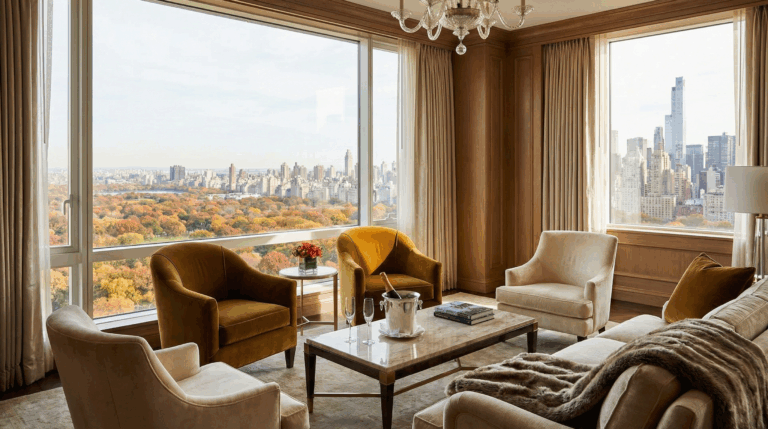
Best Luxury Hotels in New York City with a View of Central Park

New York City is never short on energy. If you’re going to stay, why not go all in with a room overlooking Central Park? It’s hard not to be captivated by the city’s pulse and the park’s calming green from a plush hotel suite.

There’s something quietly magical about waking up to Central Park right outside your window. You get the best of both worlds: urban buzz and a bit of nature’s calm tucked in the middle of Manhattan.

Below, you’ll find a handful of the best hotels for soaking up those iconic views—each with its own flavor of luxury, and a few booking tips to help you snag that coveted park-facing room.


The Mark

Location: Central Park East, at 25 E 77th St (Upper East Side, right on the park’s edge).

The Mark is unapologetically chic, blending classic Upper East Side charm with a modern twist. It’s a favorite for those who want to feel a bit like a New Yorker with a taste for the finer things.

Room Types with Park Views: The Mark Penthouse (staggering views from the terrace), Park Suites, and some Grand Suites offer direct Central Park vistas. Not every room faces the park, so make sure to double-check.

Nightly Rate Range: Usually $1,200–$10,000+, depending on room and season. The penthouse? That’s a “call for rates” situation.

Signature Amenities: 24/7 concierge, Jean-Georges room service, complimentary bikes, and a fleet of custom pedicabs for a spin around the park. The Mark’s salon is a go-to for last-minute glam.

Dining: The Mark Restaurant by Jean-Georges is a scene in itself—think inventive French-American cuisine and a bar that’s perfect for people-watching.

Booking Tip: Call the hotel directly and request a guaranteed park view. If you’re flexible, mid-week stays sometimes unlock better rates and views.


The Ritz-Carlton New York, Central Park

Location: Central Park South, 50 Central Park South (right along the park’s southern border).

This spot is all about classic luxury. Think old-school service and a prime perch for watching the city move.

Room Types with Park Views: Premier Park View Rooms, Park View Suites, and the Royal Suite all offer panoramic scenes of the park and skyline.

Nightly Rate Range: $1,200–$8,000+, depending on suite size and timing.

Signature Amenities: La Prairie Spa, a killer fitness center, and the Club Lounge with all-day bites and drinks. The Ritz’s signature butler service is worth a mention—it’s discreet but attentive.

Dining: Contour is the hotel’s gastro lounge, serving up creative cocktails, bites, and weekend brunch. It’s cozy but refined, just like the rest of the place.

Booking Tip: Don’t rely on third-party sites for park views—book direct and confirm your room type. The higher the floor, the better the view (and the less street noise).

Tripadvisor link


The Pierre, A Taj Hotel

Location: Central Park East, 2 E 61st St (Upper East Side, right at the southeast corner of the park).

The Pierre is a slice of old New York glamour, with white-gloved doormen and a lobby that feels straight out of a movie. Just a few blocks south on Fifth Avenue, a newer landmark — the Fifth Avenue Hotel — has joined the city’s top-tier roster.

Room Types with Park Views: Signature Park View Rooms and Grand Suites are your ticket to those sweeping treetop scenes. The higher, the better—ask for floors 30 and up.

Nightly Rate Range: $950–$5,000+, depending on suite and season.

Signature Amenities: Afternoon tea in the Rotunda, Jaguar house car service, and a 24-hour fitness center. The Pierre’s attentive staff have a knack for making you feel like royalty without the fuss.

Dining: Perrine offers seasonal French-American fare, and the Two E Bar/Lounge is a local favorite for cocktails and live jazz.

Booking Tip: Park view rooms go fast—call ahead and ask for a written confirmation that your room faces the park. Mention any special occasions; sometimes they’ll go the extra mile.


Mandarin Oriental, New York

Location: Central Park West, 80 Columbus Circle (perched above the southwest corner of the park).

If you like your luxury with a side of modern edge, this is the spot. The hotel sits way up in the Time Warner Center, so the views are dramatic—especially at sunset.

Room Types with Park Views: Central Park View Rooms, Premier Central Park Suites, and the Presidential Suite all deliver jaw-dropping vistas.

Nightly Rate Range: $1,100–$7,500+, depending on room and time of year.

Signature Amenities: A sprawling spa with a lap pool that looks out over the city, high-tech fitness center, and in-room yoga mats. The service is polished but never stuffy.

Dining: MO Lounge is the go-to for creative cocktails and Asian-inspired bites, all with floor-to-ceiling windows facing the park. It’s a great spot for a nightcap or a lazy brunch. For rooftop drinks farther downtown, the Fleur Room rooftop is hard to beat.

Booking Tip: Book as far in advance as possible for park view rooms, especially in spring and fall. Direct reservations get priority for upgrades.


Booking Tips for Park View Rooms

Securing a true park view isn’t always as simple as clicking “Central Park View” online. Always call the hotel to confirm that your room or suite has an unobstructed view—sometimes “partial” means you’ll be craning your neck from the bathroom window.

If you’re celebrating something, mention it. Hotels sometimes upgrade guests celebrating milestones. And if you want the very best view, ask for a high floor and be flexible with your dates—midweek stays often have more availability.


There you have it: four of NYC’s most iconic hotels for Central Park views, each with its own personality and perks. If you’re going to splurge, might as well do it right—there’s just nothing like that first glimpse of the park from way up high.

Insider Tips for Booking the Perfect Central Park View

If you’re after a killer Central Park view in NYC, a lot comes down to picking the right floor and timing your booking. It’s honestly a bit of an art.

Selecting the Optimal Floor and Room Type

Go for the higher floors—trust me, it’s worth it. You get those sweeping park views, and honestly, the city noise drops off the higher you go.

Corner suites are usually the jackpot. Bigger windows, more angles, and you can catch both the park and the skyline in one glance.

Some hotels have those floor-to-ceiling windows that really make a difference. It’s smart to dig into the room descriptions on the hotel’s site, but if you’re unsure, just shoot the concierge an email or call. They usually know which rooms have the best views and can sometimes pull strings for you.

Timing Your Stay for Breathtaking Vistas

Timing matters more than you’d think. Fall is all about the wild color show—Central Park goes full gold and red, and it’s unreal from above.

Spring is a different vibe, with everything blooming and the park looking softer. It kind of depends what scene you want out your window.

If you’re set on a certain date, especially around Thanksgiving or New Year’s, book as early as you can. Those dates fill up fast, and you don’t want to get stuck with a view of the air shaft. Six to eight weeks ahead is a decent rule of thumb for the best shot at the good rooms. Want to extend the trip with a wellness escape? Consider Wildflower Farms in the Hudson Valley.

Central Park’s Top Luxury Hotels with Park Views

If you want a true Central Park experience, these four hotels are the classics. Each has its own personality, but they all deliver on those park views. For those who prefer a residential vibe, the Four Seasons New York Downtown Residences are worth a look downtown.


The Mark

  • Location: Upper East Side, right on Central Park’s east edge (Madison Ave at 77th St).
  • Park-View Rooms: Premier Park View Suites, Grand Suites, and Penthouse—all face the park.
  • Nightly Rates: Typically $1,000–$5,000+, depending on room and season.
  • Signature Amenities: Custom bikes and picnic baskets for the park, Frédéric Fekkai salon, 24/7 concierge, in-room mixology.
  • Dining: The Mark Restaurant by Jean-Georges—always buzzing, especially for brunch.
  • Booking Tip: Ask for the high-floor park view suites directly; sometimes they’re not listed online, and upgrades are possible if you call ahead.

The Ritz-Carlton New York, Central Park

  • Location: South edge of Central Park, at 50 Central Park South.
  • Park-View Rooms: Premier Central Park View Rooms, Avenue View Suites, and Club Level Park View Suites.
  • Nightly Rates: Around $1,200–$6,000+ depending on suite and season.
  • Signature Amenities: La Prairie Spa, personal butler service, exclusive Club Lounge, pillow menu (yes, really).
  • Dining: Contour—upscale cocktails, all-day bites, and a cozy vibe.
  • Booking Tip: Book direct and request a high-floor park-facing room; loyalty members sometimes get priority for upgrades.

The Pierre, A Taj Hotel

  • Location: East 61st Street at Fifth Avenue—right on Central Park’s southeast corner.
  • Park-View Rooms: Park View Rooms, Signature Park View Suites, Tata Suite—all with direct park outlooks.
  • Nightly Rates: Usually $900–$4,500+.
  • Signature Amenities: White-glove butler service, Jaguar house car, afternoon tea in the Rotunda.
  • Dining: Perrine—classic French-American, plus the famous Two E Bar/Lounge for cocktails.
  • Booking Tip: Some park view rooms are tucked away; call and confirm you’re getting an unobstructed view before you book.

Mandarin Oriental, New York

  • Location: Columbus Circle, on the park’s southwest edge (floors 35+ of the Time Warner Center).
  • Park-View Rooms: Central Park View Rooms, Premier Central Park Suites, Presidential Suite.
  • Nightly Rates: Generally $1,200–$6,500+.
  • Signature Amenities: Massive spa, 75-foot lap pool, floor-to-ceiling windows in most rooms.
  • Dining: MO Lounge—sky-high cocktails, light bites, and that view.
  • Booking Tip: Specify “Central Park view” when booking—some suites have Hudson River views instead, so double-check the room description.

Booking Tips for Securing Park View Rooms

Don’t leave it to chance. Always confirm with the hotel, not just the booking site, that your room faces the park.

If you can, join the hotel’s loyalty program—it sometimes bumps you up the list for upgrades or early check-in.

Ask about construction or events in the park that could impact your view or noise level. And if you’re celebrating something, mention it—hotels can be surprisingly generous with upgrades.


Frequently Asked Questions

Which five-star hotels offer the most iconic Central Park views from guest rooms or suites?

Ritz-Carlton New York, Central Park and Mandarin Oriental are both top picks for those “wow” views. The Mark and The Pierre aren’t far behind, especially if you love classic NYC luxury.

What are the best luxury hotels within a short walk of Central Park’s south entrance?

The Ritz-Carlton and Mandarin Oriental are both right on the south edge, so you’re basically steps from the park. The Pierre is a quick stroll over from the southeast corner.

Which properties have rooftop bars or restaurants with sweeping Manhattan skyline views near Central Park?

Mandarin Oriental’s MO Lounge is way up there, with both park and skyline views. The Mark doesn’t have a rooftop, but its bar scene is iconic in its own way.

How do the Plaza and the Ritz-Carlton New York, Central Park compare for rooms, service, and park-facing views?

The Plaza is old-school glam, with over-the-top décor and a legendary history. Ritz-Carlton is more understated, with service that’s hard to beat and slightly bigger, more modern rooms facing the park.

What is the best time of year to book a park-view room for the most dramatic scenery and value?

Autumn wins for color, hands down. Winter is magical too, but prices can spike around the holidays—so be ready for that.

What should I expect to pay for a true Central Park view room, and which upgrades are actually worth it?

Getting a real Central Park view? Expect to pay at least several hundred bucks a night, sometimes more if you want the full, sweeping panorama.

Suites with bigger windows are honestly the way to go if you’re after that “wow” moment—those floor-to-ceiling scenes are what people dream about.

If you’re looking for value without giving up the good stuff, places like the Luxury Collection Hotel Manhattan Midtown might surprise you.
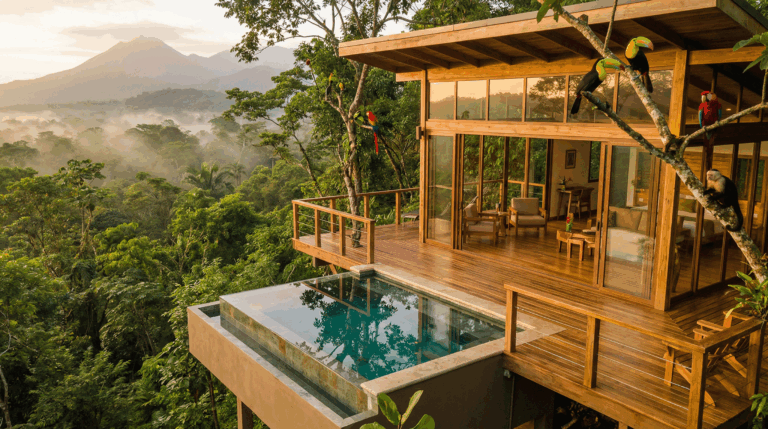
The 10 Best Luxury Eco-Lodges in Costa Rica

0

Costa Rica in 2026? Still the go-to spot for travelers who want their luxury with a big side of wild, unspoiled nature. Here, you can have it all—comfort, beauty, and the sense you’re doing right by the environment.

The country’s luxury eco-lodges don’t just set the bar for sustainable travel; they make sure you can unwind in style and leave the lightest possible footprint. It’s a delicate balance, but Costa Rica seems to pull it off with flair. For broader trip-planning context, our ultimate guide to luxury travel covers complementary destinations and frameworks.

Why choose a luxury eco lodge in Costa Rica? Well, for one, these places are as serious about the planet as they are about pampering their guests. You’re not just booking a fancy room—you’re stepping into a world where conservation is woven into everything.

There’s something special about waking up to birdsong, knowing your stay supports the rainforest rather than harming it. As more travelers weigh their impact, Costa Rica’s lodges show how responsible travel and real luxury can coexist.

1) Tortuga Lodge, Tortuguero National Park

Tortuga Lodge sits right on the banks of the Tortuguero River, surrounded by the kind of rainforest that feels almost primeval. It’s only accessible by boat, so getting there is half the adventure.

Wildlife is everywhere—howler monkeys, toucans, and all sorts of birds flit through the trees. The lodge’s eco-efficient air conditioning and glass doors mean you’re never far from nature, even when you’re inside.

Rooms are spacious and comfortable, and the open-air restaurant serves up river views alongside local cuisine. The lodge is Rainforest Alliance certified, so you know sustainability isn’t just a buzzword here.

You’ll find yourself exploring jungle canals one day and sipping cocktails by the water the next. For more, peek at Tortuga Lodge.

2) Lapa Rios Lodge, Osa Peninsula

Lapa Rios Lodge is tucked away on the Osa Peninsula, arguably Costa Rica’s wildest corner. It’s perched within a 1,000-acre private reserve—a haven for scarlet macaws, monkeys, and all manner of rainforest dwellers.

Rates start at around $900 per night, and yes, it’s definitely a splurge. But you’re paying for front-row seats to nature and a deep commitment to the planet.

The lodge holds a coveted Certification for Sustainable Tourism (CST) and has been a National Geographic Unique Lodge for years. Want wildlife? You’ll spot sloths, toucans, and maybe even a puma if you’re lucky.

Seventeen open-air bungalows, each with a private terrace and ocean view, let you soak it all in. Lapa Rios doesn’t just talk sustainability—they live it, from conservation programs to community involvement. Find out more at Lapa Rios Eco-Lodge.

3) Nayara Tented Camp, Arenal Volcano

Nayara Tented Camp brings safari-style luxury to the Arenal region, right on the edge of the rainforest. If you want to wake up to volcano views and the sound of tropical birds, this is your spot.

Nightly rates hover around $1,000, and it’s worth every penny for the privacy and wow-factor. The camp is part of the Nayara Resorts family, which holds the CST certification for sustainability.

Each tented suite has its own plunge pool fed by natural hot springs, plus a deck for wildlife watching. Expect to see tree frogs, toucans, and maybe an armadillo or two.

The camp’s eco-credentials are serious—solar power, reforestation, and support for local schools. It’s luxury with a conscience, and the tented suites somehow make it feel even more special.

4) Nekajui, a Ritz-Carlton Reserve, Guanacaste

Nekajui, a Ritz-Carlton Reserve, is the new kid on the block in Guanacaste and already making waves. It’s set in the Culebra Bay region, where dry forest meets the Pacific.

Nightly rates are steep, starting at $1,500, but you’re getting the Ritz-Carlton’s signature service wrapped in eco-friendly design. The property is working toward CST certification and has a strong focus on sustainable building and operations.

Wildlife? Think iguanas, monkeys, and rare birds, all just outside your suite. Nekajui’s standout features include private infinity pools and exclusive access to hidden beaches.

It’s undeniably luxurious, but there’s a real effort to blend into the landscape and give back to local communities. Not just another chain hotel—this one’s got soul.

5) Nayara Springs, Arenal Volcano

Nayara Springs is an adults-only hideaway in the lush Arenal rainforest. Each of the 35 villas comes with a private hot spring-fed plunge pool—honestly, it’s hard to leave your room.

Rates start at about $900 per night. The property has CST certification and is known for its strong conservation initiatives.

Wildlife is everywhere: you might spot a sloth on your way to breakfast or hear toucans calling at dusk. The spa, yoga pavilion, and two acclaimed restaurants round out the experience.

Nayara Springs manages to feel both exclusive and genuinely connected to the landscape. It’s a rare combination.

6) TreeHouse Lodge, Tortuguero

TreeHouse Lodge is for anyone who ever dreamed of sleeping in the treetops. Tucked in the Tortuguero jungle, it’s quirky, eco-friendly, and surprisingly comfortable.

Rates start at $400 per night, which feels fair for a private treehouse. The lodge is CST certified and uses reclaimed wood and solar power throughout.

Wake up to monkeys swinging by your balcony or parrots squawking overhead. Each treehouse is unique, with natural materials and open-air designs.

It’s a bit of an adventure, but that’s half the fun. If you want a stay that’s both memorable and sustainable, this is the place.

7) Kura Design Villas, Uvita

Kura Design Villas sits high above Uvita, where the rainforest meets the Pacific. It’s adults-only, sleek, and about as Instagrammable as it gets.

Nightly rates start at $1,000, and the resort is CST certified for its sustainability practices. The villas are minimalist but luxurious, with floor-to-ceiling glass and private terraces.

You’ll see toucans and maybe even whales from the infinity pool. The restaurant focuses on organic, local ingredients, and the vibe is pure relaxation.

Kura manages to be both cutting-edge and deeply respectful of its environment. Not an easy feat.

8) Hotel Punta Islita, Nicoya Peninsula

Hotel Punta Islita is tucked into the hills of the Nicoya Peninsula, overlooking the ocean. It’s a bit remote, but that’s part of its charm.

Rooms and villas start at $600 per night. The hotel holds CST certification and is big on community involvement and reforestation.

Wildlife here includes monkeys, iguanas, and plenty of birds. Guests can join turtle conservation projects or just relax in the spa.

It’s luxurious but never stuffy, with a real sense of place. The sunsets alone are worth the trip. Families weighing this kind of trip may also find our multigenerational family vacation planning guide useful.

9) El Silencio Lodge & Spa, Bajos del Toro

El Silencio Lodge & Spa is hidden in the cloud forests of Bajos del Toro. It’s a Relais & Châteaux property, so expect high standards and a touch of old-world charm.

Rates start at $700 per night. The lodge is CST certified and runs its own reforestation projects.

Wildlife encounters are frequent—think hummingbirds, butterflies, and maybe a tapir if you’re lucky. Private hot tubs and farm-to-table cuisine round out the experience.

It’s quiet, peaceful, and just a little bit magical. Perfect for those who want to unplug.

10) Makanda by the Sea, Manuel Antonio

Makanda by the Sea is perched above the Pacific, close to Manuel Antonio National Park. It’s adults-only and feels like a secret hideaway.

Nightly rates start at $700. The hotel is CST certified and has a strong focus on eco-friendly design and local sourcing.

Expect monkeys and sloths in the trees, and maybe a toucan or two. Villas come with private pools and ocean views.

The vibe is romantic and relaxed, with great food and a dreamy spa. It’s hard not to fall in love with the place. For travelers who would rather have the whole property handled, our best luxury all-inclusive resorts roundup is a useful next step.


What Defines a Luxury Eco Lodge in Costa Rica?

Luxury eco lodges in Costa Rica are all about finding that sweet spot between indulgence and responsibility. You get the creature comforts—think plunge pools, gourmet meals, and killer views—without the guilt.

Sustainability isn’t just a checkbox here. Lodges go big on solar panels, water recycling, and reforestation. Many are CST certified, which is about as official as it gets in Costa Rica’s green tourism world.

There’s a real focus on supporting local communities, too. From hiring locally to sourcing food and materials nearby, these lodges try to make sure everyone benefits.

In the end, it’s about more than just a fancy stay. It’s a chance to experience Costa Rica’s wild side, knowing you’re helping to protect it for the next traveler—or maybe even your future self.

Signature Luxury Amenities

Costa Rica’s luxury eco-lodges really know how to blend indulgence with wild beauty. You’ll find rooms or villas with sweeping rainforest or ocean views—sometimes both.

Private plunge pools, outdoor showers, and butler service? That’s pretty standard at this level. The food is a big draw too, with chefs leaning hard into local flavors and farm-to-table ingredients.

Spas here don’t just slap on a “natural” label. Many draw from indigenous wellness traditions, so treatments feel rooted in the place. It’s not unusual to have a massage surrounded by birdsong.

Most lodges offer private nature walks, yoga sessions, or whatever else helps you unplug. Every detail feels thought-out, but not in a way that makes you feel like you’re tiptoeing through a museum.

How Eco Lodges Support Conservation and Local Communities

These places aren’t just about plush linens and infinity pools. They’re putting real effort into protecting the land and the people who call it home.

Wildlife Preservation Efforts

Plenty of Costa Rica’s luxury eco-lodges are tucked into private reserves—Lapa Rios Lodge is a good example. It sits right in the Osa Peninsula’s rainforest, which is about as wild as it gets.

Solar panels, sustainable building—these aren’t just buzzwords. Lodges invest in real solutions to keep their footprint small.

Guided wildlife tours and educational programs are a big part of the experience. Guests get up close with the local flora and fauna, while their dollars help fund conservation.

Some lodges even team up with non-profits to protect threatened species or habitats. It’s not just about snapping photos of toucans; it’s about keeping them around for the next generation.

Engagement With Indigenous Cultures

Cultural connection matters here. Many lodges work with local and indigenous communities, hiring staff and supporting neighborhood economies.

There are often workshops or cultural nights where guests can meet artisans and try their hand at traditional crafts. Buying a handwoven basket or tasting food prepared the old way? It feels good knowing your vacation dollars are supporting real people.

Some places go further, backing projects that improve education or healthcare for their neighbors. It’s a two-way street: travelers get a richer experience, and the community benefits in tangible ways.

Frequently Asked Questions

If you’re eyeing Costa Rica’s luxury eco-lodges, you’re in for more than just a pretty room. These spots balance sustainability, style, and some wild experiences.

Which regions in Costa Rica offer the most exclusive luxury eco-lodges with standout wildlife and scenery?

The Osa Peninsula is a heavy hitter—think Lapa Rios Lodge surrounded by untamed rainforest and monkeys overhead. Arenal’s volcanic landscape is another favorite, and Manuel Antonio blends beaches with jungle.

What sustainability standards and certifications should I look for when booking a high-end eco-lodge in Costa Rica?

Look for the CST (Certification for Sustainable Tourism) badge. It’s the gold standard here. Properties like Nayara Springs and Nayara Tented Camp take it seriously, weaving sustainability into everything they do.

Which luxury eco-lodges deliver the best all-inclusive experience without compromising on local, seasonal cuisine?

Kura Design Villas is a standout for foodies, with menus that change based on what’s fresh and local. The best lodges don’t just talk about farm-to-table—they live it.

What should I budget per night for a truly luxury eco-lodge stay in Costa Rica, and what inclusions justify the rate?

Rates run from around $500 up to $1,500 a night. That usually covers all your meals, guided tours, and access to spa facilities. Kura Design Villas and similar spots justify the price with attentive service and off-the-charts amenities.

Which luxury eco-lodges are best suited for families, including multi-bedroom villas, kids’ programs, and easy logistics?

Lapa Rios Lodge is a solid pick for families, with spacious villas and activities for all ages. You’ll find programs for kids and logistics that don’t make parents want to pull their hair out.


Featured Luxury Eco-Lodges

Lapa Rios Lodge
Region: Osa Peninsula
Nightly Rate: $900–$1,300
Sustainability Certifications: CST, Rainforest Alliance
Wildlife Encounters: Scarlet macaws, monkeys, sloths, wild cats
Unique Features: Set in a 1,000-acre private reserve, open-air bungalows, guided wildlife hikes, family-friendly programs

Nayara Tented Camp
Region: Arenal
Nightly Rate: $1,000–$1,600
Sustainability Certifications: CST, Leading Hotels of the World Sustainability Leader
Wildlife Encounters: Tree frogs, toucans, armadillos
Unique Features: Luxury tents with volcano views, private plunge pools, on-site sloth sanctuary, immersive spa

Nekajui, a Ritz-Carlton Reserve
Region: Guanacaste (close to Manuel Antonio vibes)
Nightly Rate: $1,200–$2,000
Sustainability Certifications: LEED, local conservation partnerships
Wildlife Encounters: Howler monkeys, iguanas, sea turtles (seasonal)
Unique Features: Cliffside suites, curated cultural experiences, direct beach access, emphasis on local sourcing

Each of these lodges walks the line between high-end comfort and genuine eco-credentials. If you’re after a trip that feels both indulgent and responsible, you’ll find it here.

When is the best time to visit Costa Rica for ideal weather, fewer crowds, and prime wildlife viewing near eco-lodges?

Honestly, if you want Costa Rica at its best, aim for the dry season—December through April. That’s when the sun actually shows up and the rain takes a break.

You’ll get those bluebird skies, warm days, and, let’s be real, way fewer people crowding the trails or the breakfast buffet. Wildlife seems to be everywhere, especially near spots like Arenal Volcano.

It just feels easier to explore and actually relax.

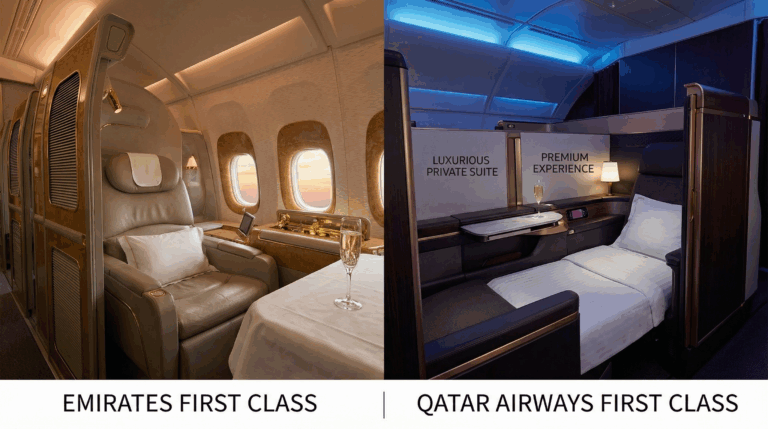
Emirates First Class vs. Qatar Airways Qsuite: Which Is Worth the Splurge?

Affiliate Disclosure: LUXGetaway may earn a commission from qualifying purchases or bookings made through links on this page, at no additional cost to you.

Deciding between Emirates First Class and Qatar Airways Qsuite? It’s not exactly an easy call. Both are heavy hitters in luxury air travel, and honestly, they know how to spoil you.

Emirates First Class is all about lavish private suites. Meanwhile, Qatar Airways Qsuite has made a name for itself with clever design and a focus on privacy. Picking one really comes down to what makes you feel more at home—or, let’s be real, more like royalty—at 40,000 feet.

Emirates First Class goes all-in with private suites, a shower spa, and that glam onboard lounge on certain routes. Qatar Airways Qsuite, on the other hand, brings a suite-style business class with sliding doors, so you can cocoon yourself away if that’s your vibe.

Both airlines serve up high-end hospitality, world-class dining, and a solid entertainment lineup. You won’t be bored, and you definitely won’t go hungry.

If you’re weighing these two, you’ll want to look at the amenities and comfort, dining, ground perks, and—let’s not forget—what you’re actually getting for your money. At the end of the day, it’s about what matters most to you.

Key Takeaways

  • Emirates nails suite privacy in First Class.
  • Qatar Qsuite? Super clever design and privacy.
  • It’s all about your personal taste in luxury.

Emirates First Class vs Qatar Airways Qsuite: Key Differences

Put Emirates First Class and Qatar Qsuite side by side, and you’ll spot some pretty striking differences. They both bring the wow factor, but in their own ways.

Emirates First Class Highlights

Emirates First Class is peak opulence. Think floor-to-ceiling sliding doors—no peeking neighbors here. The suite turns into a full-on bed with plush bedding, so you can actually sleep.

If you’re lucky enough to be on the A380, there’s a shower spa. Yes, you can literally shower mid-flight. There’s also an onboard lounge with premium drinks and a social vibe.

The entertainment system is huge—tons of movies, music, you name it. And when you’re hungry, you’re getting gourmet meals, whenever you want them.

Qatar Airways Qsuite Innovations

Qsuite is Qatar’s answer to business class, but honestly, it feels like first. There’s a double bed setup (great for couples, or if you just want to stretch out), and the suite has sliding doors for privacy.

You can reconfigure the seats—keep it private, or open it up for a group or family setup. Storage is generous, beds are comfy, and the crew is usually spot-on with personalized service.

Dining is a highlight, with menus inspired by global cuisines and a “whenever you want” approach. It’s not just business class—it’s business class with an upgrade.

Suites and Seating Configurations

Emirates’ private suites, especially on the A380, feel like your own mini hotel room. More space, more privacy, more everything.

Qatar’s Qsuite is more flexible—you can go full privacy mode or open things up if you’re traveling with friends. It’s a smart use of space, and the double bed is a rare find.

Both are super comfy, with plush bedding and lie-flat beds. Emirates might edge out on space, but Qsuite’s design is tough to beat for versatility.

Cabin Features and Design

You’ll notice the differences in cabin design pretty much right away. Emirates leans into luxury with vanity tables and mini-bars. Qatar Qsuite is more about a cozy, private suite vibe.

Cabin Layouts and Privacy

Emirates First Class feels spacious and grand. Each suite has a sliding door, plus extras like a vanity and personal mini-bar.

You’ll find these on both the Boeing 777 and Airbus A380, and no matter the plane, you get direct aisle access.

Qatar’s Qsuite does a 1-2-1 layout, so everyone gets an aisle. The doors close fully, so you’re in your own little world. Business travelers especially love the privacy.

A380 and 777 Cabin Experiences

The Emirates A380 is famous for its onboard lounge—a real social spot at 35,000 feet. Only on the A380, though.

Both the A380 and 777 have top-notch entertainment and flat-bed seats. Qatar’s Qsuite also gives you the option of a double bed if you want to share.

Design Details and Ambiance

Emirates First Class is all soft leather, mood lighting, and little extras like vanity mirrors and mini-bars. It’s unapologetically luxurious.

Qsuite goes for a more modern, understated look. Still plush, with lots of storage and personalized touches like soft quilts and big table space.

Both airlines put a ton of thought (and money) into making these cabins feel special. Emirates is more over-the-top, while Qatar is quietly luxe and super private.

Entertainment and Amenities

If you care about what you’ll do between meals—or just want to be pampered—both airlines deliver, but in different ways.

In-Flight Entertainment Systems

Emirates’ ICE system is kind of legendary. Over 4,500 channels, huge HD screens, and noise-canceling headphones. You’ll never run out of stuff to watch.

Qatar’s Oryx One isn’t quite as massive, but it’s still loaded with movies, TV, and music. You won’t be bored, but if you’re a movie buff, Emirates probably wins.

Exclusive Amenities: Shower Spa and More

The Emirates A380 Shower Spa is a total flex. You get to freshen up mid-flight, with fancy products and a real spa feel. It’s unique—no one else does this at scale. Arriving feeling refreshed is also a quiet weapon against jet lag on ultra-long-haul routes.

Qatar doesn’t have showers, but their Diptyque amenity kit is high-end, with luxe skincare and wellness products. You’ll feel pampered, just in a different way.

Signature Onboard Bars and Lounges

Emirates’ A380 lounge is a whole scene—chic, social, and stocked with premium drinks and snacks. It’s the place to be if you like to mingle.

Qsuite doesn’t have a bar, but the privacy is next level. You can dine, work, or just relax in your own space. It’s a different kind of comfort—more “me time” than “let’s chat.”

Dining and Culinary Experience

Flying Emirates First or Qatar Qsuite isn’t just about the seat—it’s about eating well, too. Both airlines take food seriously, and it shows.

Gourmet Dining Options

Emirates brings a multi-course menu with global dishes, all plated like you’re at a fancy restaurant. White tablecloths, real glassware, the works.

Qsuite takes a more tailored approach, with signature dishes and international flavors. You’ll find regional specialties and some pretty impressive presentation.

A La Carte and On-Demand Menus

In Emirates First, you can order from an a la carte menu whenever you want. Breakfast at 10 p.m.? Midnight snacks? No problem.

Qatar’s Qsuite does the same—on-demand dining, mix and match, and you’re in control. It’s a far cry from the old “chicken or pasta” days.

Beverage Selections

Emirates has a killer wine list, including top champagnes and premium spirits. Their sommeliers curate the list, so you know it’s the good stuff.

Qsuite’s beverage game is strong, too, with fine wines, signature cocktails, and organic teas. Everything pairs well with the food, and you can tell they put thought into it.

Ground Services and Lounge Access

What happens before you board matters, especially if you’re splurging. Both airlines treat you right on the ground, but the details differ.

Exclusive Lounge Access

Emirates First Class passengers get into the Emirates First Class Lounge in Dubai. It’s massive, with a full restaurant, cigar bar, and showers. You can rack up Skywards Miles for extras, too.

Qatar’s Al Safwa First Lounge in Doha is seriously swanky. Five-star dining, spa, private family spaces—the works. Privilege Club members can use miles for extra perks.

Airport Experience: Dubai vs Doha

In Dubai, Emirates First Class flyers get dedicated check-in, fast-track security, and a chauffeur if you’re Skywards Gold or Platinum. The airport is a shopping paradise, too.

Hamad International in Doha is all about art, shopping, and smooth service. Qatar has exclusive check-in and fast-track as well, so you’re through in no time.

Pre-Flight Services

Emirates offers a chauffeur-driven ride to and from the airport in select cities for First Class. It’s a nice touch—and, honestly, makes the whole experience feel a notch above.

Qatar matches with premium transfers and attentive staff. They’ll sort out your requests and make sure you’re set before you even step on the plane.

Routes, Fleet, and Connectivity

If you’re a frequent flyer—or just picky about routes—this could tip the scales. Emirates and Qatar both have huge networks and modern fleets.

They both fly to major cities worldwide, with flagship aircraft like the A380 and 777 (Emirates) or the A350 and 777 (Qatar). You’ll find First Class and Qsuite on key routes like Dubai–London (EK1/EK2) and Doha–New York (QR701/QR702). Both also feed long-haul leisure routes to the Maldives, where the premium-cabin experience is part of the resort journey.

Consistency is strong, but it’s worth double-checking the aircraft type before you book. Not every Emirates flight has the new First Class, and not every Qatar flight has Qsuite yet.


Verdict? If you want over-the-top luxury, privacy, and a shower at 40,000 feet, Emirates First Class is tough to beat. If innovative design, true suite privacy, and flexible seating matter more, Qsuite is a game-changer—especially given the price difference.

Personally, I lean toward Emirates for the full “wow” factor, but Qatar’s Qsuite is the best business class in the sky—and sometimes, that’s all you need. Either way, you’re in for an unforgettable ride.

Route Networks and Destinations

Emirates and Qatar Airways both have sprawling route maps that make them favorites among global travelers. Emirates, with its Dubai hub, connects to over 150 destinations on six continents.

You’ll spot Emirates planes everywhere—from bustling European capitals to remote African cities and the heart of North America. The sheer variety is impressive, and it’s hard not to admire how seamlessly you can hop from Asia to Africa or Europe with just one stop.

Qatar Airways, based in Doha, edges ahead with more than 160 destinations. Its location is a sweet spot for linking Asia, Africa, and Australia.

The Qatar Airways route network stands out for frequency, too. You’ll find multiple daily flights to major cities, so if flexibility matters, Qatar’s probably got you covered.

Aircraft Types and Consistency

Both airlines have fleets that are the stuff of aviation geek dreams. Emirates leans heavily on the iconic Airbus A380 and Boeing 777.

Those jets mean you get spacious cabins, big entertainment screens, and—let’s be honest—a bit of that “wow” factor. The A380’s upper deck is practically legendary.

Qatar Airways, for its part, brings the Airbus A350 and Boeing 777 to the table. The A350, in particular, is a quiet, comfortable ride that’s hard to beat.

Best business class? That’s up for debate, but both airlines are laser-focused on keeping cabin quality consistent, no matter where you’re headed.

Alliance Membership and Global Reach

If you’re a frequent flyer, alliances and partnerships can make or break your loyalty. Emirates isn’t part of a big alliance, but it has forged strategic partnerships (think Qantas and others) to extend its reach.

That means you can still get to those out-of-the-way places, just maybe not always on an Emirates jet. Travelers who fly the London corridor often pair these carriers with British Airways for connecting onward to Heathrow or beyond.

Qatar Airways, however, is a proud member of oneworld. This opens up a world of coordinated schedules, reciprocal elite perks, and more ways to rack up and spend points.

If you’re loyal to oneworld or often connect across continents, Qatar’s alliance membership gives it a real edge.

Value for Money and Loyalty Programs

Let’s talk about what really matters: is your money well spent? Both airlines are famous for luxury, but the real value comes down to ticket prices and loyalty perks.

Ticket Pricing and Booking Value

Ticket pricing is a moving target, but trends do emerge. Emirates, thanks to its massive fleet and network, often posts competitive fares—especially on routes with multiple daily flights.

You might find ticket prices with Emirates are a bit friendlier, particularly in Economy and Business. It’s not always a landslide, but the fares can be tempting.

Qatar Airways, on the other hand, isn’t shy about charging a premium for its Qsuite. That said, you’re paying for privacy and a dash of exclusivity.

Don’t forget to factor in extras: entertainment, meals, and lounge access can tip the scales. Sometimes, the “cheaper” ticket isn’t really cheaper once you look at the full package.

Frequent Flyer Benefits

Emirates Skywards and Qatar Privilege Club are where the game gets interesting. Skywards lets you earn and burn miles across flights and a pretty wide partner network.

Perks include bonus miles, elite status goodies, and extra baggage. If you fly Emirates a lot, those benefits start to add up.

Qatar’s Privilege Club now uses Avios, which opens up some surprisingly good reward options. Priority check-in, lounge access, and more bags are standard for elites.

Which program is better? Honestly, it depends on where you fly and how often. Both can be rewarding, but the devil’s in the details.

Upgrade Options with Miles

Upgrades are the holy grail for many frequent flyers. Emirates lets you use Skywards miles to jump from Economy to Business, or Business to First.

It’s a solid way to snag a taste of the high life without paying full price.

Qatar Privilege Club offers similar upgrade flexibility, including into the coveted Qsuite. If you play your cards right, a standard trip can turn into something special.

Just watch out for availability and miles requirements—they can be a moving target.

Which Premium Suite Is Best For You?

Choosing between Emirates First Class and Qatar Airways Qsuite isn’t just about picking a seat. It’s about priorities—privacy, space, socializing, or pure indulgence.

Best for Couples and Families

If you’re traveling with a partner or family, Qatar Airways’ Qsuite is a game changer. The setup lets you combine suites into a shared space, so up to four people can hang out together.

The double bed option is a rare treat for couples. There’s something undeniably cool about stretching out next to someone at 40,000 feet.

Qsuite’s flexibility means you can socialize or retreat into your own space. Families get tailored dining and entertainment, which is a thoughtful touch.

Best for Solo and Business Travelers

Flying solo or for work? Emirates First Class is tough to beat for privacy and pampering.

The fully enclosed suite is your own little bubble—ideal for zoning out or catching up on emails. Personalized dining is the standard, and you can eat whenever you want.

Extras like the personal mini-bar and vanity kit add just enough indulgence. And let’s not forget the onboard shower spa on select A380s. Arriving refreshed is a luxury you don’t realize you need until you try it.

For business travelers or those who just want to disappear into their own world, Emirates nails it.

Frequently Asked Questions

Both Emirates First Class and Qatar Airways Qsuite offer unique takes on luxury, privacy, and service. Here’s how they stack up on the details that matter.

Which delivers the more private, premium in-flight experience: Emirates First Class or Qatar Airways Qsuite?

Qatar’s Qsuite is famous for its sliding doors and customizable spaces. Emirates counters with fully enclosed suites that feel like your own mini-cabin.

It’s a tough call—some swear by Qsuite’s flexibility, others love Emirates’ cocoon-like privacy.

How do Emirates First Class and Qsuite compare for sleep quality, bedding, and overall comfort on long-haul flights?

Both deliver lie-flat beds with plush bedding. Emirates adds a personal minibar and vanity kit, which is a nice touch.

Qatar’s bedding is top-notch, with thick pillows and high-thread-count linens. Sleep comes easy on either, but the details might sway you.

What are the key differences in dining, champagne/wine programs, and onboard service between Emirates First Class and Qsuite?

Emirates is all about the wine list—think rare vintages and top-shelf champagne. Qatar leans into a la carte dining, with menus that feel more like a restaurant than an airplane.

Service is attentive on both, but the style differs. Emirates can feel a bit more formal, while Qatar’s crew tends to be warm and intuitive.

How do aircraft type and route (A380 vs Boeing widebodies) affect the experience in Emirates First Class versus Qsuite?

Emirates’ A380 is the showstopper, with an onboard lounge and showers. Qatar flies a lot of Boeing 777s and 787s, which are quieter and more modern.

The aircraft can make a big difference—if you have the choice, it’s worth checking which model you’ll be on.

Which airline typically offers better value for money when paying cash or redeeming miles for a premium cabin?

Qatar often wins on miles redemptions, especially with Avios. Emirates can be pricier in miles, but sometimes rolls out promos that make cash fares surprisingly appealing.

If squeezing the most value from your points is the goal, Qatar usually edges ahead.


So, which should you choose? If you’re traveling as a couple or group and want to socialize, Qatar’s Qsuite is a revelation. For solo luxury, privacy, and that “wow” factor, Emirates First Class takes the crown. Honestly, both are bucket-list worthy—pick based on your mood, your company, and maybe just a little bit of wanderlust.

How do the ground experiences compare, including lounges, chauffeur service, priority handling, and connections at the hub?

Emirates goes all out with chauffeur-driven transfers, which honestly feels like a treat—especially after a long haul. Their lounge in Dubai? It’s massive, almost overwhelming, with every amenity you could want.

Qatar tries to one-up them with the Premium Lounge in Doha. The vibe there is calmer, more refined, and the dining options are honestly a notch above. If you care about relaxing before a flight (and who doesn’t?), Doha’s lounge experience really might edge out Emirates.

Book Emirates First Class or Qatar Airways Qsuite

Ready to experience the world’s finest premium cabin? Compare prices, find award availability, and book Emirates First Class or Qatar Airways Qsuite. Use miles or pay cash — we show you both options for the best value.

Compare Premium Cabin Flights → Search Flights on Booking.com →

Affiliate links: We may earn a commission at no extra cost to you.

How to Plan the Perfect Multigenerational Luxury Family Vacation

Embarking on a multigenerational luxury family vacation is one of those rare opportunities to bring everyone together—grandparents, parents, kids, maybe even a cousin or two. It’s a chance to see the world through each other’s eyes, and if you play your cards right, everyone gets a bit of what they love.

But how do you actually pull off a trip that works for three or more generations? There’s a lot to juggle, and the stakes feel high. Let’s dig into the details.

Choosing the right destination is everything. Some families want a chilled-out beach, others crave safaris, and some just want a place where the kids can run wild while the adults unwind. Look for places that offer something for everyone—think cultural hotspots, adventure, and plenty of downtime.

Accommodations matter. You’ll want spaces that let everyone gather, but also spots to retreat when you need a breather. Villas, resorts, cruises—they all have their perks and pitfalls.

A flexible itinerary is your best friend. Leave room for surprise discoveries and lazy mornings. Not every minute has to be scheduled, but a few anchor experiences can help everyone feel included.

Understanding Multigenerational Luxury Family Vacations

Multigenerational trips are on the rise, and honestly, it’s easy to see why. There’s something magical about watching your parents bond with your kids in a place that’s new to all of you.

These trips usually mean high-end digs, private guides, and a mix of activities for every age. You might be sipping cocktails by the pool while the kids are off at a cooking class or learning to snorkel.

Defining Multigenerational Travel in Luxury Contexts

Luxury multigenerational travel is all about customizing experiences for every age group. Picture sprawling villas where everyone has their own room—or interconnected suites at a top resort like Four Seasons or Aman.

Some resorts go above and beyond, offering babysitting, private chefs, or even tailored spa treatments. The best ones, like Soneva Fushi in the Maldives or Four Seasons Resort Maui, make you feel like royalty but without the stuffiness.

Dining is a big deal. The best properties cater to picky eaters, special diets, and foodies alike. From kid-friendly menus to vegan tasting dinners, nobody’s left out.

Key Benefits and Challenges of Multigenerational Family Trips

The biggest perk? Real, unfiltered family time—without anyone stuck in the kitchen or worrying about chores. Grandparents get to spoil the grandkids, parents get a break, and kids get to see their family in a whole new light.

Of course, it’s not all smooth sailing. Different interests, energy levels, and mobility needs can make planning tricky. Communication is everything—don’t be shy about voicing what matters most to you.

If the logistics feel overwhelming, consider hiring a travel planner who specializes in multigenerational trips. They’ll know which villas have wheelchair access, which resorts offer gluten-free menus, and how to keep everyone happy.

Budget can be a sticking point, but with some creativity—and maybe some group deals—you can make it work without sacrificing comfort.

Current Trends in Multigenerational Family Vacations

There’s a definite shift toward experiences over things. Families want to learn together, explore together, and sometimes even give back together.

Eco-friendly travel is gaining ground, too. Resorts like Soneva are leading the way with sustainability and thoughtful luxury. Safety and privacy matter more than ever, so destinations like Turtle Bay in Hawaii or Rosewood Mayakoba in Mexico are getting lots of love from families who want both adventure and peace of mind.

Early Planning and Coordinating Logistics

If you want the best options—especially for big groups—you’ve got to start early. Like, a year or more in advance if you’re eyeing popular resorts or peak travel seasons.

Optimal Planning Timeline for Large Families

Give yourself at least 12 to 18 months if you can. Villas and top-tier suites book up fast, especially at places like Four Seasons or Aman. Early planning also means you might catch a few deals or secure a private guide before they’re all snapped up.

Gathering Input from Every Generation

Don’t try to guess what everyone wants—just ask! A quick group chat, a shared doc, or even a family dinner can help you figure out what’s on everyone’s wish list.

You’ll want to know who needs an accessible room, who’s vegetarian, and who absolutely must have a pool. Getting everyone’s input early makes for fewer headaches later.

Date Selection and Calendar Coordination

Finding dates everyone can do is often the hardest part. School breaks, work schedules, even medical appointments can throw a wrench in the works.

Try using a shared calendar app or a simple poll. Flexibility helps, but sometimes you just have to pick a date and hope for the best.

Selecting the Perfect Destination

This is where things get fun—and a little overwhelming. The “perfect” spot means something different to every family.

Choosing Destinations for All Ages and Interests

Look for places with a bit of everything. Safari in Kenya? The kids will love the animals, and grandparents can enjoy sundowners with a view. Or maybe a week at Soneva Jani, where you can snorkel, bike, and watch movies under the stars.

If you want culture, cities like Florence or Kyoto offer art, food, and history. For pure relaxation, the Caribbean or Hawaii rarely disappoint.

Resorts with kids’ clubs and teen activities free up adults for spa time or golf. Bonus points if there’s a cooking class or art workshop everyone can join.

Prioritizing Accessibility and Comfort

Accessibility shouldn’t be an afterthought. Look for properties with elevators, ramps, and step-free access. Four Seasons and Aman properties are usually on top of this, but always double-check.

Private transportation can be a lifesaver, especially if you’re traveling with someone who tires easily or needs extra help.

Make sure there’s space to spread out—a villa with a pool, or a suite with a big balcony can make all the difference.

Highlighting Iconic Luxury Family Destinations

Some places just get multigenerational travel right. Four Seasons Resort Punta Mita in Mexico is famous for its family-friendly vibe and sprawling villas. Amanpuri in Phuket offers serene privacy and a kids’ club that’s actually fun.

In the Caribbean, Jumby Bay Island is a hit for its all-inclusive ease and endless activities. Soneva Fushi in the Maldives is pure barefoot luxury—think private villas, open-air cinemas, and snorkeling right off the beach.

Curating Accommodations for Family Comfort and Privacy

Where you stay can make or break the trip. The right setup means everyone gets the space and comfort they need.

Luxury Vacation Rentals Versus Resorts

Private villas are a dream for big families. You get kitchens, living spaces, and often a private pool. There’s no fighting over pool chairs or waiting for room service.

Resorts, on the other hand, offer more structure. Pools, restaurants, spas, and activities are all right there. Four Seasons and Aman both offer villa options within their resorts—kind of the best of both worlds.

A villa can feel like your own home base, while a resort gives you the ease of having everything at your fingertips.

Evaluating Family-Friendly Features

Check for connecting rooms, cribs, high chairs, and babysitting. Some villas come with a private chef or butler—worth it if you want to really relax.

Safety matters, especially with little kids. Gated pools, stair gates, and childproofed spaces are a must.

Don’t forget the little touches: blackout curtains for jet-lagged toddlers, accessible bathrooms for grandparents, and maybe a games room for teens.

All-Inclusive Resorts: Pros and Cons

All-inclusives can be a lifesaver if you want to keep things simple. Meals, drinks, and activities are all bundled in, so you’re not nickel-and-diming every day.

But sometimes, these resorts can feel a bit cookie-cutter. If you crave privacy or more custom experiences, a villa or boutique resort might suit you better.

It’s a trade-off—convenience versus flexibility. Know your family’s vibe before you book.

Designing a Flexible Itinerary with Unforgettable Experiences

No one wants a jam-packed schedule, but you also don’t want to waste precious time figuring out what to do each day. Striking a balance is key.

Anchor Activities and Opt-In Scheduling

Pick a few “anchor” activities—maybe a family dinner on the beach, a group cooking class, or a private guided tour. These are the moments everyone shares.

The rest? Let people opt in or out. Some might want to lounge by the pool, others might want to hit the local market or try zip-lining. No guilt trips if someone wants to skip an outing.

Activities Suitable for Every Generation

Outdoor adventures like gentle hikes, river cruises, or wildlife watching can be tweaked for all ages. Multi-level trails or accessible boats mean nobody’s left out.

Workshops—like pottery, painting, or pasta-making—are great for bringing everyone together, regardless of age or ability.

Private guides can make all the difference. They’ll tailor the pace, share local secrets, and handle the logistics so you can just enjoy.

Budgeting and Managing Payments Transparently

Money talk isn’t fun, but it’s essential. Set expectations early so there are no surprises or awkward moments.

Setting Realistic Budgets in Advance

Get everyone’s input on what they’re comfortable spending. List out the big-ticket items—flights, villa or resort, private guides, special meals.

A shared spreadsheet or travel app can help keep track. Check with luxury travel advisors for hidden costs or possible upgrades.

Keep the conversation open. Circumstances change, and it’s better to tweak plans than risk resentment. As long as everyone feels heard, you’re on the right track.

Splitting Costs and Payment Options

Sorting out how to share expenses can get a little awkward, especially with three or more generations in the mix. Some families just split everything equally among adults, while others prefer to divvy things up based on income or family size.

Digital payment apps make it easier to track who paid for what—no more chasing down receipts or awkward IOUs. Setting up a joint vacation fund ahead of time isn’t a bad idea either; everyone can chip in as you go.

If you’re headed overseas, keep an eye on currency exchange rates—they sneak up on you. Make sure everyone knows in advance which costs they’ll handle directly, so there are no surprises mid-trip.

Ensuring Accessibility, Wellness, and Special Needs

Luxury family vacations really should cover everyone, from toddlers to grandparents. That means thinking about mobility, health, and dietary quirks right from the start.

Catering to Mobility and Health Requirements

When you’re planning with grandparents and young kids, accessibility is non-negotiable. Go for destinations with elevators, ramps, and at least a few wheelchair-accessible rooms.

Resorts like Four Seasons, Aman, and Soneva are known for their thoughtful accommodations—think on-site medical support and staff who actually seem to care. Some even have age-appropriate activities that keep both the energetic and those who’d rather lounge by the pool happy.

Guided tours with accessibility features or poolside relaxation with easy-entry steps can make a big difference. If you’re not sure where to start, a travel advisor who specializes in multigenerational trips can save a ton of headaches and suggest destinations with a solid track record for families (multigenerational travel ideas).

Dietary Considerations and Wellness Amenities

Let’s be real—dietary needs can get complicated fast. Look for resorts that take food seriously, offering everything from gluten-free to low-sodium menus.

Many luxury spots will let you work with a chef to customize meals, so no one feels left out or stressed about what’s on their plate. Having that flexibility is a game changer, especially with picky eaters or health concerns.

Wellness centers and spas are a big plus. Yoga classes, hot springs, or meditation sessions can be a welcome break from the family chaos. Resorts that focus on health and rejuvenation, like Soneva or Aman, tend to offer personalized attention to both dietary and wellness needs (resorts with spas and wellness centers). If the grown-ups want to go deeper, some properties now build entire stays around luxury longevity retreats, pairing diagnostics and biohacking with the same spa comforts the rest of the family enjoys.

Strengthening Family Bonds Through Shared Luxury Experiences

Traveling with three or more generations is a rare chance to actually connect—beyond the group texts and birthday calls. The right destination and experiences can make those moments genuinely unforgettable.

Facilitating Memorable Moments

The best trips seem to hinge on those little shared moments—like a sunset dinner on the beach or a hot air balloon ride you’ll talk about for years. Private villa stays, cooking classes with a local chef, or even a family wine tasting (for the adults, obviously) can make the trip feel special.

Remote and scenic spots—think the Maldives, Tuscany, or the African bush—pull you out of your routines and into real connection. Resorts and safari lodges that offer custom itineraries help ensure everyone, from toddlers to grandparents, gets their moment (safari lodges).

Balancing Togetherness and Autonomy

Let’s be honest: togetherness is wonderful, but everyone needs a little space, too. Luxury resorts get this and often have spas, kids’ clubs, and quiet corners for reading or napping.

Places like Four Seasons or Aman design their properties so you can slip away for a solo nature walk or join a group excursion when the mood strikes. That way, everyone comes back together refreshed, and the family time feels more meaningful (exclusive resorts).

Frequently Asked Questions

Choosing the right setup for a multigenerational trip isn’t always straightforward. Sometimes, what works for one group just doesn’t click for another.

How do you choose a destination that delights grandparents, parents, teens, and young children without compromise?

Honestly, it’s a balancing act. Look for spots with a mix of cultural attractions and kid-friendly activities—Mediterranean cruises or Caribbean resorts are often crowd-pleasers.

What are the best villa, resort, or yacht setup options for privacy, togetherness, and seamless service for an extended family?

A villa with separate suites or a resort with interconnected rooms gives everyone their own space but keeps the family together. Yachts with private cabins and a dedicated crew can also be a dream setup—personalized, private, and surprisingly relaxing.

Which U.S. destinations deliver the strongest blend of five-star accommodations, family-friendly activities, and easy logistics for multiple generations?

Disney’s Aulani in Hawaii and The Broadmoor in Colorado are hard to beat. Both offer luxury, plenty of activities for all ages, and enough dining options that nobody gets bored (or hangry).

Which European destinations offer the most rewarding mix of culture, comfort, accessibility, and luxury experiences for an extended family trip?

Paris and Tuscany are classics for a reason. Paris has the museums, parks, and food, while Tuscany charms with its countryside, villas, and culinary adventures. Both are surprisingly accessible for travelers of all ages.

What should you look for in an all-inclusive property to ensure genuinely elevated dining, activities, and multigenerational comfort?

Don’t settle for bland buffets—seek out properties with gourmet dining, a range of activities, and thoughtful touches like family zones and adult-only spaces. Personal concierge service is a bonus, making sure everyone feels looked after.

How do you structure a flexible itinerary that balances shared signature experiences with downtime and age-specific interests?

When you’re planning a trip for three or more generations, it’s honestly a bit of a puzzle. Destination is everything—places like Hawaii, Tuscany, or the Maldives pop up a lot, and for good reason.

You want somewhere that’s got a little magic for every age. Villas, big resorts, and cruises all have their perks, but each one fits a different vibe.

Villas—think Soneva Fushi in the Maldives or a sprawling Tuscan farmhouse—give families privacy and space to just be themselves. Resorts like Four Seasons and Aman take care of everything, from kids’ clubs to spa days and even private guides if you want to explore without the crowds.

Cruises, especially lines like Disney or Silversea, are surprisingly great for all ages, with activities running from dawn till late (and you only have to unpack once).

The real trick is to build in a few signature moments—maybe a group snorkeling trip, a private chef’s dinner, or a guided market tour. Then, let everyone break off to do their own thing. Maybe Grandpa wants a nap, the teens want to zip-line, and the little ones are happy with the pool.

Dietary needs? Resorts like Four Seasons and Aman are pros at handling allergies, picky eaters, and all sorts of requests. Same goes for accessibility—most luxury properties and cruises are pretty dialed in, but always double-check before you book.

If you ask me, having a flexible plan and a sense of humor is key. No itinerary survives first contact with a toddler (or a grandparent, for that matter), but that’s half the fun.

Best Luxury Ryokans in Japan: The Ultimate Guide to Traditional Inn Experiences

Affiliate Disclosure: LUXGetaway may earn a commission from qualifying purchases or bookings made through links on this page, at no additional cost to you.

If you’re hoping to immerse yourself in Japanese culture, luxury ryokans are the ticket. These traditional inns wrap you in serene hospitality, blending centuries-old customs with a surprising dash of modern comfort.

You’ll find kaiseki meals that look as good as they taste, and onsen baths that melt away the world’s noise. It’s a whole vibe—part ritual, part indulgence.

1) Kinnotake Tonosawa, Hakone

Tucked away in the calm of Hakone, Kinnotake Tonosawa is an adults-only hideaway that feels worlds apart. The design leans into elegance and sophistication, and, honestly, it’s hard not to feel a bit spoiled here.

Each room comes with its own private open-air onsen bath. You just step in, slide the door shut, and let the mountain views and hot water do their thing.

The interiors balance contemporary style with those classic Japanese touches—think clean lines and a connection to the outdoors. The sense of freedom and peace is real.

Location-wise, you’re close to Hakone’s main sights, so you can explore by day and retreat in the evening. The dining? Expect refined Japanese cuisine, each dish as thoughtful as the setting.

There’s a shared lounge if you want to mingle, and a souvenir shop for a last-minute gift or two. Kinnotake Tonosawa manages to feel both modern and rooted in nature, which is no small feat in Hakone. More about Kinnotake Tonosawa.

2) Tawaraya Ryokan, Kyoto

Tawaraya Ryokan is the definition of old-school Kyoto hospitality. This place has been welcoming guests since 1709—imagine the stories those walls could tell.

The vibe is peaceful, almost meditative. Gardens weave through the property, inviting you to pause and breathe.

Inside, you’ll find tatami mats, sliding shoji doors, and an attention to detail that borders on obsession (in a good way). Service is personal—almost like visiting a distant, very refined relative.

Kaiseki meals here are an art form, each course reflecting Kyoto’s seasons. They’re served in your room, adding to the sense of privacy and ritual.

Notables like Steve Jobs have stayed here, and honestly, you feel the weight of history in every corner. It’s a classic, and for good reason.

3) Gora Kadan, Hakone

Gora Kadan is a jewel in Hakone, built on the grounds of the former Kan’in-no-miya Villa—yes, the Imperial Family’s old stomping grounds. The place radiates understated luxury.

Onsen bathing here is something else. The hot springs are natural, and the baths (private and communal) are designed with a reverence for tradition.

Rooms blend tatami floors with modern design. It never feels stiff or museum-like; it’s more like a living homage.

The kaiseki dining is a highlight, with seasonal ingredients showcased in ever-changing menus. You can tell the chefs care deeply about every detail.

Mountain views add to the magic, and the location is perfect for exploring Hakone. Gora Kadan isn’t just a place to sleep—it’s an experience that lingers long after you leave.

4) Hiiragiya Ryokan, Kyoto

Hiiragiya Ryokan sits quietly in central Kyoto, its doors open since 1818. The place is steeped in heritage, yet it never feels stuck in the past.

There are 28 rooms, each with its own personality. Expect tatami floors, low furniture, and sliding doors. Some suites even have lacquered bathrooms—a little touch of luxury.

The main building is all about that classic sukiya style, while the newer wing mixes in some modern flair. It’s a peaceful spot, great for unwinding after a day in the city.

Service is famously attentive, and the seasonal kaiseki cuisine is a big draw. Every meal is a little celebration of what’s fresh and local.

5) Hoshinoya Kyoto

Hoshinoya Kyoto is tucked along the Hozu River in Arashiyama, a pocket of calm away from the city’s rush. Each room faces the river, so you’re never far from nature.

The architecture nods to Kyoto’s Machiya townhouses, with shoji screens and verandas that overlook the water. It’s traditional, but you won’t miss out on comfort.

Dining is all about kaiseki, with menus built around local, seasonal ingredients. Meals feel intimate and purposeful—definitely not your average dinner.

Getting here is half the fun: a private boat ride from Togetsukyo Bridge sets the tone for a truly secluded escape. Check out Hoshinoya Kyoto.

6) Beniya Mukayu, Kaga

Beniya Mukayu sits on a hill above Yamashiro Onsen town in Kaga. It’s all about minimalism and nature—think light, shadow, and lots of quiet.

Rooms come with private open-air hot spring baths and views of a Japanese garden. The design mixes tatami and shoji screens with modern touches, creating a space that feels both timeless and fresh.

You’ll notice the thoughtful details everywhere, from the architecture to the way the gardens are curated. It’s a place that invites you to slow down, maybe even reflect a little.

Unique experiences, like garden walks and local cuisine, let you dig into Kaga’s culture. Beniya Mukayu feels less like a hotel and more like a sanctuary. More details here.

7) Ryokan Sawanoya, Tokyo

Ryokan Sawanoya is a gem in Tokyo’s Yanaka district, a quieter corner of the city. It’s family-run, and that warmth really shows.

Rooms are tatami-floored and cozy. Some have ensuite baths, others share facilities, so you can pick what suits you.

The location is great for exploring Ueno Park and old Tokyo neighborhoods. There’s a real sense of community here, and guests from all walks of life are welcome.

Tea and coffee in the lounge, friendly chats, and a low-key vibe make Sawanoya a favorite for travelers who want something genuine. More on Sawanoya.

8) Kikunoi Honten, Kyoto

Kikunoi Honten is a Kyoto institution, revered for its kaiseki dining. The kitchen here is legendary—each dish is a small work of art.

Seasonality is everything. The menu changes constantly, so you’re always tasting something new and fresh.

The setting is elegant but never stuffy. Traditional design meets a touch of modern luxury, making it a place you’ll want to linger.

If you’re after a deep dive into Kyoto’s food culture, Kikunoi Honten is essential. See more at their website.

9) Nishimuraya Honkan, Kinosaki Onsen

Nishimuraya Honkan sits in Kinosaki Onsen, a town famous for its hot springs. The ryokan’s gardens are tranquil, perfect for a slow stroll or a moment of reflection.

Rooms are classic: tatami mats, simple elegance, and a sense of calm. Both communal and private onsen baths are available, fed by springs that have soothed travelers for over a millennium.

Kaiseki meals are a highlight, with ingredients pulled from the local area. The ryokan’s reputation is solid, and it’s part of the Relais & Châteaux group—a mark of quality if there ever was one.

It’s a top pick for anyone wanting the full onsen town experience. Learn more here.

10) Yoshikawa Inn, Takayama

Yoshikawa Inn in Takayama is all about blending tradition with comfort. It’s right in the heart of town, close to the old Edo district, so you can step out and explore with ease.

Rooms come in both Japanese and Western styles. The gardens are peaceful, and you’ll find yourself drawn to the quiet corners.

Onsen baths here are central to the experience—just relax and let the day fade away. Kaiseki meals showcase Takayama’s best local flavors.

Yoshikawa Inn is a solid choice for travelers who want a little luxury with their cultural immersion. More info here.

What Defines a Luxury Ryokan Experience

Luxury ryokans in Japan are really about the details—architecture that soothes, service that feels personal, and rooms that invite you to slow down.

It’s not just a place to stay, but an invitation to experience Japanese culture from the inside out.


Onsen & Ryokan Etiquette Tips

A few things to keep in mind: Always remove your shoes before entering guest areas. When using the onsen, wash thoroughly before getting in, and don’t bring towels into the water. Tattoos can sometimes be an issue, so check ahead.

Kaiseki dinners are usually served at set times, and it’s polite to wear the provided yukata robe to meals and around the inn. Try to keep voices low in communal spaces—these places are all about tranquility.

If you’re unsure, just watch what others do or ask the staff—they’re usually happy to help. The rituals might seem daunting at first, but that’s part of what makes the experience so memorable.

Architectural Elegance and Japanese Design

A hallmark of luxury ryokans is their architectural elegance, rooted in traditional Japanese design principles. You’ll see tatami mat flooring, sliding shoji screens, and minimalist interiors that just ooze calm and harmony.

Natural materials—wood, stone, even bamboo—are everywhere, connecting you to the landscape in a way that feels intentional. Ryokans are usually tucked into scenic spots, with views of gardens, mountains, or steaming hot springs just outside.

The architecture is all about framing those vistas, blurring the line between indoors and out. It’s not just for show; it’s about atmosphere and that elusive sense of peace.

Every detail matters. Intricate woodwork, soft lighting, and clever layouts elevate the whole experience, making the space feel refined but not fussy.

Personalized Omotenashi Service

Omotenashi—the spirit of selfless hospitality—sits at the heart of the luxury ryokan experience. Staff seem to anticipate your needs before you even realize them, offering warmth and attentiveness without hovering.

From your first step inside, you’re greeted with genuine smiles and little gestures that make you feel noticed. It’s not uncommon to be invited to a sake tasting or a proper tea ceremony, each one offering a window into Japanese culture.

Kaiseki dining is another highlight. Meals are tailored to your tastes, with every course presented like a tiny work of art. It’s not just about food, it’s about feeling cared for.

In-Room Amenities and Tranquility

Rooms at luxury ryokans are designed for real relaxation. Think plush futons, crisp linens, and those fragrant yukatas you won’t want to take off.

Many have private onsen baths, so you can soak in mineral-rich waters without leaving your room. The vibe is intentionally peaceful—soft lights, maybe a bit of birdsong or the trickle of water outside.

Technology is there if you need it, but it never intrudes. Sometimes you’ll find fresh flowers or handmade sweets waiting for you—a small but memorable touch.

Cultural and Culinary Highlights in Japanese Ryokans

Ryokans are a gateway to Japanese culture and cuisine. Kaiseki feasts, private onsen rituals, and tea ceremonies all play their part in making a stay unforgettable.

Kaiseki Dining and Seasonal Cuisine

Kaiseki is more than a meal—it’s a slow, thoughtful journey through flavors and textures. Each course is tiny but packed with seasonal ingredients, arranged with a kind of quiet artistry.

You’ll get everything from grilled to raw, with colors and plating that almost make you hesitate to eat. It’s not just about taste; it’s about celebrating nature and the shifting seasons.

Chefs put serious care into every detail, crafting a meal that feels like an intimate reflection of time and place. Sometimes you’ll catch yourself marveling at how much work went into a single bite.

Private Onsen Rituals and Wellness

Nothing says ryokan like slipping into an onsen. These mineral-rich baths are the stuff of legend—relaxing, restorative, and deeply tied to Japanese wellness traditions.

Most top ryokans are built near natural hot springs, so the water itself is part of the draw. Privacy is a big deal too: many offer private baths so you can unwind solo or with a partner, no interruptions.

The ritual usually starts with a cleansing shower, then a slow soak that melts away stress. People swear by the healing powers of the water, and honestly, it’s hard to argue once you’ve tried it.

Traditional Tea Ceremonies

Participating in a tea ceremony at a ryokan is like stepping into another era. Guided by a tea master, you’ll watch as matcha is whisked and served with deliberate care.

Everything—the cups, the gestures, the silence—carries meaning. It’s not about the caffeine; it’s about mindfulness, respect, and being present in the moment.

There’s something meditative about it. Even if you’re not a tea person, the ritual leaves an impression. It’s a quiet reminder of the depth of Japanese culture.

Three Exceptional Luxury Ryokans in Japan

Beniya Mukayu

  • Location: Yamashiro Onsen, Ishikawa Prefecture
  • Nightly Rate: From ¥80,000 (~$550 USD) per person
  • Onsen Type: Private and communal baths
  • Kaiseki Dining: Yes, with seasonal, locally sourced menus

Beniya Mukayu sits on a forested hillside, and the architecture feels almost monastic—minimalist, but with big windows that frame the trees outside. The private open-air onsen baths in each room are a real treat, especially when the mist rolls in.

Their kaiseki dinners are inventive, leaning on local Kaga ingredients. There’s a sense of quiet luxury here that’s hard to put into words—maybe it’s the way the staff seem to appear just when you need them, or the hush that settles over the property at night.

Gora Kadan

  • Location: Hakone, Kanagawa Prefecture
  • Nightly Rate: From ¥100,000 (~$700 USD) per person
  • Onsen Type: Private and communal baths
  • Kaiseki Dining: Yes, with refined seasonal courses

Gora Kadan used to be a former imperial retreat, and you can feel the history in every hallway. The mix of traditional and modern design is seamless, and the gardens are meticulously kept.

Private onsen baths are available in many rooms, and the kaiseki meals are as beautiful as they are delicious. Service is discreet but attentive, and the whole place radiates a kind of elegant calm.

Hoshi Onsen Chojukan

  • Location: Minakami, Gunma Prefecture
  • Nightly Rate: From ¥30,000 (~$200 USD) per person
  • Onsen Type: Communal and some private baths
  • Kaiseki Dining: Yes, featuring regional mountain cuisine

Hoshi Onsen is one of the oldest ryokans in Japan, tucked away in the mountains. The main bathhouse has a rustic, almost magical vibe—think wooden beams, lantern light, and the sound of water echoing off the stones.

Meals here focus on hearty, local fare. It’s less polished than some luxury ryokans, but the sense of history and authenticity is unmatched. It’s a place for those who want to step back in time and experience something truly special.

Etiquette Tips for Ryokan Stays

There are a few things to keep in mind to avoid any faux pas. Take off your shoes at the entrance—always. You’ll usually change into slippers provided by the ryokan.

When using the onsen, wash thoroughly before entering the bath, and don’t bring towels into the water. Tattoos can be an issue at some places, so it’s best to check ahead.

Meals are often served at set times, and it’s polite to arrive promptly. Don’t be afraid to ask questions—staff are usually happy to explain customs or help you navigate the experience.

Most of all, try to embrace the slower pace and quiet. Ryokans are about stepping away from the rush and letting yourself sink into the moment.

Frequently Asked Questions

Luxury ryokans in Japan offer impeccable service, exquisite dining, and unique bathing experiences. Understanding the details of top ryokans, dining expectations, and pertinent etiquette ensures a memorable stay.

Which ryokans in Japan offer the most refined, high-touch service for discerning travelers?

Discerning travelers will find exceptional service at establishments like Gôra Kadan in Hakone and Tawaraya Ryokan in Kyoto. These ryokans are renowned for their meticulous attention to detail and personalized hospitality, ensuring that every guest feels valued and pampered.

What should I expect from a top-tier kaiseki dinner and traditional Japanese breakfast at an upscale ryokan?

At luxury ryokans, guests can anticipate kaiseki dinners that consist of multiple courses highlighting seasonal and local ingredients. The presentation is often as artful as it is delicious. A traditional Japanese breakfast usually features rice, grilled fish, miso soup, and an assortment of small side dishes, all prepared with the same commitment to quality and flavor.

Which luxury ryokans have private in-room onsen baths, and what are the key differences between them?

Many high-end ryokans, such as Kinnotake Tonosawa in Hakone and Hoshinoya Kyoto, offer private in-room onsen baths. The key differences often lie in the design and setting, with some offering more modern aesthetics while others maintain a traditional ambiance, offering views of gardens or natural landscapes.

How do I choose between a classic, historic ryokan like Tawaraya and a contemporary luxury ryokan?

Choosing between a historic ryokan and a contemporary one depends on the traveler’s preference for tradition versus modernity. Tawaraya Ryokan offers a rich history and traditional experience with tatami mats and paper screen doors, while contemporary luxury ryokans blend modern design sensibilities with traditional elements, providing a different type of luxury.

Where are the best destinations for an exceptional ryokan stay—Kyoto, Hakone, Kinosaki, or the Japanese Alps?

Each location offers a unique appeal. Kyoto is famed for its historic ryokans and proximity to cultural sites. Hakone’s allure lies in its stunning views of Mount Fuji and hot spring baths. Kinosaki is celebrated for its onsen town charm, and the Japanese Alps offer an escape into serene natural beauty, ideal for those seeking tranquility.

What are the essential etiquette rules for a seamless, respectful ryokan and onsen experience?

First things first: shoes off at the entrance. Always.

Slip into the yukata robe they provide—don’t worry if you’re not sure how, staff are happy to help.

Before stepping into the onsen, wash up thoroughly at the shower stations. This isn’t optional; it’s a sign of respect for everyone sharing the water.

Keep your voice down. Ryokans are peaceful escapes, and nobody wants loud chatter echoing off the walls.

If staff offer specific instructions, just go with it. They know what they’re doing.

Above all, be mindful of others’ privacy and space. That’s really the heart of the whole experience.

Book Your Luxury Ryokan in Japan

Experience Japan’s finest traditional inns — from Kyoto’s historic Tawaraya to Hakone’s mountain onsen retreats. Compare ryokan availability, read verified guest reviews, and book your authentic Japanese escape today.

Find Luxury Ryokans → Compare on Agoda →

Affiliate links: We may earn a commission at no extra cost to you.

Best Luxury Hotels in Santorini with a Private Plunge Pool

Santorini’s got that magic—sweeping caldera cliffs, sun-bleached houses, and, for the lucky, a private plunge pool with a view that’ll make you forget your phone. If you’re after real luxury, it’s hard to beat the feeling of slipping into your own pool as the Aegean glows gold at sunset. For the broader regional context, see our Greece coverage.

These hotels aren’t just about a place to crash. They’re about soaking in the moment, glass in hand, maybe with someone you love, and letting the world slow down. There’s something about that mix of privacy and extravagance that just feels so… Santorini. If you’re piecing together a multi-stop trip, our guides to Mykonos and Athens and the best Greek honeymoon resorts are good companions.

1) Grace Hotel Santorini – Imerovigli

Grace Hotel sits high up in Imerovigli, and honestly, it’s hard to imagine a better vantage point. The views sweep across the caldera and the Aegean—classic Santorini drama.

Nightly rates usually land between €700 and €1600, depending on the suite and the season. Most suites come with private plunge pools and terraces, so you can float above the sea in near silence. The cave-style architecture is all whitewashed curves and cool serenity.

You’ll get caldera views from almost every angle. The spa is top-notch, and the Mediterranean restaurant is a local favorite—don’t skip the tasting menu. Grace is tucked away from the crowds, so if you’re after peace and privacy, this is your spot.

Insider tip: Book the Grace Suite for the biggest plunge pool and the kind of sunset that makes you rethink your life choices (in a good way). Book early—this place fills up fast.

2) Canaves Oia Suites – Oia

Canaves Oia is carved right into the cliffs of Oia, blending that classic Cycladic look with all the modern frills. The suites here are pure elegance, and each one comes with a private heated plunge pool—perfect for those late-night dips.

Rates generally run from €800 to €2000+ per night, depending on your suite. You’ll get front-row caldera views, and the pillow menu is a nice touch if you’re particular about your sleep. There’s always a bottle of wine waiting for you, which feels just right.

You’re steps away from Oia’s famous blue domes and all the postcard scenes, but the hotel itself feels tucked away from the madness. The poolside Mediterranean restaurant is a highlight—try the seafood if you can.

Insider tip: If you want the most privacy, ask about the River Pool Suite. And don’t be shy about requesting a sunset-facing room—views here are everything.

3) Katikies Hotel – Oia

Katikies is iconic—those whitewashed curves almost seem to float above the sea. It’s perched on Oia’s cliffs, so the views are as good as it gets. Rooms are light-filled and romantic, with private terraces and, in many cases, plunge pools that overlook the caldera.

Expect to pay between €700 and €1800 per night, depending on the suite and season. The vibe here is relaxed luxury; nothing feels forced. There are three infinity pools, so you can always find a quiet corner to yourself.

Dining is a treat—Botrini’s and the Lower Deck Lounge both serve up Mediterranean flavors, and the setting is unbeatable. Service is genuinely attentive, never stuffy.

Insider tip: Book directly for the best rates and a chance at an upgrade. The Master Suite has the most jaw-dropping pool terrace—worth the splurge if you can swing it.


4) Neptune Luxury Suites – Akrotiri

Neptune Luxury Suites sits quietly in Akrotiri, far from the crowds. It’s all about privacy here, with suites offering either outdoor heated pools or plunge pools—plus those sweeping caldera and volcano views.

Rates usually fall between €400 and €1000 per night. The spa suites come with private hamams and hydro massages, which is a pretty decadent touch.

You’ll get your own veranda with sunbeds, and the staff are genuinely warm. If you want to feel like you’re on your own private island, this is a good bet.

Insider tip: Book early, especially in peak season—there aren’t many suites, and they go quickly.

5) Sophia Luxury Suites – Imerovigli

Sophia Luxury Suites is perched up in Imerovigli, with cave-style rooms that feel both traditional and fresh. Every suite has a private plunge pool with a view that’s hard to beat.

Rates are typically €500 to €1200 per night. The interiors are all about comfort—soft lines, cool stone, and a sense of calm. Staff here are attentive but never overbearing.

Insider tip: The Honeymoon Suite has the best sunset vantage point. Book direct for special perks.

6) Chromata Santorini – Imerovigli

Chromata keeps things modern and minimalist, but there’s warmth in the details. Most rooms and suites come with private heated plunge pools or jacuzzis, and the caldera views are front and center.

Expect rates from €600 to €1500 per night. The infinity pool is a showstopper—one of those places you’ll remember for years.

Insider tip: The Chromata Pool Suite is the one to book if you want extra privacy.

7) Mystique Santorini – Oia

Mystique is tucked into Oia’s cliffs, with a vibe that’s both sophisticated and a little bit wild. The suites and villas all have private plunge pools, and the Mystery Villa even has its own infinity pool.

Rates range from €900 to €2500+ per night. The design leans into natural textures and curves, and the restaurants (Charisma and Asea) serve up Greek and Japanese flavors.

Insider tip: Ask about the Secrecy Villas for the most secluded experience. The wine cave is worth a visit, even if you’re not a wine geek.

8) Perivolas Hotel – Oia

Perivolas is adults-only and all about peace and quiet. The suites are carved from 300-year-old caves, with simple, elegant interiors and private plunge pools in many rooms.

Rates start around €800 and can go up to €2000+ for the larger suites. The infinity pool here is legendary—seriously, bring your camera.

Insider tip: There are no TVs, so be ready to unplug. Book a suite with a private pool for the full experience.

9) Santorini Secret Suites & Spa – Oia

Santorini Secret is a boutique spot with just 17 suites and villas, each with a plunge pool or hot tub and killer caldera views.

Rates usually run €600 to €1200 per night. The infinity pool is a highlight, and the Greek restaurant is surprisingly good for a hotel.

Insider tip: Book the Grand Suite for the most space and privacy. Spa treatments are worth splurging on.

10) Cavo Tagoo Santorini – Imerovigli

Cavo Tagoo is bold—white sculpted walls, dramatic angles, and every suite comes with a plunge pool or jacuzzi overlooking the sea.

Rates range from €900 to €2500+ per night. The Vezenes restaurant is a must for foodies, and the floating loungers in the infinity pool are just fun.

Insider tip: The honeymoon suites have the best views. The concierge can set up private boat trips—don’t miss out if you’re feeling adventurous. For travelers who want to extend their Greek itinerary by sea, see our roundup of the best luxury cruise lines in the world.


What Sets Santorini’s Luxury Hotels With Private Plunge Pools Apart

There’s something special about watching the sun melt into the caldera from your own pool. That’s the heart of the Santorini plunge pool experience—seclusion, beauty, and a sense that you’re somewhere truly unique.

The best hotels here don’t just offer a bed—they deliver a whole mood. Think personalized service, thoughtful touches, and spaces that feel both luxurious and lived-in. If you’re after a memory that lingers, this is the way to do Santorini. For broader planning, our ultimate guide to luxury travel for 2026 ties it all together.

Tips For Booking The Ultimate Private Plunge Pool Experience

If you’re serious about scoring the perfect suite, book early—these rooms are limited, and demand is fierce in high season. Pay attention to the room type and ask for the best view; not all plunge pools are created equal.

Shoulder season (late spring or early autumn) can be a sweet spot for lower rates and fewer crowds. And don’t be afraid to reach out directly—sometimes a polite email gets you perks you won’t see online.

Best Seasons To Visit

Santorini’s weather can make or break your private plunge pool plans. If you ask me, late spring (April to June) and early fall (September to October) are the real sweet spots.

You get warm days, but you won’t be sweating buckets like in July or August. Honestly, you’ll dodge the worst crowds, too.

Rates tend to be a bit friendlier during these months. You might even stumble onto a local festival or two.

Evenings cool off just enough to make a heated plunge pool feel like a real treat. There’s something about soaking in warm water while gazing at the caldera that just hits differently.

Understanding Room Categories and Upgrades

Booking a luxury hotel in Santorini isn’t exactly straightforward. The room categories can get a little confusing.

You’ll want to pay attention to plunge pool size, the view (caldera or sea?), and privacy. Not all suites are created equal.

Some suites come with infinity pools, others with big terraces. It’s worth checking those details before you commit.

If space and seclusion matter most, consider splurging on a higher category. Sometimes you can score an upgrade if you’re staying a few nights or have loyalty status.

It pays to ask about these perks—never hurts, right?

Frequently Asked Questions

Luxury stays in Santorini with private plunge pools are the stuff of travel dreams. Here are the answers to some burning questions travelers keep asking.

Which Santorini luxury hotels offer in-room private plunge pools with unobstructed caldera views?

Grace Santorini Imerovigli is a standout—those plunge pools and caldera views are tough to beat.

La Perla in Oia is another favorite for its jaw-dropping vistas.

What are the best cave-style suites in Santorini that include a heated private plunge pool?

Cave-style suites in Santorini at Sofia Luxury Suites have that traditional-meets-modern vibe. Heated private plunge pools add to the cozy, cave-like ambiance.

Which Santorini resorts provide the most privacy for couples in suites with a private plunge pool?

Neptune Luxury Suites are known for seclusion.

Suites tucked away in Imerovigli generally offer a quieter, more intimate setting for couples.

What should I verify before booking a Santorini suite advertised with a private plunge pool (temperature, size, view, and privacy)?

Double-check if the pool is actually heated—don’t just assume. Look at the pool’s dimensions and ask about the view.

Privacy is a big one; some pools are more exposed than others.

Are there all-inclusive luxury properties in Santorini that include a private plunge pool suite, and what is typically included?

All-inclusive isn’t the norm here, but a few places offer packages. Usually, you’ll get some meals, maybe a spa treatment, and access to wellness facilities—plus that all-important private plunge pool.


Top Santorini Hotels with Private Plunge Pools

Grace Hotel

  • Location: Imerovigli
  • Nightly Rate Range: €700–€1800
  • Suite/Villa Type: Deluxe Suites, Honeymoon Suites, and the Grace Suite
  • View: Direct caldera views—think endless blue and dramatic cliffs
  • Insider Booking Tip: Book directly for complimentary Champagne breakfast. If you want true privacy, request a higher-floor suite away from the main pool area.

Grace Hotel is the kind of place you daydream about. The suites are minimal yet impossibly chic, and the plunge pools seem to float above the caldera. The vibe is refined but not fussy—perfect for travelers who want a little luxury without the attitude.

Canaves Oia

  • Location: Oia
  • Nightly Rate Range: €600–€2000
  • Suite/Villa Type: River Pool Suites, Infinity Pool Suites, and Canaves Villa
  • View: Iconic caldera and sea views (that sunset, though)
  • Insider Booking Tip: For maximum privacy, ask for a suite with a covered pool terrace. Booking early can snag you a better rate, especially in shoulder season.

Canaves Oia nails that balance between modern comfort and Cycladic charm. The private plunge pools are the real stars here—some even have swim-up bars. If you’re after those postcard views and want to be close to Oia’s buzz, this is your spot.

Katikies

  • Location: Oia
  • Nightly Rate Range: €500–€1500
  • Suite/Villa Type: Junior Suites, Honeymoon Suites, Katikies Suite
  • View: Caldera and open sea—classic Santorini drama
  • Insider Booking Tip: The Katikies Suite offers the most space and best views, but books up fast. Don’t be shy about emailing the hotel for room photos before you decide.

Katikies is all about those iconic whitewashed curves and bougainvillea-draped balconies. The suites with private plunge pools are tucked away, perfect for travelers who want a little peace and quiet with their luxury.


If you’re looking for a plunge pool suite in Santorini, these three are worth a serious look. Each has its own personality, but they all deliver those “wow” moments you came for.

Which areas of Santorini are best for luxury stays with private plunge pools and dramatic sunset views without heavy crowds?

If you’re after a luxury stay with a private plunge pool and those unreal sunset views—minus the elbow-to-elbow crowds—look toward Imerovigli. The vibe here is quiet, almost secretive, perched high on the caldera’s edge.

The outskirts of Oia are another solid bet. You’ll get that cinematic Santorini look, but with a little more space to breathe and relax.

Let’s be honest, central Fira and the heart of Oia can get packed, especially at sunset. If you want all the drama of the view without the chaos, these less-trod corners are the move.

The Future of Wellness: A Complete Guide to Luxury Biohacking and Longevity Retreats

Imagine walking into a space where luxury isn’t just about plush linens or panoramic views, but about science-backed health upgrades that might just add years to your life. In 2026, the world of luxury wellness retreats feels like it’s finally caught up to the demands of the health-obsessed, the ambitious, and, let’s be honest, the slightly perfectionistic traveler.

These places aren’t just about pampering anymore; they’re about integrating biohacking and longevity therapies right into your daily rituals. The goal? Not just to feel good now, but to keep feeling good for decades to come. If a full medical-grade program feels like a leap, start with our ranking of the best wellness retreats in the world and work your way up.

You might find yourself in a secluded Mediterranean villa or a futuristic alpine clinic, with teams of experts tailoring every detail of your stay. The programs are immersive—think metabolic resets before breakfast, red-light therapy after your hike, and diagnostics that go way beyond the usual check-up.

Signature destinations blend ancient rituals with the latest in wellness tech. You’ll see everything from deep detoxes and cellular rejuvenation to cryotherapy and IV infusions—sometimes all in one day.

Whether you’re after a tropical escape or a mountain sanctuary, these retreats are all about holistic, integrative philosophies. It’s a full mind and body reset, but with a medical-grade edge.

Personalized care is the standard. Advanced diagnostics aren’t an add-on; they’re the starting point. If you’re going to spend this much to travel, you want results you can measure, not just memories.

Key Takeaways

  • The best luxury retreats now offer advanced biohacking and longevity therapies.
  • Wellness programs are tailored, not templated, and designed to boost your healthspan.
  • Expect serene environments, but also serious science and next-level care.

Defining Luxury Wellness Retreats, Biohacking, and Longevity in 2026

Luxury wellness retreats in 2026 are a different breed. They’re not just spa holidays—they’re full-on longevity labs.

Think advanced diagnostics, personalized nutrition, and therapies you used to only read about in scientific journals. It’s about optimizing your health, not just relaxing.

Evolution of Wellness Retreats to Longevity Labs

Wellness retreats have morphed into something more ambitious. Forget the old model of massages and group yoga; now, it’s about recovery therapies, performance optimization, and even AI-driven health tracking.

Places like SHA Wellness in Spain, or Vivamayr in Austria, don’t just offer “wellness”—they offer a blueprint for living longer, better. The programs are comprehensive, blending relaxation with real, measurable health interventions.

These aren’t just vacations—they’re investments in your future self.

Biohacking Principles in Modern Luxury Retreats

Biohacking is everywhere in these spaces. You’ll see cryotherapy chambers, red-light therapy pods, and medical-grade diagnostics as standard.

It’s not about one-size-fits-all. Everything is personalized, from your supplement stack to your sleep protocol. There’s a sense of experimentation, but it’s all grounded in data.

Frankly, these places are where you go if you want to be ahead of the curve—maybe even ahead of your own biology.

The Science and Art of Longevity

Longevity clinics within these retreats are like a marriage of science and art. Advanced diagnostics tell you your biological age, and then, well, the fun begins.

The environment matters, too. There’s a real focus on mental and emotional wellness, not just physical metrics.

It’s a holistic approach, and frankly, it’s hard not to feel inspired by the ambition of it all.

2026 Trends in Health Optimization

Wellness travel is no longer about escaping your life—it’s about upgrading it. AI-driven assessments, communal recovery, and biotech innovations are the new normal.

Wellness hotels and resorts now offer everything from slow-living rituals to high-tech interventions. The vibe is intentional, not rushed.

If you’re feeling burned out, these places promise not just rest, but a reset—body, mind, and maybe even spirit. For travelers planning a broader 2026 itinerary, our Ultimate Guide to Luxury Travel in 2026 sets these wellness trends in the wider context of how affluent travel is evolving this year.

Signature Destinations: The World’s Leading Luxury Wellness Retreats

If you’re searching for the ultimate upgrade, these retreats are the gold standard. Each one blends science, luxury, and a bit of magic. Stateside, The Ranch Hudson Valley in Sloatsburg, New York remains one of the country’s most respected fitness-and-longevity programs and belongs in any serious shortlist alongside the European clinics below.

SHA Wellness Clinic: The SHA Method Experience

Sitting pretty in Alicante, Spain, SHA Wellness Clinic is the kind of place where Western medicine and Eastern philosophy actually get along. The SHA Method is all about transforming your lifestyle with custom nutrition, detox, and natural therapies.

Expect advanced diagnostics and a spa that feels more like a futuristic sanctuary than a hotel amenity. Programs are personalized from the start.

Pricing? You’re looking at €7,000–€15,000 per week, depending on your protocol. Worth it? If you’re serious about longevity, probably.

Clinique La Prairie: Cellular Longevity Science

Switzerland’s Clinique La Prairie is iconic for a reason. This is where cellular science and anti-aging research meet five-star hospitality.

Their focus is on cellular regeneration—think advanced detox, medical technology, and plush accommodations. Programs are science-backed and deeply personalized.

A week-long stay can run CHF 15,000–CHF 40,000, but you’re paying for access to some of the world’s top longevity experts (and, let’s be honest, Swiss precision).

Ananda in the Himalayas: Ayurveda and Spiritual Renewal

Ananda in the Himalayas is perched in Northern India, and it’s a haven for anyone craving spiritual (and physical) renewal. The vibe is serene, the routines are crafted to your dosha, and the yoga is world-class.

You’ll find personalized Ayurveda, meditation, and spa treatments that blend ancient Indian healing with modern wellness. The setting alone feels transformative.

Rates start around $6,000 per week, with ultra-private suites available for much more. It’s a splurge, but the experience is hard to match.

Palazzo Fiuggi: Integrative Longevity in Italy

Palazzo Fiuggi is Italy’s answer to the longevity trend. Set in a historic spa town, it combines medical science with holistic therapies and a dash of Italian flair.

The programs here focus on nutrition, fitness, and full-body detox. You’ll get advanced spa treatments and access to wellness practitioners who know their stuff.

Expect rates from €7,000 to €20,000 per week, depending on the depth of your program. The setting? Pure Italian romance, but with a medical twist.

Personalised Wellness: Diagnostic-Driven and Tailored Programs

The real luxury? Knowing your body inside and out. These retreats use advanced diagnostics to build a wellness plan that’s actually about you—not some generic guest. Because so many guests fly in from across time zones, smart programs now begin before arrival; our notes on avoiding jet lag on long-haul flights double as a primer on the kind of circadian-rhythm biohacking these retreats build their first 48 hours around.

Advanced and Genetic Testing

Genetic testing is the new baseline. Your DNA gets analyzed to reveal everything from nutrient needs to potential health risks.

You’ll get a bespoke nutrition and lifestyle plan, all grounded in actual data. Advanced diagnostics are standard, not a luxury add-on.

It’s a little intense, but the results can be genuinely eye-opening.

Personalised Longevity Protocols

Retreats now use genetic and lab data to craft individualized longevity protocols. Nutrition, exercise, supplementation—it’s all tailored.

The approach is integrative, blending traditional wisdom with the latest science. Longevity programs often include cryotherapy, red-light therapy, and other modalities that are both innovative and evidence-based.

Epigenetic and Biomarker Assessments

Epigenetic testing digs deep, showing how your lifestyle and environment affect gene expression over time. Biomarker assessments track your progress in real time.

At biohacking retreats, these tools help refine your wellness plan on the fly. It’s proactive, precise, and a bit addictive if you’re data-driven.

Cutting-Edge Therapies and Longevity Modalities

Luxury retreats are where you’ll find therapies that sound almost sci-fi, but they’re grounded in real results.

IV Therapies and Infusions

IV infusions deliver nutrients straight into your bloodstream. No waiting for your gut to catch up—just fast, targeted results.

You can get custom blends for energy, immunity, or even skin glow. The medical teams are top-notch, and the experience feels oddly indulgent.

It’s not cheap, but the immediate effects are hard to ignore.

Cryotherapy and Contrast Therapy

Cryotherapy means stepping into a chamber colder than a Swiss winter—for a minute or two. It’s supposed to reduce inflammation, boost recovery, and give you a hit of endorphins.

Contrast therapy alternates hot and cold, improving circulation and helping you bounce back faster from workouts or, honestly, from life.

Not for everyone, but for the adventurous, it’s a rush.

Hyperbaric and Oxygen Treatments

Hyperbaric oxygen chambers are popping up everywhere, promising faster healing and sharper focus. These treatments saturate your tissues with oxygen, which sounds simple but feels pretty amazing.

Ozone therapy is also on offer, aiming to stimulate your immune system. Both are now staples at top-tier longevity clinics.

Red Light and Sound Therapies

Red light therapy is all about cellular rejuvenation. It’s big for skin, joint pain, and even mood.

Sound therapy—think sound baths or binaural beats—helps you drop into a meditative state. It’s a different kind of reset, more about the mind than the body, but still powerful.

Integrative and Holistic Wellness Philosophies

Retreats in 2026 aren’t picking sides—they’re blending ancient wisdom with modern science for a truly holistic experience.

Ayurveda, Panchakarma, and Yoga

Ayurveda starts with understanding your doshas and finding balance. Treatments like Panchakarma detoxify and reset, often with herbal remedies, special diets, and massage.

Yoga and meditation are daily rituals, helping you align mind and body. It’s not just about flexibility; it’s about clarity and resilience.

Traditional Chinese Medicine and Eastern Healing

Traditional Chinese Medicine (TCM) is all about balancing your qi. Acupuncture, herbal medicine, and qi gong are common offerings.

Acupuncture targets energetic imbalances, while herbal formulas support healing from within. Qi gong blends movement and meditation for a subtle, but real, vitality boost.

If you’re open to it, these practices can be surprisingly transformative.

Mindfulness, Breathwork, and Meditation

Mindfulness is at the heart of holistic wellness, helping you actually connect with what you’re feeling and experiencing in real time. Breathwork retreats, especially the ones cropping up in the Alps or tucked away in Bali, create space for you to focus on controlled, conscious breathing—a surprisingly effective way to lower stress and boost energy.

Guided meditation sessions are part of the package, teaching you how to quiet the mind and find a bit of inner peace. It’s not just about zen, though; these practices can seriously improve your physical health by dialing down stress-related issues.

Functional and Regenerative Medicine

Functional and regenerative medicine is where luxury wellness gets truly high-tech. The focus here is on pinpointing root causes—nutritional gaps, hormonal imbalances—and then building a plan that’s all about you.

Top-tier retreats like Vivamayr in Austria (expect to spend at least €4,000 per week) use advanced diagnostics before tailoring treatments. IV nutrient drips, peptide therapies, and even stem cell infusions are on the menu, all designed to repair tissues and slow aging. Honestly, it’s as close as you’ll get to personalized medicine without a private clinic back home.

Targeted Longevity Retreats: Detox, Metabolic Reset, and Inflammation Reduction

The new breed of luxury retreats doesn’t just promise relaxation—they’re offering science-backed programs for detox, metabolic resets, and inflammation control. It’s not hype; these places are working with the latest longevity research.

Detox Retreats for Cellular Cleansing

Detox retreats go way beyond the old juice cleanse. At SHA Wellness Clinic in Spain (think €6,000+ for a week’s stay), you’re looking at cellular-level detox: customized nutrition, fasting protocols, herbal therapies, and a parade of treatments from infrared saunas to lymphatic massages.

Yoga and meditation are woven in, but the real draw is the clinical approach to cleansing. Curious? The Affluence’s curated guide lists the top spots for this kind of deep reset.

Metabolic and Nervous System Reset

Metabolic and nervous system resets are trending, and for good reason—when your body’s energy regulation is off, everything feels harder. Six Senses in Ibiza is pioneering this space, with programs that include metabolic testing, custom fitness, and therapies like neural biofeedback.

High-altitude detox centers and mountain clinics (see elite longevity retreats) are also in demand, promising to recalibrate your systems and boost resilience. It’s a compelling offer, especially if you’re after more than just a spa weekend.

Inflammation and Recovery-Focused Programs

Inflammation is the silent saboteur of longevity, so the best retreats are getting aggressive about it. Programs may include anti-inflammatory diets, cryotherapy, and red-light therapy—yes, you’ll look like you’re in a sci-fi movie, but the results are real.

World-class biohacking resorts (see this list) bring in experts for personalized consultations. The idea is to fine-tune every protocol so you leave feeling—and looking—noticeably better.

Innovative Approaches in Longevity Optimization

If you’re serious about longevity in 2026, you can’t ignore the rise of stem cell treatments and biohacking tech. These aren’t just buzzwords anymore—they’re the backbone of the new wellness elite.

Stem Cell and Cellular Therapies

Stem cell therapies are moving from the lab to the luxury retreat. Vivamayr, SHA, and select clinics in Switzerland now offer cellular repair infusions and personalized genetic assessments.

The process isn’t cheap—a week can easily run €8,000–€15,000—but the promise is compelling: repair, regeneration, and a real shot at slowing the aging process. You get a full workup, and the interventions are tailored to your biology. For a deeper dive, check luxury wellness retreats.

Biohacking Devices and Wearables

Biohacking is everywhere, and the gadgets are getting smarter. At places like Six Senses, you’ll get access to wearables that track everything from HRV to sleep cycles, feeding you real-time data so you can actually see what’s working.

Smart rings, continuous glucose monitors, and even neural feedback headbands are part of the experience. These tech tools let you tweak your routines on the fly, which is honestly pretty addictive once you start seeing the numbers move.

Lifestyle Medicine and Preventive Strategies

Lifestyle medicine is finally getting the luxury treatment. At retreats like SHA and Vivamayr, you get nutrition counseling, stress workshops, and movement programs built around you.

The vibe is aspirational but grounded in science—think Michelin-level plant-based meals and meditation led by neuroscientists. Luxury wellness retreats are betting big on this holistic approach, and it’s paying off for guests who want results that last.

Design, Environment, and Experience: The Essence of Luxury Wellness Travel

Let’s be honest: the setting matters. The best retreats are as obsessed with design and sensory detail as they are with science. You want to feel transported, not just treated.

Architectural, Natural, and Sensory Elements

Every detail, from the architecture to the ambient lighting, is crafted for both style and substance. Think eco-conscious materials, floor-to-ceiling windows, and spaces that let in the outdoors—places like Six Senses Bhutan nail this balance.

Aromatherapy, curated soundscapes, and nature-immersed lounges are standard. You’ll find yourself unwinding before you even realize it. For more on the design side, see this Forbes feature.

Global Accessibility and Wellness Experiences

Luxury wellness isn’t limited by geography anymore. Whether you’re craving the Maldives’ turquoise calm or Tuscany’s rolling vineyards, there’s a retreat designed for you.

Diagnostics, nature immersion, and personalized protocols are available almost anywhere now. This exploration breaks down the best destinations for the globally minded traveler.

Elite Services for Discerning Guests

Exclusivity is the name of the game. Expect a personal wellness concierge, chef-driven nutrition, and activities tailored to your preferences.

Retreats like SHA and Six Senses employ top-tier experts in biohacking and longevity. Whether it’s a sunrise yoga session or a molecular gastronomy dinner, every detail is crafted for guests who expect the best. For a glimpse into this world, check luxury hospitality insights.

Frequently Asked Questions

Luxury wellness retreats in 2026 are pushing boundaries with advanced diagnostics and biohacking. Here’s what you should know before you book.

Which luxury wellness retreats offer the most advanced longevity diagnostics and biohacking protocols this year?

SHA Wellness, Vivamayr, and Six Senses are leading the way, especially in Europe and Asia. Alpine clinics and Balearic escapes are also making waves with cellular reboot protocols and high-tech therapies like cryotherapy and red-light treatments.

How much should I budget for a high-end longevity retreat, and what’s typically included in the price?

You’re looking at anywhere from $7,000 to $20,000 per week, depending on the level of personalization and medical interventions. That price usually covers diagnostics, nutrition, treatments, fitness, luxury accommodations, and gourmet meals.

What are the best destinations in the USA for luxury biohacking and longevity-focused retreats?

California’s coastal enclaves and Arizona’s desert resorts are at the forefront, blending top-tier biohacking with stunning natural backdrops. Closer to the East Coast, properties like Wildflower Farms in the Hudson Valley and the wellness facilities at Fontainebleau Las Vegas show how varied the American landscape has become, from upstate New York pastoral to high-design Vegas resort. Expect a mix of local holistic traditions and next-gen medical protocols.

Which European luxury retreats are leading in medically supervised longevity programs and recovery therapies?

Vivamayr in Austria and SHA Wellness in Spain are the gold standard, with medically supervised programs and a blend of clinical and traditional wellness. Swiss clinics and Alpine sanctuaries are also worth a look for their comprehensive recovery therapies.

How do I evaluate the credibility and safety of cutting-edge biohacking treatments offered at luxury retreats?

First, check the medical team’s credentials and look for transparency about what’s on offer. Guest testimonials can be revealing, but don’t skip the fine print—make sure treatments are evidence-based and that safety protocols are in place. If something sounds too good to be true, ask questions.

What do recent guest reviews reveal about results, service standards, and overall value at top-tier longevity retreats?

Recent guest reviews are a goldmine if you want to know what really goes on behind the glossy brochures. People tend to mention the staff’s warmth (or lack thereof), and whether the treatments actually left them feeling different—or just lighter in the wallet.

If you dig into feedback on luxury retreat sites like Six Senses, you’ll spot honest takes on their biohacking protocols and cellular rejuvenation therapies. Some guests rave about the personalized attention, while others quietly question if the science always matches the promise.

There’s a lot of talk about value for money. For example, at SHA Wellness in Spain, guests report that the €7,000+ price tag for a week’s program comes with rigorous diagnostics, advanced IV infusions, and a team that seems genuinely invested in your progress.

Vivamayr in Austria gets praise for its medical-grade detox and gut health protocols, though a few guests admit the strictness isn’t for everyone. Still, when you’re paying €5,000–€10,000 per stay, you expect results—and many say they leave lighter, clearer, and oddly motivated to keep up the habits at home.

Six Senses’ longevity clinics in destinations like Ibiza and Thailand lean into tech-driven wellness and spa rituals. There are mentions of ozone therapy, red light beds, and sleep optimization, with prices hovering around $6,000–$12,000 per week depending on your chosen suite and protocol.

It’s not all clinical, though. Reviews often mention the little luxuries: mountain views at breakfast, the quiet confidence of the practitioners, and the subtle thrill of being part of a cutting-edge health movement. If you’re chasing both science and soul, these retreats seem to know their audience.

AirPods Max 2 vs AirPods Max Comparison and Key Differences Explained

The AirPods Max 2 builds on the original model with notable improvements in sound quality, active noise cancellation, and smart features. Both headphones share a premium design and comfort, but the newer version introduces the H2 chip, which enhances performance and adds new capabilities like Live Translation.

Pricing remains similar, but the second generation offers value through these refinements and software integrations that benefit Apple device users.

For those considering an upgrade or a first-time purchase, understanding these distinctions is essential. The differences in battery life, connectivity, and customization also factor into the overall experience.

Key Takeways

  • The newer model provides improved sound and noise cancellation technology.
  • Advanced features and chip upgrades boost usability and smart functions.
  • Price is stable, but added value comes from enhanced performance and software.

Core Differences Between AirPods Max 2 and AirPods Max

The AirPods Max 2 builds upon its predecessor with notable changes in hardware, sound quality, and extra features. These updates impact user experience and justify the upgrade for many, depending on their priorities.

Design and Build Quality

The overall design remains similar, with the same iconic aluminum ear cups and stainless steel frame. The AirPods Max 2 introduces new color options that refresh the lineup.

A significant update is the transition from Lightning to USB-C charging, aligning with broader industry standards and improving compatibility. The weight and dimensions remain almost unchanged, keeping the premium feel and robust build Apple is known for.

The headband padding and materials have slight refinements aimed at long-term comfort. The core structural elements are consistent between both models.

Audio Performance

The AirPods Max 2 features the new H2 chip, replacing the H1 chip used in the original. This upgrade enhances audio processing speed and improves Active Noise Cancellation (ANC) efficiency.

ANC improvements allow for better isolation of ambient sounds. Spatial audio also benefits from the H2 chip, delivering more accurate positioning and dynamic head tracking.

Battery life remains similar but may show slight gains in real-world usage due to more efficient internal components. Soundstage and clarity see incremental improvements, but the core tonal signature is consistent across both models.

Feature Enhancements

With the H2 chip comes support for computational audio features previously unavailable. The AirPods Max 2 can perform advanced adaptive EQ and personalized spatial audio through iOS integration.

Transparency mode has also been refined for clearer external sound blending while staying aware of the surroundings. The number of microphones for noise cancellation remains the same at nine.

Additionally, USB-C charging speeds up recharging and simplifies cable use. The AirPods Max 2 supports new Find My features for better location tracking.

For a detailed comparison, see AirPods Max 2 vs AirPods Max: Here’s everything new.

Sound Quality Comparison

The AirPods Max 2 introduce several key advancements in sound performance over the original model. These improvements are evident in driver technology, noise cancellation, and spatial audio features.

Driver Technology

Both models use dynamic drivers designed to deliver rich, detailed sound. The AirPods Max 2 maintain the same driver size but benefit from updated internal components.

With the introduction of the H2 chip, the new model achieves more precise audio processing. This enhances clarity across lows, mids, and highs, resulting in better instrument separation and vocal presence.

The AirPods Max 2 also have smarter acoustic tuning algorithms. This means the headphones adapt more effectively to fit and ear shape variations, providing consistent sound quality.

Noise Cancellation Improvements

Active Noise Cancellation (ANC) is significantly enhanced in the AirPods Max 2. Using the H2 chip, the newer headphones achieve faster real-time audio processing, allowing them to reduce a broader range of frequencies.

This leads to quieter backgrounds and less audible faint noises than the original model. Apple has introduced Adaptive Audio functions that intelligently adjust noise cancellation depending on the environment.

The AirPods Max 2 also support features like Voice Isolation and Conversation Awareness, improving clarity during calls or when engaging with surroundings. These upgrades make the second generation more versatile for noisy or changing environments.

Spatial Audio Experience

Spatial audio on the AirPods Max 2 benefits from upgraded processing power thanks to the H2 chip. It offers smoother tracking of head movements and more precise placement of sound in a three-dimensional space.

This improves the realism and immersion, especially for supported Dolby Atmos content. The 2nd generation also introduces improved dynamic head tracking, which works seamlessly with Apple devices to provide consistent positional audio.

The enhanced spatial audio creates a wider soundstage, making music and media feel more lifelike compared to the earlier model.

For detailed differences, see the AirPods Max 2 vs AirPods Max comparison.

Comfort and Ergonomics

The AirPods Max 2 maintain much of the original design’s comfort while introducing subtle refinements. Weight distribution, materials, and adjustability all influence how the headphones perform during extended use.

Weight and Fit

Both the AirPods Max and AirPods Max 2 weigh approximately 385 grams, which is on the heavier side for over-ear wireless headphones. Apple’s careful design balances the weight well across the head, reducing pressure points.

The ear cups and headband cushion large surface areas to avoid discomfort. The fit is stable but not overly tight, allowing them to sit securely without feeling restrictive.

This balance helps long listening sessions feel more comfortable than other headphones of similar weight and build. The consistent fit supports passive noise isolation effectively.

Materials Used

Apple uses premium materials for both generations, including stainless steel frames and breathable mesh on the headband. The ear cups feature memory foam padding wrapped in a soft knit fabric.

The AirPods Max 2 continue this approach with subtle updates to enhance durability and comfort. The materials remain breathable, minimizing heat buildup around ears.

Apple has not significantly changed the external finish or fabrics, focusing instead on internal improvements and refinements in build quality.

Adjustability Options

Both models provide smooth telescoping arms for sizing adjustments. The headband features a flexible stainless steel frame with a knit mesh canopy that adapts to different head shapes.

The ear cups pivot and swivel to help conform closely to the ears, improving fit and noise isolation. The adjustment mechanisms feel precise and sturdy across both versions.

No new adjustability features were introduced in the AirPods Max 2.

Battery Life and Charging

The AirPods Max 2 and original AirPods Max offer similar battery performance and charging options. The newer model introduces some changes in charging ports, but battery longevity and management remain consistent with the original design.

Battery Longevity

Both AirPods Max generations provide up to 20 hours of listening time with Active Noise Cancellation enabled. This is consistent across both models.

The battery holds for extended use, whether streaming music or handling calls, matching premium wireless headphone standards. Battery degradation over time will depend on usage habits but is expected to be similar for both models.

Charging Methods

The original AirPods Max charge using a Lightning port, while the AirPods Max 2 switches to USB-C, aligning with Apple’s broader lineup. USB-C allows for more universal charging and compatibility with a variety of cables and chargers that are now common.

Both models support wired charging only and do not have wireless charging capabilities. The AirPods Max 2’s USB-C port also enables wired listening via a single cable, a versatility not enabled through the Lightning port on the first version.

Charging times remain the same across both models.

Battery Management Features

Battery management in both models supports intelligent power use. They automatically enter a low-power mode when not in use and pause audio playback to conserve energy.

Sensors detect when the headphones are removed, triggering this behavior. The AirPods Max 2 continues to use Apple’s H2 chip, which offers improved overall efficiency but does not translate into longer battery life.

Both models maintain the same up to 20 hours playback on a full charge with ANC active.

For more detailed comparisons on connectivity and battery, visit Trusted Reviews’ comparison of AirPods Max 2 vs Max.

Connectivity and Compatibility

The AirPods Max 2 brings notable improvements in wireless technology and device interaction that enhance user convenience and audio performance. Specific upgrades affect how the headphones connect to multiple devices and maintain consistent audio quality.

Device Pairing

The AirPods Max 2 upgrades from Bluetooth 5.0 to Bluetooth 5.3, which enhances overall connection stability and reduces latency, particularly important for gaming and video streaming. This version supports faster pairing times and improved interference resistance.

Pairing remains seamless across Apple devices thanks to the H2 chip. It enables instant device recognition with iCloud accounts, allowing automatic switching among iPhone, iPad, Mac, and Apple Watch.

Legacy AirPods Max models use the H1 chip, which supports similar Apple ecosystem features but without the enhanced efficiency of the H2 chip.

Multipoint Support

Multipoint connectivity has been introduced with the AirPods Max 2, allowing simultaneous pairing with two devices. This means you can switch between, for example, a laptop and a phone, without manually disconnecting and reconnecting.

The original AirPods Max lack native multipoint support, so users must manually swap connections. The multipoint feature on the Max 2 also intelligently prioritizes active audio sources, reducing the chance of audio interruptions.

This improvement benefits users who frequently toggle between devices, providing a smoother workflow and media experience. Multipoint functionality pairs with Bluetooth 5.3’s lower latency to improve responsiveness across devices.

Learn more about the connectivity advances of the new AirPods Max 2 at 9to5Mac.

Software Features

The AirPods Max 2 offers notable software improvements that enhance usability and audio performance through intelligent processing. These upgrades build on the original model’s foundation by leveraging the new H2 chip to deliver smarter interaction and consistent updates.

The integration with Apple’s ecosystem also becomes more seamless, providing a refined user experience.

Firmware Updates

With the introduction of the H2 chip, the AirPods Max 2 supports more frequent and sophisticated firmware updates. These updates bring enhancements such as improved active noise cancellation algorithms and Adaptive Audio features, allowing the headphones to better react to environmental changes in real time.

Users can also expect expanded support for new audio formats, including lossless playback capabilities. Firmware updates are deployed automatically when the AirPods Max 2 is connected to an iOS or macOS device, minimizing manual intervention.

Apple prioritizes stability and security in these updates, ensuring that enhancements do not compromise overall functionality. The original AirPods Max receives fewer updates tailored to AI-driven processing.

Integration With Apple Devices

AirPods Max 2 deepens its integration across Apple’s ecosystem through advanced features powered by the H2 chip. Conversation Awareness allows the headphones to detect when a user starts speaking and automatically lowers playback volume, a function absent in the original model.

Hands-free Siri interaction is more responsive, enabling better voice command recognition and context-aware replies. Switching between devices like iPhone, iPad, Mac, and Apple Watch is smoother and nearly instantaneous.

Key integration features include:

  • Dynamic head tracking with Apple Spatial Audio for immersive listening
  • Automatic device switching without manual pairing steps
  • Advanced Siri commands for music, calls, and settings adjustments

These software advancements make AirPods Max 2 a more capable companion for users heavily invested in Apple hardware and services.

For more detail, see 9to5Mac’s coverage of the differences between AirPods Max 2 and AirPods Max.

Accessories and Customization

The AirPods Max 2 maintains much of the accessory lineup seen with the original model while introducing subtle enhancements in customization options. These updates provide users with both functional and aesthetic improvements to match their preferences.

Included Accessories

The AirPods Max 2 package includes the same key accessories as its predecessor: a Smart Case designed to preserve battery life and put the headphones into an ultra-low-power mode. Additionally, the box contains a USB-C to Lightning cable for charging.

Apple did not add extra cables, adapters, or ear cushions, keeping the bundle minimal and focused on essentials. The durability and protective quality of the Smart Case remain unchanged but continue to draw mixed opinions regarding ease of use compared to competitor offerings.

Personalization Options

Customization with the AirPods Max 2 centers primarily on color availability and engraving.

The new model introduces several fresh color choices, expanding options beyond the original Silver, Space Gray, Green, Sky Blue, and Pink.

Engraving is possible when purchasing through Apple’s online store, allowing users to add text for identification or personalization.

Physical customization remains limited since the ear cushions and headband retain the same design and material options as the first generation.

Apple continues to emphasize a sleek metal frame with subtle finishes as the core aesthetic.

For more details, see the comparison of AirPods Max 2 vs AirPods Max.

Price and Value

The AirPods Max 2 and the original AirPods Max have notably different pricing dynamics at launch and in the current market.

Apple adjusted the UK price on the newer model, while US and Australian prices stayed steady.

Resale values also differ due to age and features.

Launch Prices

The original AirPods Max debuted at $549, matching its price in the US, UK (£549), and Australia (AU$899).

This price was regarded as high but set a precedent for premium wireless headphones.

The AirPods Max 2 maintains the same $549 price point in the US and Australia, but Apple lowered the UK price to £499—about £50 less than the original’s launch.

The AirPods Max 2 includes the H2 chip, improved Active Noise Cancellation, and new features like Conversation Awareness.

Despite offering more advanced technology, Apple chose to keep the US price unchanged rather than increasing it.

Ongoing Market Value

The first-gen AirPods Max now sell used or refurbished around Rs 59,900 in India, reflecting depreciation after six years.

Meanwhile, the AirPods Max 2 starts closer to Rs 67,900 in the same market, indicating a premium for newer hardware and software.

With enhanced features and better battery efficiency, the AirPods Max 2 holds higher value on resale platforms compared to the original model.

The original model’s price drop makes it a more accessible option for budget-conscious consumers wanting premium sound without the latest updates.

For market detail, see this price comparison.

Which AirPods Max Is Right for You

Choosing between the AirPods Max 2 and the original AirPods Max depends on your priorities in features, performance, and budget.

Both offer premium sound quality, but the AirPods Max 2 benefits from improvements that may justify the upgrade.

If advanced noise cancellation (ANC) and longer battery life matter, the AirPods Max 2 is the better option.

It features the updated H2 chip, which provides improved ANC and spatial audio capabilities.

Battery life is extended by about 20%, making it more reliable for extended use.

For those who want the latest technology, the AirPods Max 2 includes extra features like touch controls with swipe gestures.

It also offers better integration with Apple’s ecosystem.

The design remains largely unchanged, but the charging case is now more compact.

Budget-conscious users might prefer the original AirPods Max, especially if found at a discount.

It still delivers excellent sound and premium build quality but lacks the newer chip and ANC improvements.

Feature AirPods Max 2 AirPods Max (Original)
Chip H2 (newer, more efficient) H1
Active Noise Cancellation Improved ANC Strong ANC
Battery Life Up to 20 hours (better) About 20 hours
Touch Controls Swipe gestures added Physical buttons
Price $549 Usually discounted

If you use noise cancellation frequently and seek better battery life, the AirPods Max 2 is worth the investment.

For those satisfied with solid performance and possibly lower cost, the original retains value.

More details on the differences are available in this AirPods Max 2 vs AirPods Max comparison.

Best Luxury Safari Lodges Africa: Top Exclusive Camps, Wildlife Views, and Insider Tips

0
Affiliate Disclosure: LUXGetaway may earn a commission from qualifying purchases or bookings made through links on this page, at no additional cost to you.

You can find luxury safari lodges across Africa that pair exceptional wildlife viewing with high-end comfort, personalized service, and private settings that let you focus on the animals and the landscape. If you want a safari that feels effortless and immersive—think private guides, gourmet meals, and rooms that open onto waterholes or savanna—these lodges deliver that experience while placing you inside iconic parks and conservancies. For broader trip planning context, see our ultimate guide to luxury travel.

A luxury safari lodge with a wooden structure and infinity pool surrounded by trees and savannah, with wild animals grazing in the distance under a warm sunset.

This article will guide you through top-rated properties, standout features like exclusive camps and riverside suites, regional recommendations, and how to choose a lodge that matches your priorities for wildlife encounters, sustainability, and comfort. Expect practical comparisons and clear examples so you can pick a lodge that fits your travel style and expectations. Bringing the whole family along? Our multigenerational family vacation planning guide is a useful companion read.

Top-Rated Luxury Safari Lodges in Africa

These lodges deliver exceptional wildlife encounters, immaculate service, and accommodations that blend comfort with place. Expect private game drives, expert guides, and dining that highlights local ingredients.

Singita Sabi Sand

Singita Sabi Sand sits inside the Sabi Sand Game Reserve, bordering Kruger National Park, and excels at close-up leopard sightings. You’ll stay in spacious suites or villas with private plunge pools and floor-to-ceiling glass walls that maximize game-viewing from your room.

Guiding focuses on tracking and photographic safaris; professional guides and trackers work together so you see predators and learn animal behavior. Conservation funding and community projects are core to the lodge’s operations, so your stay supports habitat protection and local employment.

Expect refined South African cuisine, tailored wellness treatments, and a lodge team that arranges private drives, bush breakfasts, and after-dark spotlighting. Rooms book out well in peak season, so reserve early if you want a specific villa or guide.

Royal Malewane

Royal Malewane occupies a private concession in Thornybush and emphasizes exclusivity and classic safari style. You’ll find high-ceilinged suites, polished antiques, and attentive but discreet service that suits travelers seeking privacy and luxury.

Game activities focus on big-cat viewing and bespoke experiences such as photographic safaris, tracking walks, and night drives. Guides are highly experienced; trackers read spoor to position you for ambush-predator sightings and to explain ecosystem dynamics in plain language.

Dining highlights local and seasonal ingredients served with South African wine pairings. Add-on experiences include helicopter transfers and gallery-style conservation briefings that explain how tourism funds anti-poaching and community initiatives.

andBeyond Ngorongoro Crater Lodge

andBeyond Ngorongoro Crater Lodge perches on the crater rim in northern Tanzania, offering dramatic views over the Ngorongoro Crater floor. You’ll wake to panoramic vistas and reach crater game-viewing within minutes for dense wildlife sightings concentrated on a small area.

Accommodations feature opulent tented suites with African design motifs and terraces that look directly into the crater. Guides provide crater-level drives where you can reliably see black rhino, hippo, and large herbivore herds alongside predators.

Service blends Maasai cultural interactions, locally inspired cuisine, and conservation briefings focused on protecting endemic species. Security and transport logistics are tightly managed because the lodge sits inside a UNESCO World Heritage site with strict access rules.

Mombo Camp

Mombo Camp sits on Chief’s Island in the Okavango Delta and is renowned for high predator densities and exceptional birdlife. You’ll be based close to seasonal floodplains, giving you front-row access to hunting lions, leopards, and prolific elephant encounters.

Tented or stone-and-thatch suites place you near river channels; many suites include private viewing decks and plunge pools. Guides emphasize flexible, game-driven itineraries—early morning and late-afternoon drives capitalize on predator activity and changing light for photography.

Mombo’s conservation model includes research collaborations and community outreach; meals highlight regional flavors prepared with international technique. Availability is limited by a small number of suites, so plan dates well in advance to secure peak-season windows.

Unique Features of Exclusive Safari Lodges

A luxury safari lodge overlooking the African savanna with wildlife and a colorful sunset in the background.

You can expect highly curated wildlife access, individualized service, and elevated cuisine designed around local ingredients and guest preferences. These lodges pair privacy and expert guides with comfort that supports extended time in the field. Many guests arrive by private jet charter for a truly seamless start to the trip.

Private Game Drives

You get game drives reserved only for your party, often with a dedicated guide and tracker who know individual animal histories and microhabitats. Vehicles are typically limited to one group, so your sightings are quieter and longer; that increases opportunities for close photographic work, daybreak tracking, and extended stakeouts at known predator or waterhole locations.

Routes are flexible and based on real-time intelligence from other rangers and radios, not fixed schedules. Drives may include walking segments, night drives with spotlights, or boat safaris where applicable. Expect safety briefings, binoculars and camera mounts provided, plus adjustable pacing for children, photographers, or mobility needs.

Personalized Guest Services

Staff create a profile for you on arrival and tailor room amenities, activity timing, and even dining preferences to that profile. You’ll find examples such as bespoke wake-up calls, private sundowner locations, and children’s programs or wellness treatments scheduled around your safari day.

Concierge-level logistics cover park permits, bush dinners at a chosen vista, and discreet transport between airstrips and the lodge. Communication is often proactive: managers check in daily with activity adjustments and can arrange cultural visits, specialist guides (ornithologists, trackers), or conservation briefings on demand.

World-Class Dining

Menus emphasize seasonal, regional produce—think game meats, freshwater fish, and heirloom vegetables sourced from lodge gardens or local suppliers. Chefs prepare multi-course meals that can be adapted for dietary restrictions, and they often explain provenance and preparation during service.

Dining settings vary: private boma dinners with firelight, elevated decks overlooking watering holes, or in-room private chefs for intimate meals. Beverage lists match cuisine with regional wines, craft cocktails, and non-alcoholic options; sommeliers or bar staff can recommend pairings based on your taste.

Best Safari Lodge Destinations by Region

A luxury safari lodge overlooking an African savanna with wild animals and golden grasslands at sunrise or sunset.

Expect a mix of private reserves, river-front camps, and vast national parks that deliver both intimate wildlife encounters and upscale comfort. Each region emphasizes different species, landscapes, and lodging styles—choose by whether you prioritize big cats, waterways, cultural visits, or endless plains.

South Africa

South Africa combines private concessions and well-managed national parks that let you see the Big Five with high guide-to-guest ratios. The Sabi Sand and Timbavati reserves adjacent to Kruger National Park are famous for reliable leopard sightings and luxury lodges with private plunge pools and game-viewing decks.
You can pair lodge-based game drives with short, scenic transfers to Cape Town for fine dining and wine estates. Many lodges focus on conservation and community partnerships, offering guided bush walks, night drives, and photographic safaris tailored to your interests.
Expect five-star service, ensuite suites or villas, and curated itineraries that balance wildlife viewing with relaxation and local cultural experiences.

Botswana

Botswana centers on water-driven safaris across the Okavango Delta and river systems, so lodges often sit on waterways or islands. Mokoro rides, boat safaris, and walking safaris deliver close encounters with hippos, elephants, and abundant birdlife—particularly in Moremi and the Delta’s private concessions.
Lodges tend to be intimate, with low guest numbers and high staff-to-guest ratios, offering exclusive access to wildlife corridors. You’ll find both mobile tented operations for immersive wilderness nights and luxury camps with private guides and helipad transfers for remote comfort.
Conservation fees and seasonal water levels affect activity options, so lodge choice and timing directly shape the type of safari you experience.

Kenya

Kenya offers classic savannah scenery and the prolific wildlife of the Maasai Mara, plus lesser-known gems like Laikipia and the Samburu ecosystem. The Mara’s private conservancies provide luxury tented camps with direct access to river crossings during the Great Migration and early-morning hot-air ballooning.
Laikipia delivers intimate ranch-style lodges and walking safaris with rhino tracking and community-run conservancies. Samburu’s arid landscapes bring rare species such as Grevy’s zebra and reticulated giraffe, often seen from lodge terraces or during guided drives.
Choose Kenya if you want migration spectacles, cultural visits with Maasai communities, and a range of lodging from mobile classic-camp experiences to multi-suite luxury lodges.

Tanzania

Tanzania combines the Serengeti’s endless plains and the Ngorongoro Crater’s high-density wildlife for dramatically different but complementary experiences. The Serengeti’s luxury camps position you for migration viewing and close predator action, while lodges around Ngorongoro offer crater rim vistas and guaranteed wildlife concentrations.
Northern circuit lodges emphasize game drives and fly-in convenience; southern circuits and Selous (Nyerere) emphasize remote riverine and walking safaris. Expect a mix of high-end tented camps and permanent lodges, many with strong conservation programs and opportunities for guided walks, night drives where permitted, and cultural visits to local communities.
Seasonal movement patterns dictate where to go, so align lodge selection with the timing of the wildebeest migration or dry-season concentrations.

Wildlife Experiences at Luxury Lodges

Luxury lodges place wildlife access, expert guiding, and comfort at the center of your stay. Expect tailored game drives, private-viewing hides, and experienced guides who read animal behavior and adapt each outing to maximize sightings and safety.

Big Five Sightings

You’ll often target the Big Five—lion, leopard, elephant, buffalo, and rhino—on early morning and late-afternoon drives when animals are most active. Guides use years of local experience, radio networks, and spoor-tracking to locate prides, solitary males, and elusive leopards.
Vehicles are typically purpose-built with open sides or photographic seating, letting you frame close-up shots while maintaining a safe distance. Many lodges offer private drives if you want uninterrupted time with a sighting or to follow a target animal for extended observation.

Expect lodges in Botswana’s Okavango Delta, South Africa’s Kruger region, and Kenya’s Maasai Mara to report the most consistent Big Five encounters. Conservation-minded properties also work with anti-poaching units and rhino monitoring teams, so your visit can support protection efforts directly.

Walking Safaris

Walking safaris let you approach wildlife at ground level under the guidance of an armed, licensed guide and often a tracking naturalist. You’ll learn to read tracks, droppings, and feeding signs to find smaller species and appreciate predator-prey dynamics that vehicles can miss.
These treks usually last 2–4 hours and take place in private concessions where vehicle access is restricted, reducing human disturbance and increasing the chance of intimate encounters.

Walking safaris emphasize wildlife safety and etiquette: you’ll keep quiet, follow the guide’s spacing rules, and avoid sudden movements. Lodges in Zambia, Zimbabwe, and certain Kenyan conservancies specialize in walking programs that pair experienced trackers with small guest groups for a personalized, educational experience.

Sustainable and Eco-Friendly Safari Lodges

Expect lodges that reduce environmental impact, actively protect wildlife, and invest in local economies. You’ll find solar power, water recycling, anti-poaching programs, and local procurement shaping the guest experience and conservation outcomes.

Conservation Initiatives

Look for lodges that fund or run measurable wildlife protection. Many operate anti-poaching patrols and vehicle-based or foot-based wildlife monitoring teams that log GPS data and population counts you can ask to see. Some properties partner with research organizations to support elephant and big cat tracking, provide funding for veterinary interventions, or host camera-trap programs that contribute to peer-reviewed studies.

Sustainable energy and resource management matters for habitat protection. Check whether the camp uses solar microgrids, greywater systems, and composting toilets to reduce fuel use and water extraction. Also verify on-site sourcing: lodges that grow seasonal produce or use certified suppliers lower supply-chain emissions and reduce pressure on surrounding ecosystems.

Community Engagement

You should expect lodges to employ local staff, pay living wages, and offer training that builds long-term skills. Look for programs that hire community rangers, guides trained in natural history, or hospitality apprentices from nearby villages. Transparent payroll and career-path examples are good indicators of genuine engagement.

Effective lodges invest in tangible community projects tied to tourism revenue. Typical initiatives include school bursaries, clinic support, and community-run conservancies where a percentage of room revenue funds local development. Ask for specifics: the percentage of revenue allocated, names of schools or clinics supported, and whether community members sit on the lodge’s management or trust board.

Choosing the Best Luxury Safari Lodge for Your Trip

Decide what matters most: the species you want to see, the level of privacy and service, and how much time you’ll spend on game drives versus relaxing at the lodge. Match those priorities to location, style, and logistics to avoid surprises and get the experience you expect.

Accommodation Styles

Luxury safari lodges range from canvas tented suites with en-suite bathrooms to stone-and-glass villas with private plunge pools. Tented camps often place you closer to wildlife sounds and night skies, while fixed-structure lodges generally provide better insulation, climate control, and larger indoor spaces.

Think about privacy and orientation. Private concession camps let you take off-road drives after dark and offer exclusive sightings; shared conservancy lodges schedule group game drives and limit off-road access. Check room amenities: mosquito screens, hot-water systems, indoor/outdoor showers, and reliable Wi‑Fi if you need to work or stay connected.

Service level matters as much as architecture. Butler service, private guides, and in-room dining change the daily rhythm. Ask about meal flexibility and whether spa, gym, or cultural excursions are included or charged separately.

Seasonal Considerations

Different parks peak at different times. Visit the Maasai Mara for the Great Migration in July–October, while South Luangwa’s dry-season (May–October) concentrates game around waterholes for dense sightings. Gorillas in Rwanda and Uganda have best visibility during drier months (June–September, December–February).

Weather affects travel times and road conditions. Rainy seasons can make airstrips and dirt roads unusable and increase charter cancellations. Confirm lodge contingency plans and refund policies for weather-related disruptions.

Consider wildlife behavior and foliage density. Dry seasons offer easier viewing and photographic opportunities, but green-season visits deliver lower rates, fewer guests, newborn animals, and dramatic landscapes. Balance your priorities: animal concentration versus accommodation availability and cost.

Travel Logistics

Work backward from your entry point. International flights arrive at hub airports like Nairobi, Johannesburg, or Kilimanjaro; most lodges require a charter flight or long road transfer afterward. Verify flight durations, baggage limits, and minimum-connection times before booking international legs.

Check visa and vaccination requirements for every country on your itinerary. Yellow fever certificates may be required for cross-border travel between some African countries. Carry printed copies of permits, lodge vouchers, and charter confirmations; remote lodges often have limited mobile coverage.

Plan luggage and kit carefully. Many small aircraft enforce strict weight and soft-bag policies. Pack neutral-colored clothing, layered outfits, sturdy shoes, and essential optics (binoculars, camera lenses). Confirm arrival times with your guide and lodge to avoid missed transfers.

What to Expect From a Luxury Safari Experience

You can expect personalized service from arrival to departure. Staff often learn guest preferences and tailor activities, meals, and downtime to your needs.

Daily rhythms center on wildlife viewing with flexible schedules. Morning and late-afternoon game drives are typical, and many lodges include guided walking safaris or night drives for different perspectives.

Accommodations combine comfort and authenticity. Suites or tented camps usually feature private decks, spacious bathrooms, and views that put you close to the landscape without sacrificing modern amenities.

Dining tends to be high quality and locally influenced. Expect multi-course meals, bespoke menus for dietary needs, and opportunities to sample regional ingredients prepared with professional flair.

Conservation and community engagement are commonly part of the stay. Many lodges support local conservation projects and involve guests through talks, guided visits, or optional volunteering.

Common inclusions and optional extras:

  • Included: guided game drives, some meals, park fees in certain packages.
  • Often extra: premium alcohol, spa treatments, private drives, and bespoke excursions.

Safety and guiding standards are high. Expert guides, strict vehicle limits during sightings, and clear briefing routines help you enjoy wildlife encounters responsibly.

Pace varies by lodge; choose yours. If you want intense wildlife focus pick private reserves or small concessions, while family-oriented lodges emphasize comfort and varied activities.

Book Your Luxury African Safari

Ready to experience Africa’s most exclusive safari lodges? Compare luxury camps in the Maasai Mara, Okavango Delta, Serengeti, and Kruger. Find the perfect private lodge with expert guides, gourmet dining, and unforgettable wildlife encounters.

Browse Luxury Safari Lodges → Explore andBeyond Lodges →

Affiliate links: We may earn a commission at no extra cost to you.

Best Luxury Hotels in Dubai: Top Picks, Amenities, and Insider Booking Tips

0
Affiliate Disclosure: LUXGetaway may earn a commission from qualifying purchases or bookings made through links on this page, at no additional cost to you.

Dubai raises the bar for luxury travel, and you can expect extraordinary hotels that blend iconic architecture, Michelin-level dining, expansive spas, and personalized services. If you want a shortlist of the city’s top luxury addresses—hotels that deliver standout suites, world-class restaurants, and unmatched wellness and leisure facilities—this article points you straight to them. For more on the destination, see our Dubai coverage, and for a regional companion check out Abu Dhabi.

Luxurious Dubai hotel exterior with an infinity pool, palm trees, and the city skyline including the Burj Khalifa in the background.

You’ll find choices that suit every kind of indulgence, from waterfront resorts with private beaches to urban palaces in Downtown Dubai. The sections ahead break down top-rated properties, exceptional dining and wellness offerings, unique signature experiences, and practical booking tips so you can pick the perfect stay with confidence.

Overview of Luxury Hotels in Dubai

Dubai’s luxury hotels combine landmark architecture, high-touch service, and curated experiences. You’ll find beachfront resorts, city-center palaces, and ultra-modern skyscraper properties with dining, wellness, and bespoke concierge offerings.

Defining Luxury in Dubai’s Hospitality

Luxury in Dubai emphasizes tangible, measurable amenities alongside personalized service. Expect private beach access or rooftop pools, suites with panoramic views (Burj Khalifa or Arabian Gulf), and dedicated butler or private-check-in services. Many properties offer opulent design details — marble lobbies, bespoke furnishings, and extensive art collections — paired with practical comforts like soundproofing and high-speed connectivity. A handful of these properties push beyond the official five-star scale into the territory of what travelers describe as ultra-luxury, so it helps to understand what a six-star hotel really is before you compare Dubai’s headline addresses.

You should also expect immersive guest experiences: desert excursions arranged by the hotel, Michelin-starred or celebrity-chef restaurants on-site, and family services such as kids’ clubs and nanny programs. Safety standards, multilingual staff, and 24-hour concierge support are normal, not exceptional, in this market. One of the most photographed new openings is the St. Regis Dubai, known for its 360-degree infinity pool.

Key Features of Top Luxury Hotels

Top properties differentiate through a small set of high-impact features. Look for:

  • Signature dining concepts and in-house fine-dining restaurants.
  • Extensive wellness facilities: full-service spas, dedicated wellness suites, and medical or fitness-focused programming.
  • Exclusive access elements: private yachts, helicopter transfers, and members-only lounges.

You should assess room types (private villas vs. city suites), service metrics (guest-to-staff ratio), and amenity breadth when comparing hotels. Rates often reflect the presence of unique drawcards — an iconic architectural setting, location beside a landmark (Palm Jumeirah, Downtown Dubai), or seasonal packages that bundle experiences with stays.

Comparison With Other Global Destinations

Dubai’s luxury mix centers on scale and spectacle more than intimate boutique quietude. Compared with Paris or Kyoto, you’ll find larger properties and more activity-driven amenities in Dubai — helipads, indoor ski centers, vast conference facilities. Service levels are competitive with top-tier cities such as London and New York, but standards skew toward concierge-led, experience-first offerings rather than historic charm.

You should note pricing and value: room rates can be on par with other major luxury hubs, yet Dubai frequently bundles high-value extras (meals, transfers, attractions) into packages. Seasonal demand and events (Art Dubai, Dubai Shopping Festival) can greatly affect availability and rates, so plan bookings around your priorities: privacy and serenity, or landmark-driven spectacle.

Top-Rated Luxury Hotels in Dubai

Expect hotels that deliver exceptional service, standout locations, and facilities such as private beaches, Michelin-level dining, and expansive spas. You’ll find properties that define Dubai’s luxury through architecture, brand pedigree, or intimate, design-led experiences.

Iconic 5-Star Properties

You can stay in hotels that are landmarks themselves—properties with signature architecture, extensive leisure facilities, and large, opulent suites. Look for hotels with private beaches, overwater or sea-view room categories, and comprehensive spa and wellness centers when you want full-service luxury.

Key examples and what matters:

  • Location: Palm Jumeirah villas and Jumeirah Beach Residence put you on the water; Downtown Dubai places you close to the Burj Khalifa and Dubai Mall.
  • Facilities: Multiple pools, full-service spas, children’s clubs, and varied dining (from casual to high-end) ensure everyone in your party has options.
  • Room types: Duplex suites, presidential suites, and villas often include private pools, dedicated butlers, and expansive living areas for privacy and entertaining.

Award-Winning Hotel Brands

You should consider internationally recognized brands when consistency and elevated standards matter. These hotels often win awards for service, culinary programs, and design, and they provide reliable loyalty benefits if you travel frequently.

What to look for:

  • Brand strengths: Michelin-starred restaurants, signature spa treatments, and curated experiences (e.g., desert excursions, yacht charters).
  • Service model: 24-hour concierge, private transfer services, and personalized guest relations teams that anticipate needs.
  • Benefits: Elite program perks, room upgrades, late check-out, and access to exclusive lounges can enhance value on repeated stays.

Exclusive Boutique Hotels

If you prefer discretion and design-forward environments, choose boutique hotels that emphasize curated service, unique interiors, and smaller guest counts. These properties often pair bespoke experiences with proximity to cultural districts or quieter beachfront stretches.

What distinguishes them:

  • Design & scale: Boutique hotels focus on artful interiors, local craftsmanship, and intimate public spaces rather than sprawling resort footprints.
  • Personalization: Expect tailored dining menus, custom itineraries, and managers who remember preferences.
  • Niche advantages: Quiet locations, easier access to independent galleries and local dining, and a more residential feel that suits extended stays or romantic getaways.

Luxury Suites and Accommodations

Expect impeccably appointed private spaces with bespoke service, expansive layouts, and design that blends contemporary luxury with local influences. You’ll find options that prioritize privacy, personalized amenities, and direct access to exclusive facilities.

Royal Suites and Penthouses

Royal suites and penthouses deliver the most lavish living areas, often spanning multiple rooms and entire floors. You’ll get formal dining rooms, private cinemas, panoramic terraces, and dedicated butler service included in the stay.

Interior finishes typically include marble bathrooms, custom furniture, and artwork from regional or international designers. Floor-to-ceiling windows and rooftop terraces provide skyline or waterfront views you can enjoy from a private plunge pool or sun deck. Security and privacy features—private elevators, discreet entrances, and in-suite check-in—ensure a seamless experience.

Book these for milestone celebrations or VIP stays when you require sweepingly grand spaces and on-call staff for dining, transport, and bespoke experiences. Rates reflect the scale and exclusivity, but you can often request add-ons like in-suite spa treatments, personal chefs, and chauffeur services.

Private Villas and Residences

Private villas and branded residences provide a standalone feel with gardens, private pools, and direct beach or marina access in many properties. You’ll have multiple bedrooms, full kitchens, and living areas designed for family privacy or group travel.

Service models vary from fully staffed villas with daily housekeeping, private chefs, and childcare to residence programs that integrate hotel facilities—spa access, room service, and concierge—while preserving a residential layout. Villas often sit within resort compounds offering exclusive beach sections, tennis courts, and kids’ clubs without sacrificing seclusion.

Choose villas when you value separate living spaces, outdoor entertaining areas, and control over meal times. Contracts may require minimum stays and advance notice for bespoke services, so plan early for peak-season travel.

Exclusive Club Levels

Club levels concentrate concierge-led services, private lounges, and elevated breakfast and evening reception offerings. You’ll receive faster check-in, dedicated concierge teams, and access to quiet lounges stocked with complimentary refreshments and business facilities.

Club rooms often include complimentary minibar selections, pressing services, and bespoke excursions organized by the club concierge. Some properties extend club privileges to pools, private cabanas, or reserved restaurant seating, giving you preferential treatment across the hotel.

If you travel for work or want high-touch convenience without booking an entire suite, club-level rooms strike a balance between service and value. Confirm specific inclusions—meal times, guest policies, and lounge hours—before booking to ensure the benefits match your needs.

Exceptional Dining Experiences

Outdoor dining terrace at a luxury hotel in Dubai with guests enjoying a meal and the city skyline in the background at sunset.

You can expect world-class tasting menus, high-profile chef concepts, and immersive themed restaurants that sit inside Dubai’s top luxury hotels. Each option focuses on precision service, unique ingredients, and settings that match the hotel’s design and location.

Michelin-Starred Restaurants

Luxury hotels in Dubai host restaurants awarded by the Michelin Guide, where progression through multi-course tasting menus emphasizes seasonal produce and technical execution. You’ll find menus that range from contemporary European tasting sequences to refined modern Japanese omakase, often paired with curated wine lists and expert sommelier service.

Book well in advance for peak nights and request dietary preferences when reserving. Many hotels place these restaurants in signature locations — rooftop terraces, private garden pavilions, or dramatic atrium spaces — giving you both culinary excellence and memorable views.

Celebrity Chef Establishments

Hotels partner with internationally known chefs to create signature outlets that reflect the chef’s style and local influences. You can dine on signature dishes from celebrity chefs who bring recognizable concepts — for example, high-energy fusion kitchens, minimalist seafood counters, or elevated regional specialties — replicated with hotel-grade service and bespoke interiors.

These venues often feature open kitchens, tasting flights tied to the chef’s repertoire, and occasional guest appearances. Expect prix fixe menus alongside à la carte options, plus branded retail products or chef-led masterclasses available through the hotel.

Artisanal and Themed Dining

Artisanal outlets inside luxury hotels focus on craft: in-house bakeries, charcuterie programs, and micro-roastery coffee bars that emphasize provenance and technique. You can order hand-rolled breads, chef-curated cheese boards, or single-origin espresso prepared by trained baristas.

Themed dining experiences create immersive settings — underwater-style seafood rooms, desert-inspired tented banquets, or retro supper clubs — designed to align with special occasions. Many hotels also run pop-up series and seasonal collaborations, so check event calendars for limited-run menus and chef residencies.

Wellness and Leisure Facilities

Outdoor infinity pool with sun loungers and palm trees overlooking the Dubai skyline and Burj Khalifa.

Expect comprehensive wellness services, tailored treatments, and high-end leisure amenities that support both relaxation and active pursuits. Many hotels combine specialist spa therapies, expansive pools and private beach access, plus fully equipped fitness spaces with personal training options.

World-Class Spas

You’ll find multi-room treatment suites offering bespoke programs such as deep-tissue, lymphatic drainage, and anti-aging facial protocols. Look for hotels that include specialty facilities: Moroccan hammams, cryotherapy, floatation tanks, and dedicated couples’ pavilions for private rituals.
Therapists often use clinically-backed product lines and offer assessment-driven packages that combine bodywork, hydrotherapy and nutrition consultations. Booking a signature treatment—often 60–120 minutes—gives you access to thermal areas, steam rooms and relaxation lounges before and after service.
If you value measurable results, choose a property that lists certified physiotherapists, in-house dermatologists, or medically supervised wellness programs. These hotels also run seasonal wellness retreats and multi-day detox or sleep restoration programs.

Infinity Pools and Beach Access

Luxury hotels typically feature at least one temperature-controlled infinity pool with panoramic city or sea views. Pools often include swim-up bars, cabanas with dedicated staff, and underwater sound systems for a refined experience.
If beachfront is important, prioritize resorts on Jumeirah Beach, Palm Jumeirah or the Ras Al Khor coastline where hotels maintain private sand strips, water-sport centers, and reserved sunloungers. Many properties provide complimentary shuttle boats or direct marina access for yacht transfers.
Check pool opening hours, child-friendly zones, and whether cabana reservations include food, beverages, or towel service. For quieter swims, ask about adults-only pool areas or early-morning lap sessions.

Luxury Fitness Centers

Expect 24-hour gyms with strength zones, free weights, and functional training rigs alongside cardio machines with individual touchscreens. High-end hotels staff certified personal trainers, Pilates and reformer instructors, and offer tailored performance testing.
Many fitness centers include recovery amenities: cryo-chambers, compression therapy, infrared saunas, and physio rooms for sports massage. Group classes—outdoor yoga at sunrise, boxing, and HIIT on the lawn—are scheduled daily and can be booked through the concierge.
If you keep a strict routine, confirm availability of sport-specific equipment (e.g., Olympic bars, spin bikes, TRX) and whether the hotel provides fitness tracking integration or in-room training kits.

Unique Experiences and Signature Services

Expect highly tailored service, exclusive transport options, and curated activities that save time and create memorable moments. These hotels emphasize privacy, convenience, and experiences you can’t easily replicate elsewhere.

Personalized Butler Service

A dedicated butler handles room arrival, unpacking, garment pressing, and turn-down on request. You can schedule meals, in-room spa treatments, or restaurant reservations through them, often with direct phone or messaging access 24/7.

Butlers commonly prepare bespoke mini-bars and anticipate preferences—specific pillow types, preferred wines, or dietary needs—so your room feels ready the moment you enter. They also coordinate special requests like private dining on a terrace or arranging surprise celebrations with floral, cake, and décor options.

Expect discretion and local knowledge: your butler can advise on the least-crowded times for attractions, help secure hard-to-get reservations, and liaise with concierge services for flights or ground transport. Response times are fast; many hotels offer instant chat or dedicated lines for real-time changes.

Private Excursions and Activities

Hotels partner with vetted operators to deliver private desert safaris, guided city tours, and cultural experiences tailored to your interests. You can choose sunrise camel treks with a photographer, sunset dune drives with a private chef picnic, or curated art-and-architecture walking tours with a licensed guide.

Water-based options include private yacht charters for the Palm and Marina coastline, complete with crew, catering, and watersports equipment. For thrill-seekers, book private skydiving slots or helicopter flights to view the skyline and coastline from above.

Packages usually include door-to-door transfers, bottled water, and insurance; ask about group size limits, cancellation policies, and any age or fitness requirements. Most hotels will customize timing, language of guides, and menu options for dietary needs.

Helipad and Yacht Transfers

Helipad transfers connect key Dubai hubs—Downtown, Palm Jumeirah, and Dubai International—cutting travel time to minutes rather than hours. You can book one-way or round-trip flights to appointments, airport connections, or nearby emirates; flights are typically arranged through the hotel’s private aviation partner.

Yacht transfers and pick-ups operate from private berths at the Marina, Atlantis, or hotel-owned jetties. You can request crewed transfers for group arrivals, corporate shuttle services, or luxury arrival experiences that include champagne, light catering, and on-board concierge.

Verify luggage limits, check-in time windows, and weather contingency plans before booking. Prices reflect exclusivity, but they provide predictable travel times, privacy, and impressive arrival or departure moments that many travelers value. International flyers can compare cabins in our Emirates first class vs Qatar Qsuite breakdown.

Tips for Booking the Best Luxury Hotel in Dubai

Plan around price windows, loyalty benefits, and bundled extras so you get a suite, dining credits, or spa access without overpaying. Compare refundable versus non‑refundable rates and check which perks are explicitly guaranteed at booking. For broader trip planning, our ultimate guide to luxury travel for 2026 is a useful companion.

Seasonal Offers and Packages

Book travel in Dubai’s shoulder seasons—late April to early June and September to early November—to find lower rates than peak winter months while still enjoying warm weather. Look for packages that include breakfast, airport transfers, or resort credits; these can save more than the initial rate difference.
Hotel sites and major booking platforms often publish limited-time packages tied to events (Dubai Shopping Festival, Art Dubai) that add dining vouchers or late checkout. Confirm blackout dates and the exact value of “resort credit” before you book.

During Ramadan, hotels run special iftar or suhoor packages and may reduce pool or beach access hours; check timing and costs. For long stays, negotiate a weekly or monthly rate directly with the hotel sales team—many luxury properties will improve room category or add complimentary services for extended bookings.

Loyalty Programs and Perks

Enroll in major chains’ loyalty programs (e.g., Marriott Bonvoy, Hilton Honors, or IHG One Rewards) before you search; members often receive room upgrades, free breakfast, and faster points accrual that offset higher nightly rates. Check the hotel’s tier benefits page to confirm which perks apply at the Dubai property you want.
Use co‑branded credit cards that accelerate elite status or offer annual free nights; these cards can deliver immediate value on dining and spa spend at luxury hotels.

When booking, input your loyalty number and request confirmed perks in writing (email or booking notes). If a benefit like a guaranteed suite upgrade is promised, ask for a confirmation code or policy reference to avoid surprises at check‑in.

Book Your Luxury Dubai Hotel

Compare prices and availability for Dubai’s top 5-star hotels — from the iconic Burj Al Arab to Palm Jumeirah villas. Find exclusive deals on beachfront resorts, Downtown Dubai palaces, and ultra-luxury suites with private pools.

Find Luxury Dubai Hotels → Compare on Agoda →

Affiliate links: We may earn a commission at no extra cost to you.