

This article contains affiliate links. If you book through them we may earn a commission at no extra cost to you.
Hilton Diamond is the most widely held top-tier status in luxury travel, and the reason is simple: you can get it without staying in a single Hilton. That accessibility is its greatest strength and the source of every complaint about it.
Hilton Honors runs the largest hotel footprint on earth — roughly 8,000 properties across brands ranging from Hampton Inn to Waldorf Astoria. Diamond is the top published tier. What it delivers depends enormously on which end of that range you are standing in.
The Diamond Benefits, Ranked by What They’re Worth
Space-available room upgrades
Diamond members receive upgrades subject to availability, and Hilton’s published policy extends this to select suites. In practice, the outcome is wildly property-dependent. At a business-district Hilton on a quiet Tuesday, a genuine suite is realistic. At a Waldorf Astoria in high season, expect a better standard room. Hilton does not guarantee suite upgrades the way some competitors do, and there is no confirmable upgrade instrument to deploy on a stay you care about.
Executive lounge access
This is the benefit that actually moves the needle. At properties with an executive lounge, Diamond gets you in, typically with continental breakfast and evening canapés. At a well-run lounge in an expensive city, that is real money every day of a stay.
The catch: many luxury Hilton brands have no executive lounge at all. Waldorf Astoria and Conrad properties frequently substitute a daily food and beverage credit instead.
Daily food and beverage credit
Where there is no lounge, Hilton provides a per-person daily credit usable at on-property outlets. The amount varies by region and brand. It is a clean, predictable benefit — and at properties where breakfast for two would cost more than the credit, you simply pay the difference.
The 100% points bonus
Diamond doubles the base points earned on paid stays. Hilton points are individually low-value compared with Hyatt or Marriott currency, so the practical effect is less dramatic than the headline suggests, but it compounds quickly for frequent stayers.
The fifth night free on award stays
Book five award nights and pay points for four. On a long stay at an expensive resort, this is quietly one of the best benefits in the programme and the main reason to hoard Hilton points at all.
Elite rollover and Diamond status gifting
Members who substantially exceed the requirement can gift Diamond status to another member. It is a genuinely unusual perk and worth knowing about if you travel with a partner who does not.
How to Get Hilton Diamond
There are two routes, and one of them is far more common than the other.
The stay route
Earn Diamond the traditional way through nights, stays or base points in a calendar year. Hilton’s thresholds are among the more achievable in the industry, but they still require a serious volume of travel.
The credit card route
The Hilton Honors American Express Aspire card confers Diamond status outright for as long as you hold the card. No nights required. At an annual fee in the $550 range, offset by resort and airline credits plus an annual free night, it is the reason most Diamond members are Diamond.
This is the central trade-off of Hilton’s programme. Status you can buy is status everyone has, which is precisely why upgrades feel thin at desirable properties. Compare that with how the other major hotel and airline programmes handle top-tier status before deciding where to concentrate your stays.
Diamond at a Luxury Hilton Versus Diamond Everywhere Else
The honest assessment: Hilton Diamond performs best in the upper-midscale and upscale range — Hilton, DoubleTree, Embassy Suites, Hilton Garden Inn — where lounge access and upgrades are plentiful and demand is soft.
At Waldorf Astoria, Conrad and LXR properties, the benefits narrow to breakfast or a credit, plus whatever upgrade the front desk can spare on a property where every room is already expensive. It is still worth having. It is not the transformative experience that top-tier status delivers at some competitors.
If your travel is concentrated in genuine luxury properties, it is worth running the numbers against booking those same hotels through a premium card programme instead. Amex Fine Hotels + Resorts delivers breakfast, a property credit and an upgrade at many luxury hotels without requiring any status at all — and unlike elite benefits, it applies at properties across every chain.
Getting More Out of the Status You Have
- Book direct. Third-party and agency bookings generally do not receive elite benefits, do not earn points, and do not count toward tier qualification.
- Check whether a property has a lounge before booking. It is the single biggest variable in what your stay will feel like.
- Use the fifth night free deliberately. Structure long resort stays in five-night blocks rather than four or six.
- Ask at check-in, politely and early. Our guide to getting a hotel room upgrade covers the timing that actually works.
The Bottom Line
Hilton Diamond is the best value-per-effort status in hospitality and the weakest value-per-member. If you travel widely across Hilton’s enormous mid-tier footprint, it is close to indispensable. If you only stay in five-star hotels, the credit-card route to Diamond is still cheap enough to be worth holding — but do not expect it to carry a stay at a Waldorf Astoria on its own.
Programme benefits and qualification thresholds change. Confirm current terms with Hilton Honors before planning around them.
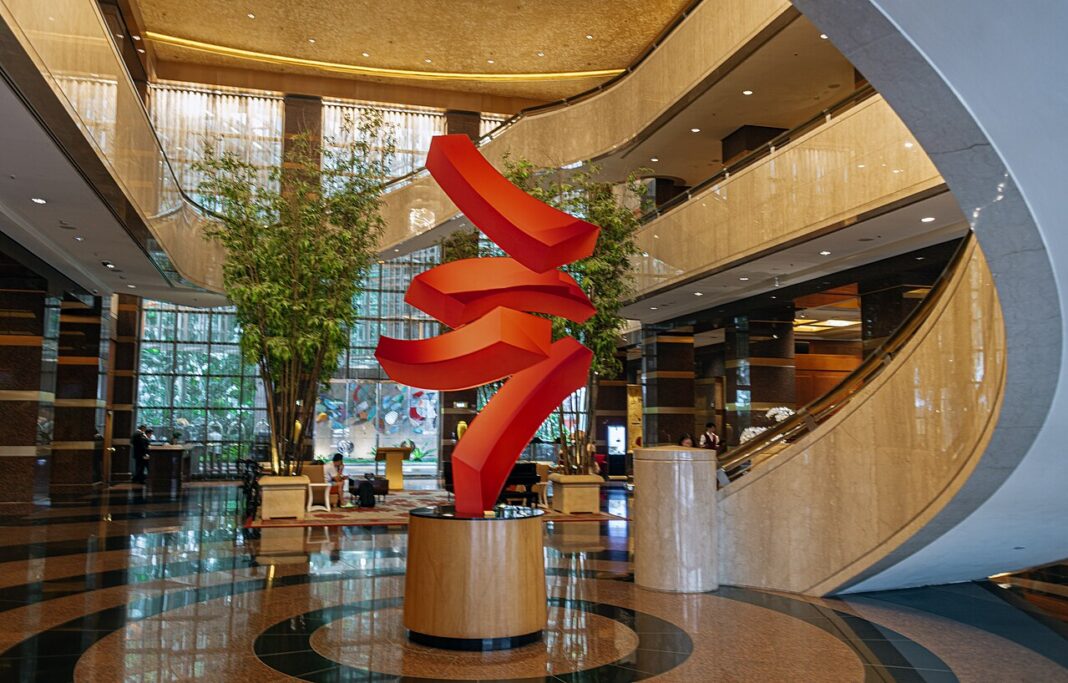
Image credit: Waldorf Astoria New York, Park Avenue entrance — photo by Hennem08, CC BY-SA 3.0 via Wikimedia Commons.