
Some links on this page are affiliate links. If you book through them, we may earn a commission at no extra cost to you.
Premium economy is the most misunderstood cabin in aviation. It is not a cheap business class, and on several airlines it is barely distinguishable from a good economy seat with a blocked middle. On others it is a genuinely separate product with its own cabin, its own crew ratio and its own catering.
The pricing is equally inconsistent. Premium economy typically runs two to three times the cost of economy on the same route, while delivering something closer to a third of the business class experience. Whether that is a good trade depends almost entirely on which airline you are flying and how long you are in the air.
What Premium Economy Actually Is
True international premium economy is a distinct cabin between economy and business, usually 20–40 seats, in a 2-4-2 layout on a widebody where economy is 3-4-3. The seat is a fixed-shell or standard recliner — it does not lie flat, and it does not become a bed.
The physical upgrade over economy is consistent across most carriers:
| Measure | Economy | Premium economy | Business |
|---|---|---|---|
| Seat pitch | 31–32″ | 38–40″ | Lie-flat, 78″+ bed |
| Seat width | 17–18″ | 18.5–20″ | 20–23″ |
| Recline | 3–5″ | 7–9″ plus leg rest | 180° |
| Layout (widebody) | 3-4-3 | 2-4-2 | 1-2-1 |
| Typical price vs economy | 1x | 2–3x | 4–8x |
Crucially, what you are buying is space and a better recline, not sleep. Anyone booking premium economy hoping to arrive rested after a red-eye is buying the wrong product. If sleep is the goal, the honest comparison is against business class — we cover that gap in detail in our guide to business class vs first class.
What You Also Get — and What You Don’t
Usually included: priority check-in and boarding, an extra checked bag, upgraded catering served on real crockery, a larger IFE screen, an amenity kit, and a better blanket and pillow.
Usually not included: lounge access. This is the most common misconception about the cabin. With a handful of exceptions, premium economy does not get you into the lounge on any major carrier. Nor does it typically earn business-class-level mileage, though it earns more than deep-discount economy.
Airline by Airline
The genuinely good ones
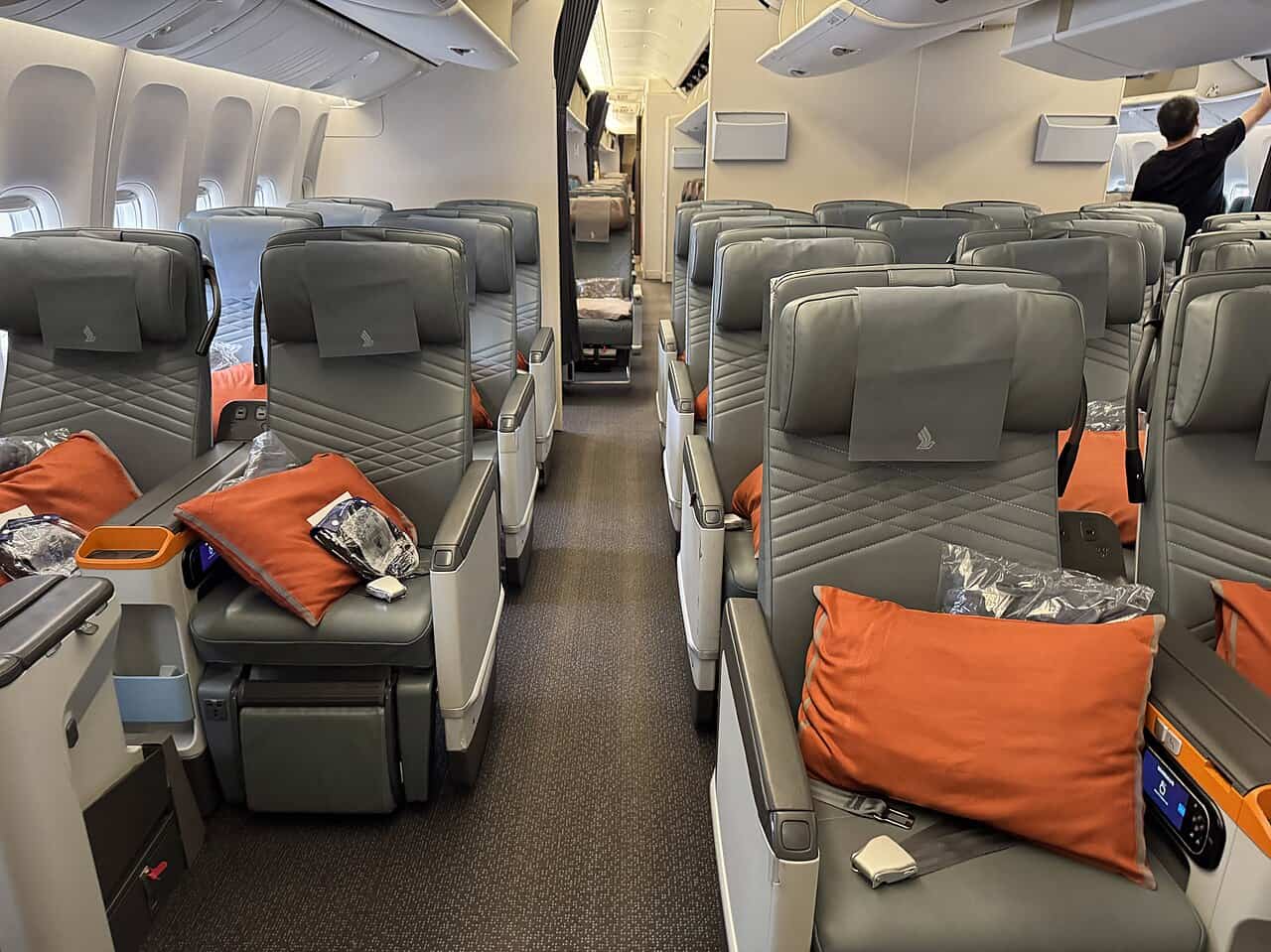
Singapore Airlines — Among the best in the sky. 38″ pitch, 18.5–19.5″ width in a 2-4-2 layout, and the only mainstream premium economy with Book the Cook, the pre-order menu normally reserved for premium cabins. The catering gap over economy is larger here than almost anywhere else. If you are comparing Singapore’s economy and premium economy specifically, the food alone shifts the calculation.
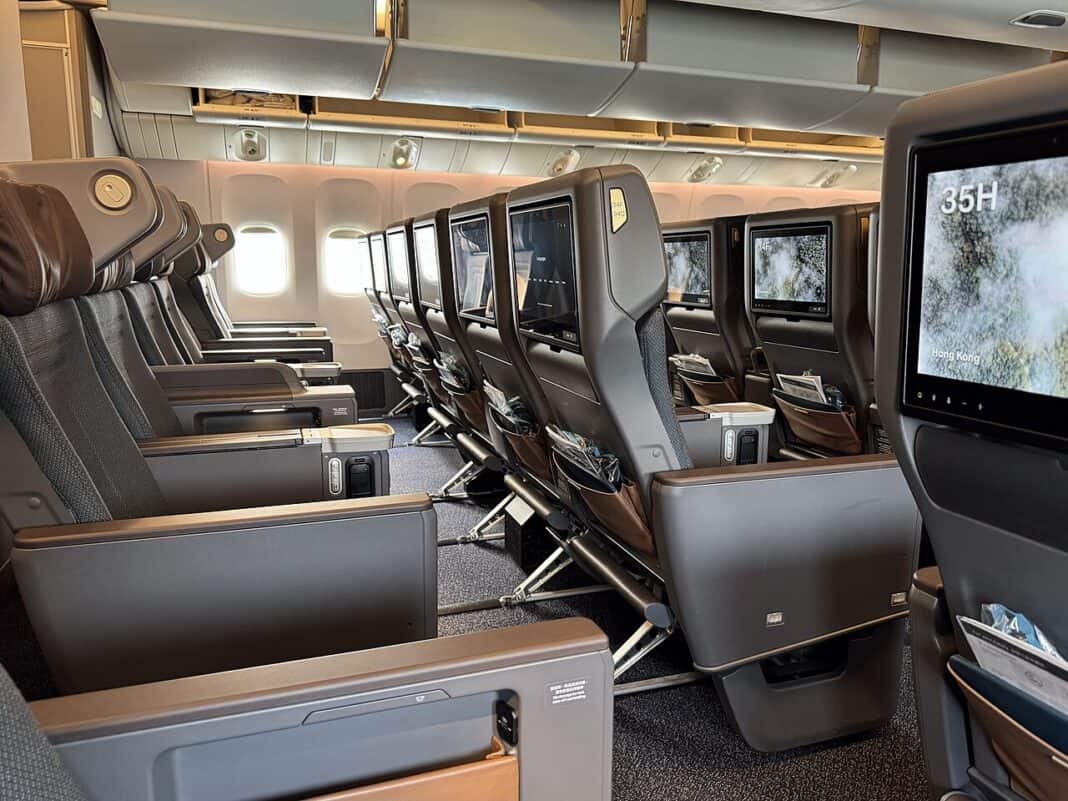
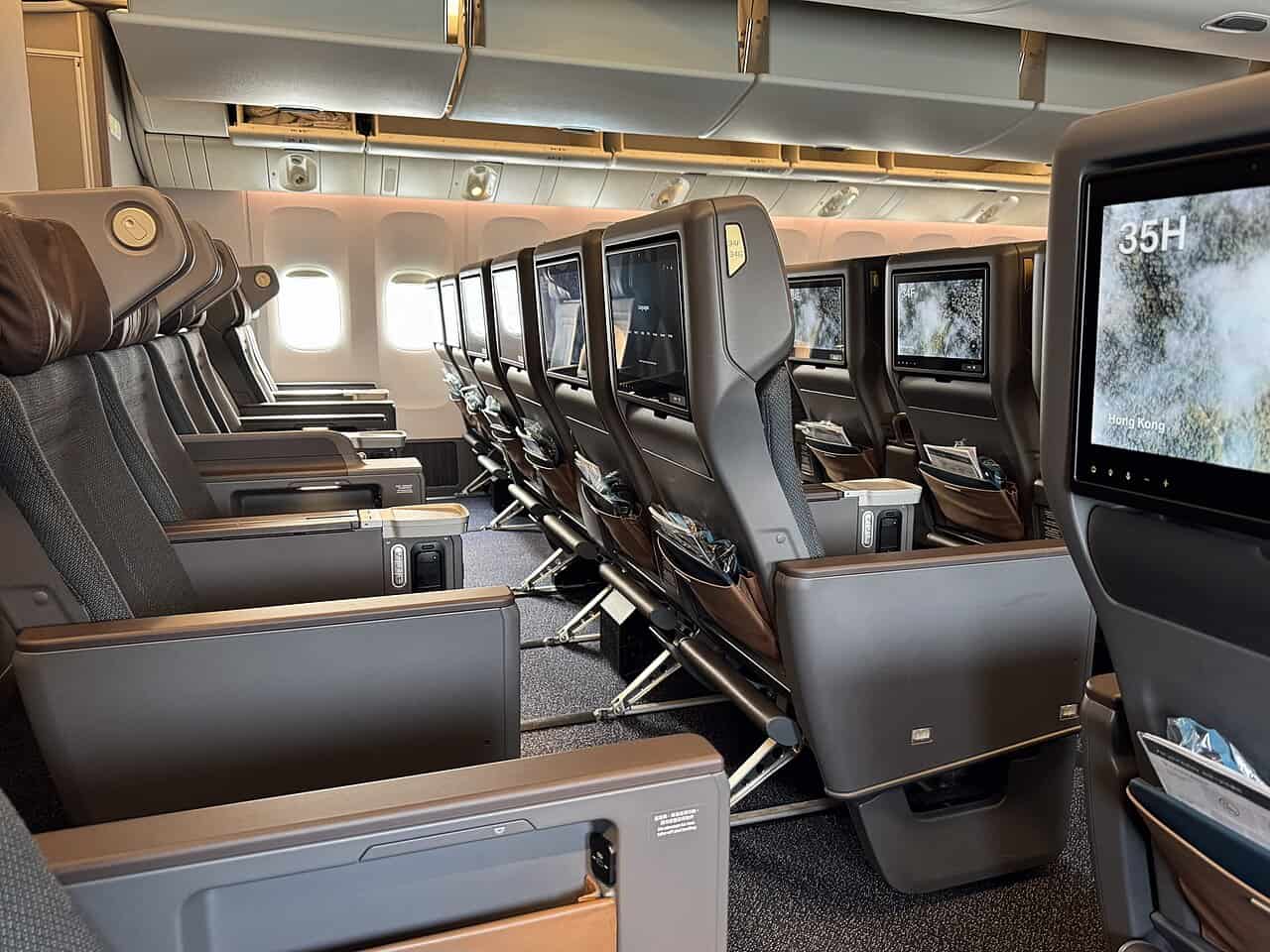
Cathay Pacific — A fixed-shell recliner at 38–40″ pitch with a large personal screen, a dedicated small cabin, and consistently attentive service. The fixed shell means the passenger in front cannot recline into your space, which matters more than the specs suggest.
ANA and Japan Airlines — Both excellent, with JAL’s Sky Premium among the widest seats in the category. Japanese carriers treat the cabin as a real product rather than an upsell.
Air France and Lufthansa — Solid, well-defined cabins with proper catering. Air France’s is a fixed shell; Lufthansa’s offers a welcome drink and a strong hard product.
The middling ones
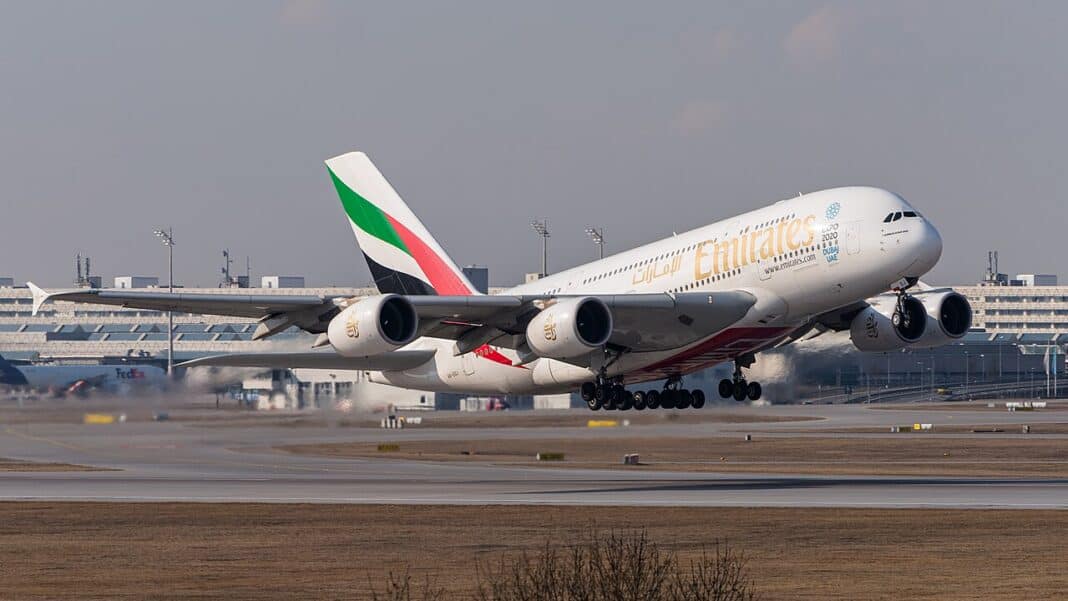
Emirates — A late arrival to the category and still expanding across the fleet, which is the main problem: it is not available on every route or aircraft, so you may pay a premium fare and find a standard economy cabin. Where it exists, the seat is good — 19.5″ wide with a generous recline and a solid meal service. Verify the aircraft before you book, because the gap between Emirates economy and premium economy is meaningless if the cabin is not fitted.
British Airways World Traveller Plus — The specs are respectable but the service and catering sit closer to economy than the price implies. Frequently the worst value-per-dollar of the major long-haul carriers.
Qantas — Good on the A380 and 787, and genuinely useful on ultra-long-haul routes where the flight length justifies the spend.
The US carriers
Delta Premium Select, United Premium Plus and American Premium Economy are all real cabins on international widebodies, with roughly 38″ pitch and better catering. They are decent products. They are also, on average, less generous than their Asian and European counterparts, and they are frequently priced closer to discounted business class than to economy — which makes the upgrade to business the better buy more often than you would expect.
Be careful with domestic naming. “First class” on a US domestic narrowbody is a wider recliner with a meal — comparable to international premium economy, not to international first. Delta Comfort+ and similar are extra-legroom economy, not premium economy.
When Premium Economy Is Worth It
- Daytime flights of 7–12 hours. This is the sweet spot. You are awake, you want space, and you are not trying to sleep — so the lack of a flat bed costs you nothing.
- You are tall. The extra 6–8 inches of pitch is transformative above about 6’1″, and no amount of economy seat selection replicates it.
- The price gap to business is enormous. On routes where business is $6,000 and premium economy is $1,400, the middle cabin is doing real work.
- You need to arrive presentable rather than rested. Space to work, better food, faster off the aircraft.
- Two people travelling together. The 2-4-2 layout means a true pair of seats with no stranger in the middle — a real gain over 3-4-3.
When to Skip It
- Overnight flights where you must sleep. Premium economy does not lie flat. If you land at 6am and go straight into meetings, either pay for business or take economy and save the difference for a hotel room and a late check-in.
- Flights under six hours. The economics rarely work. Extra-legroom economy delivers most of the benefit for a fraction of the cost.
- When business is within about 40%. On sale fares this happens more than people realise. Business at $2,600 against premium economy at $1,900 is not a close call.
- On carriers where the cabin is weak. Paying a Singapore-level premium for a British Airways-level product is the worst outcome in the category.
How to Pay Less for It
- Bid or buy up at check-in. Many carriers run paid upgrade offers 24–72 hours out at a steep discount to the booked fare. Lufthansa, BA and Qantas all do this routinely.
- Look at premium economy award space. It is often available when business is not, at a fraction of the miles.
- Check the aircraft, not just the route. Airlines swap equipment, and a premium economy fare on an unfitted aircraft is money wasted.
- Price the one-way legs separately. Premium economy outbound and economy home is a common and sensible split when only one direction is a daytime flight.
- Book the bulkhead or the rear rows of the cabin where possible — more space, and fewer people reclining into you.
If jet lag is the real concern behind the upgrade, our guide to avoiding jet lag on long-haul flights covers strategies that work regardless of cabin. And for the full picture on the cabins above premium economy, see our first and business class hub.
Frequently Asked Questions
Does premium economy include lounge access?
Almost never. A small number of carriers offer it on select routes or to elite members, but you should assume no lounge unless the fare rules explicitly say otherwise.
Does premium economy lie flat?
No. It is a recliner with additional pitch and a leg rest. Only business and first class offer lie-flat beds on long-haul aircraft.
How much more does premium economy cost than economy?
Typically two to three times the economy fare on the same route, though the multiple varies widely by carrier, season and how far ahead you book.
Is premium economy worth it for a 10-hour daytime flight?
On a good carrier, usually yes. Daytime flights of this length are the cabin’s strongest use case, because the absence of a flat bed does not cost you anything.
What is the difference between premium economy and extra-legroom economy?
Extra-legroom economy is the same seat in the same cabin with more pitch. Premium economy is a physically different seat in a separate cabin, with different catering, baggage and boarding.
Which airline has the best premium economy?
Singapore Airlines and Cathay Pacific are the consistent standouts, with ANA and JAL close behind. British Airways is generally considered the weakest value among major long-haul carriers.
The Bottom Line
Premium economy is worth it on long daytime flights, on carriers that treat it as a real product, and when business class is genuinely out of reach rather than merely expensive. It is not worth it overnight, on short sectors, or when a business fare sits within roughly 40% of the price. Check the carrier and check the aircraft — the gap between the best premium economy and the worst is wider than the gap between the worst premium economy and a good economy seat.
Seat specifications vary by aircraft type and configuration and change as airlines refit their fleets. Verify the seat map for your specific flight before booking. Cabin imagery via Wikimedia Commons, credited individually.