
Some links on this page are affiliate links. If you book through them, we may earn a commission at no extra cost to you.
Emirates and Etihad are based 80 miles apart, fly similar aircraft to overlapping destinations, and are both owned by emirates of the same country. They are also, in practice, quite different airlines — and the choice between them turns less on which is objectively better than on which cabin you are booking and how much you value a quiet airport.
Emirates is the larger operation by a wide margin, and it has spent two decades building a brand around theatrical touches: the onboard lounge, the first class shower, the ICE entertainment system. Etihad is smaller, has restructured hard since its loss-making equity-alliance years, and has quietly ended up with the better business class seat.
The Short Verdict
| Category | Winner | Why |
|---|---|---|
| Route network | Emirates | Roughly 140+ destinations against Etihad’s ~80. More US gateways, more frequencies. |
| Business class seat | Etihad | All-aisle-access 1-2-1 on the 787 and refitted 777. Emirates’ A380 business is 1-2-1, but much of the 777 fleet remains 2-3-2. |
| First class | Emirates | A380 shower suites. Etihad’s Residence is more exclusive but available on very few aircraft. |
| Onboard theatre | Emirates | The A380 bar is a genuine differentiator nothing at Etihad matches. |
| Economy | Tie | Both well above US carriers; Emirates has a larger IFE library. |
| Hub experience | Etihad | Zayed International is calmer and faster than the scale and crowds of Dubai. |
| Loyalty value | Emirates | Skywards has broader partner utility; Etihad Guest is improving but thinner. |
| Award availability | Etihad | Less competition for premium award seats. |
The Fleets
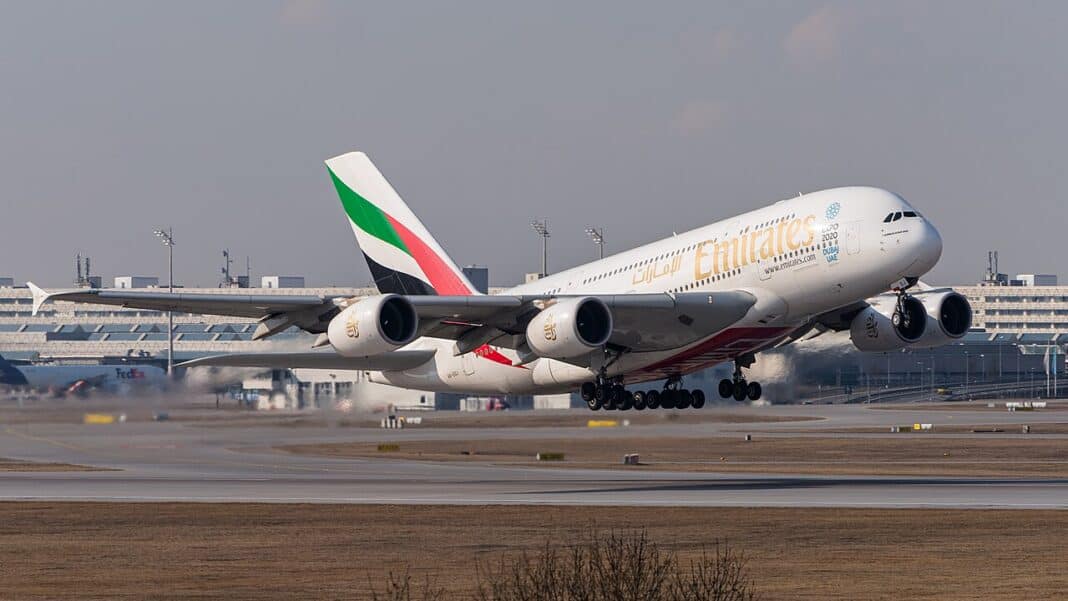
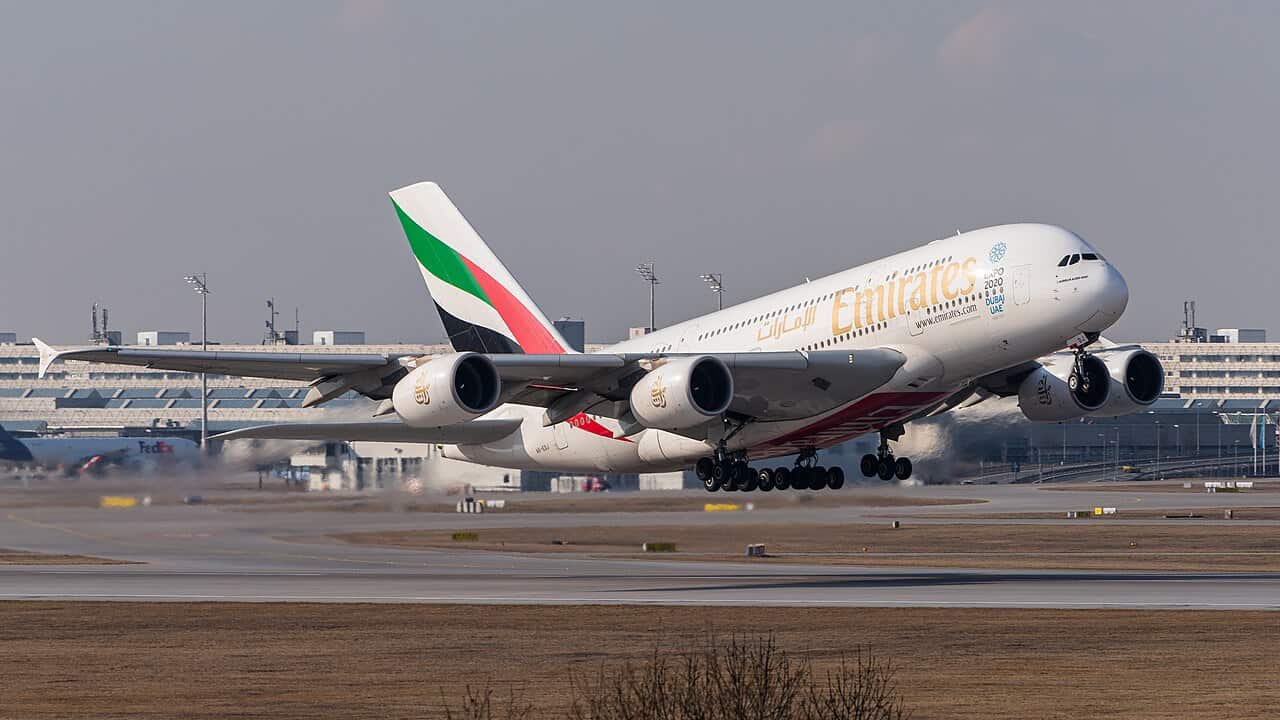
Emirates runs the largest A380 fleet in the world alongside a big 777 operation, with A350s now entering service. The A380 is the whole strategy — it is why the onboard bar and the shower suites exist, and it is why Emirates feels different from almost any other airline. If your route is A380-operated, that is a meaningful reason to choose Emirates.
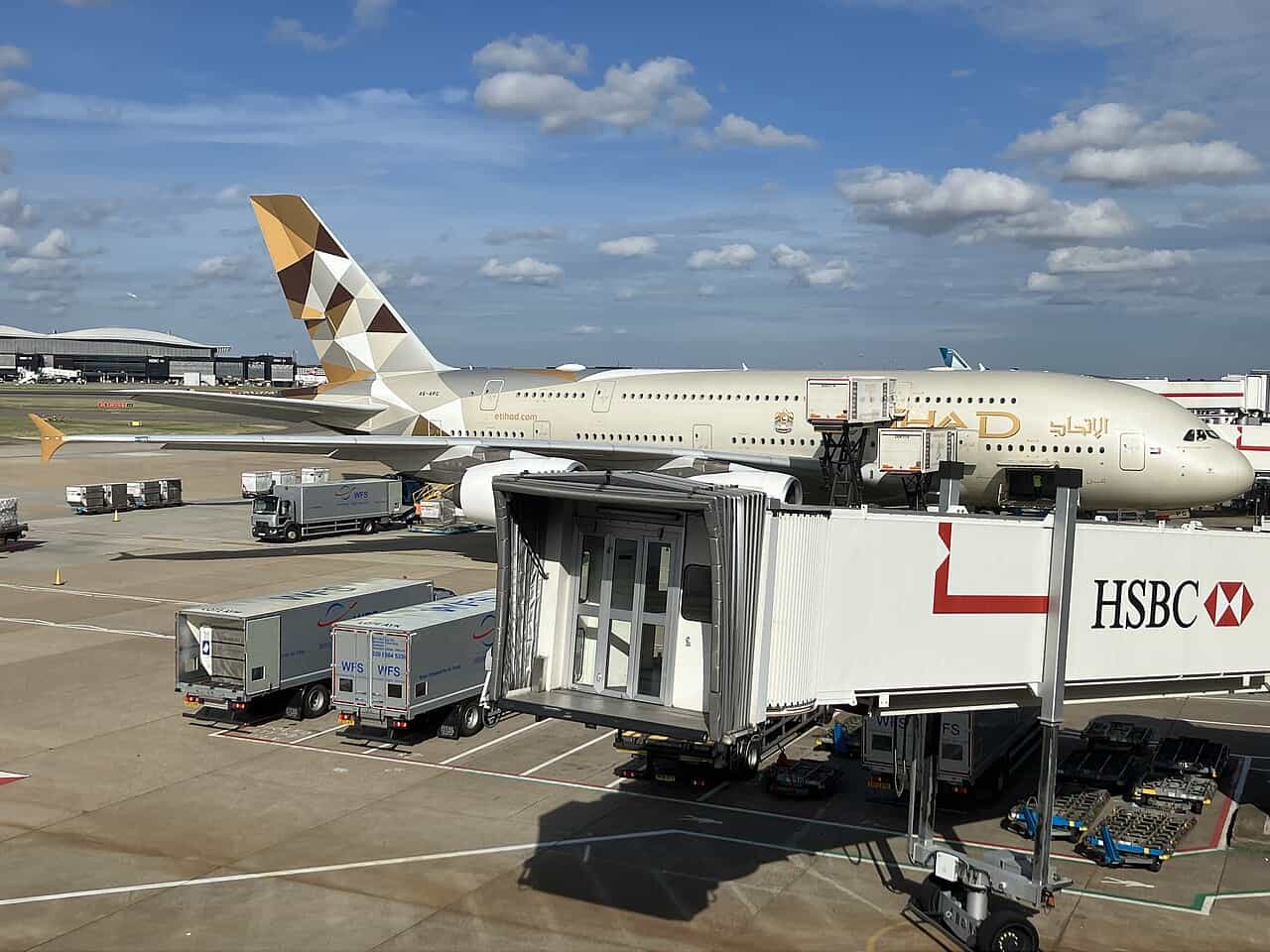
Etihad operates a smaller, younger mix built around the 787 Dreamliner, refitted 777s, A350s and a handful of A380s that returned to service on London and New York after a long pandemic-era grounding. The 787 is the aircraft to target — it carries Etihad’s best-value business product.
Business Class: Etihad Wins on Hardware
This is the comparison most travellers actually care about, and it is closer than Emirates’ marketing suggests.
Etihad Business Studio on the 787 and refitted 777 is a 1-2-1 configuration where every seat has direct aisle access. The seat converts to a fully flat bed of around 80 inches, with a substantial side console and good storage. The middle pairs work well for couples. It is a modern, competitive business class by any standard.
Emirates business class depends entirely on the aircraft. On the A380 it is 1-2-1 with direct aisle access, and it comes with the bar — a real advantage. On much of the 777 fleet, however, business remains 2-3-2, which means middle seats, passengers climbing over each other, and no direct aisle access for everyone. Emirates has been refitting these, but the older configuration is still widely deployed and it is the single biggest weakness in the Emirates premium proposition.
Practical takeaway: if you are flying Emirates business, check the aircraft. A380 business is excellent. Unrefitted 777 business is a generation behind what Etihad offers on the 787.
The onboard bar
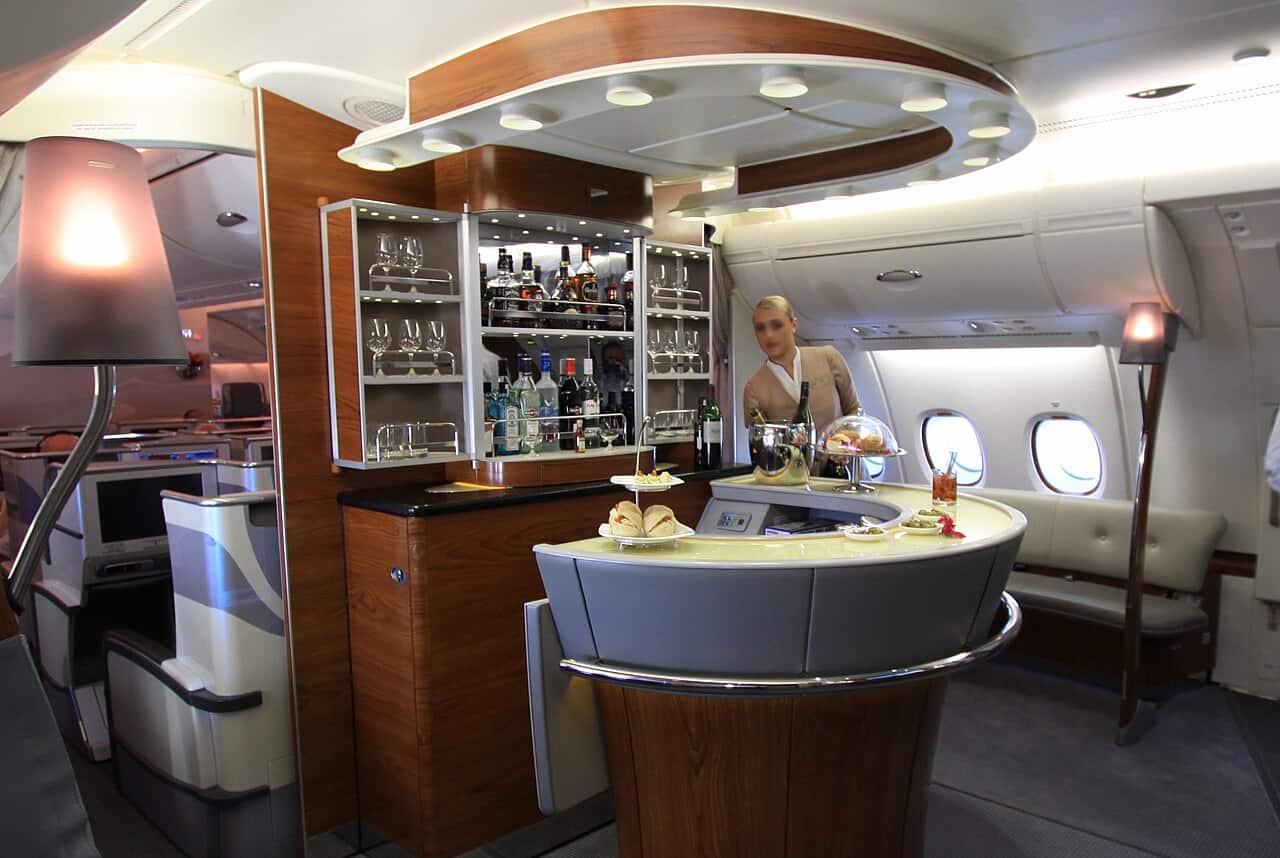
Emirates’ A380 lounge at the rear of the upper deck is available to business and first passengers, staffed, and stocked properly. It sounds gimmicky and it is genuinely good — somewhere to stand up, stretch and talk on a 14-hour flight. Etihad has nothing comparable.
First Class and The Residence
Emirates’ A380 first class is the more accessible flagship: fully enclosed suites, an onboard shower spa, and Dom Pérignon. On the refitted 777 the newer first class suites go further, with floor-to-ceiling doors and virtual windows for the middle seats. It is bookable on a long list of routes, which matters.
Etihad counters with The Residence — a three-room suite with a bedroom, living room, private bathroom and a dedicated butler. It is arguably the most exclusive commercial cabin ever built, and it is available on a very small number of A380 rotations at a price that runs well into five figures. Etihad’s standard First Apartments are excellent and similarly scarce.
On availability, Emirates wins comfortably. On the single best product in the sky, Etihad does. For a wider view of the category, see our roundup of the best first class airlines in the world, and our head-to-head on Emirates First Class vs Qatar Qsuite.
Economy and Premium Economy
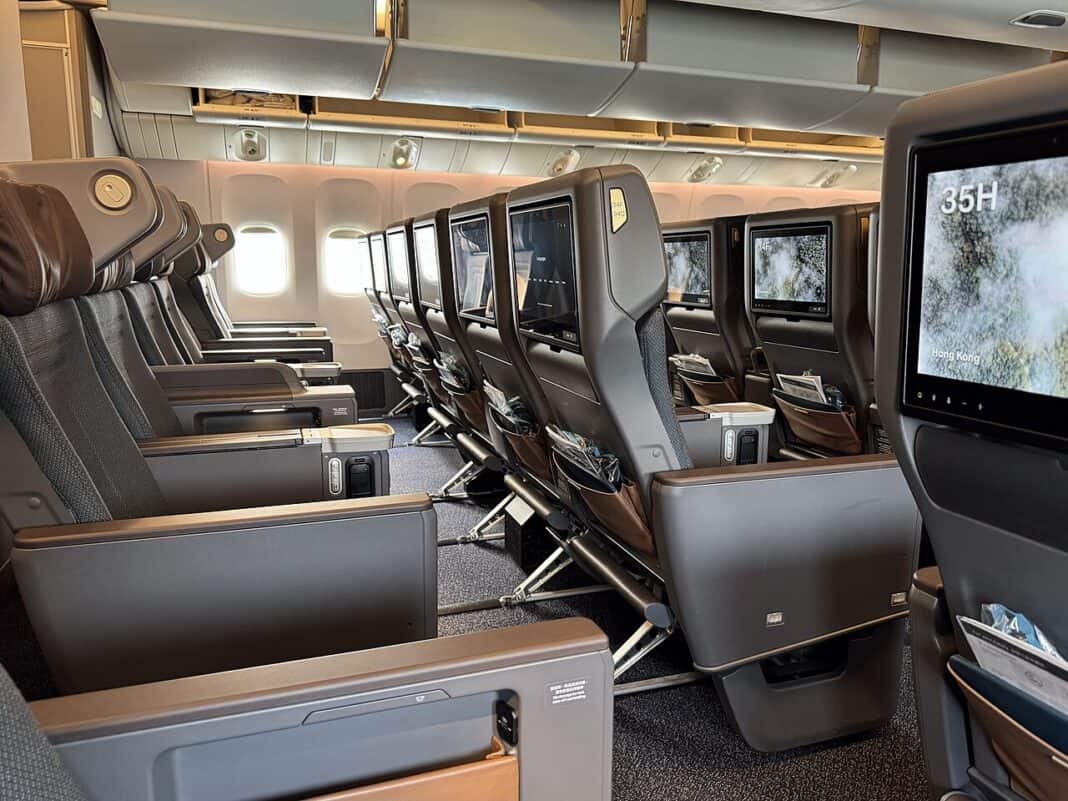
Both airlines run economy products that are clearly better than what US carriers offer on the same routes — better catering, better entertainment, better crew ratios. Emirates’ ICE system has the deeper content library.
Emirates has been rolling out premium economy across its A380 and refitted 777 fleet, and the seat is good where it exists. The problem is coverage: it is not fitted on every aircraft, so a premium economy fare can land you on a plane without the cabin. Etihad’s premium economy is similarly limited in deployment. On both carriers, verify the aircraft configuration before paying the premium — we cover the broader question of when this cabin is worth paying for in our guide to whether premium economy is worth it.
Dubai vs Abu Dhabi: The Hub Difference
This is underrated in most comparisons and matters enormously if you are connecting.
Dubai International is one of the busiest airports on earth. It is impressive, well-equipped, and frequently overwhelming. Connections through Terminal 3 can involve long walks, crowded corridors and security queues. Emirates’ first and business lounges in Concourse A and B are enormous and board directly to the aircraft, which is a real advantage — but the terminal experience around them is high-volume.
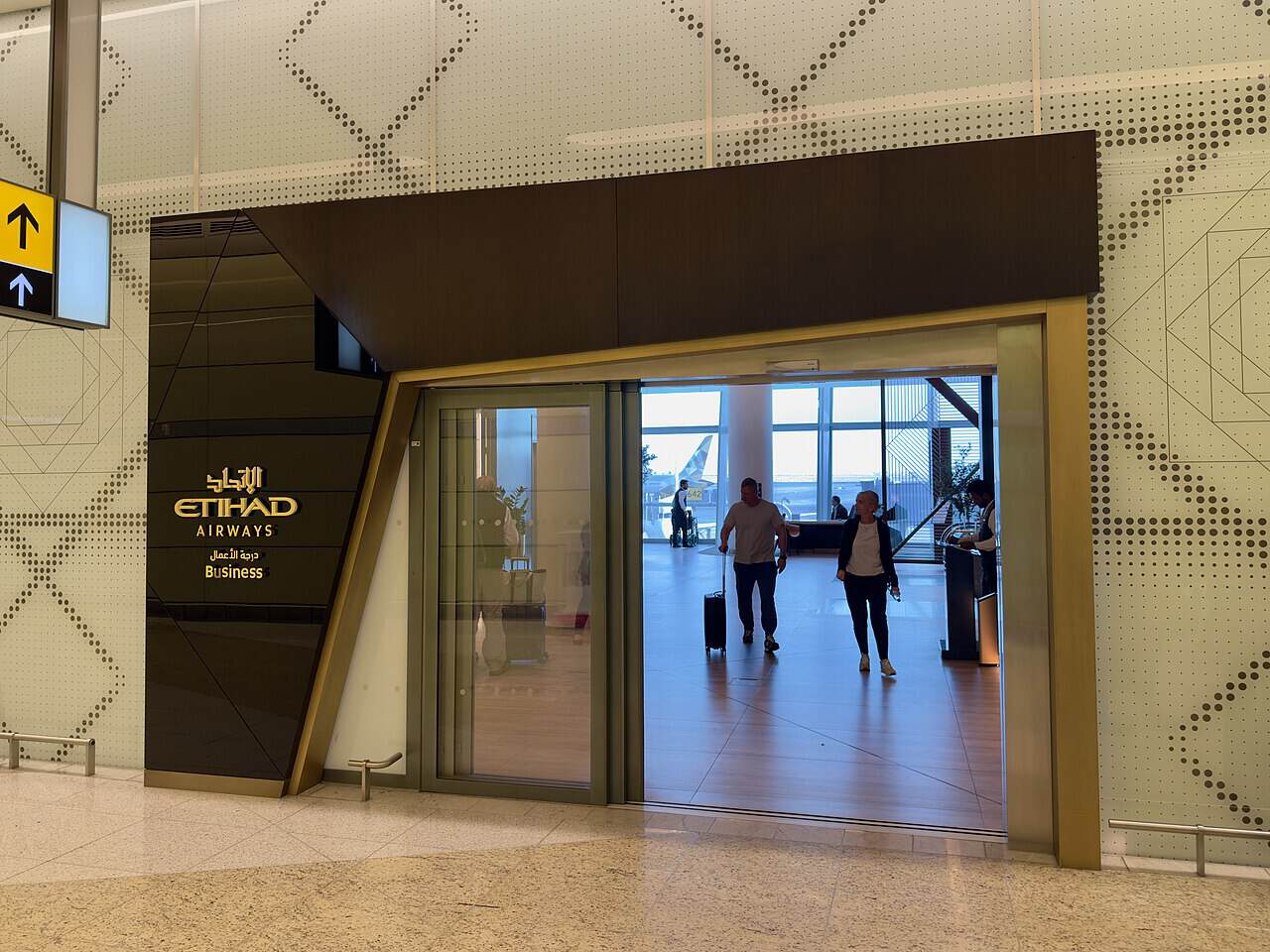
Zayed International in Abu Dhabi opened its new terminal recently and is a calmer, faster, more pleasant place to connect. Shorter walks, shorter queues, less noise. Etihad’s lounges are smaller than Emirates’ but the overall transit experience is materially better.
If you are travelling to the UAE itself, note that Abu Dhabi and Dubai are about 90 minutes apart by road, so the hub is also a destination decision.
Loyalty and Award Bookings
Emirates Skywards is the larger program with more partner utility, and it is a transfer partner of most major flexible currencies including Amex Membership Rewards, Chase Ultimate Rewards and Capital One. The catch is high surcharges on award tickets, which can run into four figures on long-haul premium redemptions.
Etihad Guest is thinner on partners but also transfers from the major flexible programs, and it has periodically offered strong value on partner awards. Its real advantage is availability — fewer people are hunting Etihad premium award space, so it is easier to find.
Neither program is the reason to pick one airline over the other. Both impose meaningful surcharges, and both are better used opportunistically than as a primary strategy. Our loyalty programs guide covers where these sit against the wider field.
Who Should Fly Which
Choose Emirates if: your route is A380-operated; you want the onboard bar or the first class shower; you need a destination Etihad does not serve; you are flying from a smaller US city with a direct Emirates service; or you are travelling with family and want the deepest entertainment library.
Choose Etihad if: you are booking business class on a 787 or refitted 777 and want guaranteed direct aisle access; you are connecting and value a fast, calm hub; you are hunting premium award availability; or you are heading to Abu Dhabi itself.
Choose neither if: Qatar Airways serves your route competitively. Qsuite remains the benchmark business class among the Gulf carriers, and Doha is an efficient hub. That comparison is worth running before you settle on the UAE options.
Frequently Asked Questions
Is Etihad better than Emirates?
Etihad has the better business class hardware on its 787 and refitted 777 fleet, and a much calmer hub. Emirates has a far larger network, the A380 onboard bar and a more widely available first class. For business class specifically, Etihad often wins; for network and flagship experience, Emirates does.
Are Emirates and Etihad the same company?
No. Emirates is owned by the government of Dubai; Etihad is owned by the government of Abu Dhabi. They are separate airlines and direct competitors, despite both being UAE flag carriers.
Which has better business class, Etihad or Emirates?
It depends on the aircraft. Etihad’s 1-2-1 Business Studio gives every passenger direct aisle access. Emirates is 1-2-1 on the A380 but still 2-3-2 on much of the 777 fleet, which means middle seats. Always check the aircraft before booking Emirates business.
Does Etihad still fly The Residence?
Yes, on a small number of A380 routes including London and New York. It remains the most exclusive commercial cabin available, with a bedroom, living room, private bathroom and dedicated butler.
Which hub is easier to connect through?
Abu Dhabi’s Zayed International is generally faster and less crowded than Dubai International, with shorter walks and shorter queues.
Which airline has better food?
Both are strong and broadly comparable in premium cabins. Emirates offers a wider wine list and the A380 bar service; Etihad’s on-board chef in business and first is a genuine differentiator on longer flights.
The Bottom Line
Emirates is the better airline if you are flying the A380, chasing first class, or need the network. Etihad is the better airline if you are booking business class on the 787, connecting through the hub, or looking for award space that has not already been taken. The decision is not really Emirates versus Etihad — it is which aircraft is operating your specific flight, and that is worth two minutes on the seat map before you book either.
Fleet configurations and cabin products change as both airlines continue refit programmes. Verify the aircraft type and seat map for your specific flight before booking. Aircraft and lounge imagery via Wikimedia Commons, credited individually.