
LUXGetaway is reader-supported. When you book through our links, we may earn a commission at no extra cost to you.
The Ritz-Carlton vs Four Seasons debate is the most common fork in the road for anyone spending $800 to $2,000 a night on a hotel room. Both are the “safe” five-star choice. Both have flagships that consistently show up on best-of lists. And both will absolutely deliver a memorable stay. But after a decade of booking clients into each, we can tell you the two brands feel meaningfully different the moment you walk through the door, and the right choice depends less on the logo and more on what kind of luxury you actually want.
This guide breaks down how Ritz-Carlton and Four Seasons compare on service philosophy, room product, food and beverage, spa, best destinations, loyalty programs, and pricing, so you can pick with confidence.
A Quick History of Two Iconic Brands
The original Ritz name traces back to Cesar Ritz and the Paris and London hotels he opened around the turn of the 20th century. The modern Ritz-Carlton Hotel Company was built around The Ritz-Carlton Boston (1927) and grew through the 1980s and 1990s into a global brand famous for its “Gold Standards” and its uniformed, formal European-style service. Marriott acquired the company in 1998, and today Ritz-Carlton operates roughly 115 hotels and resorts worldwide.
Four Seasons is younger and, in many ways, more disruptive. Founded in Toronto by Isadore Sharp in 1961, the brand pioneered the idea that true luxury was warmth, personalization, and small human gestures rather than gilded lobbies. Four Seasons runs about 130 properties globally and, notably, still owns almost none of them, focusing entirely on management and service culture.
Service Philosophy: Where Ritz-Carlton and Four Seasons Diverge
This is the single biggest difference in the Ritz-Carlton vs Four Seasons comparison, and it shapes everything else.
Ritz-Carlton service is formal, choreographed, and confident. Staff are in crisp uniforms. You are addressed by name and by title. Doormen open doors with a slight bow. The famous credo (“We are Ladies and Gentlemen serving Ladies and Gentlemen”) is not marketing copy; it genuinely runs the culture. If you like a hotel that feels like an event, Ritz-Carlton delivers.
Four Seasons service is warmer, more discreet, and more contemporary. Uniforms are softer. Interactions feel like a well-briefed friend rather than a butler on stage. The staff-to-guest ratio at flagship properties is quietly enormous, and preferences get logged and remembered across properties globally. If you want a hotel that reads the room and disappears when you want privacy, Four Seasons usually wins.
Neither is objectively better. They are aimed at different sensibilities. Old-money and celebrity travelers often lean Four Seasons for exactly this reason; new-to-luxury travelers and business travelers often prefer the visible polish of Ritz-Carlton.
Rooms and Suites
Base-category rooms at both brands average 450 to 650 square feet at US city properties and considerably larger at resorts. Bathrooms are marble, linens are heavy, and the minibars are generous.
Ritz-Carlton interiors trend traditional and residential, with darker woods, classic art, and heavier drapery. Recent openings like The Ritz-Carlton New York, NoMad and Ritz-Carlton Reserve properties (Dorado Beach in Puerto Rico, Zadun in Los Cabos) push more contemporary, but the DNA is grand.
Four Seasons rooms tend to feel lighter, more design-forward, and more of-the-moment. Properties like Four Seasons Surf Club in Miami, Four Seasons Bora Bora, and Four Seasons Hotel New York Downtown have a cleaner, gallery-like sensibility. Bathrooms are consistently excellent, often with soaking tubs positioned for the view.
Food and Beverage
Food is where Four Seasons quietly pulled ahead over the last decade. The brand has aggressively courted marquee chefs: Le Cinq at Four Seasons George V (three Michelin stars), Wolfgang Puck’s CUT at Four Seasons Beverly Wilshire, and destination restaurants at properties from Bangkok to Florence. Breakfast at any Four Seasons is legitimately one of the best meals in the city.
Ritz-Carlton is strong but less chef-driven. Standouts include Fifth at The Ritz-Carlton Half Moon Bay, Aqua at Ritz-Carlton Naples, and the traditional afternoon tea programs at the Ritz-Carltons in Boston, San Francisco, and Hong Kong. If tea service and a proper lobby bar with a jazz trio matter, Ritz-Carlton has the edge.
Spa and Wellness
Both brands run large, full-service spas averaging $250 to $450 for a signature 60-minute treatment at US properties. Four Seasons spas tend to be more clinically credible, with medical-adjacent offerings and stronger wellness programming at destination resorts like Four Seasons Punta Mita and Four Seasons Maui at Wailea. Ritz-Carlton spas skew traditional and pampering, with excellent facilities at Ritz-Carlton Kapalua, Amelia Island, and Half Moon Bay.
For pure spa-and-wellness travel, both are a tier below dedicated resorts. See our guide to what qualifies as a six-star hotel and where to find them if wellness is the entire point of the trip.
Ritz-Carlton vs Four Seasons: Head-to-Head Comparison Table
| Category | Ritz-Carlton | Four Seasons |
|---|---|---|
| Properties worldwide | ~115 | ~130 |
| Average nightly rate (flagship) | $700 to $1,400 | $900 to $1,800 |
| Service style | Formal, uniformed, choreographed | Warm, discreet, contemporary |
| Design DNA | Traditional, residential, grand | Modern, gallery-like, lighter |
| Food and beverage | Strong tea and lobby bars | Chef-driven, destination restaurants |
| Sweet-spot destinations | Big US cities, Caribbean, Hawaii resorts | Global cities, tropical resorts, Europe |
| Loyalty program | Marriott Bonvoy (points-earning) | Four Seasons Preferred Partner (perks, not points) |
| Best for | Visible polish, points junkies, family beach resorts | Privacy, food, design, ultra-wealthy travelers |
Best Destinations for Ritz-Carlton
- The Ritz-Carlton, Half Moon Bay — the definitive Northern California coastal resort.
- The Ritz-Carlton, Amelia Island — Ritz-Carlton at its Southern-resort best.
- The Ritz-Carlton Maldives, Fari Islands — the brand’s ambitious swing at ultra-luxury overwater.
- The Ritz-Carlton, Hong Kong — the highest hotel in the world at ICC, unrivaled skyline.
- Ritz-Carlton Reserve properties — Dorado Beach (Puerto Rico) and Zadun (Los Cabos) are the brand’s discreet ultra-luxury tier.
Best Destinations for Four Seasons
- Four Seasons Hotel George V, Paris — arguably the best city hotel in the world.
- Four Seasons Resort Bora Bora — the reference point for Polynesian luxury.
- Four Seasons Resort Maui at Wailea — the definitive Hawaii family flagship.
- Four Seasons Hotel Firenze — a restored 15th-century palazzo with the largest private garden in Florence.
- Four Seasons Resort Punta Mita — Mexico’s blue-chip Pacific coast resort.
Loyalty and Points: A Real Difference
This is where the Ritz-Carlton vs Four Seasons question becomes practical.
Ritz-Carlton stays earn Marriott Bonvoy points, and Bonvoy elite status (Platinum and above) gets you meaningful perks: 4pm late checkout, free breakfast at some tiers, room upgrades when available, and lounge access at properties that have one. If you already collect Bonvoy points or hold the Ritz-Carlton or Bonvoy Brilliant credit cards, Ritz-Carlton stays quietly pay for themselves over time. We go deeper on this in our luxury hotel loyalty program guide.
Four Seasons does not have a traditional points program. Instead, book through a Four Seasons Preferred Partner travel advisor and you get upgrades at check-in when available, daily breakfast for two, a property credit (typically $100), and early check-in and late checkout. For a couple staying three nights, that package is often worth more than any points earn.
Pricing: What You Actually Pay
Across major US markets in 2026, expect:
- Ritz-Carlton entry-level rooms: $650 to $1,100 per night off-peak, $1,100 to $1,800 in season.
- Four Seasons entry-level rooms: $850 to $1,400 off-peak, $1,400 to $2,200 in season.
- Resorts at both brands: add 20 to 40 percent versus city rates, plus resort fees where applicable.
- Suites at either brand: $2,500 to $8,000 per night for a proper one-bedroom suite.
Four Seasons runs roughly 15 to 20 percent more expensive on a like-for-like basis in most markets. In some cities (Paris, Bora Bora, Maui) the gap is much larger.
When to Pick Which
Pick Ritz-Carlton if: you value formal, visible service; you collect Marriott Bonvoy points or hold a Ritz-Carlton credit card; you want a US beach resort with a big kids’ club; you prefer a traditional, residential aesthetic; you want a proper afternoon tea program.
Pick Four Seasons if: you prioritize discreet, personalized service; food and beverage matters a lot; you want contemporary design; you are booking a European city or a special-occasion tropical resort; you can access a Preferred Partner advisor for the amenity package.
If you are debating whether to spend even more and go a full tier up, our Aman vs Four Seasons comparison is the natural next read for the ultra-luxury comparison.
The Verdict
Ritz-Carlton is the better choice if you want a polished, points-earning grand hotel experience and a strong US resort footprint. Four Seasons is the better choice if you want warmer, more discreet service, better food, and design that feels current. Both will deliver a five-star stay. Neither will disappoint. But once you know which sensibility you actually want, the choice usually makes itself.
Ready to book? Compare live rates and availability for both brands on Booking.com, or go direct to Ritz-Carlton and Four Seasons to see current offers and package rates. For more inspiration, browse our roundup of the most luxurious hotels in the world.
Frequently Asked Questions
Is Ritz-Carlton or Four Seasons more expensive?
Four Seasons is typically 15 to 20 percent more expensive than Ritz-Carlton for a comparable room in the same city. In destination markets like Paris, Bora Bora, and Maui, the gap can be larger.
Which has better service, Ritz-Carlton or Four Seasons?
Neither is objectively better. Ritz-Carlton service is formal, uniformed, and visible. Four Seasons service is warmer, more discreet, and more personalized. Travelers who value privacy typically prefer Four Seasons; travelers who value visible polish prefer Ritz-Carlton.
Can I earn points at Four Seasons?
No. Four Seasons does not participate in a traditional loyalty points program. Instead, booking through a Four Seasons Preferred Partner advisor gets you upgrades, breakfast, a property credit, and flexible check-in and checkout.
Is Ritz-Carlton part of Marriott?
Yes. Ritz-Carlton has been owned by Marriott International since 1998. Stays earn Marriott Bonvoy points, and Bonvoy elite status is recognized at Ritz-Carlton properties, though benefits are structured differently than at other Marriott brands.
What is the top tier of each brand?
Ritz-Carlton Reserve is the brand’s ultra-luxury tier, with only a handful of properties globally, including Dorado Beach in Puerto Rico and Zadun in Los Cabos. Four Seasons does not have a formal sub-brand but its Private Residences and Private Retreats represent the top of its inventory.
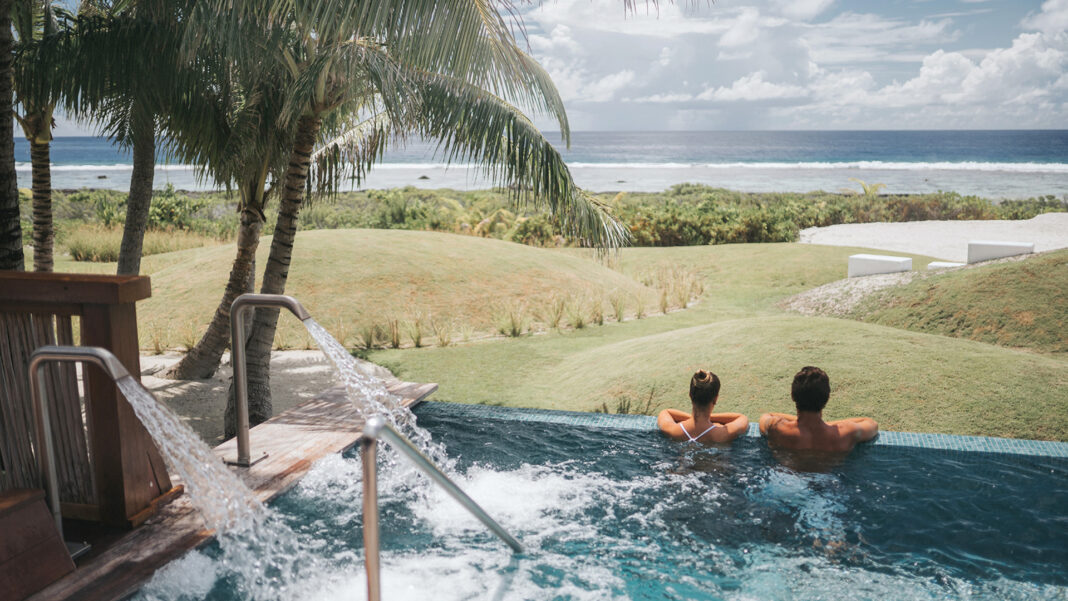
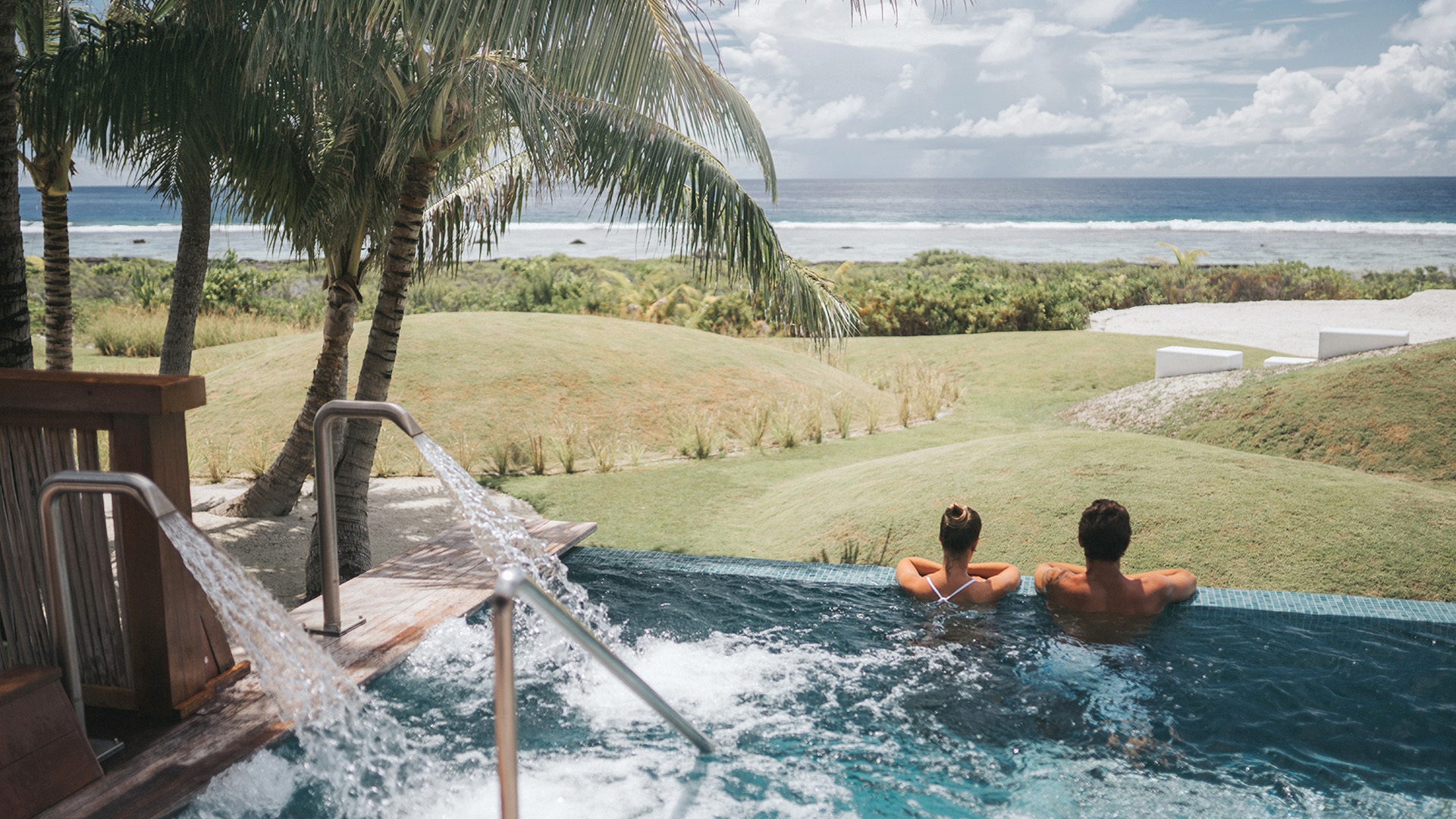
Featured image: Four Seasons Resort Bora Bora. Photo courtesy Four Seasons Hotels and Resorts.