
Updated 2 November 2026.
Almost every guide to the best time to visit Costa Rica opens with the same sentence: the dry season runs December to April, the rainy season May to November, go in the dry season. That sentence describes one side of a country that has two opposite climates — and the side it describes is the side most luxury travellers are not actually going to.
Costa Rica’s own national meteorological institute, the IMN, states it plainly: the Caribbean slope has no defined dry season at all, its wettest month is December, and its driest stretch is September and October — precisely the months the Pacific is at its wettest. The two coasts are roughly 100 miles apart and run on inverted calendars.
Get that one fact right and the whole trip changes. This guide is built on IMN regional climate studies, ICT arrivals and occupancy statistics, and current SINAC national park rules — several of which changed in 2026 and are not yet reflected anywhere else.
The short answer
- Guanacaste and the Papagayo resorts: late December through March. The dry season there is genuinely bone dry.
- The Caribbean — Tortuguero, Puerto Viejo: September and October, or February to March. Not December, which is its wettest month.
- Osa Peninsula and Corcovado: January to March, and note that three park sectors close entirely in October.
- Best value and fewest people anywhere: September and October, when national hotel occupancy falls to 36.7% and Liberia’s arrivals drop by 80%.
- Best overall compromise: late November to mid-December on the Pacific, after the rains break and before the holiday rates land.
The inversion, in one pair of numbers
The IMN’s own figures: Liberia, in Guanacaste, averages about 2 mm of rain in January. Limón, on the Caribbean, averages roughly 300 mm in the same month. That is about 150 times more rain, in the same country, in the same week of the year.
Here is how the regions actually behave, from IMN’s regional climate studies:
| Region | Annual rainfall | Rain days / year | Driest stretch | Wettest stretch |
|---|---|---|---|---|
| Guanacaste / Papagayo | 1,500–2,500 mm | 136 | Dec–Mar (just 4% of annual rain) | Sep–Oct |
| Central Pacific (Manuel Antonio) | ~3,500 mm | 166 | Jan–Mar (~4%) | May–Aug, then Sep–Nov |
| Osa / Golfo Dulce | 4,000–6,000 mm | 204 | Jan–Mar (~11%) | October extremes |
| Arenal / Northern Zone | 3,200 mm+ | — | No defined dry season; relative lull Feb–Apr | One long wet period, May–Dec |
| Caribbean north (Tortuguero) | 3,500–4,500 mm | 195 | Sep–Oct and Feb–Mar | Nov–Jan, peaking in December |
| Caribbean south (Puerto Viejo) | 2,500–3,000 mm | 184 | Sep–Oct and Feb–Mar | Nov–Jan |
Three things follow that are worth more than any month-by-month calendar:
The Osa has no real dry season. Its “dry” January to March still carries 11% of annual rain — nearly three times Guanacaste’s share — on 4,000 to 6,000 mm a year. It is the wettest part of the country. Plan accordingly; do not plan it like Guanacaste.
Arenal is not a dry-season destination. IMN finds a single rainy period running May into December or January that carries about 93% of annual rainfall, with no formally defined dry season at all — only a relative lull in February to April.
Pacific rain falls in the afternoon; Caribbean rain falls at night and in the morning. This is an IMN observation, and for a luxury traveller it is the single most practically useful line in this guide: a Pacific “rainy season” morning is usually dry. You lose the late afternoon, not the day.
The veranillo is real, but it is not a reliable dry window
The mid-year “little summer” does exist. IMN’s study, using a dry-pentad criterion over 1941–1980 data, finds dry five-day periods most frequent between 12 July and 14 August in the most affected zone. But the probability in even the most intense zones is only 30–40%, it occurs on the Pacific slope only, and IMN states that in the lowland Central Pacific the mountains block the trade winds so the veranillo disappears — “in the Parrita valley it is imperceptible.” Extreme years have run 85 days (1972) or failed to show at all. Any guide quoting fixed veranillo dates is overstating what the data supports.
Crowds and cost: the September cliff
ICT’s 2025 arrivals data shows the sharpest seasonality of any destination we cover.
| Month 2025 | Total arrivals | Via San José (SJO) | Via Liberia (LIR) |
|---|---|---|---|
| March | 336,476 | 195,680 | 117,044 |
| August | 199,959 | 132,838 | 49,477 |
| September | 121,815 | 82,054 | 22,176 |
| October | 145,663 | 98,574 | 30,779 |
| December | 347,143 | 201,440 | 114,686 |
| 2025 total | 2,943,991 | 1,783,761 | 904,762 |
December ran 2.85 times September’s arrivals. The August-to-September drop alone is 39.1% in a single month. And the regional split matters enormously: Liberia swings 5.28× between March and September, while San José swings only 2.46×. Guanacaste empties out in September in a way the Central Valley simply does not.
Hotel occupancy tells the same story with a twist. ICT’s figures for 2024 — the most recent year available — peak at 83.5% in February and bottom at 36.7% in September. Note that occupancy peaks in February while arrivals peak in December: December arrivals are inflated by holiday and diaspora travel with shorter stays, whereas February is when paid hotel nights peak.
One honest caveat, and it is one no competitor seems to mention: ICT suspended its hotel survey in 2025. There is no official Costa Rican occupancy data after 2024. Anyone quoting current occupancy figures is not using ICT data.
National park rules that changed in 2026
This is where stale guides will cost you a day of your trip.
Manuel Antonio is closed on Tuesdays, not Mondays
SINAC’s official park page: open Wednesday to Monday, 7:00 a.m. to 3:00 p.m., closed Tuesday. The Monday closure came from a 2015 executive decree and was reversed by MINAE and SINAC effective 1 April 2021 — more than five years ago. Many guides still print both the wrong closed day and a 4 p.m. closing time. Tickets are sold online only; entry is $18.08 for adults including tax, $5.65 for children 2–12.
Corcovado’s capacity is unstable, and three sectors close in October
Sirena’s daily cap was cut to 225 in July 2026 after a wastewater treatment plant failure sent untreated waste into a waterway inside the park, then restored to 366 per day effective 17 September 2026. Entry requires a prior reservation and a certified guide. Daily limits elsewhere: San Pedrillo 120, La Leona 80, Los Patos 80, El Tigre 80. Crucially, Sirena, El Tigre and Los Patos close to visitors in October for maintenance and because October is among the wettest months on the Osa. San Pedrillo and La Leona stay open. The caps remain under active constitutional litigation, so book early and re-confirm.
Poás now requires a helmet
Following an eruption on 27 August 2026, Poás Volcano National Park cut capacity from 2,052 to 1,064 visitors per day effective 28 August 2026. No more than 56 visitors at the crater viewpoint at a time, for up to 20 minutes, and helmets are mandatory on the main trail. Advance reservation through SINAC is required and the restrictions have no end date. Check SINAC before you travel — this one can change at short notice.
More broadly: as of March 2026, advance reservation is mandatory at 11 protected areas including Manuel Antonio and Irazú, booked through SINAC’s SICORE platform, with digital-only entry. Download the QR code before you leave the hotel.
The wildlife calendar — and why September to October is not the write-off everyone says
The months with the worst Pacific weather and the thinnest crowds are, inconveniently for the conventional advice, the best months for several of the country’s signature wildlife events.
| Event | When | Where |
|---|---|---|
| Olive ridley arribadas | Peak September–November | Ostional |
| Raptor migration | Aug–Nov, peak second half of October | Kèköldi, southern Caribbean |
| Green turtle nesting | Roughly June/July–October/November | Tortuguero |
| Turtle hatching | September–December | Tortuguero |
| Leatherback nesting | March–May | Tortuguero |
| Humpback whales | Mid-July–November and mid-December–April | Pacific coast; Bahía Ballena, Isla del Caño, Bahía Drake |
The arribada numbers are genuinely extraordinary: peak-month events at Ostional can bring more than 100,000 turtles in a night and last up to two weeks, with November 2021 estimated at around 219,000 animals. Dry-season arribadas are a fraction of that — typically under 20,000 turtles and under a week.
The raptor migration at Kèköldi is one of the world’s five great bird-migration bottlenecks, where the Talamanca mountains funnel birds into a corridor a few miles wide. Historic counts averaged 2.5 million birds a season, with a record single day of 450,000.
On whales, Costa Rican law (Ley 10400) declares two Pacific viewing seasons: mid-July to November, and mid-December to April — roughly ten months of the year in total. That leaves only about May to mid-July as reliably whale-free. We will note honestly that we could not find a single primary source mapping each hemisphere’s population to specific months, so we are not going to pretend to one.
Semana Santa, and the dry-law myth
Semana Santa 2027 runs roughly 21 to 28 March, with Good Friday on 26 March. That places it inside the Pacific dry season and overlapping the second-busiest arrivals month of the year — dry weather, peak rates and peak domestic travel at once. Plan around it or book a year out.
The persistent claim that alcohol sales are banned nationwide during Holy Week is no longer true. Under Ley 9047, in force since 2012, the decision belongs to each municipality. For Semana Santa 2025, a national monitoring exercise found just two cantons applied any restriction: Cartago, for the 24 hours of Good Friday, and Turrialba, only during processions. The trend is clearly toward zero.
Practicalities worth knowing for 2027
- You get up to 180 days, not 90. The US State Department lists Costa Rica as requiring no visa for stays under 180 days, though admission is discretionary and a return ticket is required.
- Tourism services carry the full 13% VAT. The pandemic-era phase-in ended in mid-2023 after steps at 4% and 8%. It is already baked into quoted rates.
- The new US nonstop routes are almost all dry-season-only Liberia services — which is itself the clearest possible corroboration of the seasonality above. Delta flies JFK–LIR weekly from 19 December 2026 to 10 April 2027; United flies Washington Dulles–LIR daily from 17 December 2026 to 4 January 2027; Southwest adds Nashville–LIR from 13 February 2027 and Austin–SJO from 13 March 2027.
- San José’s airport is mid-expansion — a roughly $390 million master plan running through 2027, including more than 10,000 m² of terminal expansion and a new wide-body apron.
Best time to visit Costa Rica by traveller
| If you want… | Go | Why |
|---|---|---|
| Guaranteed Pacific beach weather | January–March | Guanacaste’s dry season carries just 4% of annual rain |
| Tortuguero and the Caribbean | September–October | The Caribbean’s relative dry window; December is its wettest month |
| Corcovado and the Osa | January–March | Three sectors close in October; Osa is the wettest region year-round |
| Value and solitude | September–October | 36.7% occupancy; Liberia arrivals down ~80% from March |
| Turtles at scale | September–November | Ostional’s peak arribadas, 100,000+ in a night |
| Whales | Mid-July–November or mid-December–April | Two legally-declared seasons; only May–mid-July is quiet |
| Arenal | February–April | The only relative lull in a year-round wet climate |
Frequently asked questions
Is the rainy season really that bad in Costa Rica?
On the Pacific, less than you would think — IMN finds the rain falls mainly in the afternoon and early evening, so mornings are usually usable. September and October are the genuine exception on that coast. On the Caribbean, the “rainy season” framing simply does not apply: its wettest month is December.
What is the cheapest month to visit Costa Rica?
September. National occupancy bottomed at 36.7% in September 2024 and arrivals hit 121,815 that month in 2025, against 347,143 in December. Guanacaste discounts most steeply because it empties out most completely.
When should I avoid Costa Rica?
If you want Pacific sun, avoid September and October. If you are going to the Caribbean, avoid November through January. If you want value, avoid the second half of December and Semana Santa, which in 2027 falls 21–28 March.
Which day is Manuel Antonio National Park closed?
Tuesday. It has been closed on Tuesdays, not Mondays, since 1 April 2021, and it closes at 3 p.m., not 4. Tickets are online only.
Can I visit Corcovado without a guide?
No. SINAC requires a certified guide for hikes, and entry requires an advance reservation. Note also that Sirena, El Tigre and Los Patos close to visitors in October.
Related reading
- The Best Luxury Eco-Lodges in Costa Rica
- Nekajui, a Ritz-Carlton Reserve, Costa Rica
- Best Time to Visit Turks and Caicos
Sources: Instituto Meteorológico Nacional regional climate studies and veranillo study; Instituto Costarricense de Turismo arrivals and accommodation statistics; SINAC national park pages and 2026 capacity resolutions; US Department of State; Ley 9047 and Ley 10400.
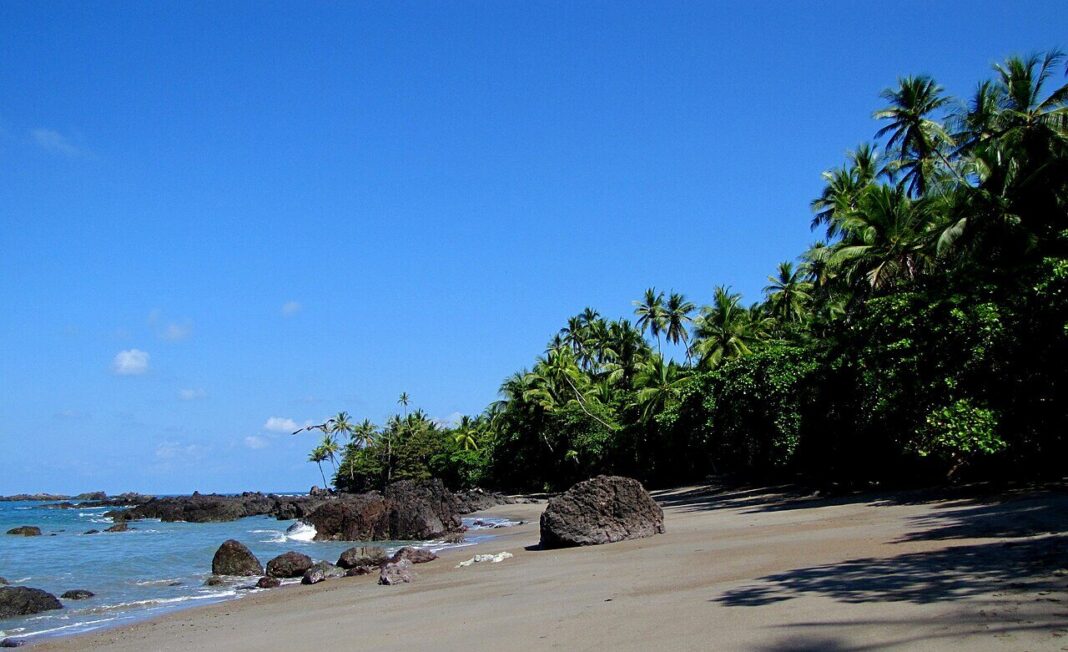
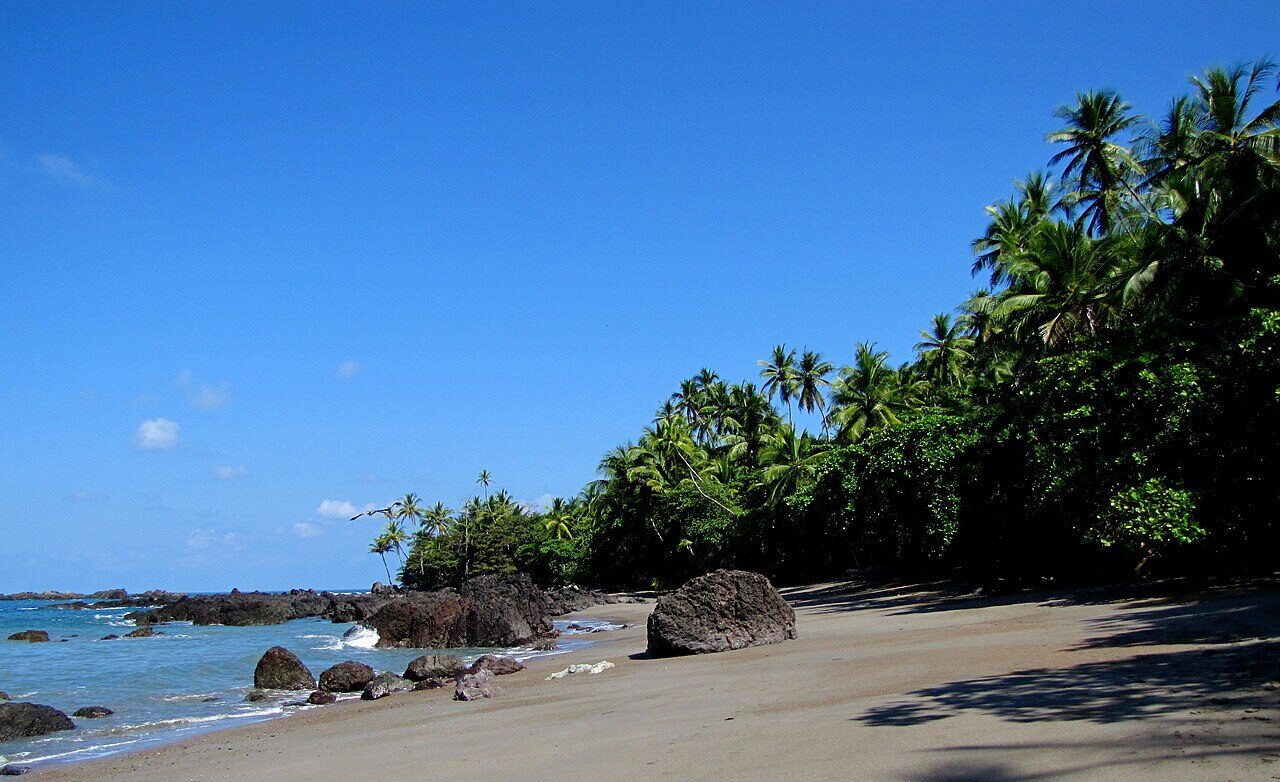
Photo: Corcovado National Park, Osa Peninsula, by José R., CC BY 3.0 via Wikimedia Commons.