



LATEST ARTICLES

Luxury Hotels in Washington DC 2027: One Five-Star, Sixteen Four Diamonds, and a Rebrand Nobody Noticed

Washington DC has a deep bench of very good hotels and a startlingly thin top tier. For 2026, exactly one hotel in the District holds a Forbes Travel Guide Five-Star rating, and exactly one holds AAA Five Diamond — and it is the same hotel. The Four Seasons in Georgetown stands alone, as it has in AAA terms since 1989.

Below it, the field is both wide and strong: five Forbes Four-Star hotels and sixteen AAA Four Diamond properties, several of which are among the most historically interesting hotels in America.

This guide also corrects a change that has slipped past almost every published list. The Salamander Washington DC no longer exists under that name. It rebranded on 5 August 2026 — details below.

The official lists, 2026

Forbes Travel Guide

  • Five-Star (one): Four Seasons Hotel Washington, D.C.
  • Four-Star (five): The Hay-Adams; Park Hyatt Washington D.C.; The Ritz-Carlton Georgetown; Rosewood Washington, D.C.; The St. Regis Washington, D.C.
  • Recommended: Conrad Washington DC; The Dupont Circle; Fairmont Washington D.C. Georgetown; The Jefferson; Pendry Washington DC – The Wharf; The Ritz-Carlton Washington D.C.; Waldorf Astoria Washington DC; The Watergate Hotel
  • Soon to be rated: Hotel Washington; InterContinental Washington D.C. – The Wharf; Willard InterContinental

Two things worth flagging. The Jefferson holds Forbes “Recommended,” not Four-Star — it held Four-Star back in 2016, and plenty of current write-ups still describe it that way. And Riggs, The Line DC and Eaton DC carry no Forbes rating at all.

AAA

Five Diamond, District of Columbia: one. Four Seasons Hotel Washington, D.C., designated 1989.

Four Diamond: sixteen, with the year of current consecutive designation — Conrad (2025), Fairmont Georgetown (1985), InterContinental The Wharf (2019), Park Hyatt (2007), Pendry The Wharf (2023), Riggs (2020), Rosewood (2014), Salamander (2004), The Hay-Adams (1984 — the longest-held in DC), The LINE DC (2020), Ritz-Carlton Georgetown (2019), Ritz-Carlton Washington DC (2019), The St. Regis (2008), The Watergate (2017), Willard InterContinental (1986) and Waldorf Astoria (2017).

The nine worth booking

1. Four Seasons Hotel Washington DC — the only one at the top

Around 212 to 222 rooms and suites at 2800 Pennsylvania Avenue NW, on the Georgetown side of Rock Creek, opened in October 1979. The only Forbes Five-Star and the only AAA Five Diamond hotel in the District.

It has also been steadily reinvesting. The spa and fitness centre reopened in May 2024; a $15 million suite transformation by ForrestPerkins was unveiled on 1 October 2024, covering 63 rooms and suites and adding ten new suites; and in August 2026 the Bourbon Lounge at Bourbon Steak was redesigned — the restaurant’s first major renovation since it opened in 2008.

Bourbon Steak by Michael Mina, an indoor lap pool and a three-storey spa round it out. Neither valet parking nor any destination fee is published on the hotel’s own site.

2. Rosewood Washington, D.C. — the smallest, and the only Two-Key

57 rooms in total: 37 rooms, 12 suites and 8 Georgetown townhouses let as residential-style accommodation, at 1050 31st Street NW on the C&O Canal, opened in 2013. It holds Two MICHELIN Keys, the only DC hotel to do so.

CUT DC by Wolfgang Puck sits downstairs, CUT Above is on the roof, and so is the pool. If you see “49 rooms” quoted elsewhere, it contradicts the hotel’s own published figure.

3. The Hay-Adams — the view, and the bar

145 rooms and 20 suites at 800 16th Street NW, on Lafayette Square directly across from the White House, opened in 1928 as The Hay–Adams House and owned by the B. F. Saul Company since 2006. It has held AAA Four Diamond since 1984, the longest unbroken run in the city.

Select suites look straight at the White House. Off The Record, the basement bar, famously takes no reservations and hosts no private events — which is precisely why it works.

Valet is $68 per night including 18% tax, with in-and-out privileges; $34 short-term; $20 with validation for diners at The Lafayette. No destination fee.

4. The St. Regis Washington, D.C. — two blocks from the White House

182 rooms including 25 suites at 923 16th Street NW, originally opened in 1926 and last renovated in 2016. Beaux-Arts, with Florentine gold ceilings in the lobby, St. Regis Butler Service, the Alhambra restaurant, afternoon tea and membership of Historic Hotels of America.

One warning: valet is $85 per day with 18% tax on top — the most expensive of any hotel verified for this guide. Day parking is $50; oversized vehicles $100. A pet fee of $250 per stay applies.

5. Riggs Washington DC — the best bar in a bank

181 rooms and suites at 900 F Street NW in Penn Quarter, opened February 2020 in the 1891 Riggs National Bank building — the “Bank of Presidents.” Silver Lyan, Ryan Chetiyawardana’s basement bar, is the reason to stay; Café Riggs occupies the former banking hall.

AAA Four Diamond since 2020, no Forbes rating. Riggs is also the only DC luxury hotel where we could confirm both the existence and the amount of a mandatory fee: $40 per night, covering in-room mineral water and Nespresso, WiFi, the gym and a tote bag. Valet is $64 a night, $25 for up to three hours when dining, $50 for a day rate.

6. The Ritz-Carlton Georgetown — a converted incinerator

86 rooms plus 27 premier suites and 5 luxury suites at 3100 South Street NW, opened April 2003 in a converted 1932 municipal incinerator. The 140-foot former smokestack survives and houses an eight-seat private dining room — the best private table in the city. Degrees Bistro and The Living Room complete it.

Valet is $75 overnight plus tax, $45 for day parking. No destination fee.

7. Park Hyatt Washington D.C. — for the Tea Cellar

At 1201 24th Street NW in the West End, bordering Georgetown and Foggy Bottom. AAA Four Diamond since 2007 and Forbes Four-Star.

Blue Duck Tavern is the known quantity, but the Tea Cellar is the genuine oddity: more than thirty rare single-estate teas priced from $8 to $300 per pot. There is a skylit saltwater pool with a separate hot tub, and roughly 12,000 sq ft of event space.

Hyatt publishes neither a room count nor a valet rate for this property, so this guide does not quote either.

8. Pendry Washington DC – The Wharf — and yes, it exists

Worth saying plainly, because it is routinely omitted from DC lists: Pendry Washington DC opened in 2022 and is very much open. 131 rooms at 655 Water Street SW on The Wharf, about a mile from the National Mall and a six-minute walk from Waterfront Metro.

Spa Pendry holds Forbes Four-Star — one of only three Four-Star spas in the District — with five treatment rooms and two eucalyptus steam rooms. Moonraker is the rooftop; there is a heated second-floor terrace pool with five summer cabanas. AAA Four Diamond since 2023.

Valet is $75 per night plus tax. A nightly destination fee applies but the amount is not published — ask at booking.

9. Willard InterContinental — the Round Robin, since 1847

335 rooms and suites including 69 suites at 1401 Pennsylvania Avenue NW, two blocks from the White House. AAA Four Diamond since 1986. The Round Robin Bar has been in operation since 1847 and has been called “the Oval Office of Bars.”

It has been renovated twice recently: an $18 million all-rooms project completed around its 200th birthday in 2018, and in July 2025 a restoration of all 335 accommodations by Parker-Torres Design, which restored the Jefferson, Lincoln, Washington and Theodore Roosevelt Presidential Suites and added six Oval Suites with murals of Eleanor Roosevelt, Julia Ward Howe and Mary McLeod Bethune.

Forbes currently lists it as “Soon to be Rated,” so it holds no Forbes star at present. Valet is $78 per night with unrestricted in-and-out.

Also worth knowing

The Jefferson — 99 rooms including 20 suites at 1200 16th Street NW, built 1922–23 as an apartment building, a hotel since 1955, closed in March 2007 and reopened in August 2009 after a two-year restoration that uncovered the original atrium skylight. A Relais & Châteaux member since 2010. A legitimate luxury choice on reputation, though not on current Forbes or AAA grounds.

The Watergate Hotel — 336 rooms and 35 suites at 2650 Virginia Avenue NW in the Brutalist Moretti building, reopened 2016 after an extensive renovation, AAA Four Diamond since 2017. A further project is renovating all 336 guestrooms and adding a 6,000 sq ft event space called The Vault plus a redesigned Top of the Gate rooftop. Its own Drive & Stay offer values overnight valet at $65 a night.

Eaton DC — 1201 K Street NW, opened September 2018, a design and activism-minded hotel with Allegory and the Wild Days rooftop. No Forbes or AAA luxury rating, so not a luxury pick on credentials — but it advertises free on-site parking, which in this city is almost unheard of and worth verifying by phone.

The rebrand everyone missed: Salamander is now The Potomac Hotel

If you are working from a list compiled before August, this will catch you out.

The 373-room hotel at 1330 Maryland Avenue SW, overlooking the Tidal Basin, has changed names twice in four years. It opened on 16 May 2004 as the Mandarin Oriental Washington D.C. Mandarin Oriental sold it for $139 million on 8 September 2022 to Henderson Park, and it was renamed Salamander Washington DC on 13 September 2022. Then on 5 August 2026 it relaunched as The Potomac Hotel, Autograph Collection, within Marriott.

Henderson Park remains the owner, Pyramid Global Hospitality manages, and Sheila Johnson stays on as a minority partner. Dōgon by Kwame Onwuachi, which opened in September 2024, continues under the new brand, alongside a dual-level spa, heated indoor pool and 38,000 sq ft of event space. Stays now earn Marriott Bonvoy points.

One caveat: it appears on neither the 2026 Forbes list nor the 2026 AAA list under its new name — its AAA Four Diamond status is recorded under “Salamander” — so treat its current rating as unconfirmed.

Waldorf Astoria Washington DC — the facts, plainly

The hotel at 1100 Pennsylvania Avenue NW occupies the Old Post Office, an 1899 Romanesque Revival building with a clock tower. It opened in 2016 under a different brand on a federal lease, and reopened as a Waldorf Astoria in 2022 after the lease changed hands. It has changed ownership more than once since, through a foreclosure process, after which BDT & MSD Partners became the leaseholder.

In June 2026 the General Services Administration sold the building and land to BDT & MSD Partners, its then-leaseholder; GSA did not disclose the price, though the Wall Street Journal reported $80 million. The same reporting indicated the owner was in discussions to sell for as much as $400 million, so ownership may change again.

Hilton has described operations as business as usual. The hotel has 263 rooms including 43 suites, holds AAA Four Diamond and Forbes “Recommended,” and its spa holds Forbes Four-Star. Bazaar Meat and Sushi Nakazawa are on site.

Taxes, parking and what it actually costs

DC lodging tax: 15.95%

DC’s transient lodging tax is 15.95%, raised from 14.95% effective 1 April 2023 under the Tourism Recovery Tax Emergency Amendment Act, with the proceeds funding destination marketing. The increase was framed as temporary and has been extended; the tax office’s October 2025 notice runs it through 30 September 2027, while the original 2023 notice gave an expiry of 30 March 2027.

Do not rely on the 14.95% figure, which still circulates on travel sites that have not been updated since 2020. The general sales tax change of 1 October 2026 does not affect the lodging rate.

Valet parking, verified

Hotel Overnight valet
Eaton DC Free on-site parking
Riggs Washington DC $64/night
The Watergate $65/night (hotel’s stated value)
The Hay-Adams $68/night, tax included
The Ritz-Carlton Georgetown $75/night + tax
Pendry Washington DC $75/night + tax
Willard InterContinental $78/night
The St. Regis $85/day + 18% tax

Expect roughly $64–$85 per night before tax, with 18% typically on top. Four Seasons, Rosewood, Park Hyatt, Conrad, Waldorf Astoria, The Potomac, The Line and The Jefferson do not publish valet rates.

Destination fees: mostly absent

Here is some good news. DC luxury hotels are, with one confirmed exception, largely free of the resort-fee practice that dominates Miami and Las Vegas. Riggs charges $40 a night and states it clearly. Pendry confirms a nightly destination fee exists but does not publish the amount. The Hay-Adams, St. Regis, Ritz-Carlton Georgetown, Willard, Watergate, Conrad and Eaton list none on their own pages.

Seasonality: use the federal per diem

The government sets a monthly lodging cap for DC that tracks the market’s own seasonality closely, and it is a far better planning tool than vague advice about spring. For fiscal year 2027, currently in force:

Month FY2027 lodging per diem What it means
March–June $295 Peak — cherry blossoms, school trips, graduations
September–October $287 Second peak — conference season
November–February $203 The value window, holidays excepted
July–August $192 Deepest low — humidity and congressional recess

Rates are up year on year across the board: the equal-weight annual average rose from $233.67 to $245.83, a 5.2% increase, with spring rising most at about $19 a night.

Book April 2027 now

This is the single most actionable thing in this guide.

Two things stack in April 2027, in what is already the peak $295 per diem month. The National Cherry Blossom Festival runs 20 March to 11 April 2027, with the parade on 10 April. And the 2027 NFL Draft will be held in Washington DC, on the National Mall, in April 2027 — Mayor Bowser has predicted a million visitors, which is a mayoral projection rather than a forecast, but the event is confirmed. The exact Draft dates had not been announced at the time of writing.

If your trip can fall in April 2027, book it now. If it can’t, note that November through February is roughly $92 a night cheaper on the federal benchmark.

One statistical warning for anyone comparing DC rates year on year: in the week ending 4 July 2026, Washington led all top-25 US markets in RevPAR growth, up 57.3% with ADR up 34.8% to $209.40, lifted by the America 250 celebrations. Any 2027-versus-2026 comparison against that week will look like a collapse. It isn’t.

Which neighbourhood

  • Georgetown — the highest concentration of the city’s best hotels: the Four Seasons, Rosewood, Ritz-Carlton Georgetown and Fairmont. Cobblestones, the C&O Canal, the best shopping. The trade-off is real: Georgetown has no Metro station, the nearest being Foggy Bottom–GWU.
  • Downtown / Penn Quarter — the densest cluster and the most walkable to the White House, the Mall and the Smithsonians, with the best Metro access. The Hay-Adams, St. Regis, Willard, Riggs, Conrad, Waldorf Astoria. Quiet on weekends in the office blocks.
  • Dupont Circle — Embassy Row, townhouses, the best neighbourhood restaurant scene. The Dupont Circle, The Jefferson nearby.
  • Foggy Bottom / West End — the Kennedy Center and the Potomac, and the practical bridge between Georgetown’s charm and downtown’s connectivity, with the Metro access Georgetown lacks. Park Hyatt, The Watergate.
  • The Wharf — the newest hotel district, waterfront dining and music venues, about a mile from the Mall. Pendry, InterContinental, The Potomac. It holds two of DC’s three Forbes Four-Star spas.

Frequently asked questions

What is the best hotel in Washington DC?

By independent rating, the Four Seasons Hotel Washington, D.C. in Georgetown — the only hotel in the District holding both Forbes Five-Star and AAA Five Diamond, the latter since 1989. Rosewood Washington, D.C. is the only DC hotel with Two MICHELIN Keys.

How many five-star hotels does Washington DC have?

One. Four Seasons Washington DC is the sole Forbes Five-Star hotel and the sole AAA Five Diamond property in the District. Five more hold Forbes Four-Star and sixteen hold AAA Four Diamond.

What happened to the Salamander Washington DC?

It rebranded to The Potomac Hotel, Autograph Collection on 5 August 2026, joining Marriott. Henderson Park remains the owner and Sheila Johnson stays on as a minority partner. The property — formerly the Mandarin Oriental until 2022 — is open with 373 rooms, and Dōgon by Kwame Onwuachi continues.

What is the hotel tax in Washington DC?

15.95%, raised from 14.95% on 1 April 2023 and currently extended through at least March 2027, with the tax office’s October 2025 notice running it to 30 September 2027. Older sources quoting 14.95% are out of date.

Do Washington DC hotels charge resort fees?

Mostly not, which sets DC apart from Miami and Las Vegas. Riggs charges a confirmed $40 nightly hotel fee and Pendry confirms a destination fee without publishing the amount. The Hay-Adams, St. Regis, Ritz-Carlton Georgetown, Willard, Watergate, Conrad and Eaton list none.

When is the cheapest time to visit Washington DC?

July and August, when the federal lodging per diem falls to $192 — DC is humid and Congress is in recess. November through February at $203 is the better value window for most travellers, holidays excepted.

When is the 2027 Cherry Blossom Festival?

20 March to 11 April 2027, with the parade on 10 April. Peak bloom is generally expected between late March and early April, though in some years it has fallen at the start or the end of the festival window rather than the middle.

Should I book early for April 2027?

Yes. The NFL Draft comes to the National Mall in April 2027 and overlaps the tail of the Cherry Blossom Festival, in a month that already carries DC’s highest lodging per diem at $295.


Ratings are from the official 2026 Forbes Travel Guide and AAA lists. Fees, parking rates and tax rates were verified against hotel and District government sources in October 2026. This guide does not publish nightly rates: DC booking engines price dynamically and no entry-level rate could be independently verified for stated dates, so the federal per diem is used as the seasonality benchmark instead.

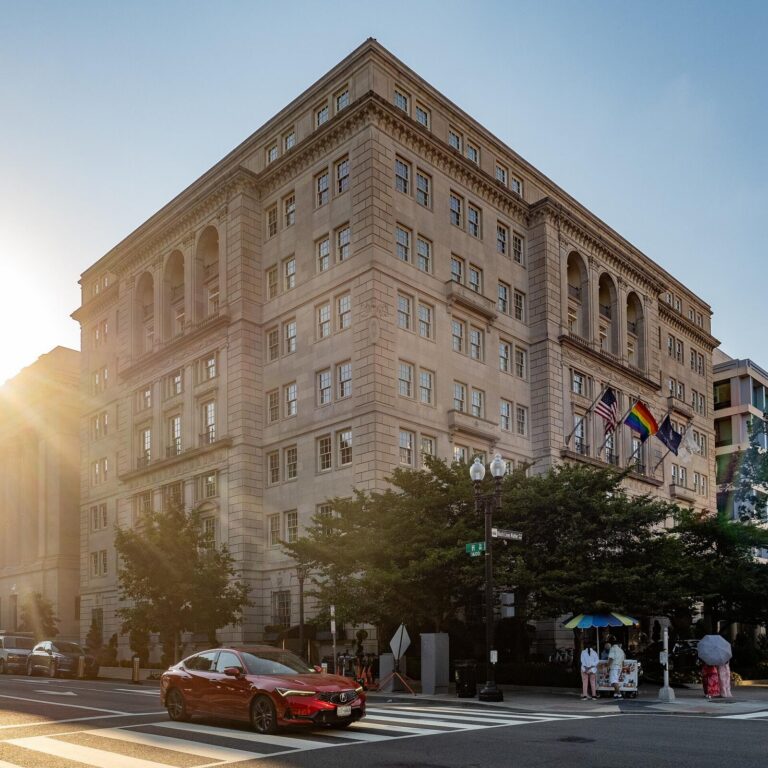
Image: the Hay-Adams hotel on Lafayette Square, by Ajay Suresh, licensed CC BY 2.0 via Wikimedia Commons.

More from LUXGetaway: A Stay at the Four Seasons Washington DC · Best Luxury Hotels in New York City · The Most Luxurious Hotels in the World
Luxury Hotels in New Orleans 2027: The 9 Michelin Key Winners, and 4 Names Everyone Gets Wrong

New Orleans is one of the great hotel cities in America, and one of the hardest to write about accurately, because its luxury inventory has been churning fast. In the last two years four significant properties have changed brand, one landmark has closed for renovation, and a major new hotel opens this fortnight.

Start with the credentials, because they are bracing. There is no Forbes Travel Guide Five-Star hotel in New Orleans. Only three hotels hold Forbes Four-Star: the Four Seasons, The Ritz-Carlton and the Windsor Court. And no Louisiana property appears on AAA’s 2026 Five Diamond list at all.

What New Orleans does have is something more interesting. In September 2026 the MICHELIN Guide awarded Keys to nine New Orleans hotels, and that list — which mixes the grand old names with a converted church, a former infant asylum and a tobacco merchant’s villa — is a far better map of where to actually stay than any star rating.

The nine Michelin Key hotels

Hotel Neighbourhood Rooms The reason to book
Four Seasons New Orleans CBD / riverfront 341 Chandelier Bar; 75-ft rooftop pool over the Mississippi
The Ritz-Carlton Canal St / Quarter edge ~528 The city’s largest spa; Davenport Lounge jazz
The Windsor Court CBD ~315 The Grill Room and Windsor Court Spa, both Forbes Four-Star
Maison Métier Warehouse Arts District 67 Salon-style bar; the city’s best small luxury hotel
Hotel Saint Vincent Lower Garden District 75 1861 infant asylum; three venues; free self-parking
Hotel Peter and Paul Marigny 71 A converted church, schoolhouse, rectory and convent
The Columns Uptown / Garden District 20 The best hotel porch in America; Sunday jazz brunch
The Celestine French Quarter 14 Peychaud and Tennessee Williams courtyard
Hotel Henrietta Uptown, St Charles Ave 40 First new-build hotel on this stretch in ~30 years

The grand hotels

Four Seasons Hotel New Orleans

341 rooms and suites plus 92 private residences in the former World Trade Center at 2 Canal Street, a 1968 Edward Durell Stone tower converted at a cost of around $450 million and opened in August 2021. The Chandelier Bar, with its 15,000-piece glass installation, is the best hotel bar opened in the city this century, and the 75-foot crescent rooftop pool looks straight down the Mississippi.

The dining has changed and most guides have not caught up. Miss River, Alon Shaya’s restaurant, served its last dinner on 31 August 2026 and has closed permanently. Donald Link’s Chemin à la Mer has moved from the fifth-floor riverfront space down to the lobby as a Louisiana brasserie, relaunching on 23 September 2026, with Link now the primary culinary partner across the brasserie and the Chandelier Bar menu. A new concept for the vacated fifth floor was expected to be announced later in 2026.

Valet parking is $64.10 a night. No mandatory destination fee is listed.

One credential note handled carefully: Four Seasons New Orleans appeared on AAA’s 2025 Five Diamond list and appears on the 2026 Four Diamond list. That reads like a change in status, but AAA has published no statement explaining it, so we are not going to characterise it as a downgrade. Confirm directly with AAA if the rating matters to your booking.

The Ritz-Carlton, New Orleans

Housed in the Beaux-Arts former Maison Blanche department store at 921 Canal Street, on the edge of the French Quarter. It holds Forbes Four-Star, and both its spa and its restaurant M Bistro carry Forbes Four-Star in their own right. The spa is the largest in the city; the Davenport Lounge is a proper jazz room, not a lobby with a piano.

Valet is $62 a day. Room count is not published by the hotel — AAA inspector notes give 528 units, which may bundle the Maison Orléans club wing and the residences, so treat it as approximate.

The Windsor Court Hotel

Around 315 guestrooms and suites at 300 Gravier Street in the CBD, built 1984, with a $2 million presidential-suite renovation in 2023. Forbes Four-Star since 2007 and AAA Four Diamond for eighteen consecutive years, with The Grill Room and the Windsor Court Spa both holding Forbes Four-Star separately — the strongest cluster of individual Forbes ratings of any hotel in the city.

Le Salon afternoon tea and the Polo Club lounge are the local institutions here. Valet is $63.28 a day.

Small correction worth making: the hotel’s own press page is headlined “New Orleans Five Star Hotel.” Forbes rates it Four-Star. It is an excellent hotel, and it is not five-star rated.

Hotel Monteleone

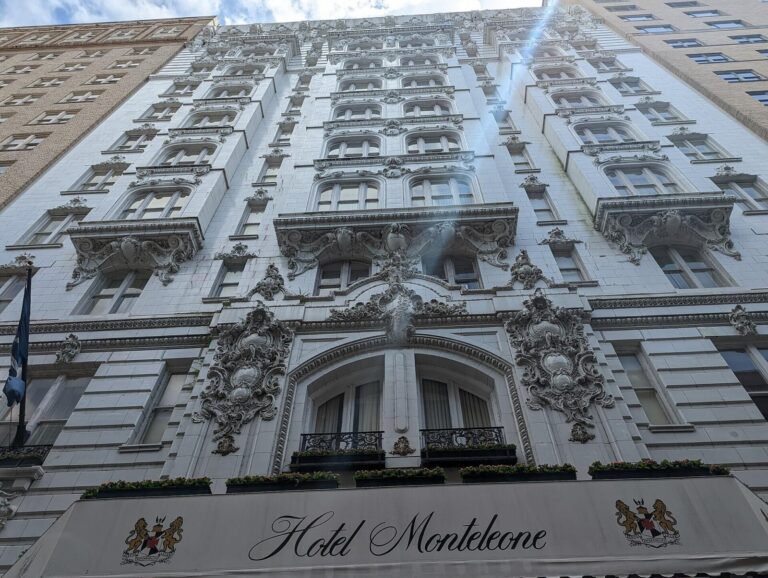
Not a Michelin Key winner, but AAA Four Diamond and impossible to leave out. 570 rooms at 214 Royal Street, family-owned since 1886, and home to The Carousel Bar & Lounge, which has been revolving since 1949 — the single most quotable room in New Orleans. Criollo restaurant, a rooftop pool and the Acqua Bella poolside bar sit above it. Valet is $56.62 a day, covered, with in-and-out privileges.

The design-led hotels, where the Keys actually went

Maison Métier — formerly Maison de la Luz

67 rooms at 546 Carondelet Street. Opened around 2019 as Maison de la Luz, an Atelier Ace project, it rebranded to Maison Métier, The Unbound Collection by Hyatt, joining World of Hyatt in March 2025. The old web address now redirects to Ace. Its salon-style bar continues a partnership with the Paris-based Quixotic Projects.

It carries the highest mandatory fee of any hotel in this guide: a $40.67 nightly destination fee, plus $50 a day for limited valet.

Hotel Saint Vincent

75 rooms at 1507 Magazine Street in the Lower Garden District, in an 1861 building that was Saint Vincent’s Infant Asylum, opened as a hotel in June 2021 by the Austin team behind Elizabeth Street Café. Three venues on site: San Lorenzo for coastal Italian, Elizabeth Street Café for French-Vietnamese, and the Paradise Lounge opening onto the patio. Seasonal outdoor pool.

It charges a $27.36 nightly destination fee — but it also offers free self-parking on site, which is genuinely rare in New Orleans and worth about $55 a night against its peers.

Note for searchers: hotelsaintvincent.com is a different hotel, in Ramatuelle, France.

Hotel Peter and Paul

71 rooms at 2317 Burgundy Street in the Marigny, steps from Frenchmen Street. A converted church, schoolhouse, rectory and convent — the room categories are named accordingly. The Elysian Bar handles all-day dining, and the Marigny Lido is a heated guests-only outdoor pool with a seasonal bar. Parking and EV charging are available; prices are not published.

The Columns

Twenty rooms in an 1883 Italianate villa at 3811 St Charles Avenue, built for a tobacco merchant and a hotel since 1953. Bought in 2019 by Jayson Seidman and family and restored. The front porch bar is the best-known hotel porch in the city, there is a Victorian lounge with coffered mahogany ceilings, a Sunday jazz brunch, and the streetcar stops at the door.

The Celestine and Hotel Henrietta — the two newest

The Celestine, 14 rooms in the French Quarter, launched in early 2024 from hotelier Robért LeBlanc with Neal Bodenheimer of Cure Co., designed by Sara Ruffin Costello. Its courtyard is associated with both Antoine Amédée Peychaud and Tennessee Williams, and the Suite Rosalie is a two-storey carriage house.

Hotel Henrietta, 40 rooms over five storeys on St Charles Avenue Uptown, launched mid-2024 — a ground-up new build, the first new hotel on this stretch of St Charles in roughly thirty years. A marble island doubles as check-in, café counter and cocktail bar, and the colonnaded porch has two fire pits.

The Chloe

Fourteen rooms in an 1891 St Charles Avenue mansion by Thomas Sully, bought by LeBlanc + Smith in 2018 and opened on 28 October 2020 — the same day Hurricane Zeta made landfall, after COVID had already pushed the opening back from April. A modern Creole restaurant, a bar and a saltwater pool in the backyard. Fees and parking are not published.

Four names most guides still get wrong

You may have read The reality in 2027
Maison de la Luz Maison Métier, Unbound Collection by Hyatt (2024–25)
W New Orleans – French Quarter Hotel de la Poste – French Quarter, a Renaissance Hotel (Jan 2025)
The Eliza Jane, Unbound Collection by Hyatt The Eliza Jane, Marriott Autograph Collection (April 2026)
Soniat House Closed for renovation; sold October 2026

Soniat House deserves particular care. The 30-key hotel in three 1830 Chartres Street townhouses beside the Old Ursuline Convent is not operating. It closed for renovation, targeting a reopening in late 2026, and was sold to a Dallas buyer in a transaction recorded in the first week of October 2026. The new owner has yet to decide whether to restore the previous operating model. Any guide listing it as bookable is wrong.

Hotel de la Poste — the former W — is open with 97 rooms and suites at 316 Chartres Street, after a multi-million-dollar renovation completed in 2024. Third-party listings showing “W New Orleans, closed” are describing the brand change, not a closed hotel.

And one hotel that is brand new: Fairmont New Orleans

This one needs care, because the history invites an error.

The Fairmont New Orleans scheduled to open on 2 November 2026 is an entirely new hotel. It is not the historic property most people associate with the name. The Roosevelt opened in 1893, was operated by Fairmont for around four decades from 1965, flooded and closed after Hurricane Katrina in 2005, and reopened in 2009 as a Waldorf Astoria, not a Fairmont. Accor had no New Orleans hotel at all from 2005 until now.

The new Fairmont is at 1010 Common Street in the CBD, with 250 rooms and suites including Fairmont Gold floors, in the former Bank of New Orleans tower — a 1970 Skidmore, Owings & Merrill building of 31 floors, of which the hotel occupies 17. Interiors by Rockwell Group. Two Emeril Lagasse venues at lobby level, Delmonico Steakhouse and The Café by Emeril; The Third Measure rooftop bar; a roughly 10,000 sq ft spa; and a rooftop pool billed as the highest in the city.

Opening offers include a $75 daily credit on a two-night minimum, or breakfast for two. Valet is reported at $65 a night. It holds no rating yet, because it has not opened.

Taxes, fees and parking

Hotel tax: roughly 16–17%, and nobody publishes a single figure

This is worth being honest about. New Orleans has no single official published combined hotel tax rate, and any article giving you one precise number is reconstructing it.

The components that are verifiable: Louisiana state sales tax rose to 5.00% on 1 January 2025 (from 4.45%), temporary through 31 December 2029 under House Bill 10. The combined general sales tax in New Orleans is 10% (5% state plus 5% Orleans Parish). The Ernest N. Morial Exhibition Hall Authority levies 3% on Orleans Parish lodging. The city adds a 4% hotel/motel tax split between the general fund, the school board and the Regional Transit Authority. And there is an Additional Paid Occupancy Tax charged as a flat nightly amount by hotel size: $0.50 for properties with 10–299 rooms, $1.00 for 300–999, and $2.00 for 1,000 or more.

The best full itemisation available put the total at 16.35%, but that analysis predates the 2025 state increase, so the current figure is likely higher. Budget for roughly 16–17% in combined taxes and assessments, plus $0.50–$2 per night flat, and check your own quote.

Mandatory fees — and a genuinely useful pattern

Hotel Mandatory nightly fee Valet
Maison Métier $40.67 destination fee $50/day
Virgin Hotels New Orleans $33.86 “service fee” $55/night
Hotel Saint Vincent $27.36 destination fee Free self-parking
The Pontchartrain $25.00 resort fee $55.69/day
Four Seasons None listed $64.10/night
The Ritz-Carlton None listed $62.00/day
Windsor Court None listed $63.28/day
Hotel Monteleone None listed $56.62/day

The pattern is worth internalising: in New Orleans the grand hotels mostly do not charge a destination fee, while several of the design-led boutiques do. That inverts the usual assumption, and on a four-night stay the Maison Métier fee alone adds about $163 before tax.

Valet runs roughly $50–$65 a night across the French Quarter and CBD, almost always with in-and-out privileges.

When to go: the 2027 calendar that sets rates

  • Allstate Sugar Bowl — 15 January 2027
  • Mardi Gras (Fat Tuesday) — 9 February 2027, with parades running from 23 January. The rate spike covers the final fortnight, not just the Tuesday.
  • New Orleans Book Festival — 11 March 2027
  • Crescent City Classic — 27 March 2027
  • French Quarter Fest — 8–11 April 2027
  • Jazz & Heritage Festival — weekend one 22–25 April, weekend two 29 April–2 May 2027

Note that French Quarter Fest and Jazz Fest fall within three weeks of each other, which makes April the hardest month of the year to book well.

One thing to disregard: there is no Super Bowl in New Orleans in 2027. The city hosted Super Bowl LIX in February 2025, and no 2027 event appears on the official calendar.

Peak is late January through February and March to May. Shoulder is September through November — though November 2026 is unusually busy with the marathon, the Bayou Classic and the Fairmont opening — and early January before Carnival. Low season is deep summer, June to August, for reasons of heat, humidity and hurricane season, plus the first half of December.

The practical point for Mardi Gras and Jazz Fest is less about rate than terms: expect minimum-stay requirements and non-refundable bookings.

Which neighbourhood

  • French Quarter — for first-timers who want to walk everywhere. Hotel Monteleone, The Celestine, Hotel de la Poste, and the Ritz-Carlton and Four Seasons at its edges. The trade-off is noise.
  • CBD / Downtown — for a quiet night within walking distance of the Quarter. Windsor Court, Four Seasons, the new Fairmont, International House, Kimpton Fontenot.
  • Warehouse / Arts District — for galleries, the WWII Museum and contemporary design. Maison Métier, Virgin Hotels, The Eliza Jane.
  • Garden District / Uptown — for mansions, the St Charles streetcar and Magazine Street. The Pontchartrain, The Columns, The Chloe, Hotel Henrietta.
  • Lower Garden District — the Magazine Street corridor, closer in than the Garden District proper. Hotel Saint Vincent.
  • Marigny / Bywater — for Frenchmen Street rather than Bourbon Street. Hotel Peter and Paul.

Frequently asked questions

What is the best luxury hotel in New Orleans?

On independent credentials, the Four Seasons, The Ritz-Carlton and the Windsor Court are the only three hotels in the city holding Forbes Four-Star, and all three also hold Michelin Keys. For a small-hotel experience, Maison Métier and Hotel Saint Vincent are the strongest of the nine Michelin Key winners.

Does New Orleans have a five-star hotel?

Not by the independent rating bodies. There is no Forbes Travel Guide Five-Star hotel in New Orleans, and no Louisiana property appears on AAA’s 2026 Five Diamond list.

Is Soniat House open?

No. The 30-key French Quarter hotel is closed for renovation and was sold to a Dallas buyer in October 2026. A late-2026 reopening was the target, but the new owner has not confirmed the operating model.

Is the Fairmont New Orleans the same as the Roosevelt?

No, and this is the most common confusion in New Orleans hotel content. Fairmont operated the Roosevelt for about four decades until Katrina; that property reopened in 2009 as a Waldorf Astoria. The Fairmont New Orleans opening 2 November 2026 is a brand-new 250-room hotel at 1010 Common Street in the former Bank of New Orleans tower.

How much is hotel tax in New Orleans?

Roughly 16–17% in combined taxes and assessments, plus a flat nightly occupancy charge of $0.50 to $2 depending on hotel size. The city publishes no single combined rate, and Louisiana’s state sales tax rose to 5% on 1 January 2025, so older figures understate it.

Do New Orleans luxury hotels charge resort fees?

The grand hotels mostly do not — Four Seasons, Ritz-Carlton, Windsor Court and Monteleone list none. Several boutiques do: Maison Métier $40.67, Virgin Hotels $33.86, Hotel Saint Vincent $27.36 and The Pontchartrain $25.00 per night.

When is Mardi Gras 2027?

Fat Tuesday falls on 9 February 2027, with parades from 23 January. Book accommodation months ahead and expect minimum-stay requirements and non-refundable rates.


Ratings are from the 2026 MICHELIN Guide, Forbes Travel Guide and AAA official lists. Fees, parking charges and opening dates were verified against hotel and official sources in October 2026. This guide does not publish nightly rates: New Orleans booking engines price dynamically and no entry-level rate could be independently verified for a stated date.

Image: Hotel Monteleone, 214 Royal Street, by Carnaval.com Studios, licensed CC BY 2.0 via Wikimedia Commons.

More from LUXGetaway: The Most Luxurious Hotels in the World · Best Luxury Hotels in Miami
Luxury Hotels in Las Vegas 2027: Only 3 Hold Five Diamond — Here’s the Real List

0

Las Vegas has roughly 150,000 hotel rooms and markets almost all of them as luxurious. The independent rating bodies are considerably less generous.

As of the 2026 awards, exactly three Las Vegas hotels hold AAA Five Diamond status, and exactly four hold a Forbes Travel Guide Five-Star rating. And here is the detail that reframes the whole city: every single one of those four Five-Star properties is a hotel within a hotel — an exclusive tower, suite collection or villa compound inside a much larger casino resort. No full-size Las Vegas casino resort holds a Forbes Five-Star rating.

That is the honest structure of luxury in Las Vegas, and it tells you how to book: in this city you are not choosing a hotel, you are choosing a tier inside one.

This guide also corrects three naming errors that appear in nearly every competing article. The Delano, the NoMad and the Mandarin Oriental no longer exist under those names.

The official lists, 2026

AAA Five Diamond — three hotels

  • Four Seasons Hotel Las Vegas — first awarded 1999, a 27th consecutive year
  • THE VILLAS Caesars Palace — first awarded 2025
  • Waldorf Astoria Las Vegas — first awarded 2010

Forbes Travel Guide Five-Star — four hotels

  • ARIA Sky Suites — 14th rating
  • Encore Tower Suites
  • SKYLOFTS at MGM Grand — 17th consecutive year
  • Wynn Tower Suites — 20th consecutive year

Forbes Four-Star — seven hotels

Crockfords Las Vegas LXR; Encore at Wynn Las Vegas; Four Seasons Hotel Las Vegas; The Palazzo at The Venetian; The Venetian Resort; The Villas at Caesars Palace; Wynn Las Vegas.

Note carefully that Wynn Las Vegas and Wynn Tower Suites are two separate Forbes listings, as are Encore and Encore Tower Suites. The headline resort holds Four-Star; the suites product inside it holds Five-Star. Conflating them is the most common error in Las Vegas hotel content.

The famous names that hold no star rating

This will surprise people. Bellagio does not appear anywhere on the current Forbes Las Vegas list, and is not AAA Five Diamond. Its restaurant Le Cirque holds Forbes Five-Star for a tenth consecutive year, but the hotel itself carries no current Forbes rating. We found no published explanation, so we will not speculate about why.

Fontainebleau Las Vegas — the newest major resort on the Strip — appears on no Forbes list and no AAA list. The Cosmopolitan and Conrad Las Vegas sit on Forbes’ lowest tier, “Recommended,” as does Waldorf Astoria Las Vegas despite its AAA Five Diamond.

The hotels worth booking

Four Seasons Hotel Las Vegas — the one that is purely a hotel

424 rooms, opened March 1999, occupying floors 35 to 39 of the building at 3960 Las Vegas Boulevard South, adjacent to Mandalay Bay rather than inside it. It is one of the very few non-gaming, non-smoking hotels on the Strip, and the only Las Vegas property to hold AAA Five Diamond for 27 consecutive years. Its Spa & Nail Bar holds Forbes Five-Star for a sixth consecutive year, a tier above the hotel itself.

Guests get direct access to Mandalay Beach, with its wave pool and lazy river. There is no on-site self-parking; valet is $45 a day.

Correct a common myth here: Four Seasons Las Vegas does charge a resort fee. It is widely assumed not to. Third-party trackers list it at $55 plus tax, and the hotel’s own site discloses no fee policy either way — so do not book on the assumption that it is fee-free.

THE VILLAS Caesars Palace — the city’s best-credentialled address right now

The freshest news in luxury Las Vegas: on 13 October 2026, THE VILLAS Caesars Palace was ranked the number one casino hotel out of 161 AAA-rated casino hotels in AAA’s inaugural Top 10, and retained AAA Five Diamond for a second consecutive year.

There are six named villas — Claudius, Marcus Aurelius, Constantine, Hadrian, Titus and Trajan. Caesars also introduced two Presidential Villas in the Colosseum Tower and 29 Sky Villas in the Octavius Tower during 2026, all by Peter Silling & Associates.

The wider resort runs to about 3,980 rooms across five towers plus the 182-room Nobu Hotel. Restaurant Guy Savoy holds Forbes Five-Star for a 14th consecutive year. Be warned that Caesars’ main valet, at $50 a day, is the most expensive on the Strip, and self-parking is $25 for visitors.

ARIA Sky Suites — Forbes Five-Star, 14th rating

A private hotel inside Aria at CityCenter, with its own entrance, check-in, concierge, airport transfers and a Sky Pool reserved for Sky Suites guests. Suites start from 1,050 square feet and run up to a two-bedroom Sky Villa of more than 3,000 square feet with 24-hour butler service. In-room control tablets throughout.

The parent Aria has 4,004 rooms including 568 suites, opened 16 December 2009, and is the largest LEED Gold hotel in the world.

Wynn Tower Suites and Encore Tower Suites — 20 and counting

Wynn Tower Suites holds Forbes Five-Star for a 20th consecutive year, the longest active run in the city. Encore Tower Suites holds Five-Star as well. Both sit inside their respective resorts on the north-mid Strip, Wynn at roughly 2,714 rooms and Encore at about 2,034.

A genuine practical advantage: Wynn and Encore offer free self-parking to registered guests, which almost nothing else at this level does. Valet is $40 a day and free for Tower Suites guests.

Waldorf Astoria Las Vegas — AAA Five Diamond, and no casino

389 rooms and suites plus 225 condos across 47 storeys at the southeast corner of CityCenter, with the hotel on floors 1 to 22. It is non-gaming and has no casino at all — the quietest luxury address on the Strip, and the reason it was voted best Las Vegas hotel by Travel + Leisure readers in 2024.

It opened as the Mandarin Oriental and became the Waldorf Astoria on 30 August 2018, with Hilton assuming management the following day. Same building, same location.

Practical note: there is no self-parking at all. Valet only, at $45 a day.

Crockfords Las Vegas LXR — the top tier at Resorts World

Resorts World opened on 24 June 2021 on the former Stardust site and houses 3,506 rooms across three brands in one 59-storey tower: Las Vegas Hilton (1,678), Conrad (1,496 — the world’s largest Conrad) and Crockfords (332), the LXR-branded top tier and the only one of the three with a Forbes Four-Star rating. Conrad is Forbes “Recommended”; the Hilton tower is unrated.

Resorts World is also running the one genuine resort-fee exception in the city. See below.

The Venetian and The Palazzo — all-suite, Forbes Four-Star

The Venetian runs 4,028 all-suite rooms across the Venetian Tower and Venezia; The Palazzo adds 3,064. Both hold Forbes Four-Star. Self-parking is $20 a day for guests, valet $40, and Nevada residents get three hours free.

One figure to avoid: “The Venetian Las Vegas, 7,092 rooms” is Venetian plus Palazzo plus Venezia combined, and is not the room count of either property on its own.

Fontainebleau Las Vegas — new, enormous, unrated

Opened 13 December 2023 at 2777 South Las Vegas Boulevard on the former El Rancho site. 3,644 rooms, 67 storeys, 737 feet — Nevada’s tallest building — and at roughly $3.7 billion the second-costliest resort ever built in Las Vegas. It holds a 173,000 sq ft casino, the 55,000 sq ft Lapis Spa, the 3,800-seat BleauLive Theater, a six-acre seven-pool complex, LIV nightclub, and a Vegas Loop station that opened in February 2026.

It is spectacular and it is worth seeing. It also holds no Forbes rating and no AAA Five Diamond, which is relevant if you are choosing on credentials rather than newness. Hotel guests park free; valet is $35 Monday to Thursday and $40 at weekends.

Bellagio and The Cosmopolitan — famous, central, unrated

Bellagio’s 3,933 rooms and its fountains remain the mid-Strip default, and Le Cirque is one of only a handful of Forbes Five-Star restaurants in the state. The Cosmopolitan, 3,032 rooms between Bellagio and Aria and now a Marriott Autograph Collection property, holds Forbes “Recommended.”

Both are excellent hotels. Neither is a star-rated luxury hotel in the eyes of the rating bodies, and you should book them knowing that.

Three names your other search results got wrong

Old name Current name Changed
Mandarin Oriental Las Vegas Waldorf Astoria Las Vegas 30 August 2018
Delano Las Vegas W Las Vegas 18 December 2024
NoMad Las Vegas The Reserve at Park MGM 17 December 2025

W Las Vegas has 1,117 rooms within the Mandalay Bay complex and, usefully, a $50 resort fee rather than the $55 standard. The Reserve at Park MGM has 293 keys; its venues were renamed at the same time — NoMad Pool became The Terrace Pool, NoMad Library became The Library, NoMad Bar became The Reserve Bar.

If an article still recommends “the Delano” or “the NoMad,” it has not been updated in at least two years.

What closed, and what is coming

The Mirage closed on 17 July 2024. Hard Rock International had acquired its operations from MGM in December 2022. It is being replaced by Hard Rock Las Vegas, a guitar-shaped tower whose final structural beam was topped out on 1 May 2026. Current expected opening is Q4 2027 — explicitly several months later than previously scheduled. The guitar tower will be 42 storeys and about 660 feet with 675 rooms, within a complex of roughly 3,600 to 3,700 rooms at a cost around $4 billion.

The Tropicana closed on 2 April 2024 and both remaining towers were imploded on 9 October 2024. Its 35-acre site is being redeveloped in two parts: a roughly $1.5 billion ballpark for the Athletics on nine acres, under construction since May 2025 with completion expected by January 2028; and a new Bally’s resort on about 15 acres, with 3,005 rooms planned across two towers. As of the most recent reporting the Bally’s resort construction had not started, so treat any opening date for it with caution.

Also changed: The Cromwell became The Vanderpump Hotel on 11 June 2026 (188 rooms, Caesars-owned). And a frequent point of confusion — the off-Strip Hard Rock Hotel is now Virgin Hotels, entirely unrelated to Hard Rock International’s Strip project.

Resort fees and parking: the numbers that actually move your bill

Las Vegas luxury resort fees have converged upward. The current standard is $55 per night plus 13.38% tax, which bills at $62.36. Resorts World’s own offer terms confirm the $55 figure directly.

Property Resort fee All-in with tax Valet
Bellagio $55 $62.36 $40/day
Wynn / Encore $55 $62.36 $40/day — free self-park for guests
Four Seasons $55 $62.36 $45/day, no self-park
Waldorf Astoria $55 $62.36 $45/day, valet only
Venetian / Palazzo $55 $62.36 $40/day
Caesars Palace ~$54.95 $62.30 $50/day — highest on the Strip
Fontainebleau $55 $62.36 $35–40 — free self-park for guests
Park MGM $50 $56.69 $40/day
W Las Vegas $50 $56.69 $40/day

The one real exception. Resorts World runs an “All Resort, No Fees” offer that waives the $55 fee, valid for travel through 28 December 2026 per its own terms. Read those terms closely: it is subject to availability on select dates, blackout dates apply, it is not valid on group bookings or existing reservations, there is a $150 per room per night incidental deposit, and the booking links point at the Hilton tower — the terms do not name Conrad or Crockfords. An independent tracker also notes that most of the calendar is blacked out. Resorts World was the first Strip property to temporarily eliminate resort fees, back in summer 2025.

Everything else advertising no resort fee in Las Vegas is budget or downtown, not luxury.

On parking: no Strip property offers free self-parking to everyone, and none offers free valet to everyone. Wynn, Encore and Fontainebleau give free self-parking to registered guests. Most Strip properties give Nevada residents three hours free with ID.

How to choose

  • Want the highest independent rating: Four Seasons Las Vegas or THE VILLAS Caesars Palace, the only two AAA Five Diamond properties besides the Waldorf.
  • Want the Forbes Five-Star room product: ARIA Sky Suites, Wynn Tower Suites, Encore Tower Suites or SKYLOFTS. Book the suites tier specifically, not the parent resort.
  • Want no casino, no smoke, no noise: Waldorf Astoria or Four Seasons — and note the Waldorf is valet-only.
  • Driving, and want to avoid parking charges: Wynn, Encore or Fontainebleau.
  • Want to avoid the resort fee entirely: chase the Resorts World waiver, read the blackout dates, and book the Hilton tower.
  • Want the newest building on the Strip: Fontainebleau — accepting that it holds no star rating.

Frequently asked questions

Which Las Vegas hotels are Five Star?

Four hold Forbes Travel Guide Five-Star for 2026: ARIA Sky Suites, Encore Tower Suites, SKYLOFTS at MGM Grand and Wynn Tower Suites. All four are exclusive sub-properties within larger resorts rather than whole hotels.

Which Las Vegas hotels are AAA Five Diamond?

Three: Four Seasons Hotel Las Vegas, THE VILLAS Caesars Palace, and Waldorf Astoria Las Vegas.

Is Bellagio a five-star hotel?

Not by the independent rating bodies. Bellagio holds no current Forbes Travel Guide rating and is not AAA Five Diamond, though its restaurant Le Cirque holds Forbes Five-Star. It remains one of the best-located and best-known hotels on the Strip.

How much are Las Vegas resort fees in 2027?

The luxury standard is $55 per night plus 13.38% tax, billing at $62.36. Park MGM and W Las Vegas are lower at $50 plus tax, or $56.69. Resorts World has been waiving its fee on select dates through late December 2026, with heavy blackout restrictions.

Does the Four Seasons Las Vegas charge a resort fee?

Yes, according to third-party fee trackers, at $55 plus tax. Four Seasons does not disclose a fee policy on its own site, so the common claim that it is fee-free is unverified and should not be relied on.

What happened to the Mirage?

It closed on 17 July 2024 and is being rebuilt as Hard Rock Las Vegas, a guitar-shaped tower currently expected to open in Q4 2027. The complex will hold roughly 3,600 to 3,700 rooms.

Is the Delano still open?

Not under that name. It became W Las Vegas on 18 December 2024. The 1,117-room property within the Mandalay Bay complex is still operating, now under Marriott’s W brand, and charges a $50 resort fee rather than the $55 standard.


Ratings were taken from AAA’s and Forbes Travel Guide’s official 2026 lists. Fees and parking charges were verified in October 2026 and change frequently. This guide does not publish nightly rates: Las Vegas booking engines price dynamically and no entry-level rate could be independently verified, so quoting one would be guesswork.

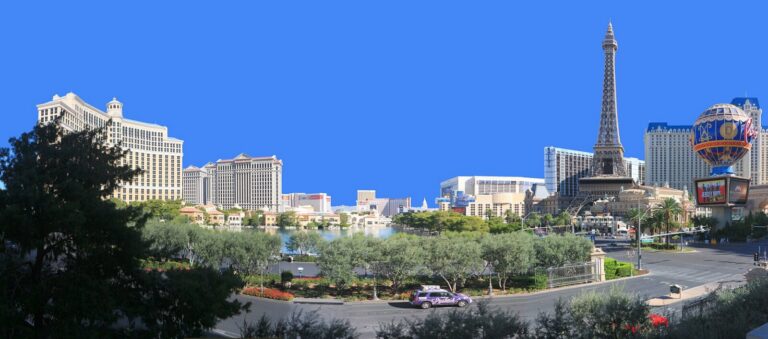
Image: the Las Vegas Strip from Bellagio to Paris, by Paul Harrison, licensed CC BY-SA 4.0 via Wikimedia Commons.

More from LUXGetaway: The Most Luxurious Hotels in the World · Inside Fontainebleau Las Vegas · ARIA Resort at CityCenter
Hawaii All-Inclusive Resorts: The Honest 2027 Guide to What Actually Exists

0

Search “Hawaii all-inclusive resorts” and you will find dozens of lists promising exactly that. Most of them are wrong, and several name properties that stopped offering all-inclusive rates years ago.

Here is the position, stated plainly by a company that actually sells Hawaii holidays for a living. Pleasant Holidays — a major Hawaii tour operator, not a blog — says on its own site that “currently there are no completely ‘all-inclusive’ hotel packages offered in Hawaii.” Their explanation is structural rather than commercial: the open nature of Hawaiian resorts and their close proximity to one another. There are no gated compounds and no wristbands. Guests wander freely between neighbouring hotels’ restaurants, and every beach in Hawaii is public by law. The all-inclusive model, which depends on keeping you inside the fence, has nothing to hold onto.

That said, there is one genuine exception, and there are several packages that get you most of the way there. This guide covers what actually exists in 2027, what it costs, and the one tax change that has quietly raised the price of every Hawaii hotel night since January 2026.

The short answer

Property Island All-inclusive? What’s actually included
Sensei Lānaʻi, A Four Seasons Resort Lānaʻi Closest thing in Hawaii Opt-in dining plan $375/guest/day; wellness credit; flights from Honolulu
The Kahala Hotel & Resort Oʻahu No — but best package Signature Experience: breakfast, airport transfer, massage for two. No resort fees.
Four Seasons Resort Lānaʻi Lānaʻi No Bed & Breakfast rate; round-trip flights included through 31 Dec 2027
Hana-Maui Resort Maui No — it used to be Nothing inclusive. $45/night resort fee, $20 parking
Kona Village, A Rosewood Resort Big Island No $95/night resort fee — the highest found. Explicitly excludes meals
Timbers Kauai Kauaʻi No $100 daily resort credit, two cocktails
Norwegian’s Pride of America All four Closest product Four islands in seven days, main dining included

Sensei Lānaʻi: the only real all-inclusive option in Hawaii

If you want to prepay for your food in Hawaii, there is exactly one serious way to do it.

Sensei Lānaʻi, A Four Seasons Resort, sells a “Discover Sensei” package at $450 per person per night as a spa-and-wellness credit, covering spa treatments, salon, wellbeing consultations and island excursions. It includes daily rotating wellbeing classes, access to the grounds, spa hale and sculpture garden, semi-private round-trip air transfers from Honolulu, and transport over to Four Seasons Resort Lānaʻi for the beach and its restaurants. There is a two-night minimum, and the resort is adults-only from age 16. Published rates start from $1,340 per night single and $1,700 double, per room, before taxes, service charges and gratuities.

Crucially, meals are not included by default. All-inclusive dining at Sensei by Nobu is a separate add-on at $375 per guest per day, selected at check-out. That single line item is the closest thing to a true all-inclusive meal plan anywhere in the Hawaiian islands.

One thing worth a phone call before you commit: the resort’s published materials do not state whether that $375 daily dining plan covers alcohol. Ask.

Other tiers exist — “Guided Wellness” at a $150 per night credit with daily private sessions, a “Self-Guided Stay” that includes the semi-private air from Honolulu, structured five-day programmes and a month-plus “Sabbatical” — but prices for these are not published.

The myth that will not die: Hana-Maui Resort

This is the single most common error in Hawaii all-inclusive content, and it is worth being precise about.

Under its former name, Travaasa Hana, the property on Maui’s remote eastern shore genuinely did sell all-inclusive packages. That ended. The resort rebranded to Hana-Maui Resort, a Destination by Hyatt, in September 2020, after Mani Brothers Real Estate Group bought the 72-acre property for around $27 million.

Hyatt’s own FAQ confirms the current position: no all-inclusive rate, no meal plan, not even a breakfast-inclusive package. The property charges a $45 nightly resort fee and $20 per night for self-parking, with no valet.

The Travaasa brand no longer exists in Hawaii at all. Any article currently offering you “Travaasa Hana all-inclusive” is selling a property that has not existed under that name for six years. It remains a beautiful and genuinely remote hotel — it is simply not an all-inclusive one.

And no, Club Med has never operated in Hawaii, past or present. Its only former US village was Copper Mountain in Colorado, now closed.

Watch for “all-inclusive” marketing that isn’t

Lumeria Maui is the clearest live example. Its homepage carries an “All-Inclusive Specials” link. Follow it and the page behind describes no all-inclusive package at all — a $100 spa credit, a seven-night “Stay Your Way” package at 20% off that includes a yoga mat, grounds access, a curated tour list and WiFi but no meals, and a book-direct discount. The only rate there that bundles meals is the Kamaʻāina rate, which includes complimentary wellness classes and daily breakfast and is restricted to Hawaii residents with ID at check-in.

The label said all-inclusive. The product is not one. Check the terms page, never the banner.

What experienced Hawaii travellers book instead

Resort credits — the dominant Hawaii substitute

Rather than prepaying for everything, Hawaii resorts hand you a credit to spend on site. The difference matters: a credit usually expires daily and is rarely combinable.

  • The Kahala (Oʻahu) — “Legacy of Aloha”: daily breakfast for two, a $150 dining credit and a $100 spa credit per stay. “Fall into Paradise”: 20% off plus a $200 resort credit. The Kahala Signature Experience is the only Hawaii package found that bundles meals, a round-trip airport transfer and an activity (a massage for two).
  • Timbers Kauai at Hōkūala — “Island Escape”: 15% off, a $100 daily resort credit and two complimentary cocktails at Hualani’s.
  • Four Seasons Resort Lānaʻi — an “Experience More” spending credit, plus a formal Bed and Breakfast rate, and round-trip luxury flights included on all bookings with arrivals by 31 December 2027. That last item is worth real money.

The no-resort-fee play

The Kahala advertises “No Resort Fees” on direct bookings. On a seven-night stay, against Kona Village’s $95 a night, that single difference is worth $665 before tax — more than most resort credits.

The inter-island cruise

Pleasant Holidays itself calls a Hawaii cruise “the closest thing” to an all-inclusive resort here, and the obvious candidate is Norwegian’s Pride of America, which sails year-round round-trip from Honolulu and visits four islands in seven days with two overnights and no sea days.

For a sample sailing departing 31 October 2026, published fares per person at double occupancy were inside $1,527, balcony $2,576 and suite $2,886. Single occupancy generally costs 100% more.

One correction worth having. You will see aggregator listings claiming the cruise price includes everything with “no sneaky extra fees.” That is not accurate. NCL includes its main dining rooms, diner, cafés, grills and buffet, but roughly twenty named specialty venues — Cagney’s, Le Bistro, Los Lobos, Teppanyaki — cost extra, and NCL levies a separate mandatory daily service charge on top. NCL does not describe its own dining as all-inclusive. Confirm the current service-charge amount at booking.

Flight-plus-hotel packages

Costco Travel and Pleasant Holidays both bundle air, hotel and car. Neither describes any Hawaii package as all-inclusive — Pleasant Holidays states its packages “generally exclude meals, activities, and drinks,” and reserves the term for the Caribbean and Mexico. These are bundles, and useful ones, but they are not the same product as a Caribbean all-inclusive.

What Hawaii actually costs in 2027: taxes, fees and the “green fee”

This is where most guides are either vague or wrong, and where a careful reader saves real money.

The lodging tax went up on 1 January 2026

Hawaii’s transient accommodations tax rose from 10.25% to 11% effective 1 January 2026, under Act 96 of 2025. The policy nickname for this is the “green fee,” which causes a persistent misunderstanding: Act 96 did not add a separate green-fee line to your hotel bill. It raised the existing TAT by 0.75 percentage points. If you are looking for a distinct charge labelled “green fee,” you will not find one.

Act 96 also newly extends the tax to cruise ship operators. The cruise industry sued over that provision; the court dismissed the vast majority of the claims and denied an injunction, allowing the measure to take full effect on 1 January 2026, though the litigation is not finished.

The combined rate: 18.5%, but your bill will say about 18.7%

The statutory arithmetic is 4.5% general excise tax + 11% state TAT + 3% county TAT = 18.5%, and the county TAT is 3% in all four counties.

But the figure on your folio will usually be slightly higher, and there is a precise reason. Hawaii’s general excise tax is levied on gross receipts, and gross receipts include any tax passed on to the customer. To recover the full 4.5%, a hotel has to restate it as a percentage of the price: 4.5% ÷ 95.5% = 4.712%. The state tax department publishes this explicitly. So the effective combined rate commonly billed is about 18.712%.

Note also that both taxes apply to resort fees, not just the room rate.

Resort fees and parking at Hawaii luxury resorts

Resort Daily resort fee Parking
Kona Village, A Rosewood Resort $95 + tax (new bookings from 21 Nov 2025) Not stated
Fairmont Kea Lani, Maui $59 + tax Valet $59/night; self-parking included in resort fee
Grand Wailea, Maui $55 per room Not published
Hana-Maui Resort $45 Self-park $20/night, no valet
The Royal Hawaiian, Waikīkī Not published Self-park $55/day, valet $65/day + tax
The Kahala, Oʻahu None advertised on direct bookings Not stated

Kona Village’s $95 covers non-motorised water equipment, spa access, the fitness centre, tennis and pickleball and bicycles — and explicitly not meals. Worth knowing before you assume a high resort fee is a quasi-meal-plan.

When to go — and the shoulder-season discount nobody quantifies

State hotel performance data gives a much better answer than the usual “spring and autumn are cheaper.”

Looking at luxury-class average daily rate statewide in 2026: January ran $749.62, August $740.28, and May — a shoulder month — $645.08. That is roughly 14% below January and 13% below August, or about $95–$105 a night saved on a luxury room purely on timing.

The statewide gap across all hotel classes was only about 10%, which tells you something useful: the luxury tier discounts shoulder season more aggressively than the market as a whole.

By island, the January / May / August pattern:

  • Maui County $545.68 / $493.86 / $525.74 — consistently the most expensive, but see below.
  • Island of Hawaiʻi $496.54 / $427.24 / $471.02 — the biggest shoulder swing at about 14%, so the best island for timing arbitrage.
  • Kauaʻi $430.78 / $409.40 / $430.63 — the flattest. Timing buys you least here.
  • Oʻahu $287.11 / $264.37 / $294.58 — cheapest throughout.

Maui in 2027: where things actually stand

Maui remains the island travellers ask about most cautiously, so here is the current position from the county rather than from travel blogs.

Front Street in Lahaina reopened to vehicle traffic on 1 August 2026, on the stretch from Pāpalaua to Shaw, with no regularly restricted hours. Dickenson and Prison streets also reopened. Market Street, Papelekane Street and Mokuhinia Place remain closed, partly because of the state’s dredging of Lahaina Harbor. Commercial activity has returned with the ʻUlu o Lele Marketplace, Kimo’s restaurant and more than a dozen other businesses.

All of Kāʻanapali, Napili, Kahana and Kapalua are open, including beaches and activities, along with more than sixty West Maui restaurants. Expect construction, limited parking and slow traffic in places.

Hawaii’s official tourism site now carries no closure, safety or recovery notice for Lahaina or West Maui at all — the posture is that Maui is open and visitors are welcome.

One trap to be aware of: several listicles still repeat a list of Maui closures — Road to Hāna inaccessible, Haleakalā closed, ʻĪao Valley closed — that came from a severe rain and flash-flooding event in March 2026, not from wildfire recovery. Those were temporary weather closures, and repeating them as current status is simply wrong.

There is a value angle in the numbers. Maui County hotel occupancy ran 62.4% in August 2026 against Oʻahu’s 79.2%. Within Maui, Wailea RevPAR was up 10.0% year on year while Lahaina/Kāʻanapali/Kapalua managed 2.8% with occupancy slightly down. West Maui is still softer than South Maui — which, for a traveller, means negotiating room.

Which island for which traveller

  • Oʻahu — the cheapest island throughout and the one where the absence of all-inclusives matters least, because you are surrounded by restaurants you would want to eat at anyway. Best air access. Home to the Kahala and its no-resort-fee policy.
  • Maui — the most expensive island but the softest occupancy, which is the best negotiating position in Hawaii right now. See our guide to Maui’s five-star hotels.
  • Kauaʻi — the Garden Isle, dramatic scenery, the flattest seasonality in the state. Timbers Kauai carries the best resort credit on the island.
  • Island of Hawaiʻi — volcanoes, coffee, stargazing, and the largest shoulder-season discount. Home to Kona Village and its $95 resort fee.
  • Lānaʻi — tiny, two Four Seasons properties, reached by semi-private air from Honolulu that is included in both Sensei and Four Seasons Lānaʻi bookings. This is where Hawaii’s only genuine all-inclusive-style product lives.
  • Molokaʻi — no luxury resort inventory. A deliberate choice for travellers who want the undeveloped version of Hawaii, and out of scope for this guide.

Frequently asked questions

Are there any true all-inclusive resorts in Hawaii?

Essentially no. Pleasant Holidays, a major Hawaii tour operator, states on its own site that no completely all-inclusive hotel packages are offered in Hawaii. The nearest thing is Sensei Lānaʻi, which sells an opt-in all-inclusive dining plan at $375 per guest per day on top of its nightly rate.

Why doesn’t Hawaii have all-inclusive resorts like Mexico or the Caribbean?

Structural reasons rather than commercial ones. Hawaiian resorts are open rather than gated, they sit close together, every beach is public by law, and guests move freely between neighbouring hotels’ restaurants. The all-inclusive model depends on containment that Hawaii’s geography and law do not permit.

Is Hana-Maui Resort still all-inclusive?

No. As Travaasa Hana it did offer all-inclusive packages, but that ended when the property rebranded to Hana-Maui Resort, a Destination by Hyatt, in September 2020. Hyatt’s own FAQ confirms there is no all-inclusive rate, no meal plan and no breakfast package. It charges a $45 nightly resort fee and $20 for parking.

What is Hawaii’s green fee and will I see it on my bill?

Not as a separate line. Act 96 of 2025 — nicknamed the green fee — raised Hawaii’s transient accommodations tax from 10.25% to 11% effective 1 January 2026. It is folded into the tax rate, not charged separately.

What is the total tax on a Hawaii hotel room?

Statutorily 18.5% — 4.5% general excise tax plus 11% state TAT plus 3% county TAT. In practice most bills show around 18.7%, because hotels gross up the general excise tax to 4.712% to recover it fully. Both taxes also apply to resort fees.

When is the cheapest time to visit Hawaii?

On verified state data, May. Luxury-class average daily rate statewide ran $645 in May 2026 against $750 in January and $740 in August — roughly $95–$105 a night less. The autumn shoulder is widely claimed to be cheaper still, but state figures were not available past August at the time of writing.

Is Maui open to visitors?

Yes. Front Street in Lahaina reopened to traffic on 1 August 2026, Kāʻanapali through Kapalua are fully open, and Hawaii’s official tourism site carries no visitor restriction notice for West Maui. A few Lahaina side streets remain closed during harbour dredging.


Rates, fees and tax rates were verified against resort, state and county sources in October 2026. Resort fees and packages change without notice — confirm directly before booking. Where a property does not publish a figure, this guide says so rather than estimating.

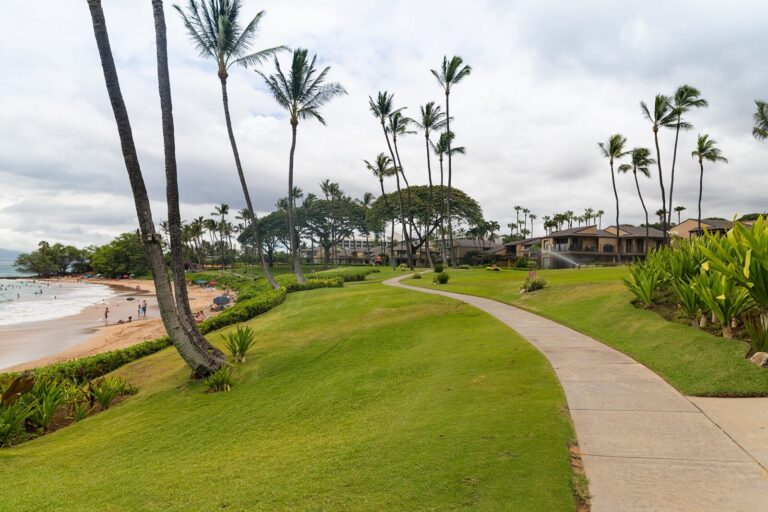
Image: the Wailea beach path, Maui, by dronepicr, licensed CC BY 2.0 via Wikimedia Commons.

More from LUXGetaway: The Best Luxury All-Inclusive Resorts in the World · Four Seasons Maui at Wailea · Fairmont Kea Lani, Maui

Luxury Train Rides in the USA: The 8 Best Journeys for 2027 (and What They Actually Cost)

Ask most travel sites about luxury train rides in the USA and you will get a list that mixes a $70 scenic excursion with a $40,000 private charter, quotes fares that stopped being accurate two seasons ago, and never explains the one structural fact that matters: the United States has no scheduled, multi-day, all-inclusive luxury sleeper train. Not one. You cannot buy a cabin on an American Venice Simplon-Orient-Express, because no such train runs.

What America does have is genuinely excellent, and it comes in three distinct shapes: glass-domed day excursions, a two-to-three day rail-and-hotel package through the Rockies, and — new as of January 2026 — a charter market that will sell you an entire restored 1950s Pullman car with a chef and a steward aboard a scheduled Amtrak train.

Every fare below was taken from the operator’s own published pricing in October 2026. Where an operator does not publish fares, this guide says so rather than inventing a number.

The 8 best luxury train journeys in the United States

Journey Route Length Premium class Published fare
Canyon Spirit Denver–Moab or Denver–Salt Lake City 2 or 3 days Signature / Premier Not published online (see below)
Halloway Nine routes, coast to coast 1–2 nights Exclusive-use railcar Not published; reported $10k–$50k+ per car
Alaska Railroad GoldStar Anchorage–Fairbanks ~12 hours GoldStar dome $578 one-way, 3 meals included
Napa Valley Wine Train Napa–St. Helena round trip 3–6 hours Legacy Experience From $641 per person
Grand Canyon Railway Williams–South Rim 2h15m each way Luxury Dome / Parlor $242.98 round trip
Royal Gorge Route Cañon City out-and-back ~2 hours First Class $199 with meal included
Verde Canyon Railroad Clarkdale–Perkinsville 4 hours Private caboose $1,200 for up to 6 adults
Private railcar charter Most western Amtrak routes Multi-day Whole-car hire ~$15,000 per day, all-in

1. Canyon Spirit — the closest thing America has to a luxury rail holiday

If you have read about this train before, you probably know it as Rocky Mountaineer’s Rockies to the Red Rocks. Two things have changed and most published guides have not caught up.

First, the brand. For the 2026 season onward the US service operates as Canyon Spirit, with its own website, and “Rockies to the Red Rocks” is retained only as the route name. Second — and this is the detail that will cost you money if you get it wrong — the service levels were renamed. SilverLeaf is now Signature; SilverLeaf Plus is now Premier. Any article still quoting “SilverLeaf fares” is at least a season out of date.

There are now two products: the original two-day Denver–Moab run with one night in Glenwood Springs, and a three-day Denver–Salt Lake City itinerary added for 2026 with nights in Glenwood Springs and Moab.

The single most important thing to understand before booking: Canyon Spirit is a daylight-only train. There are no sleeping cars. The operator states this plainly. You ride through the scenery by day and sleep in hotels, which are included in the fare. This is not a criticism — it means you see every mile of Glenwood Canyon and the Ruby Canyon rather than sleeping through them — but travellers expecting an American Orient Express are expecting the wrong product entirely.

Signature includes a glass-dome coach with oversized curved windows, meals served at your seat, alcoholic and non-alcoholic drinks, an outdoor vestibule for photography, luggage handling, station transfers and the mid-journey hotel nights. Gratuities are built in: the operator discloses these as $48 per person on the two-day Signature itinerary and $71 on the three-day. Premier adds an exclusive lounge car, signature cocktails and wine pairings, with gratuities of $62 and $94 respectively.

On fares, a caveat you should insist on from any guide. Canyon Spirit does not publish its prices in a way that can be independently verified — the booking pages load pricing dynamically and the brochure sits behind a lead-capture form. Reseller pricing for 2027 puts Denver–Moab Signature at roughly $1,740–$1,810 per person one-way including hotels, and the three-day Denver–Salt Lake City at roughly $2,440–$2,530, with the Premier upgrade adding about $1,000. Treat those as indicative and confirm directly before you book.

The 2026 season ran 7 April to 17 November. The 2027 season is reported as 6 April to 7 November, again reseller-sourced.

2. Halloway — the genuine luxury news of 2026

This is the one most round-ups are still missing, and it is the reason this guide exists in its current form.

Halloway launched in January 2026, attaching privately owned, exclusively chartered luxury railcars to scheduled Amtrak trains. It does not own the cars; it operates as the booking platform for vintage equipment that was previously close to impossible for an ordinary traveller to reserve. Its first two California departures sold out, as did the June 2026 Chicago–Emeryville run.

The equipment is the real thing. Evelyn Henry is a midcentury Union Pacific sleeper with four double bedrooms and a queen master suite, all en suite. Warren R. Henry is a 1955 Union Pacific dome car used for sightseeing, dining and socialising. A Blue Ridge Club car now runs on the eastern routes.

What is included: an executive chef, a steward, all meals made to order, premium beverage service, in-station porter service, and hotel and station transfers. Gratuity is optional.

The booking model is the catch, and it is a significant one. Halloway sells exclusive use — one group per departure date. You cannot book a single bedroom. You are chartering the whole car.

The network has grown quickly and now covers nine routes, including Green Mountain Getaway (New York–Burlington), Atlantic Coast Cruise (New York–Miami), Canadian Crossing (New York–Montreal), Blue Ridge & Bayou (New York–New Orleans), Commodore’s Crown (New York–Chicago), Continental Crossing (Emeryville–Chicago), Pacific Pioneer (Seattle–Los Angeles) and Sea to Summit (Emeryville–Denver). 2027 departure dates are published; no 2026 dates remain.

Halloway publishes no rates at all — its FAQ describes charters as a daily rate plus operating charges, quoted by email. Press reporting across 2026 gives a wide and steeply rising range: a 12-hour Los Angeles–Oakland run was reported from $10,000 in February 2026, a 36-hour California–Denver trip from $18,500, and by April 2026 a Denver–Emeryville charter was reported from $37,375 and Northern California–Chicago from $51,750, in each case for the whole car and up to about six guests. The honest summary: roughly $10,000 to upwards of $50,000 per railcar depending on route and length, and nobody should quote you a per-person figure.

3. Alaska Railroad GoldStar Service — the best value premium class in America

GoldStar is a glass-domed upper-level car on a scheduled service, and on a straight dollars-per-hour-of-scenery basis it is arguably the best premium rail product in the country.

On the Denali Star between Anchorage and Fairbanks, GoldStar is $578 per adult one-way ($329 for children aged 2–11), and that fare includes breakfast, lunch and dinner. Standard Adventure Class on the same train is $294. On the shorter Coastal Classic between Anchorage and Seward, GoldStar is $289 one-way or $491 round trip, including breakfast on the outbound and dinner on the return.

Season dates run roughly mid-May to mid-September — the Denali Star from 12 May to 16 September 2027, the Coastal Classic from 14 May to 12 September 2027. One honest caveat: the operator’s fares page displays those 2027 dates alongside the prices without labelling the fare year, so confirm whether you are being quoted 2026 or 2027 pricing.

4. Napa Valley Wine Train — the most refined day on rails

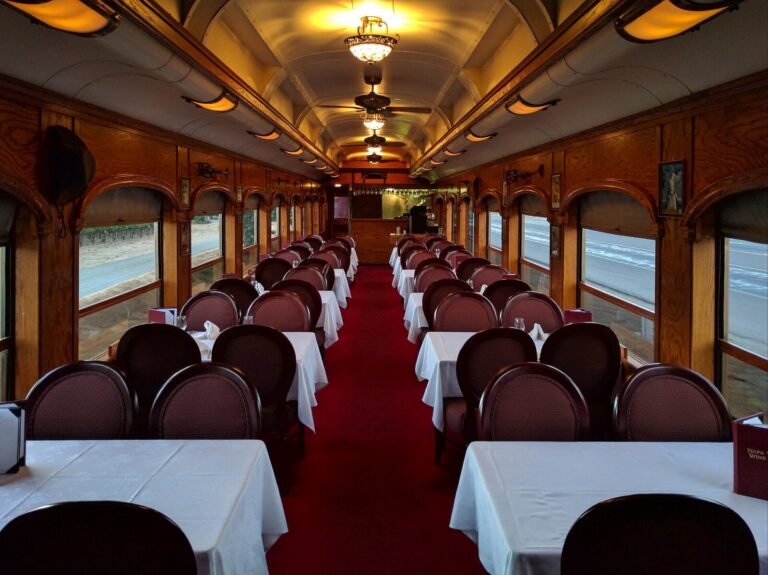
A 36-mile round trip from downtown Napa to St. Helena and back, running year-round with multiple daily departures. The carriages are the point: the Vista Dome cars are among only ten ever built.

Prices move daily. Checked on 19 October 2026, per person and round trip:

  • The Legacy Experience — from $641. Six hours. Welcome sparkling wine, a tasting of three private-label wines, a four-course meal, seated tastings at Charles Krug and V. Sattui, a stop at the Napa Valley welcome sign with an open-air-car tasting, roughly eleven tastings in total, a private table and dancing in the open-air car. Gratuity is not included; the operator suggests $15 per person.
  • Vista Dome Lunch — from $443.77 (dinner from $361.05). Three hours, a welcome glass of sparkling wine, a four-course meal cooked on board. Additional drinks and wine pairings are not included.
  • Tasting on the Rails from $453.40, Grape Stomp from $662.38, Murder Mystery Dinner from $485.12, Gourmet Express from $236.99.

Both the Legacy and Vista Dome experiences carry a two-guest minimum.

5. Grand Canyon Railway — the best-value luxury class in the Southwest

Sixty-five miles from Williams, Arizona to the South Rim, two hours and fifteen minutes each way, running 364 days a year and closing only on 25 December. From 1 January to 31 October it departs Williams at 9:30am and returns at 5:45pm, giving you about three hours and forty-five minutes at the rim.

Adult round-trip fares (ages 16+) are refreshingly transparent: Luxury Dome $242.98, Luxury Parlor $242.98, Observation Dome $202.98, First Class $172.98, Coach $89.98, Pullman $69.98. You can book a different class in each direction.

The Luxury Dome (“The Fred Harvey”) is a full-length dome with 66 upstairs seats and an open bar and lounge below, plus complimentary morning and afternoon snacks. The Luxury Parlor cars offer a plush parlor interior and — on “The Chief” — a rear open-air observation platform, which is the single best photography position on any day train in this guide. Both classes are 16+ only and the Luxury Dome is not wheelchair accessible.

Budget for one extra line item most guides omit: the national park entrance fee is billed at booking, at $20 for one adult or $35 for two to nine adults per reservation, waived if you supply a National Park Pass number.

6. Royal Gorge Route Railroad — read the fine print on food

An out-and-back run from Cañon City, Colorado through the Royal Gorge, about one hour fifty minutes on the daytime departures and around two and a half hours on the evening runs. It operates year-round with up to four departures a day.

Here is the trap. Vista Dome class — from $139 per adult off-peak, $154 at peak times — does not include food. Meals are a separate add-on at $35 per person for lunch, afternoon or dinner service, or $30 for breakfast, and gratuity is extra on top. What you get for the fare is booth seating in the glass-topped dome, open-air car access and the ability to order from the 403 Grill and full bar. Peak departures are the 12:30pm and 6:30pm.

If you want the meal in the price, book First Class at $199 per person, which includes welcome sparkling wine, salad, warm rolls, a choice of entrée — Colorado buffalo short rib, chicken, king salmon, butternut squash ravioli or curried cauliflower steak — and the chef’s dessert, served in the Elegant Dining Car or the Vista Dome. It runs on select weekdays, weekends and holidays.

Accessibility note: there are fourteen steps up to the dome and it is not wheelchair accessible.

7. Verde Canyon Railroad — forget first class, book the caboose

Another correction worth making: Verde Canyon has abolished the first-class-versus-coach split. There is now a single fare of $139 per person for all ages, rising to $175 on event dates such as the Chocolate Lovers’ Festival in February and the Uncorked Wine Festival in May. That single fare bundles what used to be first class — living-room-style couch, armchair and bistro seating in climate-controlled cars with panoramic windows, a complimentary charcuterie tray, a piccolo of sparkling wine or cider per two passengers, narration, and unlimited access to the open-air viewing cars.

The genuine luxury option is the private caboose at $1,200 for a party of up to six adults: a 1929 caboose with a mahogany interior, swivel chairs, cupola seating, two private outdoor platforms, a personal valet and Champagne on boarding. For six people that is $200 each — better value than most of the premium day-train classes above, and a far better experience. It is not ADA accessible.

The four-hour round trip runs Clarkdale to Perkinsville, year-round.

8. Private railcar charter — the old-money option

Before Halloway made it easy, this was how you did luxury rail in America, and it still works. Privately owned railcars can be hauled on Amtrak routes by arrangement.

Chicago-based Train Trips quotes approximately $15,000 per day for one private railcar, and states that this is all-in: car rental, mileage fees, Amtrak charges, insurance, switching, parking, onboard staff, food and drink, with a 3% card fee. It runs on most western Amtrak routes — Chicago to Oakland, Denver, Los Angeles, New Orleans, Washington DC and Seattle.

One caution: there is no central rate card for the private-railcar market. Individual owners quote privately, so anyone citing an “AAPRCO rate” is making it up.

What about Dreamstar Lines?

You will see Dreamstar Lines — a proposed luxury overnight sleeper between Los Angeles and San Francisco — described in the present tense across a lot of travel content. It should not be.

As of October 2026, Dreamstar has not launched. There is no service, no schedule, no booking, no published fare and no confirmed equipment. The company’s own website describes the route entirely in the future tense and its calls to action are to sign up for updates or to invest. Track access is not secured: a 2024 memorandum of understanding with Union Pacific only moves “towards” it, and negotiations with Metrolink and Caltrain were still ongoing as of 2025. Equipment is not acquired either — BMW Designworks was commissioned in 2024 for concept designs, the 2025 interiors are renderings, and a November 2025 joint venture aims to develop and acquire hybrid locomotives.

Third-party reporting now puts anticipated launch at 2028, ahead of the Los Angeles Olympics. For context on how firm that is: in April 2024 the company was quoted saying service could begin “as soon as next summer,” meaning 2025. We could find no Dreamstar development reported after November 2025.

If it launches as described, it will be the first scheduled luxury sleeper in modern American history. It has not launched.

Why America has no Orient Express — the honest answer

Readers ask this constantly, and the answer is more interesting than a simple no.

The structural difference is about what you buy. In Europe, you buy a cabin on a dedicated luxury train that runs as its own consist. In America, you charter an entire luxury railcar that is then attached to a normal scheduled Amtrak train. The hardware is comparable — Halloway’s restored 1950s sleepers have master suites with en-suite bathrooms, dome cars, a private chef and a steward, which is genuinely Orient-Express-grade. The commercial model is not.

Three facts explain the gap:

  1. The flagship US product has no beds. Canyon Spirit is explicitly daylight-only; you sleep in hotels.
  2. Everything else on this list is a day excursion. Grand Canyon, Verde Canyon, Royal Gorge and Napa are two-to-six-hour round trips. Alaska Railroad GoldStar is a premium domed day coach on a scheduled service, not a luxury sleeper.
  3. The closest equivalent is a charter, not a train. One group per departure, whole car only, riding attached to a scheduled service.

The fair conclusion: America arrived at luxury rail from the charter direction rather than the scheduled-train direction, and 2026 — the year Halloway launched — is the first year that has really been true. For the scheduled-cabin experience, you still have to go to Europe and beyond, where the Venice Simplon-Orient-Express sells cabins by the night.

Which journey should you book?

  • First luxury train trip, want the full holiday: Canyon Spirit, three-day Denver–Salt Lake City.
  • Want a genuine overnight luxury sleeper and have the budget: Halloway, and book a 2027 departure now — 2026 is sold out.
  • Best scenery per dollar: Alaska Railroad GoldStar, Denali Star, three meals included.
  • Best single day: Napa Valley Wine Train Legacy Experience, or Grand Canyon Railway Luxury Parlor for the open-air platform.
  • Travelling as a group of six: the Verde Canyon private caboose, at $200 a head, is the sleeper value of this entire list.
  • Price is not a consideration: a private railcar charter, roughly $15,000 a day all-in.

Frequently asked questions

Is there an overnight luxury train in the USA?

Only as a charter. Halloway, launched in January 2026, runs restored vintage sleeper cars with en-suite bedrooms attached to scheduled Amtrak trains, but sells them on an exclusive-use basis — you book the entire railcar, not a single bedroom. There is no scheduled luxury sleeper on which you can buy an individual cabin.

Is Rocky Mountaineer the same as Canyon Spirit?

Canyon Spirit is the brand under which the US route — Denver to Moab or Salt Lake City, marketed as Rockies to the Red Rocks — now operates, from the 2026 season. The service levels were renamed at the same time: SilverLeaf became Signature and SilverLeaf Plus became Premier. Rocky Mountaineer continues to operate its Canadian routes separately.

Does Canyon Spirit have sleeping cars?

No. It is a daylight-only train and the operator says so explicitly. Overnight stays are in hotels and are included in the fare.

What is the cheapest genuinely luxurious train ride in America?

The Verde Canyon Railroad’s standard $139 fare already includes a charcuterie tray, sparkling wine and premium seating with open-air car access. If you can fill the private caboose with six adults, that works out at $200 per person for a far more exclusive four hours.

Do luxury train fares include meals?

It varies more than you would expect, and this is where travellers get caught. Alaska Railroad GoldStar includes up to three meals. Canyon Spirit Signature includes meals and drinks. Grand Canyon Railway’s luxury classes include snacks and an open bar, not a meal. The Royal Gorge Route’s Vista Dome class includes no food at all — meals are a $30–$35 add-on, or you book First Class at $199 with the meal included.

When should I book for 2027?

Halloway’s 2027 departures are already published and its 2026 dates are gone, so that is the urgent one. Canyon Spirit’s 2027 season is reported as 6 April to 7 November. Alaska Railroad’s summer season runs mid-May to mid-September 2027 and sells out for the Denali Star well in advance.


Fares and season dates were checked against operator sources in October 2026. Rail pricing is dynamic and changes frequently; confirm directly with the operator before booking. Where an operator does not publish fares — Canyon Spirit and Halloway in particular — this guide says so rather than estimating.

Image: Napa Valley Wine Train Silverado car interior, by Grendelkhan, licensed CC BY-SA 3.0 via Wikimedia Commons.

More from LUXGetaway: Luxury Train Travel: The Complete Guide · The Best Luxury Train Journeys in the World · Orient Express Cost 2026

Best Luxury Hotels in Dubai 2026: What’s Open, What’s Closed and Where to Stay

0

Some links on this page are affiliate links. If you book through them, we may earn a commission at no extra cost to you.

Almost every “best luxury hotels in Dubai” list you will read this winter leads with the Burj Al Arab. You cannot book it. It closed in April 2026 for an 18-month restoration and is not due to reopen until October 2027. The Armani Hotel inside the Burj Khalifa is closed too, until March 2027. Atlantis The Royal’s Cloud 22 sky pool — the image that sells the hotel — has been shut since April with no reopening date announced.

That is the state of Dubai luxury as of October 2026, and it is also the opportunity. A wave of closures coincided with the softest demand in a decade, and the city’s open hotels are competing on inclusions rather than cutting rates. Here is what is genuinely open, what it costs, and where the value sits.

Aerial view of Palm Jumeirah in Dubai, with the palm-frond residential islands in turquoise water, the arch-shaped Atlantis The Palm hotel on the outer crescent in the foreground and the Dubai Marina skyline on the hazy horizon
Palm Jumeirah from the air, with Atlantis, The Palm on the crescent and the Dubai Marina skyline beyond. Photo: giggel via Wikimedia Commons, CC BY 3.0.

What Is Closed Right Now

Property or venue Status Reopens
Burj Al Arab Jumeirah Closed, 18-month restoration October 2027
Armani Hotel Dubai Closed, full refurbishment March 2027 (ballroom January)
Cloud 22, Atlantis The Royal Closed for refurbishment No date announced
Dinner by Heston, Ling Ling, La Mar (Atlantis The Royal) Paused TBC
Ossiano and Hakkasan (Atlantis, The Palm) Paused; Ossiano in refurbishment TBC
St. Regis Dubai, The Palm Rooms closed; dining open 1 November 2026, 290 keys
Park Hyatt Dubai Closed, final renovation phase November 2026
Anantara World Islands Permanently closed Never

Both Atlantis hotels themselves remain open — only some restaurants are paused. If you are planning a stay before spring 2027, check status on the hotel’s own site the week you book; several of these dates will move.

Why Rates Are Unusual This Year

A US–Iran escalation in early March 2026 gutted Dubai tourism. Occupancy fell from an average of 84.8% in January and February to 22.8% in the week ending 14 March. Cancellations hit 60% within 48 hours and regional aviation capacity ran 55–60% below schedule. Hotels used the trough to close and refurbish — which is why the list above is so long.

Recovery is well under way. Dubai recorded 6.97 million international overnight visitors between January and August 2026, with occupancy climbing from 36% in March to 66% in August, and Emirates has restored 97% of its network. Lufthansa, Air France, KLM, British Airways and Singapore Airlines resume service between October and December 2026.

The pricing dynamic is the part worth understanding. Luxury-segment ADR in August 2026 was down only 5.2% year on year even though RevPAR fell 25.1%. Hotels are deliberately holding headline rates — luxury positioning is tied to price — and competing on value instead. Atlantis states “rate integrity throughout” while offering resort credit, free upgrades, dining credit and complimentary Aquaventure tickets, alongside 25% off minimum stays. One&Only The Palm has a fifth-night-free offer running to 24 December 2026; Address Downtown is at up to 25% off through 10 January 2027; Sofitel Dubai The Palm and Fairmont Dubai are running fourth-night-free.

So do not shop on nightly rate alone this season. The value is in the inclusions, and you have to ask for them.

The Hotels

Atlantis The Royal — Palm Jumeirah

795 rooms and suites including 102 suites, 44 with private pools, across 43 floors. It holds three MICHELIN Keys — the only three-Key hotel in the UAE. The Royal Mansion, four bedrooms over two levels with its own infinity pool, has been reported above $100,000 a night.

Open restaurants include Ariana’s Persian Kitchen, Nobu by the Beach, Carbone, estiatorio Milos and Malibu 90265. Dinner by Heston Blumenthal, Ling Ling and La Mar are paused. Cloud 22 is closed. Indicative rates: roughly $600–900 low season, $1,100–1,800 high.

Atlantis, The Palm

1,544 rooms and 35 restaurants at the apex of the Palm. The Underwater Suites — Poseidon and Neptune, 165m² each — have their master bedroom and bathroom submerged against floor-to-ceiling windows onto the Ambassador Lagoon, which holds over 65,000 marine animals. Aquaventure World has over 105 slides.

This is where FZN by Björn Frantzén holds three MICHELIN stars — not at Atlantis The Royal, as several roundups and even Michelin’s own hotel page have it. Atlantis Dubai as a destination holds six stars across four restaurants, the most in the Middle East, though Ossiano and Hakkasan are currently paused. Indicative: $350–600 low, $700–1,300 high.

One&Only One Za’abeel — Za’abeel

229 rooms including 51 suites on floors 38–53. The Link is the draw: a three-floor glass cantilever bridging the twin towers 100m up and 230m long, holding the Guinness World Record for the longest cantilevered building since March 2024, with 12 restaurants inside it. Tapasake sits on its adults-only rooftop pool terrace, alongside StreetXO by Dabiz Muñoz and Sagetsu by Tetsuya Wakuda.

One caveat: none of those restaurants holds a star in the 2026 Dubai guide, and La Dame de Pic Dubai lost its star because it closed. Earlier coverage crediting this hotel with starred dining is stale. City hotel, no beach. Amex Fine Hotels + Resorts. Indicative $450–650 low, $900–1,500 high.

Bulgari Resort Dubai — Jumeira Bay

101 rooms, suites and villas on a seahorse-shaped island reached by a 300m bridge. Two MICHELIN Keys. Il Ristorante – Niko Romito holds two MICHELIN stars, retained in 2026, with a list of over 1,200 wines; Hōseki holds one under chef Masahiro Sugiyama. The Bvlgari Yacht Club sits on a 50-berth marina. The spa runs to 1,700m² with a 25m indoor pool. Peak season is explicitly December to February. Indicative $700–1,100 low, $1,500–2,800 high.

Jumeirah Marsa Al Arab — Umm Suqeim

The property to know this year. Opened March 2025 on a beachfront peninsula immediately next to the Burj Al Arab, with superyacht-inspired architecture by Killa Design: 386 keys, 11 restaurants, four bars, a three-storey Talise spa, its own superyacht marina and four pools. With the Burj closed, this is Jumeirah’s de facto flagship and the closest you can get to the icon. Amex FHR.

The Lana, Dorchester Collection — Business Bay

Dorchester Collection’s first Middle East hotel, opened February 2024 on Marasi Bay Marina. 225 rooms over 30 storeys, architecture by Foster + Partners, interiors by Gilles & Boissier, 50-plus commissioned artworks and two MICHELIN Keys.

Eight dining concepts, four with name chefs: Jean Imbert at Riviera and the rooftop High Society; Martín Berasategui at Jara and the Txakolina cigar speakeasy; Angelo Musa at Bonbon Café. The first Dior Spa in the UAE occupies the 29th floor. Opening rates ran from about AED 3,400 (~$925) to AED 25,000 (~$6,800) by category.

Jumeirah Al Qasr and Madinat Jumeirah

Madinat Jumeirah is Dubai’s largest resort — over 40 hectares and 5.4km of waterways navigated by abras. Al Qasr has 294 rooms, a 2km private beach, one of the city’s largest temperature-controlled pools and complimentary Wild Wadi tickets. Dining includes the overwater Pierchic and Pai Thai, reached by boat. Published starting rates run from AED 3,780 (~$1,030), with the Presidential Suite from AED 45,000 (~$12,250). Notably, no Madinat property holds a MICHELIN Key.

Four Seasons Resort Dubai at Jumeirah Beach

237 rooms and suites, Forbes Five-Star, one MICHELIN Key, Amex FHR. Eleven restaurants and bars including Sea Fu and the Mercury Rooftop. The genuine summer differentiator: two outdoor pools plus a climate-controlled indoor pool, which matters more than it sounds in August. Indicative $450–700 low, $900–1,600 high.

Its sister Four Seasons Hotel Dubai DIFC (106 keys) is home to KIGO, a new one-star in 2026, whose team also won the 2026 Michelin Service Award.

Mandarin Oriental Jumeira

178 rooms and 78 suites on Jumeirah Beach Road. Forbes Five-Star, one MICHELIN Key, Amex FHR. Tasca by José Avillez holds one MICHELIN star on the sixth floor beside a terrace infinity pool; Netsu is a Japanese warayaki steakhouse with live cooking stations. Complimentary kayaking and paddle-boarding from the private beach. Indicative $400–650 low, $850–1,500 high. The newer Mandarin Oriental Downtown opened in November 2025 in the Wasl Tower with 259 rooms, ten dining venues and a rooftop helipad.

One&Only Royal Mirage and One&Only The Palm

Royal Mirage sits on 65 acres of palm gardens with a 1km private beach, split across The Palace, Arabian Court and The Residence & Spa. Eight dining venues including Celebrities and the Moroccan Tagine, plus the DRIFT beach club and a hammam. A Virtuoso partner.

One&Only The Palm holds two MICHELIN Keys and is home to STAY by Yannick Alléno, two MICHELIN stars. Its fifth-night-free offer runs to 24 December 2026.

The rest worth knowing

  • SIRO One Za’abeel — 132 rooms on floors 30–37 of the same tower, built around fitness and recovery. Fitness Suites have a punching bag, free weights and a treadmill in-room; Recovery Suites have private treatment rooms. A 9,500 sq ft Fitness Lab and a Recovery Lab with cryotherapy and IV infusions. Programming developed with boxer Ramla Ali and AC Milan.
  • Raffles The Palm — 389 rooms, an indoor pool billed as the largest in the Middle East, 23 spa treatment rooms, heavily maximalist. Summer rates have been seen from about $175.
  • Waldorf Astoria Dubai Palm Jumeirah — 319 rooms, bookable from around 72,000 Hilton Honors points.
  • The Ritz-Carlton, Dubai (JBR) — 294 keys, every one with a sea-facing balcony or terrace, six pools. The separate Ritz-Carlton DIFC holds Birch, a new one-star in 2026.
  • Palazzo Versace — 215 rooms on Dubai Creek, Versace-furnished throughout. Worth flagging honestly: it is Forbes Four-Star, the only property here below five, and it has no beach.
  • Six Senses The Palm — the UAE debut, bookable from 1 September 2026. 61 suites plus 172 branded residences on the West Crescent, with a 60,000 sq ft spa including a Longevity Clinic. The strongest new opening of the year.

The 2026 Michelin Picture

The Dubai guide announced on 7 October 2026 covers 122 restaurants: 20 starred (two three-star, four two-star, 14 one-star), 22 Bib Gourmand and 80 Selected.

At the top: FZN by Björn Frantzén at Atlantis, The Palm and Trèsind Studio at the St. Regis Dubai, The Palm both hold three stars — Trèsind being the first Indian restaurant anywhere to do so. Orfali Bros was promoted to two stars, the headline move of the year, joining Il Ristorante – Niko Romito, Row on 45 and STAY by Yannick Alléno.

The genuinely odd story: at least four or five starred restaurants that are currently closed retained their stars, including Al Muntaha inside the shuttered Burj Al Arab, Ossiano, Hakkasan, Dinner by Heston and Smoked Room. Michelin said it was “fully aware” of the closures and will re-inspect each on reopening. Food writer Samantha Wood publicly questioned why at least ten closed restaurants appeared across the guide’s lists.

On the hotel side, the MICHELIN Keys: Dubai holds 14 of the UAE’s 25. Three Keys go to Atlantis The Royal alone. Two Keys to One&Only The Palm, Bvlgari and The Lana. One Key to ten properties including Mandarin Oriental Jumeira, Four Seasons Jumeirah Beach, Mandarin Oriental Downtown and the St. Regis Dubai, The Palm. Conspicuously absent: the Burj Al Arab, Atlantis The Palm, Armani, every Madinat Jumeirah property, One&Only Royal Mirage, Raffles The Palm and the Ritz-Carlton JBR. Our guide to how MICHELIN Keys work explains what the rating is actually measuring.

Where to Stay by Trip Type

Area Best for Trade-off
Downtown First-timers, sightseeing, shopping Priciest non-beach area; no beach. Red Line metro, air-conditioned walkway to Dubai Mall
Palm Jumeirah Couples, families, all-in resorts Isolated; long drives to the city. Monorail to Atlantis, otherwise taxis
Dubai Marina & JBR Beach plus nightlife, better value Dense high-rises, weekend traffic. Metro and tram
Jumeirah / Umm Suqeim Quiet beach, couples No metro — taxi-dependent and the fares add up
DIFC Business; two 2026 Michelin stars No beach, quiet at weekends
Business Bay Central value, design-led (The Lana) More corporate, some construction

When to Go

Peak is November through March, with January and February delivering the best weather at around 24–26°C. July and August reach 41–42°C with heavy humidity, and rates run roughly half winter levels — a generic five-star that costs AED 1,500–1,800 in January can be AED 400–750 in high summer.

The sweet spot is late October to mid-November, or March: near-peak weather at pre- or post-peak pricing. Mid-December to early January rates double or more, and New Year’s Eve is its own tier entirely.

One scheduling note for next year: Ramadan 2027 is projected to begin around 8 February and run to roughly 8–9 March, with Eid Al Fitr around 9–10 March. Dates always depend on moon sighting and are never fixed in advance. That places Ramadan squarely inside peak season, which is unusual. Expect daytime alcohol service suspended in most licensed venues until sunset, reduced daytime restaurant hours, more modest dress expected, iftar and suhoor becoming the main dining draw — and softer rates than a normal February.

Practical Notes

Taxes add up. On top of the room rate: a Tourism Dirham fee of AED 20 per room per night for five-star hotels (charged per room, not per guest), a municipality fee of 7%, a 10% service charge and 5% VAT. Combined, these can add roughly 25–30% to the base rate, and booking sites often quote the room rate alone.

Airports. DXB is in the city with a direct Red Line metro link at Terminals 1 and 3 — 15–25 minutes to Downtown off-peak, 25–35 to the Marina. DWC (Al Maktoum) is roughly 60km away near Jebel Ali with no metro, and transfers from it typically cost 40–60% more. Check which airport code is on your ticket.

Alcohol. The legal drinking age is 21, and alcohol may be consumed only in private or in licensed venues. Since 1 January 2023, Dubai has suspended the 30% municipality tax on alcohol and made the personal liquor licence free; tourists do not need a licence to buy at retail, just a passport. Several travel sites still describe the 30% tax as live — it is not. Public beaches, streets, parks and malls are dry. Driving is zero-tolerance: any detectable alcohol carries a minimum AED 25,000 fine.

Programs That Add Real Value

Dubai’s best hotels are disproportionately independent — Bulgari, One&Only, SIRO, Atlantis, Jumeirah, The Lana, Palazzo Versace — which means no chain elite recognition at all. For those properties, Amex Fine Hotels + Resorts or Virtuoso is the only route to upgrades and credits. That is the single most important booking insight for this city.

Amex FHR covers 29 Dubai properties including Bulgari, both Four Seasons, Jumeirah Al Qasr, Jumeirah Marsa Al Arab, both Mandarin Orientals, One&Only One Za’abeel and The Palm, Raffles The Palm, The Lana, both Ritz-Carltons, Atlantis The Royal and the Waldorf Astoria Palm. Atlantis The Palm and SIRO sit in Amex’s Hotel Collection instead. The Burj Al Arab is in neither program. Our breakdown of what Amex Fine Hotels + Resorts actually gets you and the comparison with the Hotel Collection cover the difference.

On points: Park Hyatt Dubai at Category 6 is the standout value at around 20,000 World of Hyatt points — though it is closed until November 2026. The Ritz-Carlton Dubai runs about 83,500 Bonvoy, Waldorf Astoria Palm about 72,000 Hilton Honors.

Frequently Asked Questions

Is the Burj Al Arab open?

No. It closed in April 2026 for an 18-month restoration led by Paris studio Tristan Auer and is due to reopen in October 2027 — its first closure in more than 25 years. Jumeirah has been rebooking affected guests into its other Dubai properties, and Jumeirah Marsa Al Arab next door is the closest substitute.

What is the best luxury hotel in Dubai right now?

Atlantis The Royal holds the only three MICHELIN Keys in the UAE. For quieter luxury, Bulgari Resort on Jumeira Bay or The Lana in Business Bay, both two-Key. For beach resorts, Four Seasons Jumeirah Beach or Jumeirah Marsa Al Arab.

How much does a luxury hotel in Dubai cost per night?

Roughly $400–1,100 in low season and $850–2,800 in peak, depending on property, before taxes and fees that add 25–30%. Summer rates run about half winter levels.

Which Dubai hotels have Michelin-starred restaurants?

Atlantis, The Palm holds the most (FZN at three stars, plus Ossiano and Hakkasan, both currently paused). The St. Regis Dubai, The Palm has Trèsind Studio at three stars. Bulgari has Il Ristorante at two and Hōseki at one. One&Only The Palm has STAY at two. Mandarin Oriental Jumeira, Four Seasons DIFC and Ritz-Carlton DIFC each hold one.

Is this a good time to book Dubai?

Yes, with caveats. Hotels are holding headline rates but adding substantial value — resort credits, free nights, upgrades and dining credits — so this is the strongest inclusions market in years. The caveat is that several landmark properties and restaurants are closed, so confirm status before booking.

Where should a first-time visitor stay in Dubai?

Downtown, for walkable access to the Burj Khalifa, Dubai Mall and the fountain, with a metro station at the door. Choose Palm Jumeirah or Jumeirah instead if the trip is primarily about the beach.

The Bottom Line

Dubai in 2026-27 is a city with two of its most famous hotels behind hoardings and an unusually generous market everywhere else. Book Jumeirah Marsa Al Arab if you wanted the Burj Al Arab, Address Downtown if you wanted Armani, and go through Amex FHR or Virtuoso for anything independent — which, in this city, is most of the best.

And check status the week you book. Between now and March 2027, the St. Regis Palm, Park Hyatt, Armani and several Atlantis restaurants will all change state.

For how Dubai’s best compare globally, see our ranking of the most luxurious hotels in the world.

Hotel status, closures and reopening dates are current as of 12 October 2026 and several will change within months. Nightly rates are indicative, triangulated from market data rather than live inventory, and exclude the roughly 25–30% in taxes and fees. Verify availability, closures and current offers with the hotel before booking. Imagery via Wikimedia Commons, credited individually.

Luxury Train Travel: The World’s Best Trains and What They Cost in 2026

Some links on this page are affiliate links. If you book through them, we may earn a commission at no extra cost to you.

Luxury train travel spans a wider price range than any other category in travel. The Vietage in Vietnam costs $420 and lasts five hours. L’Observatoire on the Venice Simplon-Orient-Express costs £80,000 and lasts one night. Both are, accurately, luxury trains.

What follows is the whole field as it actually stands in late 2026 — which trains are running, which have quietly stopped, which have been renamed, what each one costs, and how to tell the genuinely scarce from the merely expensive.

Blue and gold Rocky Mountaineer carriages seen from trackside, with curved glass dome roofs over the upper deck, passengers visible in cream seats behind the windows, and the Rocky Mountaineer name in gold lettering along the side
Rocky Mountaineer’s bi-level glass-domed carriages. The train runs in daylight only — guests sleep in hotels along the route. Photo: Membeth via Wikimedia Commons, CC0.

First, the Four Things Called “Orient Express”

This is the single biggest source of confusion in the category, and getting it wrong will cost you a booking.

  1. Venice Simplon-Orient-Express — Belmond’s train, running since 1982 in original 1926–31 Wagons-Lits carriages. This is the one most people mean.
  2. Orient Express La Dolce Vita — a different train entirely, operated by Arsenale S.p.A. with Accor’s Orient Express brand. In service in Italy since 4 April 2025.
  3. Orient Express La Minerva — a hotel, in a palazzo beside the Pantheon in Rome, opened spring 2025. Not a train.
  4. The Accor Paris–Istanbul sleeper revival — 17 restored 1920s–30s carriages. Announced, not operating. The launch has slipped from 2024 to 2025 to 2026, and the most recent trade reporting points to 2027. No fares published.

Europe

Venice Simplon-Orient-Express

Original Wagons-Lits carriages from 1926–31, with Art Deco marquetry and Lalique glass. Three cabin tiers plus one extraordinary outlier.

Historic Twin cabins have a washbasin only, with a shared WC at the end of the carriage — a detail that surprises first-time bookers. Suites, introduced from June 2023, add an en-suite bathroom with shower. Grand Suites — six only, named Istanbul, Paris, Venice, Prague, Budapest and Vienna — add a separate living area, caviar on arrival and champagne throughout.

2026 fares (GBP, per person, twin share, one way):

Route Historic Twin Suite Grand Suite
Paris–Venice £4,275 £9,660 £13,530
Paris–Vienna £4,275 £8,785 £13,530
Paris–Budapest £4,275 £10,625 £13,530
Paris–Portofino (3 nights) £9,550 £17,400 £23,700

For 2027 Belmond has repriced in euros — Paris to Venice, Verona, Vienna or Prague at €4,510 / €10,500 / €14,070 — and added Monte Carlo as a first-time stop from May 2027, from €4,870. The flagship Paris–Istanbul runs about once a year over five nights including two hotel nights: €20,940 / €46,780 / €73,080.

L’Observatoire by JR is a 1920s Wagons-Lits car reimagined by the French artist JR and sold as exclusive use of the entire carriage: an oculus skylight above the double bed, a concealed tearoom with a fireplace and a miniature model train, a freestanding bath, a library of Gallimard books and a record player with JR-curated vinyl. From £80,000 per night.

Our dedicated guide to Orient Express cost by cabin and route goes deeper on this train specifically.

Belmond Royal Scotsman

All journeys depart Edinburgh Waverley, in Pullman cars built in 1960, with a spa car added in 2016 and four Grand Suites following a 2025 rebuild. Single cabins were removed in 2025. Around 18 bedrooms, two dining cars.

From £5,850 for the 2-night Taste of the Highlands to £24,850 for the 7-night Grand Tour of Scotland, with the Scotch Malt Whisky Trail at £12,200 over four nights. The open-air observation veranda is the signature feature.

Belmond Britannic Explorer

England and Wales’s first luxury sleeper, launched July 2025 — and built from the carriages of the retired Belmond Grand Hibernian, shipped out of Ireland in 2022 and completely redesigned. Up to 36 guests from London Victoria.

Three-night Cornwall, Wales or Lake District routes from £6,300; six-night combinations from £15,400. Programming includes Simon Rogan’s farm and dinner at The Waterside Inn, Bray.

Orient Express La Dolce Vita

Italy’s new train, running since April 2025 — and genuinely new. The carriages are converted Italian Z1 stock, not historic Wagons-Lits, with interiors by Milan’s Dimorestudio evoking 1960s and 70s Italian design. 31 cabins: 12 Deluxe at 7m², 18 Suites at 11m², and one signature La Dolce Vita Suite. Cuisine is directed by three-Michelin-star chef Heinz Beck.

From €3,500 per person for one night, from €7,000 for two, in a Deluxe cabin. Suites on request. Itineraries run mostly round-trip from Rome to Venice, Portofino, Siena, Matera and Montalcino, plus Sicilian routes.

Golden Eagle Danube Express

Maximum 50 passengers, single-sitting dining, all cabins en-suite with Wi-Fi. The 2027 Paris–Istanbul run — eight days, five nights on board plus hotel nights at each end — costs €19,900 twin in a Deluxe cabin or €25,200 in Superior Deluxe, departing 22 May and 6 October 2027.

That is worth comparing directly with Belmond: Golden Eagle is marginally cheaper than the VSOE’s €20,940 entry fare for Paris–Istanbul, and gives you five train nights instead of three, with all alcohol, all gratuities and an onboard doctor included.

Asia

Eastern & Oriental Express

Important: the relaunched train, running since February 2024, is Singapore–Malaysia only. The Thailand legs to Bangkok, Chiang Mai and Vientiane have not returned, whatever older agent tables suggest.

The carriages have the best backstory in Asia: built in Japan in 1972 by Hitachi and Nippon Sharyo as New Zealand’s “Silver Star,” bought by James Sherwood, regauged from 1,067mm to metre gauge for Malayan track and rebuilt in Singapore. The relaunch added a bar car with an open-air observation deck and a spa car.

Three-night round trips from Singapore: Essence of Malaysia £4,000 / £6,000 / £9,300 (Pullman / State / Presidential), running January to March and November to December; Wild Malaysia £4,525 / £5,625 / £9,000 via the Jungle Railway and Taman Negara, April to October. All food and drinks included.

India — Maharajas’ Express, Palace on Wheels, the Golden Chariot

Maharajas’ Express (IRCTC) runs four itineraries. 2026-27 fares for foreign passport holders, Deluxe / Junior Suite / Suite / Presidential: Indian Splendour and Indian Panorama at $8,400 / $10,700 / $15,600 / $26,800 over six nights; the 3-night Treasures of India at $5,300 / $5,700 / $8,600 / $14,600. The Presidential Suite occupies an entire carriage. A rare quirk: Suites and Presidential Suites cost the same for one guest or two — no single supplement, which is almost unheard of in this category.

Palace on Wheels publishes the cleanest rate card of any luxury train, and it is the only one quoting a straight per-night price: $864 per person per night in shoulder season (September 2026 and April 2027) rising to $976 in peak (October 2026–March 2027), on the 7-night Rajasthan circuit. Per cabin, the Presidential Suite runs $3,223–$3,510 a night. GST is extra and Christmas and New Year carry a 10% surcharge.

The Golden Chariot was relaunched by IRCTC with a refurbished train unveiled in May 2026: 80 guests in 40 cabins, an Ayurvedic spa car, and three itineraries. Agent-published 2026-27 fares are $3,400 for the 3-night Glimpses of Karnataka and $5,000 for the 5-night Pride of Karnataka and Jewels of South — before a 20% promotional discount running on selected departures from 24 October 2026 to 13 March 2027.

Japan — the ballot trains

Japan has the two hardest luxury trains in the world to book, and the difficulty is structural rather than financial.

Seven Stars in Kyushu (JR Kyushu, launched 2013) carries just 20 passengers in eight Suites and two Deluxe Suites. Deluxe Suite A has a full-carriage-width panoramic rear observation window and is the single most requested cabin in Japanese rail travel. Berths are allocated by lottery, with reported 10–20 applicants per berth.

Train Suite Shiki-shima (JR East, 2017) carries 34 passengers in 17 suites across ten cars designed by Ken Okuyama, who styled the Ferrari Enzo. The two Deluxe Suites have hinoki cypress bathtubs; one is a split-level maisonette. It is a dual-mode hybrid, running on overhead wire and on two onboard diesel generators, which is how it reaches Tohoku and Hokkaido. Its inaugural ballot was oversubscribed 76 times.

JR East does not publish fares on its English course pages. Reported figures range from about ¥320,000 per person to ¥1,950,000 for the top Deluxe Suites — treat those as indicative only.

The practical workaround: international specialist agents hold their own allocations that can be booked first-come, first-served, bypassing the domestic ballot entirely. In October 2026 one specialist was showing a single remaining suite on the October Seven Stars departure.

The Vietage by Anantara

A single carriage — the last car coupled to the back of a scheduled Vietnam Railways train — fitted with six booths for two, rattan partitions and a semicircular bar with a dedicated bartender. Maximum 12 guests, on routes between Quy Nhon, Da Nang and Nha Trang.

$420 per person (rising to $441 for 2027), including cocktails, afternoon tea, a cheese and charcuterie course and a 15-minute back-and-shoulder massage. The cheapest genuine luxury train experience in the world.

Africa

Rovos Rail

Departing from its own Edwardian private station at Capital Park, Pretoria. Four Royal Suites exist in the world, each occupying half a carriage with a Victorian claw-foot bath. Two policies define the experience: no Wi-Fi, no TVs, no radios, and phones, laptops and tablets banned from all public areas.

Journey Nights Pullman / Deluxe / Royal (Oct 2026–Sep 2027)
Pretoria–Cape Town 3 R54,000 / R78,000 / R104,000
Pretoria–Victoria Falls 3–4 R66,500 / R95,000 / R124,000
Cape Town–Dar es Salaam 16 $16,500 / $21,800 / $28,600

The Cape Town–Dar es Salaam run is the great one: 5,530km through five countries, with two nights at Madikwe Game Reserve, an overnight at the Victoria Falls Hotel, the Kafue Railway Bridge, the TAZARA Railway and a game drive in the Selous. An extra day was added from 2026 at the Zambia–Tanzania border. All drinks including alcohol are included; French champagne is not. Single supplement is +50% on Pretoria routes.

The Blue Train

Operating, but verify your departure before you book flights. Transnet’s Pretoria–Cape Town service runs weekly over 1,600km and two nights, with one annual Kruger trip each June. It stopped in 2020, resumed, was suspended again in February 2022 for a technical assessment after a derailment and a depot fire, and resumed later that year. The published 2026 schedule shows four cancelled November departures.

2026 fares per person sharing, one way: R40,685–R50,220 Deluxe, R51,905–R63,420 Luxury, rising in 2027. Twenty-four-hour butler service, all meals and drinks included. Solo travellers pay +50%. Fares are quoted in rand only.

The Americas

Rocky Mountaineer — and the rebrand you need to know

The defining fact about Rocky Mountaineer is that it never runs at night. Every journey is daylight rail with hotel nights in between, usually at Kamloops or Quesnel. If you want to sleep on a train, this is not it.

Canadian routes for 2026, per person twin share, rail only, SilverLeaf / GoldLeaf: April CAD $2,289 / $3,109, rising to $2,999 / $3,999 in September. GoldLeaf buys a bi-level dome car with a separate downstairs dining room and an outdoor viewing platform.

The US operation has been renamed. From the 2026 season, Rocky Mountaineer’s Denver–Moab “Rockies to the Red Rocks” service became Canyon Spirit, with the route extended to Salt Lake City and the classes rebranded Signature and Premier. Most of the internet still uses the old name. The core two-day Denver–Glenwood Springs–Moab product runs $1,723 Signature / $2,327 Premier in 2026, including two breakfasts, a lunch and the Glenwood Springs hotel night.

VIA Rail “The Canadian” — Prestige Class

Toronto to Vancouver, 4,466km over about four days and four nights — the longest scheduled single train ride in North America. Prestige Class gets you the largest cabin on the train: an L-shaped leather couch converting to a double bed, a private en-suite with shower, a dedicated concierge, and all meals and drinks including alcohol.

CAD $7,592 off-season, $10,000 peak — which works out to roughly CAD $1,900 per person per night, all-inclusive. That is arguably the best value in the ultra-luxury sleeper category anywhere, at about a fifth of a VSOE Suite per night.

Belmond Andean Explorer

South America’s first luxury sleeper, crossing the Peruvian altiplano to around 4,800m near La Raya pass. A spa car, a piano bar, two dining cars and an open-air observation car. Itineraries run Cusco–Puno (1 night), Puno–Cusco (1 night) and two-night routes via Arequipa.

Belmond quotes per cabin, not per person: on the most recent published rate card, the two-night Peruvian Highlands ran $6,200 for a Bunk Bed Cabin, $8,100 Standard and $9,600 Suite, double occupancy. Get a current quote — the rate card we could verify is dated 2025.

Amtrak and the private-railcar market

Amtrak has no luxury train. Its top product is a Bedroom Suite in a Superliner or Viewliner, with all dining-car meals included and fully dynamic pricing — promotional Roomettes have sold from $195. GrandLuxe Rail Journeys, the former American Orient Express, ceased operating in 2008 and its cars were auctioned; it does not exist today.

What does exist is the private-railcar market. Amtrak publishes charter rates — $4.72 per car-mile, $7.54 per locomotive-mile, $2,513 per locomotive per day and $3,433 a day for head-end power. Disused cars sell for $100,000–$200,000 with refurbishment costing roughly the same again; fully outfitted luxury cars run $1 million and up. Non-owners charter through AAPRCO from around $30,000 for a group. The honest downside: private cars ride on scheduled Amtrak trains, which yield to freight, so multi-hour delays are routine.

Australia

Journey Beyond operates the Ghan, the Indian Pacific and the Great Southern — and introduced a new top tier in April 2026 across all three. The Woods Bagot-designed Aurora Suite is double the size of a Platinum cabin; the Australis Suite is triple, with a separate bedroom, a personal bar and a double-vanity en-suite. Both include Bollinger La Grande Année 2015, butler service and a private chauffeur at each end.

The Ghan Expedition, Darwin to Adelaide over four days and three nights across 2,979km, with off-train experiences at Katherine, Alice Springs and Coober Pedy and dinner under the stars at the Alice Springs Telegraph Station: Gold Twin A$4,190–6,890, Platinum Twin A$7,590–10,590, Aurora A$12,490–13,990, Australis A$18,890–20,990.

The Indian Pacific, Sydney to Perth over 4,352km, includes the world’s longest dead-straight stretch of railway — 478km across the Nullarbor — and stops at Cook, a near-ghost town, and Rawlinna, where guests dine under the stars on a sheep station. Gold Twin A$3,190–5,490, Platinum A$6,890–10,390.

One commercial note: Journey Beyond’s Advance Purchase discount applies to Gold class only. Platinum and the new suites get no early-booking saving, so booking early buys availability, not price.

What Luxury Train Travel Actually Costs Per Night

Calculated from the entry-cabin fares above, per person per night:

Train Entry cabin Per person / night
Palace on Wheels Deluxe double $864–976 (quoted per night)
Rovos Cape Town–Dar es Salaam Pullman ~$1,030
E&O Essence of Malaysia Pullman ~£1,333
The Ghan Expedition Gold Twin ~A$1,397
Maharajas’ Indian Splendour Deluxe ~$1,400
VIA Rail Canadian Prestige ~CAD $1,898
Royal Scotsman — ~£2,925
VSOE Paris–Venice Historic Twin £4,275 (one night)
VSOE Paris–Venice Grand Suite £13,530 (one night)

The honest comparison: at the entry end, a luxury train runs roughly $850–$1,400 per person per night fully inclusive of all meals, all drinks, all excursions and all transfers. Against a $1,000-a-night hotel suite where you still pay for everything else, that is genuinely competitive. At the top, a VSOE Grand Suite at £13,530 for a single night is not a hotel substitute — it is a one-off event purchase, and it should be framed that way.

Why These Trains Cost What They Do

  • Fixed, tiny inventory. Seven Stars carries 20 people. Shiki-shima 34. Britannic Explorer 36. There are four Rovos Royal Suites and six VSOE Grand Suites on earth. Scarcity sets the ceiling, not cost.
  • En-suite plumbing is the single biggest price step. On the VSOE, moving from a Historic Twin with a shared WC to a Suite with a private bathroom roughly doubles to triples the fare, because fitting a bathroom into a 1929 carriage means sacrificing revenue berths.
  • Track access. These operators do not own the network; they buy paths and traction from national railways and freight operators. Cross-border routes multiply the problem.
  • Heritage maintenance. Bespoke parts, specialist marquetry and recertification on modern networks.
  • Single supplements are brutal — typically +50%, and +67% on some Golden Eagle cabins. The Maharajas’ Express suites are the notable exception.

How Far Ahead to Book

Operators were selling 2027 and 2028 inventory during 2026. Rovos publishes rates to September 2028; Golden Eagle’s Paris–Istanbul has only two 2027 departures. One advisor’s rule holds up: book the train first and build the rest of the trip around it.

Where booking early saves money rather than just securing a seat: Journey Beyond’s Gold-class Advance Purchase fares, Rocky Mountaineer and Canyon Spirit’s month-by-month pricing (April and October are materially cheaper), and the fact that Rovos and Belmond raise rates by fare year — Rovos’s Pretoria–Cape Town Pullman goes from R54,000 to R59,900 between the 2026/27 and 2027/28 years.

Frequently Asked Questions

What is the most luxurious train in the world?

By cabin, the Venice Simplon-Orient-Express Grand Suites and L’Observatoire carriage. By scarcity, Japan’s Seven Stars in Kyushu with 20 guests. By inclusive value, Rovos Rail’s Royal Suites — four exist worldwide.

How much does luxury train travel cost?

Entry-level luxury trains run roughly $850–$1,400 per person per night fully inclusive. Mid-tier sits at $2,000–$3,000. The top is a different market: a VSOE Grand Suite is £13,530 for one night, and L’Observatoire is £80,000.

Is the Orient Express still running?

Belmond’s Venice Simplon-Orient-Express runs today and has since 1982. Orient Express La Dolce Vita has run in Italy since April 2025. Accor’s Paris–Istanbul sleeper using restored 1920s carriages has been announced but is not yet operating, with reporting now pointing to 2027.

Which luxury train is best for first-timers?

The Venice Simplon-Orient-Express for a single iconic night, Rocky Mountaineer for scenery without overnight rail, or Palace on Wheels for the best value per inclusive night. The Vietage at $420 is the lowest-commitment way to find out whether you like it.

Does the Belmond Grand Hibernian still operate in Ireland?

No. It last ran in October 2019 and Belmond announced permanent closure in February 2021. The carriages were shipped to England and relaunched as the Britannic Explorer in July 2025. There is currently no luxury sleeper train operating in Ireland, despite several agents still listing one.

How do you book Japan’s luxury trains?

Seven Stars and Shiki-shima are allocated domestically by ballot, with Shiki-shima’s inaugural draw oversubscribed 76 times. International specialist agents hold separate allocations bookable first-come, first-served, which is the realistic route for overseas travellers.

The Bottom Line

Decide first whether you want to sleep on the train. That single question eliminates half the field — Rocky Mountaineer, Canyon Spirit, the British Pullman, the Hiram Bingham and the Vietage are all daylight products, and excellent ones, but they are not sleepers.

Then decide whether you are buying a journey or an event. Rovos, the Ghan, Palace on Wheels and VIA Rail Prestige are journeys, priced competitively against good hotels and inclusive of everything. The VSOE Grand Suites and L’Observatoire are events, and no per-night arithmetic will ever make them look sensible. Both are legitimate purchases — just know which one you are making.

Fares are lead-in pricing dated October 2026, drawn from operator and specialist-agent published rates, and these operators reprice dynamically and by fare year. Currencies vary by train and are stated individually. Verify operating status and current fares with the operator before booking — several trains in this category have suspended or renamed services recently. Imagery via Wikimedia Commons, credited individually.

Galapagos Luxury Cruise: Best Ships, Real Prices and the Costs Nobody Mentions

0

Some links on this page are affiliate links. If you book through them, we may earn a commission at no extra cost to you.

The most useful number in Galápagos cruising is not the fare. It is the guide ratio. The national park sets a legal floor of one certified naturalist per 16 passengers, which is why so many vessels are built to carry exactly 16 people. The best operators run 1:10. That difference — six fewer people between you and the person who can tell a Nazca booby from a masked one — is what you are actually buying when you move up a tier.

The second most useful number is what the cruise fare leaves out. Within one company’s own fleet, one ship includes the park fee, the transit card and your domestic flights; its sister ships include none of them and charge for bottled water. Those omissions can swing the true cost by $800 a person.

Aerial view of Bartolomé Island showing the jagged spire of Pinnacle Rock, two crescent beaches meeting at a narrow green isthmus, turquoise bays on either side, volcanic cones in the distance and a white yacht anchored offshore
Bartolomé Island, with Pinnacle Rock and a small expedition yacht at anchor — one of the most visited sites in the archipelago. Photo: kuhnmi via Wikimedia Commons, CC BY 2.0.

The Mandatory Costs Nobody Puts in the Headline Price

Cost Amount Detail
Galápagos National Park entrance fee $200 adult Doubled from $100 on 1 August 2024 — the first increase in about 25 years. $100 for children, free under 2. Paid in cash USD on arrival.
INGALA transit control card $20 All ages. Bought at the counter in Quito or Guayaquil before airline check-in.
Flights from mainland Ecuador $250–$600 return Quito or Guayaquil to Baltra (GPS) or San Cristóbal (SCY)
Crew and guide gratuities $200–$400 per person Roughly $20–30/day guide, $15–20/day crew, on an 8-day trip

That is $600–$820 per person on top of the fare unless your operator includes it. A great deal of published content still quotes the old $100 park fee, so check the date on anything you read — including the brochure.

The Vessels, Ranked by What You Actually Get

Ecoventura — Origin, Theory and Evolve

The purest luxury-yacht proposition in the archipelago and the only Relais & Châteaux expedition yachts in the Galápagos. Each carries just 20 guests in 10 staterooms with 13 crew including two naturalist guides — a 1:10 ratio Ecoventura describes as the lowest in the islands.

2026: $10,950 per person for a stateroom, $21,900 for a suite, on the 8-day/7-night itinerary. 2027: $11,500 and $23,000. Holiday departures add $500.

Included: open bar with wine, beer and spirits; 24/7 satellite Wi-Fi; two guided excursions daily; two Zodiacs and a glass-bottom boat; kayaks and paddleboards; full 3mm wetsuits and snorkel gear. Excluded: the $200 park fee and the $20 transit card, plus all flights and gratuities.

Quasar Expeditions — M/Y Grace

Sixteen guests aboard a yacht formerly owned by Grace Kelly, Princess of Monaco — comfortably the best story in the fleet, and the Grace Kelly Suite is named for her. Four cabin tiers across two 8-day itineraries.

Cabin 2026 2027 2028
Premium Stateroom $10,950 $11,500 $12,000
Twin Suite $11,600 $12,180 $12,650
Master Suite $12,600 $13,150 $13,800
Grace Kelly Suite $13,900 $14,600 $15,400

Crucially, Quasar includes the park entrance fee and the transit card — unusual, and worth roughly $220 a head against competitors. Also included: wetsuits, kayaks, paddleboards and selected wine, beer and cocktails. Single supplement is 75% in suites, 50% elsewhere.

Silversea — Silver Origin

The most hotel-like luxury in the islands: purpose-built in 2020 for exactly 100 guests in 51 suites, with a crew of around 86–90, a 1:10 guide ratio, eight Zodiacs, ten kayaks and butler service in every suite — which Silversea claims is unique in the Galápagos.

Seven-night lead-in fares with taxes included run around $12,750–$12,900, with higher categories and holiday sailings from $24,100 to $39,820. The 10-day Outer Loop package starts at $12,900 and the Inner Loop at $11,900. Silversea has historically bundled round-trip economy air from mainland Ecuador, Quito hotel nights and the park and INGALA fees into its Galápagos packages — but confirm current inclusions directly, as its published detail has moved.

Aqua Expeditions — Aqua Mare

The genuine superyacht: 16 guests in seven suites, renovated in 2021, with a Category I Owner’s Suite of 80m² billed as the largest in the Galápagos and a crew ratio near 1:1. From $12,740 for 8 days/7 nights. Inclusions are the most generous in the fleet — selected premium wines and beer, laundry, high-speed Wi-Fi, group transfers, all excursions, and both the park fee and the INGALA card.

Metropolitan Touring — and the inclusion trap

This is the clearest illustration of why headline fares mislead. All three ships are run by the same company.

Santa Cruz II (90 guests, 50 cabins, nine bilingual naturalists — a 1:10 ratio) is the most inclusive mainstream product in the archipelago: the 2026 fare of $8,372 for 5 days or $11,105 for 7 days in an Explorer cabin includes the park entrance fee, the transit card, and economy return flights from Quito to Baltra, plus all meals with wine and beer at lunch and dinner.

Yacht La Pinta (48 guests, three naturalists) looks much cheaper at $5,987 for 5 days and $7,946 for 7. But it excludes the park fee, the transit card, all flights, all beverages including non-alcoholic ones, gratuities, a fuel surcharge and a carbon-neutral fee. Add those back and the gap to Santa Cruz II narrows dramatically.

Yacht Isabela II (40 guests, two guides) is the entry point at $4,341–$6,427 in 2026, with the same long exclusion list. Note the guide ratio drops to 1:20 at full capacity — below the stated park standard.

Celebrity, Lindblad and the rest

Celebrity Flora is a purpose-built 100-guest all-suite ship with “Infinite Veranda” suites; Xpedition carries 48 and Xploration just 16. Celebrity caps naturalist groups at 12 and includes the park fee, the tourist card, all onboard drinks and gratuities, snorkel gear, mini-wetsuits, binoculars and unlimited Wi-Fi. Flights are included only on packages of 10 nights or more, not on the 7-night cruise. Celebrity does not publish per-person fares on its own pages.

Lindblad / National Geographic runs Islander II (48 guests, 1:1 guest-to-crew), Endeavour II (96), Gemini (48, with dedicated solo cabins) and the 16-guest catamaran Delfina. Its distinguishing practice: guests are not assigned to fixed guide groups and rotate freely. Fares start at $6,460 for a 7–8 day Galápagos Escape and $6,370 for the 10-day Exploring Galápagos, with the Delfina from $15,222. The park fee and transit card are included; Galápagos flights are not.

Why Your Itinerary Is Fixed — and Which Loop to Choose

You cannot design a Galápagos cruise. Every operating permit is issued by the national park with a specific itinerary attached, dictating which visitor sites a vessel may enter each day, for how long, and what you may do there. Since 2012 a vessel must wait roughly a fortnight before returning to the same site. So every ship runs a two-week master route that operators slice into 4-, 5-, 6- and 8-day segments — which is also why two consecutive 8-day departures visit entirely different islands.

  • Western (Isabela, Fernandina): the youngest, still volcanically active islands. Flightless cormorants, Galápagos penguins, marine iguanas, humpback whales around Isabela. The most dramatic landscapes and the longest open-water legs.
  • Eastern/Southeastern (Española, San Cristóbal, Genovesa): waved albatross on Española, red-footed boobies at Punta Pitt and on Genovesa. San Cristóbal is among the oldest islands at over four million years.
  • Northern (Genovesa): red-footed and Nazca boobies, great frigatebirds, storm petrels. Remote, and only on longer itineraries.
  • Central (Santa Cruz, Bartolomé, North Seymour, South Plaza): where the 4-day itineraries concentrate. Blue-footed boobies, land iguanas, the Pinnacle Rock snorkel and the Charles Darwin Research Station.

For first-timers, take the 8-day/7-night itinerary. It covers roughly half the archipelago including the remote northern, southeastern and western islands. Four-day trips stay central and skip the signature endemics.

One correction worth making: whale sharks are not a feature of western naturalist cruises. They aggregate at Darwin and Wolf islands in the far north, which are closed to naturalist itineraries and accessible only on dedicated dive liveaboards, June to November. No luxury cruise can promise you one.

When to Go

Warm and wet, roughly December to May. Air temperatures reach about 30°C, sea temperatures 23–25°C, and snorkelling is comfortable, sometimes without a wetsuit. Brief heavy afternoon showers; March is the hottest and wettest month. Calm seas and the best underwater visibility. Green turtles most active; blue-footed booby courtship from May.

Cool and dry — the garúa season, roughly June to November. Air 15–22°C with persistent morning mist that usually burns off by midday. Sea temperatures somewhere between 16°C and 22°C depending on which source you trust, so bring or rent a wetsuit. Seas are roughest July to October. The Humboldt upwelling makes this the better season for big marine life and diving.

Key windows: waved albatross on Española court from April through mid-December, with thousands laying eggs in May and chicks fledging in December. Humpbacks from June near Isabela and Fernandina. Sea lion pups are at their best in November.

Prices peak June to August and again at Christmas and New Year, when every operator applies an explicit surcharge. September and October are the best value, with some vessels in dry dock and discounted rates; November combines strong weather and wildlife with relatively few visitors.

Cruise or Land-Based?

Land-based island-hopping — Pikaia Lodge on a volcano rim, Finch Bay, Royal Palm — lets you avoid nights at sea entirely, which genuinely matters for the seasickness-prone and families with young children.

But understand the constraint: day boats from Puerto Ayora cannot reach the remote sites. Genovesa, Española, Fernandina and the far west are only reachable on 8-day cruise itineraries.

And at the luxury tier it is not a saving. Pikaia Lodge runs from $4,680 per person for 4 days/3 nights — about $1,560 a night. Ecoventura’s 2026 stateroom works out at roughly $1,564 a night. The case for land-based luxury is comfort, flexibility and a stable floor. It is not price.

Practical Notes

There are no direct international flights to the Galápagos. Fly into Quito (UIO) or Guayaquil (GYE), then connect to Baltra (GPS) or San Cristóbal (SCY) — about 2.5 hours from Quito (most of which stop in Guayaquil) or 1.5 from Guayaquil, on Avianca or LATAM. Arrive in Ecuador at least a day early. Delays are common and the ship will not wait.

Watch the transfer conditions: several operators tie group transfers to one specific flight. Ecoventura’s airport assistance covers AV1630 arrivals only; Aqua Mare’s transfers apply to “the recommended flight.” Booking off-flight can forfeit them.

On ship size: the park caps vessels at 100 passengers and limits the number of permits. Before 2010 only locally owned Ecuadorian companies could operate; when that restriction lifted, Celebrity, Silversea and Hurtigruten entered — all with 100-passenger ships. That ceiling is why “the biggest luxury ship in the Galápagos” tops out at 100 guests.

On seasickness, the catamaran-versus-monohull debate is not settled. Naval architects consulted on the question say it depends on speed, hull form and angle to the waves. In the short seas typical of the islands, monohulls tend to roll and catamarans tend to pitch. One operator’s guest survey found about 92% were “hardly or not at all” bothered.

Frequently Asked Questions

How much does a luxury Galápagos cruise cost?

Expect $10,950–$15,500 per person for an 8-day luxury cruise in 2026-27, with suites running to $23,000. Add $600–$820 for the park fee, transit card, flights and gratuities unless your operator includes them.

How much is the Galápagos park entrance fee now?

$200 for foreign adults and $100 for children, paid in cash USD on arrival. It doubled from $100 on 1 August 2024. The separate INGALA transit control card is $20 for all ages.

What is the best Galápagos cruise for a first-timer?

An 8-day/7-night itinerary on a vessel of 20–100 guests with a 1:10 guide ratio. Ecoventura, Quasar’s Grace, Silver Origin and Santa Cruz II all qualify at different price points.

What is the best time of year to visit the Galápagos?

December to May for calm seas, warm water and the best snorkelling. June to November for big marine life, cooler air and fewer crowds. September to October offers the best value; June to August and the Christmas period are the most expensive.

Can I see whale sharks on a Galápagos cruise?

Not on a naturalist cruise. Whale sharks aggregate at Darwin and Wolf islands from June to November, and those sites are accessible only to dedicated dive liveaboards.

Is a Galápagos cruise better than staying in a hotel?

For wildlife, yes — day boats cannot reach the remote islands. For comfort and flexibility, land-based works well, but at the luxury tier it costs roughly the same per night.

The Bottom Line

Compare total cost, not fare. Build a column for the $200 park fee, the $20 transit card, mainland flights and gratuities, then see which ships have already absorbed them — Santa Cruz II, Quasar’s Grace, Aqua Mare and Celebrity have; La Pinta, Isabela II and Ecoventura have not.

Then compare guide ratios. One naturalist per 16 guests is the legal minimum. One per ten is what the money is for.

If you are weighing this against other small-ship options, our comparison of Regent vs Silversea vs Seabourn and our guide to the best luxury cruise packages cover the wider field.

Fares are lead-in pricing for the 2026 and 2027 seasons, dated October 2026, and most per-cabin rates here come from authorised resellers rather than operator sites. Inclusions vary sharply between vessels, even within one fleet. Verify current fares, inclusions and the park fee with the operator before booking. Imagery via Wikimedia Commons, credited individually.

Luxury Antarctica Cruise 2026-27: Ships, Real Prices and How to Choose

0

Some links on this page are affiliate links. If you book through them, we may earn a commission at no extra cost to you.

Antarctica is the only destination in luxury travel where the ship you choose does not just determine your comfort — it determines how much of the continent you actually get to stand on. A rule written by the industry’s own trade body caps shore parties at 100 people at a time. On a 199-guest ship, everybody lands in two rotations. On a 378-guest ship, it takes four. Same money, less Antarctica.

That single fact reorganises how you should read every brochure in this category. Below: who actually operates at the luxury end, what the 2026-27 and 2027-28 seasons cost, how the itineraries differ, and where the money is genuinely well spent.

A white expedition cruise ship with a red hull stripe and orange lifeboats anchored in calm green-blue water below steep brown volcanic cliffs streaked with snow, with a small red inflatable boat running alongside
An expedition ship at anchor inside the flooded volcanic caldera of Deception Island, off the Antarctic Peninsula. Photo: W. Bulach via Wikimedia Commons, CC BY-SA 4.0.

What a Luxury Antarctica Cruise Actually Costs

All figures are per person, double occupancy, cruise-only unless noted, and almost all operator fares are lead-in “from” pricing.

Tier Per person Typical trip
Budget expedition $7,500–$10,500 10–12 days, Peninsula, triple or quad cabin
Standard expedition $10,500–$15,000 10–14 days, twin cabin, 100–200 guests
Premium small ship $15,000–$25,000 Peninsula, better guide ratio
Luxury / fly-cruise $22,000–$40,000 Suite, 70–150 guests, fly one or both crossings
Extended wildlife $25,000–$50,000+ 18–23 days incl. South Georgia and the Falklands

Add flights to the gateway ($900–$2,500), buffer hotel nights, mandatory insurance ($400–$1,350), and gratuities where not included ($15–$25 per person per day).

The Ships That Define the Category

Ponant — Le Commandant Charcot

The outlier, and the only ship on this list that is a genuine icebreaker. Le Commandant Charcot is the world’s only luxury PC2 polar-class passenger vessel and runs on LNG-electric hybrid propulsion. She carries 199 guests in Antarctica across 123 staterooms and suites, all with a balcony or terrace, with a 23-person expedition team, Alain Ducasse-overseen dining across two restaurants, a heated indoor saltwater pool, a snow room and onboard science laboratories.

Because of the hull, Charcot goes where the others cannot: the Bellingshausen Sea, the Weddell Sea emperor penguin colonies, and from January 2028 the first Ponant circumnavigation of the continent — 62 days, Ushuaia to Hobart and back, from $147,360, bookable as single legs from $74,470.

Ponant’s 2027-28 Weddell Sea emperor penguin voyages run 14 days from around $26,000–$27,590, with departures from late October. Note that two trade outlets published materially different numbers for the same 2027-28 Ponant voyages; the higher set appears to be Australian dollars without the currency stated. Confirm directly with Ponant before you budget.

Silversea — Silver Endeavour, Silver Cloud, Silver Wind

Silversea is the most price-transparent luxury operator in the region and the one most travellers end up comparing everything else against. Silver Endeavour carries 220 guests with 207 crew, a PC6 hull, 110 all-veranda suites and 18 Zodiacs; she runs most of the “Antarctica Bridge” fly-the-Drake departures. Silver Cloud (240 guests in polar mode, ice class 1C) sails the Drake.

Real 2026-27 Silver Cloud pricing, departing and returning Santiago with Chilean charter flights included:

Voyage Days Vista suite Owner’s Suite
Peninsula & South Georgia, 9–24 Nov 2026 16 $25,600 $68,400
Antarctic Circle, 9–21 Dec 2026 13 $18,800 $52,300
Antarctic Peninsula, 8–18 Jan 2027 11 $21,800 $46,400
Peninsula & South Georgia, 18 Jan–2 Feb 2027 16 $23,900 $65,300

Silversea includes a butler in every suite, all beverages including champagne, shipboard gratuities, unlimited Wi-Fi, a pre-voyage Santiago hotel night, charter flights within Chile and a keepsake parka. Waterproof boots are a rental charge — a small but irritating exclusion given every competitor loans them free.

The Antarctica Bridge fly-cruise product runs seven days from Santiago with about five days in Antarctica. For 2027-28, a Classic Veranda ranges from $19,200 (10–16 December, the season low) to $24,900 at Christmas, with Owner’s Suites from $69,900 to $83,000. Silversea’s own Peter Shanks has put the fly product at roughly a 20% premium over the sailed equivalent.

Seabourn — Venture and Pursuit

264 guests, all suites, PC6, with two six-person submarines, 24 Zodiacs and a 24-person expedition team. Eight dining venues, four outdoor jacuzzis, Starlink Wi-Fi and Swarovski binoculars in every suite. The 12-day Great White Continent runs Buenos Aires to Ushuaia with two Drake days each way and five on the Peninsula, with recent fares around $13,004–$14,279. Submarine dives and kayaking are paid extras, and sources conflict on whether gratuities are included — confirm before booking.

Scenic — Eclipse I and II

Around 200–228 guests, PC6, all-suite with butler service, up to ten dining options, and the equipment that dominates the marketing: two seven-seat helicopters and the Scenic Neptune submersible.

Read this carefully, because it contradicts how Scenic’s “all-inclusive” positioning is usually summarised: on Antarctic voyages the helicopter flights and submarine dives are not included. They are paid extras, subject to regulatory approval, weather and medical clearance. Two independent sellers confirm it. What is included is genuinely generous — all drinks, all gratuities, a keepsake parka, boots and trekking poles on loan, Zodiac, kayak and paddleboard excursions, and charter flights between Buenos Aires and Ushuaia.

Scenic Eclipse II’s 13-day “Antarctica in Depth” for 2027-28 runs from $20,198 (Deluxe Verandah, 10 December 2027) to $50,317 (Owner’s Penthouse, January and February 2028).

Quark, Lindblad, Aurora and Viking

Quark’s Ultramarine (199 guests) has the best expedition-staff ratio in the business at 1:6 and two twin-engine helicopters enabling genuine heli-landings. Its 2026-27 season runs 13 itineraries across 43 departures, with the entry-level 11-day Antarctic Explorer from $8,546 on Ocean Explorer — the lowest credible fare from a major operator — and a new 14-day “Antarctica by Helicopter” crossing the Circle from $15,825.

Lindblad’s National Geographic Endurance and Resolution carry 138 guests on PC5 Category A hulls, the strongest ice class here after Charcot, which buys real shoulder-season reach. Every departure carries a National Geographic photographer. Fares run from $12,250 for the 10–12 day sail-and-fly option to $22,715 for the 21–22 day South Georgia and Falklands voyage.

Aurora Expeditions is the one to know if you are travelling alone: the Douglas Mawson has purpose-built solo cabins, which is rare and materially cheaper than paying a 25–50% single supplement.

Viking Polaris and Octantis are superb ships — 378 guests, two submarines, an enclosed indoor marina, three infinity pools — but that guest count is the point from the top of this article. The 13-day Antarctic Explorer is from $14,999, and the inclusions are narrower than they look: beer, wine and soft drinks come with lunch and dinner, but this is not an open bar, unlike Seabourn, Silversea and Scenic.

White Desert — the land-based top of market

No ship at all. White Desert flies guests from Cape Town to the Wolf’s Fang runway in Queen Maud Land, November to January only, maximum 12 guests. Whichaway Camp and Echo Camp’s six Sky Pods are the accommodation. The eight-day “South Pole & Penguins” runs from $98,500, with a deluxe tier quoted from $115,500, and includes the Geographic South Pole, the Amundsen-Scott Station and the Atka Bay emperor colony of roughly 14,000 breeding pairs. Day trips start around $15,950.

Understanding Polar Class — the Spec That Actually Matters

Ice class 1A, 1B and 1C come from a Baltic scale and mean ice-strengthened. Polar Class PC1 to PC7 is the real measure. The difference is not marketing:

  • PC2: Le Commandant Charcot. The only one. Transits drifting sea ice.
  • PC5 Category A: National Geographic Endurance and Resolution. Reaches October and March.
  • PC6: Silver Endeavour, Seabourn Venture and Pursuit, Viking Polaris and Octantis, Ultramarine, Scenic Eclipse I and II. Effective across the main season including the Antarctic Circle.
  • Ice class 1C: Le Lyrial, Silver Cloud. Fine for the Peninsula in high season; not icebreakers.

The IAATO Rules That Shape Your Trip

The International Association of Antarctica Tour Operators sets the constraints every itinerary is built around:

  • No more than 100 passengers ashore at any one landing site at any one time.
  • Only ships carrying fewer than 500 passengers may land passengers at all. Larger ships make no landings whatsoever.
  • Only one ship may visit a given site at a time, with a daily cap on visits per site.
  • A minimum staff-to-visitor ratio of 1:20 ashore.
  • Nothing taken, nothing left, no food ashore, gear scrubbed and vacuumed before landing. Drones are banned.

Do the arithmetic before you book: a 199-guest ship puts everyone ashore in two rotations, a 264-guest ship needs three, a 378-guest ship four. That is the single best value test in this category, and it is not on any brochure.

Itinerary Types

Type Length Typical luxury price Who it suits
Fly-cruise (fly both ways) 5–9 days $19,200–$25,000 Time-poor travellers; worst sea-sickness risk avoided
Sail one Drake, fly the other 9–12 days $12,250–$17,900 The best compromise
Classic Peninsula, Drake both ways 10–12 days $13,000–$21,800 The volume price point; ~5 days actually on the Peninsula
Peninsula + Antarctic Circle 11–16 days $15,825–$19,700 Needs ice luck and a better hull
South Georgia & Falklands 18–23 days $18,330–$32,795 Wildlife maximalists; king penguin megacolonies
Weddell Sea / emperor penguins 11–14 days $18,695–$27,590 Early season only; needs heavy ice capability
Ross Sea 25–32 days $33,075–$69,300 Scott’s and Shackleton’s huts, Mount Erebus
South Pole fly-in (no ship) 1–8 days $15,950–$115,500 White Desert only; Nov–Jan, max 12 guests

Flying the Drake adds roughly $4,000–$7,000 per person over the equivalent sailed itinerary. It also carries its own risk: King George Island has a gravel runway requiring visual landings, and fog can cost you a day. Charter operator DAP reports 92% on-time departures over 15 years, which is good — and not 100%.

When to Go

The season runs late October to late March.

October–early November — “pristine.” Sea ice at maximum extent, icebergs at their most sculptural, untracked snow at landing sites, and penguins courting and nest-building while elephant seals fight over breeding beaches. Ice can restrict access to some sites. Lowest fares and best availability.

December — “opening up.” Effectively 24 hours of daylight near the Circle. Penguins on eggs and starting to hatch. Christmas and New Year carry a clear premium — Silversea’s Bridge product runs $19,200 on 10–16 December 2027 against $24,900 on 22–28 December, a 30% swing inside one month.

January — “peak.” Up to 20 hours of daylight, temperatures around 10°C, the most stable weather, fluffy chicks at the colonies and peak ice melt that makes crossing the Antarctic Circle feasible. Busiest and priciest.

February — “whales.” Humpback, minke, blue and orca in krill-rich water, warmest sea temperatures, chicks fledging, crowds easing and prices starting to soften.

March — “late light, best value.” Dramatic sunrises and sunsets, whales still feeding densely, elephant seals moulting, fewest ships, and the season’s deepest discounts. Landing sites can be slushy.

Getting There, and the Drake

Ushuaia (USH) is the dominant gateway, reached via Buenos Aires on a flight of about 3.5 hours. The trap: international flights land at Ezeiza (EZE) while most Ushuaia services leave from the domestic Jorge Newbery airport (AEP), over an hour away. Allow five hours between them, arrive a full day before embarkation, and avoid the last flight of the day. Punta Arenas (PUQ) serves the fly-cruise departures via Santiago; from 2026 Silversea stages its fly-cruise guests from Puerto Williams instead.

The Drake Passage runs roughly 500–600 miles between Cape Horn and the South Shetlands, over water averaging around 11,000 feet deep. There is no landmass at this latitude to break the westerlies, and the Antarctic Circumpolar Current is at its narrowest here, carrying over 130 million cubic metres a second. Crossings take about two days each way, occasionally up to six in severe weather.

Ignore any specific maximum wave height you read — published figures range from 12 feet to 65 feet across sources and none is reliable. The honest framing is “Drake Lake” to “Drake Shake.” Modern ships have retractable fin stabilisers, and Lindblad and Aurora use the Ulstein X-BOW hull, credited with less slamming. Talk to a doctor about a scopolamine patch before you go.

What You Must Not Skip

Insurance covering emergency medical evacuation and repatriation is mandatory. Without it you will not be allowed to board. Operators typically require between $100,000 and $500,000 of evacuation cover, and the requirement varies by ship — confirm your specific operator’s minimum rather than assuming. Expect $400–$900 for a two-to-three-week trip, with average policy costs reported around $59 a day.

Most luxury operators give you a keepsake parka. You bring base and mid layers, waterproof outer trousers, two pairs of gloves, a hat, a neck gaiter, serious sun protection and sunglasses for glare off the ice, seasickness medication and spare camera batteries. Budget $500–$1,200 if you are starting from nothing.

How to Save Real Money

  • Go in early November or March. Lowest fares, fewest ships, and March delivers peak whales and the best light.
  • Book early-bird, 12–18 months out, when the next season’s catalogue launches — typically 20–40% off. Live examples for 2026-28 include Silversea at 30% off selected November 2026 Silver Cloud departures, Antarctica21 at up to $4,000 per person off Penthouse and Deluxe suites for late-February 2028, Scenic early-payment savings up to $7,042, Quark at up to 15%, and Lindblad air credits up to $2,000.
  • Last-minute works, but badly from far away. Discounts from about four months out start around 30% and can exceed 50%, but you take whatever cabin is left and pay peak airfare. The biggest last-minute gain is often added inclusions rather than a lower headline fare.
  • Consider a repositioning voyage. Ponant’s 15-day Best of Chilean Fjords, Valparaíso to Ushuaia, runs from $9,490 in late October and early November 2027 — luxury-ship product at under half the Antarctic fare. It does not land in Antarctica, so be clear about what you are buying.
  • Solo travellers: ask about gender-matched sharing, or book Aurora’s purpose-built single cabins.
  • Compare landings, not fares. The cheapest berth on a big ship can mean fewer hours ashore than a dearer berth on a small one.

Frequently Asked Questions

How much does a luxury Antarctica cruise cost?

Expect $22,000–$40,000 per person for a genuine luxury voyage, and $25,000–$50,000+ for extended South Georgia and Falklands itineraries. Entry-level expedition cruising starts around $8,500, and White Desert’s land-based South Pole trips run from $98,500.

What is the best month for an Antarctica cruise?

January for wildlife density, daylight and stable weather; February for whales; March for photography, fewer ships and the best prices; November for pristine ice and courting penguins. There is no bad month in the season — they are different trips.

Should I fly or sail the Drake Passage?

Flying saves four days and the roughest water, but adds $4,000–$7,000 per person and introduces weather-delay risk at a gravel runway. The best compromise is sailing one crossing and flying the other.

Which Antarctica cruise ship is the most luxurious?

Le Commandant Charcot for capability and suites, Silver Endeavour and Scenic Eclipse for all-suite comfort and inclusions, and White Desert’s Echo Camp if you want land-based exclusivity. Choose by ice class and guest count, not by spa square footage.

Do I need special insurance for Antarctica?

Yes, and it is mandatory. Emergency medical evacuation and repatriation cover is required to board, typically between $100,000 and $500,000 depending on the operator. Confirm the exact minimum for your ship.

Why does ship size matter so much in Antarctica?

IAATO permits only 100 passengers ashore at a site at any one time, and ships over 500 passengers cannot land anyone at all. A smaller ship means more time on the continent per guest.

The Bottom Line

The luxury that matters in Antarctica is not the thread count. It is the hull class, the guest count and the expedition team ratio, because those three things decide where the ship can go and how long you stand on the ice. A 199-guest PC6 ship with a 1:10 staff ratio will give you a better continent than a 378-guest ship with a better spa, at a similar price.

If budget is the constraint, go in March rather than trading down to a bigger ship. If time is the constraint, fly one Drake crossing and sail the other. And book the insurance before you book the flights.

For how this compares with the rest of the small-ship market, see our head-to-head on Regent vs Silversea vs Seabourn and our ranking of the best luxury cruise lines.

Expedition fares are dynamic and most figures here are lead-in pricing for the 2026-27 and 2027-28 seasons, dated October 2026. Operator inclusions — particularly gratuities, boots, helicopter and submarine access — vary by ship and departure. Verify current fares and inclusions with the operator before booking. Ship imagery via Wikimedia Commons, credited individually.

How Much Does It Cost to Buy a Private Jet in 2026? The Real Numbers

Some links on this page are affiliate links. If you book through them, we may earn a commission at no extra cost to you.

The purchase price of a private jet is the number everyone asks about and the one that matters least. A Citation CJ3 Gen2 lists at roughly $11.7 million in 2026. Flying it 200 hours a year will cost you another $1.17 million annually before you have paid a cent of the principal — and that figure does not include depreciation, sales tax, or the pre-buy inspection that stands between you and the keys.

This is the full accounting: what aircraft actually cost new and used in 2026, what they cost to run, what the acquisition itself adds, and the honest answer to whether ownership beats chartering. If you are earlier in the decision, start with our breakdown of private jet charter cost in 2026 — most people who ask this question should charter instead.

The Short Answer

Category New (2026) Typical pre-owned Annual cost at 200 hrs
Very light jet $3.5M–$7.6M $690K–$5.5M ~$900K
Light jet $11.7M–$14.3M $255K–$12.4M ~$1.17M
Midsize $18.2M–$22M $879K–$19.8M ~$1.50M
Super-midsize $25M–$30M $1.9M–$25.9M ~$1.8M
Large cabin $35.5M–$38.3M $1M–$34.3M ~$2.40M
Ultra-long-range $50M–$85M $8.5M–$81.9M $3M+

Category boundaries vary between sources — one publisher’s “large cabin” is another’s “heavy” — so treat the bands as orientation and the named aircraft below as the real data.

A white Gulfstream G650ER registered N650GF parked on an airport apron beside a Gulfstream G550, both with orange ground-conditioning hoses running to the fuselage, with a control tower and terminal building behind them
A Gulfstream G650ER and a G550 on static display. The G650ER lists in the high $70-millions before options. Photo: Anna Zvereva via Wikimedia Commons, CC BY-SA 2.0.

New Aircraft Prices by Category, 2026

The figures below come from Aviation Week’s 2026 Purchase Planning Handbook data as published by cost-model provider FlyCraft, checked in October 2026. Treat them as typically equipped prices: a green aircraft plus a standard completion. Options, custom interiors and connectivity push real transaction prices higher.

Very light and light jets

Aircraft 2026 price
Cirrus Vision Jet G3 (SF50) $3.5M
Embraer Phenom 100EX $5.8M
Cessna Citation M2 Gen2 $7.0M
HondaJet Elite II $7.6M
Cessna Citation CJ3 Gen2 $11.7M
Cessna Citation CJ4 Gen2 $12.8M
Embraer Phenom 300E $13.4M
Pilatus PC-24 $14.3M

One correction worth making, because it still circulates: there is no Learjet in production. Bombardier ended the line in 2022 and has not replaced it. Learjets appear in this market only as used aircraft.

Midsize through ultra-long-range

The Cessna Citation Ascend lists at $18.2M and the Embraer Praetor 500 at $21.6M. Super-midsize runs roughly $25M–$30M; for reference, 2023 list prices put the Bombardier Challenger 3500 at $27.2M, the Citation Longitude at $30.0M and the Gulfstream G280 at $24.5M.

At the top: the Gulfstream G700 is $84.9M and the G800 $80.4M in 2026, with the Bombardier Global 8000 around $85M. Gulfstream’s own equipped prices from 2023 put the G650 at $68.5M and the G650ER at $70.5M, and Dassault’s Falcon 6X at $53.8M. The Falcon 10X has not entered service — it was due to fly in 2026 with service entry around 2027 — so any 10X price you see quoted is speculative.

Above that sit the bizliners: Embraer Lineage, Airbus ACJ TwoTwenty and Boeing BBJ variants, which run from roughly $80M to $120M green, before a completion that can add tens of millions and 18 months. We cover that end of the market in the most expensive private jets in the world.

The Pre-Owned Market in 2026 — And Why “Just Buy Used” Is Weaker Advice Than It Sounds

The conventional wisdom is that a used jet saves you 30–50% against new. In 2026 that is true for old metal and emphatically untrue for anything young and in demand.

JETNET’s mid-2026 data put just 6.6% of the fleet for sale, against a pre-pandemic norm of 9–12%. Average days on market reached 98, up 5.6% year on year. The critical number: 74% of the aircraft for sale are 16 years or older, up from 60% in 2019. The inventory that exists is largely aging airframes; young, low-time aircraft barely reach the market at all.

What that does to prices is striking. GlobalAir reported in September 2026 that a 2024 Citation CJ4 Gen2 sold for $12.5 million — more than Textron’s fully equipped list price — and that seven-year-old Phenom 300Es were asking $13.75M and $14.75M against a 2023 new list of $10.995M. Used CJ4 Gen2s averaged $13.2M with just seven listings worldwide and 144 days on market.

Older aircraft are a genuinely different story. Light jets from the 1970s–1990s trade cheaply: a Learjet 35A at $525K–$960K, a Citation II at $692K–$1M, a Hawker 400XP at $1.2M–$1.6M. The catch is that a $700,000 airframe does not come with $700,000 operating costs. Crew salaries, hangar and insurance are essentially the same whatever you paid, and maintenance and downtime are worse.

Two major trackers disagree on direction, so be careful with any single headline. JETNET recorded 1,115 whole-aircraft transactions in H1 2026, down 10.8% year on year. AMSTAT reported Q2 2026 business jet transactions up 15.5%, with heavy jets up 43.8%. Different periods and different methodologies; both show asking prices falling fastest at the large-cabin end.

What It Costs to Run

These are median 2026 figures from FlyCraft’s cost model, built on a 200-hour year with fuel at $7.66 a gallon.

Annual fixed cost Light Midsize Large
Crew pay (incl. benefits) $311,079 $411,881 $704,897
Recurrent training $38,000 $33,000 $73,000
Hangar $39,270 $46,650 $62,670
Insurance $13,913 $16,700 $39,000
Management $45,000 $60,000 $114,000
Other fixed $40,000 $50,000 $80,000
Total fixed $487,262 $618,231 $1,073,567
Variable cost per flight hour Light Midsize Large
Fuel $1,490 $1,923 $2,696
Maintenance $800 $1,050 $1,750
Engine reserve $600 $700 $1,000
Fees and crew travel $400 $525 $825
Other $113 $150 $300
Total per hour $3,373 $4,348 $6,637

All-in at 200 hours a year: roughly $1.17M for a light jet, $1.50M midsize, $2.40M large cabin. Fly a large-cabin aircraft 400 hours and $4M a year is realistic.

Two line items deserve a warning. Engine programs — JSSI, Rolls-Royce CorporateCare, Pratt & Whitney ESP, Honeywell MSP and the OEM equivalents — do not publish rates. They are quoted per tail, and the only publicly posted rates in the market are Pilatus CrystalCare at $4,799/month plus $380/hour for a PC-12 and $17,226/month plus $820/hour for a PC-24. Anyone quoting you a generic program rate is guessing. Second, if you are not on a guaranteed hourly program, budget $1M or more per engine for overhaul on a large-cabin jet, and $1.2M–$2M for paint and interior every seven to nine years.

The Costs Around the Purchase

Pre-purchase inspection: $15,000–$50,000 for a business jet, depending on type and scope. Expect two to four weeks end to end and three to seven days of physical inspection, covering logbook analysis, borescope of engines and APU, systems testing and a maintenance forecast. Do not economise here. Missing logbooks alone can cut appraised value by 10–20%, and up to 30% on complex aircraft.

Acquisition fees: 3–5% of purchase price for a broker or acquisition consultant on larger aircraft.

Sales and use tax is the biggest avoidable line item, and it is enormous. On a $20M midsize jet, California’s combined rates of roughly 7.25%–11.25% mean $1.45M–$2.25M. Texas is 6.25% with a fly-away exemption available. North Carolina caps aircraft tax at a flat $2,500 regardless of price. Delaware, New Hampshire, Massachusetts, Oregon and Rhode Island levy none, and New York broadly exempts noncommercial civil aircraft.

Fly-away exemptions have hard windows — ten days in Kansas and Nebraska, 60 days in Virginia and West Virginia, 90 in Idaho, 120 in Colorado — and documentation generally has to be completed at the time of sale, not retroactively. Use tax catches the rest: California presumes an aircraft brought into the state within 12 months of an out-of-state purchase was bought for California use, and the burden of proof falls on you.

Financing: expect 80–85% loan-to-value on new aircraft, 70–75% on old airframes, terms of 15–20 years on modern types, and lenders capping age plus term at roughly 23–25 years for turbines. Tier-one underwriting typically wants 12–18 months of debt service in post-close liquidity.

The Break-Even: Own or Charter?

Five independent sources converge on the same band. Below roughly 150–200 hours a year, chartering is cheaper. Between 200 and 300 hours you are in the grey zone where a jet card or fractional share usually wins. Above 300–400 hours, ownership starts to pay. Light jets cross over nearer 200–250 hours; large-cabin aircraft nearer 300–400.

The arithmetic at low utilisation is brutal: 100 hours of chartered light-jet flying runs roughly $250,000–$350,000, while owning the same aircraft for 100 hours costs $400,000–$600,000 in fixed costs alone, before you burn a gallon.

Why the hours rule of thumb is incomplete

  • Depreciation is excluded from most break-even math. Plan on 5–10% a year. On a $20M aircraft that is $1–2M annually — enough to swamp the operating comparison on its own.
  • Buying used does not cut fixed costs. Crew and hangar are unchanged; maintenance and downtime get worse.
  • Downtime means paying twice. During heavy maintenance you still charter.
  • Owners never get empty legs. Charter customers do. Our guide to empty leg flights covers that discount.
  • Opportunity cost. Twenty million dollars parked in a depreciating asset is twenty million not invested.
  • The tax tail can wag the dog — see below — which is why the hours test alone is not decisive for a qualifying business buyer.

If you land in the 150–300 hour band, the realistic options are a jet card program or fractional ownership, and the NetJets versus Flexjet comparison is the natural next read. We also run the numbers directly in private jet membership vs charter.

Depreciation and Tax: What Changed in 2025

This is where most articles on the internet are now wrong. Under the Tax Cuts and Jobs Act phase-down, bonus depreciation was scheduled to fall to 20% in 2026 and zero in 2027. A great deal of published content still says exactly that.

It was superseded. The One Big Beautiful Bill Act, signed 4 July 2025, permanently restored 100% bonus depreciation under IRC §168(k), with no scheduled phase-out. It applies to qualifying aircraft placed in service on or after 20 January 2025, with eligibility also conditioned on a binding acquisition contract signed on or after that date — so long-lead orders placed after January 2025 can qualify even when they deliver years later. New and used property both qualify, provided the buyer has not previously used the aircraft and it does not come from a related party.

The conditions matter as much as the headline:

  • Aircraft are listed property under §280F. Qualified business use must exceed 50% of total hours, and unrelated-party business use must be at least 25%.
  • If business use falls to 50% or below after the placed-in-service year, you recompute under straight-line ADS and recapture the excess as ordinary income.
  • If foreign use exceeds 50% in a year, bonus depreciation is disallowed for that year.
  • MACRS recovery is five years for Part 91 aircraft, seven for Parts 135/121.

Section 179 is largely a red herring at these prices: the 2026 indexed cap is $2,560,000, with phase-out beginning above $4,090,000 of qualifying purchases and complete at $6,650,000. For a multi-million-dollar jet, 100% bonus depreciation is the operative provision.

None of this is tax advice, and the interaction between entity structure, state tax and §280F is genuinely complicated. Engage an aviation tax specialist before you sign anything.

The 2026 Market in Context

Demand is strong. GAMA reported 383 business jet deliveries in the first half of 2026, up 8.2%, with total airplane billings of $14.3 billion, up 15.5%. Order books are deep: Bombardier’s backlog reached $21.8 billion at the end of Q2 2026 and Gulfstream’s $24.0 billion, with both targeting around 157–160 deliveries for the year.

New metal arriving or ramping in 2026 includes the Citation Ascend (the first flat-floor examples entered service with NetJets in May 2026), the Citation CJ4 Gen3, the Citation M2 Gen2 Autothrottle Edition and the Global 8000. The Gulfstream G400 is less certain — some outlets list 2026 deliveries, but General Dynamics CEO Phebe Novakovic has said the company is “no longer in the business of estimating EIS, given that the regulators set the pace.” Treat the G400 timeline as open.

Frequently Asked Questions

How much does it cost to buy a private jet?

New aircraft run from about $3.5 million for a Cirrus Vision Jet to $85 million for a Gulfstream G700 or Global 8000, with bizliners above $100 million. Used light jets from the 1980s and 1990s can be found under $1 million. The purchase price is typically the smaller part of total cost of ownership.

What is the cheapest private jet you can buy?

On the used market, older light jets such as the Dassault Falcon 10 ($255K–$395K) and Learjet 35A ($525K–$960K) are the cheapest entry points. New, the Cirrus Vision Jet G3 at around $3.5 million is the least expensive jet in production. Neither is cheap to operate.

How much does it cost to maintain a private jet per year?

At 200 flight hours a year, budget roughly $1.17 million for a light jet, $1.50 million for a midsize and $2.40 million for a large-cabin aircraft, all in. Fixed costs — crew, hangar, insurance, management — account for 40–60% of that and do not fall when you fly less.

How many hours a year do you need to fly to justify buying a jet?

The industry rule of thumb is 200–300 hours. Below 150–200 hours, chartering is almost always cheaper. Light jets cross over nearer 200–250 hours, large-cabin jets nearer 300–400.

Is bonus depreciation still available for aircraft in 2026?

Yes. The One Big Beautiful Bill Act permanently restored 100% bonus depreciation for qualifying aircraft placed in service on or after 20 January 2025. Content citing a 20% rate for 2026 is referring to the superseded TCJA phase-down.

Do private jets hold their value?

Generally no — plan on 5–10% depreciation a year. But the 2026 market is an exception at the top of the light-jet segment, where scarce in-demand models such as the Citation CJ4 Gen2 and Phenom 300E have traded at or above new list price.

The Bottom Line

If you fly fewer than 200 hours a year, buying a jet is a lifestyle decision, not a financial one — and that is a perfectly honest reason to do it, as long as you are clear that is what you are doing. If you fly more than 300, the numbers start to work, particularly with 100% bonus depreciation now permanent for qualifying business use.

What you should not do is budget the purchase price and treat the rest as detail. On a $12 million light jet flown 200 hours a year, the running costs over a decade exceed the aircraft. Price the second number first.

Aircraft prices, operating costs and market data change continuously, and the figures here are dated to October 2026. Verify current pricing with the manufacturer or a broker, and consult an aviation tax specialist before relying on any tax treatment described above. Aircraft imagery via Wikimedia Commons, credited individually.