The Fastest Private Jets in the World: Top 10 by Maximum Speed

Affiliate Disclosure: LUXGetaway may earn a commission from qualifying purchases or bookings made through links on this page, at no additional cost to you.

The fastest private jets in the world don’t just fly faster than commercial airliners — they cruise at altitudes commercial traffic can’t reach, often above 49,000 feet, where the air is thin enough to push past Mach 0.9 without burning extraordinary fuel. For a charter customer, the practical payoff isn’t bragging rights. It’s the ability to fly New York–Los Angeles in 4 hours 30 minutes instead of 5 hours 30 minutes, or do London–Singapore non-stop without a fuel stop.

Below is our 2026 ranking of the ten fastest private jets in operation, ordered by maximum operating Mach number (MMO) — the certified speed limit of each aircraft. We’ve also included typical block speeds (real-world cruise) and what the speed means for buyers, charterers, and fractional owners.

How We Ranked the Fastest Private Jets

There’s a meaningful difference between an aircraft’s maximum operating Mach number (the absolute speed limit at high altitude) and its typical long-range cruise speed (what operators actually flight-plan). A jet’s MMO is the headline number, but block speed determines real trip times. We list both. All speeds are 2026 manufacturer data and standard atmospheric conditions.

If you’re new to comparing private jets across performance categories, our companion piece on the most expensive private jets in the world covers the equivalent ranking by list price.

1. Bombardier Global 8000 — Mach 0.94 (720 mph)

Entering service in 2026, the Global 8000 is the fastest civilian aircraft of any kind since Concorde was retired in 2003. Bombardier demonstrated Mach 1.015 in a controlled dive during flight testing — making the Global 8000 the only business jet to officially break the sound barrier — though its certified MMO is Mach 0.94 in level flight.

Long-range cruise: Mach 0.85 (652 mph)
Range: 8,000 nautical miles
List price: $78 million

The Global 8000 can do New York to Hong Kong non-stop in 14 hours — about 90 minutes faster than the Gulfstream G650ER it competes against — and London to Perth direct, a route only one other business jet can fly.

2. Cessna Citation X+ — Mach 0.935 (717 mph)

From 1996 until the Global 8000’s debut, the Citation X (and its successor the X+) held the title of fastest civilian aircraft in the world. Production ended in 2018, but used Citation X+ aircraft are very much still flying — and at $5–$12 million on the secondary market, they’re the fastest private jet you can buy for under $15 million.

Long-range cruise: Mach 0.84 (642 mph)
Range: 3,460 nautical miles
Used price: $5M–$12M depending on year

The X+ is small (8 passengers) but it’s the speed champion of the super-midsize category. A charter operator running a coast-to-coast leg will save 30–40 minutes versus a typical midsize jet.

3. Gulfstream G700 — Mach 0.925 (709 mph)

Gulfstream’s current flagship is also one of the fastest jets in service. The G700 has an MMO of Mach 0.925 and a long-range cruise of Mach 0.85, which lets it cover 7,500 nautical miles with eight passengers in under 14 hours.

Long-range cruise: Mach 0.85 (652 mph)
Range: 7,500 nautical miles
List price: $78 million

NetJets and Flexjet have both placed major G700 fleet orders, making it one of the most accessible fastest-class jets through fractional ownership. See our analysis of private jet fractional ownership for the cost breakdown.

4. Gulfstream G650ER — Mach 0.925 (709 mph)

The G650ER held the record for the longest non-stop business jet flight (Singapore to Tucson, 8,379 nautical miles, in 2019) and matches the G700 on top speed. With the launch of the G800 and Global 8000, the G650ER has dropped in price on the secondary market — making it arguably the best value among ultra-long-range jets.

Long-range cruise: Mach 0.85 (652 mph)
Range: 7,500 nautical miles
Used price: $48M–$62M

5. Gulfstream G800 — Mach 0.925 (709 mph)

The G800 is Gulfstream’s range champion, certified in 2025 to fly 8,200 nautical miles — the longest range of any business jet in service. Its top speed matches the G700 and G650ER. The G800 is rapidly displacing the G650ER as the long-range workhorse for fortune-500 flight departments.

Long-range cruise: Mach 0.85 (652 mph)
Range: 8,200 nautical miles
List price: $72.5 million

6. Bombardier Global 7500 — Mach 0.925 (709 mph)

The Global 7500 is the direct predecessor to the Global 8000 and remains in production. Its top speed of Mach 0.925 matches the Gulfstream flagships, and its 7,700-nautical-mile range covers nearly every city pair on earth. The 7500 is the most popular ultra-long-range jet in current production by deliveries.

Long-range cruise: Mach 0.85 (652 mph)
Range: 7,700 nautical miles
List price: $75 million

7. Dassault Falcon 10X — Mach 0.925 (709 mph)

Entering service in 2027, the Falcon 10X will match Bombardier and Gulfstream on top speed (Mach 0.925) while offering the widest cabin of any purpose-built business jet. Dassault has positioned the 10X as the “next-generation comfort flagship” rather than a speed king, but the Pratt & Whitney engines deliver the same MMO as competitors.

Long-range cruise: Mach 0.85 (652 mph)
Range: 7,500 nautical miles
List price: $75 million

8. Dassault Falcon 8X — Mach 0.90 (690 mph)

The Falcon 8X is Dassault’s three-engine ultra-long-range jet, prized for its short-field performance (it can operate from London City Airport, which most ultra-long-range jets cannot). MMO is Mach 0.90, slightly behind the Bombardier and Gulfstream flagships but excellent for an aircraft designed around runway versatility.

Long-range cruise: Mach 0.80 (614 mph)
Range: 6,450 nautical miles
List price: $58 million

9. Embraer Praetor 600 — Mach 0.83 (637 mph)

The Praetor 600 is the fastest super-midsize jet in production. Its MMO of Mach 0.83 puts it ahead of the Challenger 350/3500 and Citation Longitude, and at $21 million it’s the price-performance leader in its class. Operators like Flexjet and PlaneSense have built fleets around it.

Long-range cruise: Mach 0.80 (614 mph)
Range: 4,018 nautical miles
List price: $21 million

10. Pilatus PC-24 — Mach 0.74 (567 mph)

The PC-24 is the only “super-versatile” jet on this list — it’s certified to land on unpaved runways, gravel strips, and short fields under 3,000 feet. Top speed of Mach 0.74 is modest by jet standards but exceptional for an aircraft that can land on grass. PlaneSense built its entire fleet around the PC-24, making it the most accessible fast jet for buyers who fly into remote destinations.

Long-range cruise: Mach 0.70 (537 mph)
Range: 2,000 nautical miles
List price: $13 million

Fastest Private Jets — At a Glance

Rank Aircraft Max Mach Top Speed (mph) Range (nm)
1 Bombardier Global 8000 0.94 720 8,000
2 Cessna Citation X+ 0.935 717 3,460
3 Gulfstream G700 0.925 709 7,500
4 Gulfstream G650ER 0.925 709 7,500
5 Gulfstream G800 0.925 709 8,200
6 Global 7500 0.925 709 7,700
7 Falcon 10X 0.925 709 7,500
8 Falcon 8X 0.90 690 6,450
9 Praetor 600 0.83 637 4,018
10 Pilatus PC-24 0.74 567 2,000

What Speed Actually Buys You

The difference between Mach 0.85 and Mach 0.92 is roughly 8% — call it 30 minutes off a transcontinental flight, or an hour off a transpacific one. For a private jet owner flying 200 hours per year, the speed premium translates to 16 hours of life back annually. Whether that’s worth the $5–$15 million premium that the fastest jets command depends entirely on how much your time is worth.

For charter customers, the calculus is simpler: book the fastest jet in the category you need, because charter rates for the fastest aircraft are typically only 10–15% above the slowest. Our complete private jet charter cost guide includes hourly rates by aircraft class.

The Bottom Line

The fastest private jets in the world have converged at roughly Mach 0.925, with Bombardier’s Global 8000 the first production aircraft to break that ceiling at Mach 0.94. For the next decade, expect speeds to creep upward only marginally — the real innovation now is in range (the G800 can fly 8,200 nautical miles) and altitude (the Global 8000 cruises at 51,000 feet, above 99% of commercial traffic). For owners and charter clients, those two improvements mean fewer fuel stops, smoother rides, and the ability to fly almost any city pair on earth direct.

The Most Expensive Private Jets in the World: Top 10 Ranked by Price

Affiliate Disclosure: LUXGetaway may earn a commission from qualifying purchases or bookings made through links on this page, at no additional cost to you.

The most expensive private jets in the world aren’t really airplanes — they’re flying penthouses. At the top of the market, a fully outfitted Boeing or Airbus business jet costs more than a Manhattan triplex, takes two years to deliver green, and another 18 months to complete inside. For the buyer, what you’re paying for isn’t the metal. It’s the freedom to fly 13 hours non-stop, sleep in a real bedroom at 45,000 feet, host eight guests around a dining table, and land at almost any airport in the world without ever queueing.

Below is our 2026 ranking of the most expensive private jets money can buy — from the $75 million Gulfstream G700 at the entry point of “ultra-long-range” through the $367 million Boeing BBJ 747-8, the largest civilian VIP aircraft ever built. We’ve also flagged the typical operating cost and the kind of buyer each aircraft is built for.

How We Ranked the Most Expensive Private Jets

“Most expensive” can mean two very different things in private aviation. There’s the list price (what the manufacturer charges for the airframe), and there’s the completed price (what the airplane actually costs once a billionaire has spent another $50–$150 million on a custom interior). Our ranking uses completed price for VIP-converted airliners (BBJs, ACJs) and list price for purpose-built private jets, because that’s what each category trades at.

All figures are 2026 USD and reflect current market quotes from brokerages like Duncan Aviation, Jetcraft, and Guardian Jet. If you’re new to private aviation pricing, our guide on how much it costs to charter a private jet covers the rental side of the market.

1. Boeing BBJ 747-8 VIP — $367 Million

The Boeing Business Jet 747-8 is the most expensive private jet in the world, full stop. The airframe alone costs roughly $367 million, and completed examples — like the one reportedly owned by Joseph Lau or operated for various heads of state — frequently exceed $500 million once the interior is finished. There are fewer than ten of these flying in private VIP configuration.

Why it costs so much: The 747-8 is a four-engine heavy with 5,200+ square feet of cabin space. VIP completions typically include a master bedroom suite with a king bed, a private office, a formal dining room for 14, multiple lounges, and crew quarters for a 15-person staff. Range is 9,200 nautical miles — Los Angeles to Sydney non-stop with weight to spare.

Operating cost: $25,000–$35,000 per flight hour.

2. Airbus ACJ380 — $360 Million

The Airbus Corporate Jet A380 is the only double-decker private jet ever certified. Only one was completed (originally for Saudi Prince Alwaleed bin Talal), and the program is no longer offered in VIP configuration as Airbus has wound down A380 production. Completed cost was an estimated $500 million.

Why it costs so much: 6,000+ square feet across two decks. Past designs proposed concert halls, Turkish baths, garages for Rolls-Royces, and prayer rooms with rotating prayer mats that automatically reoriented toward Mecca.

Operating cost: $26,000+ per flight hour, plus the practical headache that very few private airports can handle an A380.

3. Boeing BBJ 777X — $410 Million (Completed)

Boeing’s newest twin-engine BBJ, based on the 777-8 and 777-9 platforms, has a green airframe price of around $410 million but is rarely flown without an additional $100 million in interior work. The 777X offers ultra-long range (over 11,000 nautical miles on the 777-8) and the largest cabin of any twin-engine private jet.

Typical buyer: Heads of state and royal flights replacing aging 747s. Several Middle Eastern royal families are confirmed customers.

4. Boeing BBJ 787-9 Dreamliner — $325 Million

The 787 Dreamliner is Boeing’s smartest engineering platform — composite airframe, lower cabin altitude, larger windows — and the VIP version is one of the most desirable jets in the world. The green aircraft runs about $325 million; completed BBJ 787s have been delivered to Saudi royalty and Russian oligarchs at $450–$500 million.

Range: 9,800 nautical miles. Cabin altitude is the equivalent of 6,000 feet rather than the 8,000 feet of conventional aircraft, which dramatically reduces fatigue on ultra-long flights.

5. Airbus ACJ350-1000 — $317 Million

The Airbus ACJ350 is the European answer to the Dreamliner. Airbus delivers the green aircraft for around $317 million; completion adds $80–$120 million. Range is 10,800 nautical miles, and the cabin is wider than the 787 by about 18 inches — a meaningful difference when you’re laying out a master bedroom.

Acropolis Aviation in the UK is one of the few charter operators offering an ACJ350 for hire, at rates around $50,000 per hour.

6. Boeing BBJ MAX 8 — $130 Million

Stepping down from the wide-body class, the BBJ MAX 8 is based on the 737 MAX and is the most popular VIP airliner conversion in the market today. List price is roughly $130 million green; completed examples sell for $180–$230 million. Range is 7,000 nautical miles.

Why buyers choose it: The MAX 8 offers 1,000+ square feet of cabin space — about three times what a Gulfstream G650 provides — while still being able to operate from runways under 7,000 feet, which a BBJ 747 cannot.

7. Airbus ACJ TwoTwenty — $80 Million

The ACJ TwoTwenty, based on the A220-100 airframe, is the newest entrant to the corporate jet market and the cheapest “airliner-class” private jet you can buy. The green airframe is $80 million; completed examples run $90–$110 million. Range is 5,650 nautical miles — comfortably transatlantic and able to do New York to almost anywhere in Europe non-stop.

What’s interesting: Airbus is selling the TwoTwenty with a standardized interior catalog, which has cut completion timelines from 18+ months to under 12.

8. Gulfstream G700 — $78 Million

The G700 is Gulfstream’s current flagship and the most expensive purpose-built private jet (as opposed to a converted airliner) on the market. List price is $78 million. Range is 7,500 nautical miles, and the cabin offers up to five distinct living areas across a 56-foot length.

For high-utilization buyers who want a real aircraft rather than a flying apartment, the G700 is the default choice. NetJets and Flexjet have both placed multi-billion-dollar fleet orders. If you’re weighing buying versus chartering at this level, our piece on private jet fractional ownership walks through the math.

9. Bombardier Global 8000 — $78 Million

The Global 8000 enters service in 2026 as the fastest civilian jet ever built (Mach 0.94 in dive demonstrations) and the longest-range business jet on the market at 8,000 nautical miles. List price is $78 million.

Why it ranks here: Bombardier’s “Mach 0.94 over the certified ceiling of 51,000 feet” claim makes the Global 8000 the only jet able to fly from New York to Singapore non-stop in under 18 hours.

10. Dassault Falcon 10X — $75 Million

The Falcon 10X — Dassault’s clean-sheet response to the G700 and Global 7500/8000 — has a list price of $75 million and an expected entry into service in 2027. It will offer the widest and tallest cabin of any purpose-built private jet (9 feet, 1 inch wide; 6 feet, 8 inches tall), a 7,500-nautical-mile range, and the only single-aisle business jet with three living zones and a dedicated master suite.

The Most Expensive Private Jets — At a Glance

Rank Aircraft List Price Range (nm)
1 Boeing BBJ 747-8 VIP $367M 9,200
2 Airbus ACJ380 $360M 8,200
3 Boeing BBJ 777X $410M 11,000+
4 Boeing BBJ 787-9 $325M 9,800
5 Airbus ACJ350-1000 $317M 10,800
6 Boeing BBJ MAX 8 $130M 7,000
7 Airbus ACJ TwoTwenty $80M 5,650
8 Gulfstream G700 $78M 7,500
9 Bombardier Global 8000 $78M 8,000
10 Dassault Falcon 10X $75M 7,500

Should You Buy or Charter?

Even the cheapest jet on this list costs $75 million, and that’s before the typical $3–$5 million annual operating budget, hangarage, two-pilot crew, and depreciation. For all but the highest-utilization buyers (more than 400 flight hours per year), the math favors chartering or fractional ownership rather than outright ownership.

If you’re flying 50–200 hours per year, fractional ownership through NetJets or Flexjet is almost always cheaper than buying. If you’re flying under 50 hours per year, on-demand charter via a broker like Villiers Jets or directly through an operator is the most cost-effective path. Our private jet flight cost guide includes real pricing examples for every aircraft category.

The Bottom Line

The most expensive private jets in the world are an exercise in optionality. They aren’t bought because the buyer needs the absolute lowest cost per mile — they’re bought because at $300 million and up, the aircraft becomes a workspace, residence, and operational platform that lets the owner conduct life from anywhere on earth without compromise. For everyone else, the same flight experience is available on-demand at roughly $15,000 per hour. The market is large enough — and competitive enough in 2026 — that the gap between owning and chartering at the top end has never been smaller.

Best Luxury Luggage Brands: The 10 Suitcases That Travel Like You Do

A luxury suitcase is the rare luxury purchase that gets touched, dragged, dropped, and tossed onto a conveyor belt thousands of times in its life — which means it has to earn its price. The best luxury luggage brands in 2026 don’t just look good arriving at the Connaught; they survive Heathrow Terminal 5 baggage handling for ten years and still look good doing it.

This is our 2026 ranking of the ten luxury luggage brands worth your money, with the specific model recommendations for each category — carry-on, check-in, and the one piece every luxury traveler should own that isn’t either.

What makes luggage “luxury” in 2026

Three things separate luxury luggage from premium luggage:

  1. Materials and construction. Aluminum (Rimowa Original), high-grade polycarbonate (Rimowa Essential, Tumi), full-grain leather (Globe-Trotter, Goyard, Bottega), and ballistic nylon (Tumi 19 Degree, Briggs & Riley) — all warrantied for life.
  2. Real wheels and a real handle. Hinomoto wheels (Japanese, the gold standard) and aluminum telescoping handles with multiple stops are the two things mass-market luggage skimps on and luxury luggage never does.
  3. Brand and craftsmanship. Yes, this matters. A Goyard trunk on the porter’s cart at the Plaza Athénée signals something. So does a beat-up Globe-Trotter that’s been to four continents.

1. Rimowa — Best Overall Luxury Luggage

The Rimowa Original aluminum case is the only suitcase that genuinely improves with age — the patina of legitimate travel scars becomes part of the appeal. The polycarbonate Essential line offers most of the Rimowa experience at half the price. LVMH ownership since 2017 has not diluted the product; if anything, the warranty (lifetime, traceable per case) is better than it’s ever been.

Buy the: Rimowa Original Cabin in silver aluminum ($1,700) for carry-on; the Essential Check-In L in matte black polycarbonate ($1,050) for check-in.
Where: rimowa.com or LVMH boutiques.

2. Globe-Trotter — Best for Heritage

Hand-built in Hertfordshire, England, on the same machinery used since 1897. The cases use vulcanized fibreboard — lighter than aluminum, more flexible than polycarbonate, and famously durable (the marketing claim is that an elephant can stand on one; the marketing claim is largely true). Globe-Trotter is the most British luggage on the market and looks correct in front of any luxury hotel.

Buy the: Centenary 4-Wheel Carry-On ($1,800) — the perfect editorial luggage piece.
Where: globe-trotter.com.

3. Tumi — Best Practical Luxury

The 19 Degree Aluminum line is the best aluminum luggage option that isn’t Rimowa, at roughly 70% of the price. The Alpha series in ballistic nylon is the canonical business-traveler bag and has been for 25 years. Tumi’s repair service is, in my experience, the best in the industry.

Buy the: Tumi 19 Degree Aluminum Continental Carry-On ($1,250); the Alpha 3 Compact 4-Wheeled Carry-On ($795).
Where: tumi.com.

4. Briggs & Riley — Best Warranty

The “Simple as That” lifetime warranty covers airline damage — the only major brand that does. The Baseline series is the most under-appreciated luxury luggage on the market: ballistic nylon, made in the U.S., and built to a higher spec than the price suggests. The Outsider Carry-On Wide is, frankly, a better business carry-on than anything from Tumi.

Buy the: Baseline Domestic Carry-On Spinner ($699); the Outsider Wide for road warriors ($799).
Where: briggs-riley.com.

5. Bottega Veneta — Best Leather Luggage

The intrecciato weave on Bottega’s larger leather pieces is functionally tough and aesthetically singular. Not the most practical choice — leather luggage rewards careful handling — but the best-looking leather luggage on the market in 2026, with a meaningful gap to the second-place finisher.

Buy the: Cassette Suitcase ($4,200) — the carry-on you check from gate-side without flinching.
Where: bottegaveneta.com.

6. Goyard — Best Trunk

Goyard makes the trunk that lives in the back of every Mercedes Sprinter chauffeured to a Côte d’Azur villa. The chevron canvas is hand-painted, the hardware is solid brass, and the bags are made in France in tiny quantities. You won’t find them on Goyard’s website — they’re stocked only in Goyard boutiques and select hotels. The wait list is real.

Buy the: Bourget PM Trolley ($5,200) — Goyard’s traveler-friendly soft-sided rolling trunk.
Where: Goyard boutiques only (Paris, NYC, London, Tokyo).

7. Louis Vuitton — Best Status

Louis Vuitton’s hard-sided luggage is the universally recognized luxury suitcase and probably always will be. The Horizon 55 ($3,750) is the most practical carry-on LV has made; the canonical Pegase 55 in monogram canvas remains the canonical luxury suitcase. Repair service via any LV boutique is genuinely excellent.

Buy the: Horizon 55 in Damier Graphite for travelers who don’t want monogram canvas; classic Pegase 55 if you do.
Where: louisvuitton.com or any LV boutique.

8. Bric’s — Best Italian Value

Italian-made, with full leather trim on every case in the Bellagio and Capri lines. The Bellagio 21″ Carry-On at around $695 is the best soft-sided Italian carry-on under $1,000. Less prestigious than the others on this list — but that’s what makes it value.

Buy the: Bellagio Ultralight 21″ Spinner Carry-On ($695).
Where: brics.com or Bloomingdale’s.

9. Away — Best Everyday Luxury

Away isn’t traditional luxury — it’s tech luxury. The Bigger Carry-On is the most thoughtful entry-level suitcase on the market: USB-C charger built in, removable battery (FAA-compliant), and Hinomoto wheels. The lifetime warranty is real and well-administered. At $295, it is the answer for travelers who don’t want to drag a $1,700 Rimowa to a beach week.

Buy the: Bigger Carry-On Aluminum Edition ($595) for a closer-to-Rimowa experience.
Where: awaytravel.com.

10. Steamline Luggage — Best Vintage-Style

If you want the visual signal of a Globe-Trotter without the Globe-Trotter price tag, Steamline makes the closest alternative. Hand-finished vegan leather and canvas in pre-war design language, sold direct-to-consumer. Not as durable as Globe-Trotter, but at one-third the price the math works.

Buy the: The Editor Vanity Case ($395); the Stowaway in Navy ($545).
Where: steamlineluggage.com.

What to buy if you’re starting from scratch

Three pieces cover 95% of luxury travel:

  1. Aluminum carry-on (Rimowa Original Cabin, $1,700) — for every flight you’ll ever take.
  2. Polycarbonate check-in (Rimowa Essential Check-In L, $1,050) — for trips longer than five nights.
  3. Soft duffel or weekender in leather (Bottega Veneta Cassette Tote, $3,800, or for value: Filson Original Briefcase, $475) — for car trips, train weekends, and ground transfers.

If you can only buy one piece, buy the aluminum carry-on. You’ll use it more than the other two combined.

Five things to never compromise on

  1. Hinomoto wheels. All ten brands on this list use them. Mass-market luggage doesn’t. The difference is audible.
  2. Lifetime warranty. Tumi, Rimowa, Briggs & Riley, and Away all offer real lifetime warranties. Verify before buying.
  3. TSA-approved locks. Built-in, not strapped-on. All luxury brands now ship with these as standard.
  4. Telescoping handles with multiple stops. Three stops minimum. Anything cheaper isn’t worth your hand.
  5. Internal compression straps. Non-negotiable on any check-in larger than 26″.

FAQ

What is the best luxury luggage brand?
For overall quality and longevity, Rimowa. For heritage and editorial appeal, Globe-Trotter. For practical luxury, Tumi. For status, Louis Vuitton.

Is Rimowa worth the price?
Yes, if you fly more than five times a year. The aluminum cases will outlast most other suitcases by 10–15 years, the warranty is real, and the resale value is the highest of any luggage brand.

Which luxury luggage brand is most durable?
Rimowa aluminum (Original line) and Briggs & Riley ballistic nylon (Baseline line) are the two most durable options at the luxury tier. Globe-Trotter vulcanized fibreboard is also extraordinarily resilient.

What is the best luxury carry-on?
Rimowa Original Cabin ($1,700) for aluminum, Tumi 19 Degree Aluminum Continental Carry-On ($1,250) at a lower price point, or the Briggs & Riley Outsider for soft-sided business travel.

Where do celebrities get their luggage?
Goyard, Louis Vuitton, Bottega Veneta, and Rimowa are the most-photographed luxury luggage brands at private terminals. The thing under wraps in most photographs is almost always a Goyard trunk.


For more on traveling well, see our coverage of the best first-class airlines in the world and the best luxury hotels in Paris for your next trip.

Private Jet Cost Per Hour in 2026: Real Rates by Aircraft and Route

The most-asked question in private aviation has the most evasive answers. “How much does a private jet flight cost?” gets you a different number from every operator — because the real answer depends on aircraft category, route, repositioning, and whether you’re chartering on demand or buying hours in advance. This is the straight-down-the-middle 2026 breakdown, with the actual hourly rates and the actual route examples you can use to size your trip before you call a broker.

The short answer

In 2026, on-demand private jet charter pricing in the U.S. and Europe looks like this:

Aircraft category Typical use case 2026 hourly charter rate Range example
Turboprop / Very Light Jet (Pilatus PC-12, Phenom 100) 1–4 passengers, 60–90 min hops $3,000–$4,500/hr NYC → Boston
Light Jet (Citation CJ3, Phenom 300) 4–7 passengers, up to 3 hr $4,500–$6,500/hr NYC → Miami
Mid-Size Jet (Citation XLS+, Hawker 900XP) 6–8 passengers, up to 4 hr $6,500–$9,000/hr LA → Cabo
Super Mid-Size Jet (Challenger 350, Citation Longitude) 8–9 passengers, transcontinental $9,000–$12,000/hr NYC → LA
Heavy Jet (Gulfstream G450, Falcon 7X) 10–14 passengers, transatlantic $12,000–$18,000/hr NYC → London
Ultra-Long-Range (Gulfstream G650, Bombardier Global 7500) 12–18 passengers, nonstop intercontinental $18,000–$28,000/hr NYC → Tokyo

These are charter rates — what you pay when you book a one-off flight through a broker or directly with an operator. They include the aircraft, two pilots, cabin attendant where applicable, fuel surcharges, federal excise tax (7.5% in the U.S.), and standard catering. They typically do not include repositioning fees, overnight fees for the crew, de-icing, or international handling.

Real route examples (2026 pricing)

Here are realistic all-in prices for common private jet routes in 2026, including repositioning and taxes:

  • New York (TEB) → Miami (OPF), 3-hour flight, Citation CJ3+ light jet: $18,000–$25,000 one-way.
  • Los Angeles (VNY) → Las Vegas (HND), 1-hour flight, Phenom 300 light jet: $8,500–$13,000 one-way.
  • New York (TEB) → Aspen (ASE), 4.5-hour flight, Challenger 350 super-mid (Aspen requires mid-cabin or larger for high-altitude performance): $32,000–$45,000 one-way.
  • Los Angeles (VNY) → New York (TEB), 5-hour transcontinental, Gulfstream G450 heavy: $55,000–$75,000 one-way.
  • New York (TEB) → London (LTN), 7-hour transatlantic, Gulfstream G650 ultra-long-range: $110,000–$160,000 one-way.
  • Los Angeles (VNY) → Tokyo (HND), nonstop ultra-long-range, Global 7500: $220,000–$300,000 one-way.

Round trips are typically 1.6–1.9x the one-way price (cheaper than 2x because you save on repositioning).

Why prices vary so much for the same route

Five variables move private jet pricing meaningfully:

  1. Repositioning. The aircraft has to fly to your origin and back from your destination. If you book a Friday afternoon NYC → Miami leg and the aircraft is already in West Palm, you save hours. If it’s in Van Nuys, you pay for it to come east.
  2. One-way vs. round-trip. One-ways have hidden cost — the operator either deadheads back or sits the plane and crew. Round trips amortize this.
  3. Peak periods. Thanksgiving week, July 4 weekend, Aspen during Christmas/New Year’s, Super Bowl weekend in the host city, and the Friday before Memorial Day are the five most expensive blocks of the year. Expect 30–60% surcharges.
  4. Aircraft availability. Fewer than 4,000 charter-eligible jets operate in the U.S. The system gets tight during peaks. Last-minute bookings during peak windows can push hourly rates up 20–40%.
  5. Empty legs. When an aircraft is already repositioning empty, brokers can sell that leg at 30–70% off. If your dates are flexible, empty legs are the single biggest discount in private aviation.

On-demand charter vs. jet cards vs. fractional ownership

There are four ways to fly private, and they’re priced differently:

On-demand charter is what we’ve been pricing above. Best for travelers who fly 0–50 hours per year. No commitment. Highest per-hour cost, but no capital outlay.

Jet cards are pre-paid hours on a guaranteed aircraft category — typically 25–50 hours in advance. Operators like NetJets, VistaJet, and FlyExclusive all offer cards. 2026 light-jet card rates run roughly $11,000–$14,000 per occupied hour, all-in. Best for travelers who fly 25–75 hours per year and value guaranteed availability with capped repositioning costs.

Fractional ownership (NetJets, Flexjet, AirSharing) means buying a 1/16th or 1/8th share of a specific aircraft. You pay an acquisition cost (1/16th of a Citation Latitude runs around $1.2M in 2026), a monthly management fee (~$15,000–$25,000), and an occupied hourly rate (~$5,000–$7,000 for a light jet). Best for travelers who fly 75–200 hours per year and want consistent aircraft access. We covered this in detail in our NetJets pricing and fractional ownership guide.

Whole aircraft ownership is for travelers flying 200+ hours per year. The math starts working when you’d otherwise spend $4M+ per year on cards/charter.

What private jet flights actually include

A reputable charter flight in 2026 should include, at no additional cost: two pilots, a cabin attendant on heavy and ultra-long-range aircraft, fuel surcharges, FET, standard catering (cheese plate, fruit, sandwiches, soft drinks), beer and wine, federal aviation regulation reserves, and one bag per passenger.

Things that are commonly not included: premium catering (real meals from a chef-catering company run $50–$200 per passenger), spirits and high-end wine pours (operator-dependent), international handling fees, customs/immigration overtime, de-icing in winter, hangar fees on overnight stops, and crew per diems on overnight trips ($150–$400 per crew member per night).

A good rule of thumb: add 10–15% to the published charter quote for typical “real world” extras. Add 20–25% if you’re flying internationally or in winter.

How to actually book

Three options:

  1. Use a broker like Villiers Jets, PrivateFly, or Jet.com. Brokers shop multiple operators against your trip, surface empty legs, and typically don’t markup more than 5–10% above the operator’s direct rate. For 90% of buyers this is the right answer.
  2. Book direct with an operator if you have a relationship. Direct rates are slightly cheaper but only if you fly the same operator’s aircraft enough to know what you’re getting.
  3. Buy a card or share if you already know you fly 25+ hours per year. The breakeven math vs. on-demand starts working around 25–35 hours.

For 0–24 hours per year, charter on demand and don’t think about it further. The card/share economics rarely work for occasional fliers.

FAQ

How much does it cost to charter a private jet?
In 2026, light jet charter starts around $4,500/hour, and a typical 3-hour domestic flight (like NYC to Miami) runs $18,000–$25,000 all-in.

Is it cheaper to charter or own a private jet?
Charter is cheaper up to roughly 50–75 hours per year of flying. Cards start making sense at 25–75 hours. Fractional ownership becomes cost-efficient at 75–200 hours. Whole-aircraft ownership only at 200+ hours per year.

What’s the cheapest private jet to charter?
A turboprop like the Pilatus PC-12 ($3,000–$3,500/hour) is the cheapest meaningful private aircraft. For pressurized jet performance, a Very Light Jet like the Phenom 100 ($4,000–$4,500/hour) is the entry point.

How much is a private jet from NYC to Miami?
$18,000–$25,000 one-way on a light jet in 2026, including taxes and typical repositioning.

How much does an empty leg cost?
Empty legs sell at 30–70% of the standard charter rate. The catch: you accept the operator’s schedule and route. Best for flexible travelers.

Do private jet prices include taxes?
Federal Excise Tax (7.5% in the U.S.) is typically included in the quoted price. International segments are FET-exempt but pick up handling and customs fees instead.


For the rest of the private aviation picture, see our deep dive on NetJets pricing and whether fractional ownership is worth it. Flying commercial instead? Compare the best first-class airlines in the world.

Best Luxury Hotels in Miami: Where the Glitterati Stay in South Florida

Miami’s luxury hotel scene has matured dramatically in the past five years. The Faena and the Setai still anchor Mid-Beach as the spiritual capital of Miami luxury, but newer arrivals — the Standard Spa Miami Beach, the Pendry Brickell, the upcoming Rosewood Miami Beach — have given the city the depth it lacked a decade ago. Add to that the perennial winners on Brickell, in Coconut Grove, and on the bay, and you have a small but extraordinarily strong set of 2026 luxury options.

Here are the ten best luxury hotels in Miami right now — and what each one does that the others don’t.

1. Faena Hotel Miami Beach, Mid-Beach — Best Overall

Still the most maximalist hotel in America. Alan Faena and Baz Luhrmann turned a 1947 Saxony Hotel into a red-velvet-and-gold-leaf temple to South American glamour, with a Damien Hirst gilded woolly mammoth in the gardens to remove any ambiguity. The Pao restaurant inside the gilded room is one of Miami’s signature rooms; the cabaret is the only one in the city worth seeing. Service is unusually warm for a hotel of this style.

Best for: First-time Miami luxury visitors. There is no other hotel like this anywhere.
Neighborhood: Mid-Beach (Collins Avenue, 32nd Street).

2. Four Seasons Hotel at The Surf Club, Surfside — Best Beachfront

A 1930s Russell Pancoast cabana club restored by Richard Meier, now wrapped in a Four Seasons. The Cabana Pavilion suites open straight onto the sand. The Surf Club Restaurant by Thomas Keller is one of the city’s best dinners. The vibe is decidedly old-Palm-Beach rather than new-Miami, which is the point.

Best for: Travelers who want the most refined beachfront experience in Miami.
Neighborhood: Surfside (20 minutes north of South Beach).

3. The Setai, Miami Beach — Best for Quiet Glamour

The grown-ups’ South Beach hotel. Three pools at three different temperatures, oceanfront suites with full kitchens, and the most beautiful art-deco lobby on the beach. The Asian-influenced design is the antithesis of Faena and the better choice for travelers who want the location without the spectacle.

Best for: Repeat South Beach travelers and anyone who wants quiet in a loud neighborhood.
Neighborhood: South Beach.

4. The St. Regis Bal Harbour — Best Service

If The Setai is the grown-ups’ South Beach, the St. Regis Bal Harbour is the grown-ups’ Miami, full stop. Personal butler service, the largest oceanfront suites in greater Miami, and a quiet beach with no day-trippers. The 2024 renovation of the spa and the new Atlantikós Greek restaurant have moved the property back to the front of the pack.

Best for: Travelers who prioritize service over scene.
Neighborhood: Bal Harbour (25 minutes north of South Beach).

5. Mandarin Oriental Miami, Brickell Key — Best Skyline Views

The only hotel on Brickell Key (a private island in Biscayne Bay), with bayfront rooms looking directly at the downtown Miami skyline. The infinity pool may be the best urban hotel pool in Florida. The hotel will close in late 2026 for a multi-year residential redevelopment, so 2026 is genuinely the last full year you can stay here in its current form.

Best for: Travelers who want urban Miami with the skyline as wallpaper. Book before the closure.
Neighborhood: Brickell Key.

6. The Edition, Miami Beach — Best for the Scene

Ian Schrager’s Edition on Collins Avenue does the South Beach scene better than any other luxury hotel in the city. The bowling alley, the ice-skating rink, and the basement nightclub are all theatrical. The rooms are quietly excellent; the pool scene is reliably the most photogenic on the beach.

Best for: Younger luxury travelers who want a hotel with its own nightlife.
Neighborhood: Mid-Beach.

7. Pendry Brickell, Brickell — Best New Opening

Opened 2025. Pendry’s first Miami hotel sits at the top of a 50-story tower with a 35,000-square-foot amenity deck on the 25th floor, the best rooftop pool in Brickell, and a Major Food Group restaurant program (Carbone, Sadelle’s). Rooms feel meaningfully larger than competitors at the same price.

Best for: Business travelers and downtown visitors who want a brand-new property.
Neighborhood: Brickell.

8. 1 Hotel South Beach — Best for Wellness

The biofilic design feels overdue in a city this hot, and the four pools and the rooftop deck are genuinely beautiful spaces. The food program leans plant-forward and the spa is the best wellness-focused spa on the beach. Slightly less formal than the others on this list, which is what makes it work.

Best for: Wellness-focused travelers and longer stays.
Neighborhood: South Beach.

9. Ritz-Carlton Coconut Grove — Best for Families

Bayfront in Coconut Grove (Miami’s quietest luxury neighborhood), with the easiest family experience of any luxury hotel in the city. The Ritz Kids program is the strongest in greater Miami, the pool is unfussy, and the location is 15 minutes from both Brickell and South Beach without any of the noise.

Best for: Families with kids under 12.
Neighborhood: Coconut Grove.

10. The Standard Spa, Miami Beach — Best for Spa Day-Use

Technically not the most luxurious hotel on this list, but the all-day spa pass is the best wellness afternoon in Miami — hammam, mud lounge, infrared sauna, and the bayfront infinity pool that has been Instagram-famous since 2010. Stay here if you want the experience; visit here if you’re staying elsewhere.

Best for: Travelers who care more about the spa than the suite.
Neighborhood: Belle Isle / Venetian Causeway.

How to choose where to stay in Miami

Pick by what you want to do. South Beach (Setai, Edition, 1 Hotel) is loud, walkable, and full of scene. Mid-Beach (Faena) is the most glamorous and the easiest beach day. Bal Harbour and Surfside (St. Regis, Four Seasons Surf Club) are quieter and more refined. Brickell (Pendry, Mandarin Oriental) is for urban Miami and business travel. Coconut Grove (Ritz-Carlton) is the family pick.

For first visits: Faena if you want maximum Miami; Four Seasons Surf Club if you want maximum refinement. For repeat visits: St. Regis Bal Harbour is the answer surprisingly often.

FAQ

What is the most luxurious hotel in Miami?
The Faena is the most theatrically luxurious; the Four Seasons Surf Club is the most refined; the St. Regis Bal Harbour delivers the highest-end service.

Which Miami luxury hotel has the best beach?
The Four Seasons Surf Club and the St. Regis Bal Harbour both sit on quieter, less-crowded beaches than South Beach. The Faena has the best beach scene.

What’s the best luxury hotel in South Beach specifically?
The Setai for quiet luxury; the Edition for the scene; 1 Hotel for wellness.

How much do luxury hotels in Miami cost?
Expect $700–$1,500 per night in 2026 high season (December–April) for entry-level rooms at the hotels on this list. Suites start at $2,000 and climb past $10,000 at the Faena and St. Regis.

Which Miami luxury hotel is best for families?
The Ritz-Carlton Coconut Grove for younger kids; the Four Seasons Surf Club for slightly older families who want the beach experience.


Considering a different beach destination? Compare with our guide to the best luxury hotels in Turks and Caicos or the best Maldives overwater bungalows for 2026. Need a flight? See our roundup of the best first-class airlines in the world.

Best Luxury Hotel Suites in London: 10 Five-Star Stays Compared

London has more genuinely great luxury hotels than any other city in Europe — possibly the world. The Mayfair grand-dame names (Claridge’s, The Connaught, The Dorchester) still set the global standard for service, but the last decade has produced an entire second tier of London hotels — Rosewood London, The Peninsula, The Emory — that would headline any other city.

This is the 2026 short list: ten London hotels where the only acceptable answer to “is everything alright with your room?” is yes. Each has been pressure-tested for service consistency, food, suite quality, and the increasingly important question of whether the hotel’s spa is somewhere you’d actually want to spend three hours.

1. Claridge’s, Mayfair — Best Overall

Still the most London of all London hotels. Art Deco bones, a marbled lobby that you smell before you see (Claridge’s house scent), and a level of front-of-house staff continuity that you do not find in newer properties. The Foyer & Reading Room is the single best afternoon tea in the city. Rooms from £900; the Royal Suite tops £15,000 a night and is worth seeing once. The Painter’s Room cocktail bar is the best new addition of the last decade.

Best for: First-time luxury travelers to London. This is the canonical experience.
Neighborhood: Mayfair (3 minutes’ walk to Bond Street).

2. The Connaught, Mayfair — Best for Food and Drink

The Connaught’s bar (under Agostino Perrone) is consistently named the world’s best bar, and Hélène Darroze’s restaurant holds three Michelin stars. The hotel itself is smaller and quieter than Claridge’s, with a more residential feel and a beautiful Tadao Andō-designed water feature in the courtyard. Rooms have lately been refreshed and feel newer than the rest of Mayfair’s grand dames.

Best for: Food-led travelers and anyone serious about cocktails.
Neighborhood: Mayfair (1-minute walk to Berkeley Square).

3. The Savoy, Strand — Best Riverside Grand Dame

Reopened in 2010 after a £220M restoration and still the most theatrical hotel arrival in the city. River-view rooms (the Personality Suites named for Maria Callas, Charlie Chaplin, etc.) are the rooms to book; the standard rooms can feel small for the price. The American Bar is the oldest cocktail bar in London and still has the largest dry martini list in town.

Best for: Theater-goers, river views, and travelers who want the most cinematic London hotel.
Neighborhood: Covent Garden / Strand.

4. The Peninsula London, Belgravia — Best New Opening

The Peninsula’s first European property opened in late 2023, and after two years of operation it has settled into its stride. The rooms are the largest in their class in London (entry-level rooms 47 sq m vs. ~30 sq m at the older Mayfair grandes), the rooftop bar Brooklands has a Michelin star and the best private-jet-themed dining room you’ll ever see, and the spa is the best new hotel spa in London. Hyde Park Corner location is excellent.

Best for: Travelers who want a brand-new hotel with the brand-new room quality to match.
Neighborhood: Belgravia / Hyde Park Corner.

5. Rosewood London, Holborn — Best Value Luxury

The most underrated luxury hotel in London. A converted Edwardian banking hall north of the river that doesn’t get the Mayfair tourists. Holborn Dining Room is one of the best Sunday roasts in the city. Rooms are larger than Mayfair equivalents at a meaningful discount. The Manor House Wing is the closest thing in London to a private house rental at a hotel price.

Best for: Repeat London visitors who already know the Mayfair scene.
Neighborhood: Holborn (5 minutes to Covent Garden).

6. The Emory, Knightsbridge — Best Suites in London

Opened 2024 from the Maybourne group (Claridge’s, The Connaught, The Berkeley). The Emory is all-suite — 60 suites only — and every one was designed by a different architect (Rémi Tessier, André Fu, Pierre-Yves Rochon, Patricia Urquiola). The rooftop pool and spa are the best at this rarefied tier. Rates start at £2,000 and quickly climb.

Best for: Travelers who want a suite, full stop. And privacy.
Neighborhood: Knightsbridge (3 minutes to Hyde Park).

7. The Dorchester, Park Lane — Best for Old-School Glamour

Reopened in late 2024 after a multi-year restoration. The Promenade is still the most stately tea room in London, the spa is now genuinely competitive with the Peninsula’s, and the rooms — long the weak link — have been comprehensively redone. Park-view rooms are the rooms to book.

Best for: Travelers who want the most classically “London” hotel atmosphere.
Neighborhood: Park Lane / Hyde Park.

8. The Berkeley, Knightsbridge — Best Hotel Pool

The rooftop pool at the Berkeley is the only true rooftop pool at a five-star London hotel, with retractable roof. Marcus Wareing’s restaurant is one of the most consistent kitchens in London. Family-friendly in a way the other grandes are quietly not.

Best for: Travelers with kids who don’t want to compromise.
Neighborhood: Knightsbridge.

9. The NoMad London, Covent Garden — Best for Style

NoMad took over the former Bow Street Magistrates’ Court and the result is the most interesting design-led hotel in central London. The atrium restaurant is one of the city’s prettiest rooms. Less formal than the Mayfair set, lower nightly rates, and meaningfully closer to the West End theaters.

Best for: Design-conscious travelers and the under-45 luxury crowd.
Neighborhood: Covent Garden.

10. The Lanesborough, Hyde Park Corner — Best for Service Worship

Personal butler, 24 hours a day, on every room. The Lanesborough still delivers the most attentive service of any hotel in Europe — there is a real argument to be made that nothing else comes close. The rooms are traditionally formal, which is either the point or the problem depending on your taste.

Best for: Travelers who want to be looked after like minor royalty.
Neighborhood: Hyde Park Corner / Knightsbridge.

How to choose where to stay in London

Pick by neighborhood first. Mayfair (Claridge’s, Connaught, Dorchester) is the canonical luxury district, walkable to Bond Street shopping and Hyde Park. Knightsbridge (Berkeley, Emory, Lanesborough) is quieter and closer to Harrods and the museums. Strand / Covent Garden (Savoy, NoMad, Rosewood) puts you in the West End theater district.

For first visits, default to Claridge’s or The Connaught in Mayfair. For repeat visits or longer stays, Rosewood London is the locals-and-insiders pick. For absolute newest-and-largest rooms, The Peninsula or The Emory.

FAQ

Which is the most luxurious hotel in London?
By tradition and service consistency, Claridge’s. By room size and modern amenities, The Peninsula London. By suite quality, The Emory.

How much do luxury hotels in London cost?
Entry-level rooms at London’s top hotels run £700–£1,200 per night in 2026. Suites start around £2,000 and climb past £20,000 for the top-tier rooms at Claridge’s and the Savoy.

Which London luxury hotel is best for couples?
The Connaught for a quieter, foodie stay. The Savoy for the most romantic riverside views.

Is Claridge’s or the Connaught better?
Claridge’s for the iconic London hotel experience and afternoon tea. The Connaught for food, cocktails, and a quieter atmosphere.

Which London luxury hotel has the best pool?
The Berkeley (rooftop with retractable roof) and The Peninsula London (the best new hotel pool in the city).


Planning a wider European trip? See our guide to the best luxury hotels in Paris. Flying in with a private jet? Compare NetJets pricing and fractional ownership first. And for the broader question of which luxury brand to align with, our Aman vs Four Seasons comparison is essential reading.

Best Luxury Cruise Lines 2026: The 9 Most Elite Voyages on Water

0

If you think you know what a cruise is, the modern luxury cruise will quietly correct you. We’re talking butler service, suites larger than most Manhattan apartments, included business-class flights, and Michelin-trained kitchens that put many five-star hotels on notice. The category has been quietly transformed over the last five years — newer ships from Explora Journeys, Ritz-Carlton Yacht Collection, and Four Seasons Yachts have pushed the entire segment up a tier.

This is our 2026 ranking of the nine luxury cruise lines worth your money, based on suite quality, food, included extras, itinerary range, and the only metric that ultimately matters at this price point: whether you’d book the next sailing the moment you stepped off the gangway.

What “luxury” actually means in cruising in 2026

Three things separate a luxury cruise from a premium one:

  1. All-inclusive pricing. Drinks, gratuities, specialty restaurants, shore excursions, and often round-trip business-class airfare are baked into the fare. If you’re getting a bar bill at the end of the week, you’re not on a luxury cruise.
  2. Guest-to-crew ratio of roughly 1:1. This is the operational reason luxury cruises feel different. You’re never waiting for anything.
  3. Suite-only or near suite-only accommodations. Average suite size starts at ~300 sq ft and climbs north of 1,500 sq ft for top categories — most with private verandas.

With that out of the way, here are the lines that deliver in 2026.

1. Regent Seven Seas Cruises — Best Overall

Regent’s “Most Inclusive Luxury Experience” tagline is doing real work: business-class air, unlimited shore excursions, premium beverages, specialty dining, and gratuities are all included on every fare. The new Seven Seas Grandeur (debuted late 2023) and its sister Seven Seas Prestige (entering service this year) feature the largest standard suites at sea — 307 sq ft is the floor — and the Regent Suite on Grandeur spans 4,443 sq ft with a $250,000 art collection inside it.

Best for: Travelers who want zero surprises on the final bill and the most generous shore excursion program in luxury cruising.
Typical 2026 fare: $900–$1,400 per person per night (all-in).

2. Silversea Cruises — Best for Expedition Plus Polish

Silversea is the only luxury line that does small-ship classic cruising and serious expedition cruising at the same standard. The expedition fleet (Silver Cloud, Silver Wind, Silver Origin, Silver Endeavour) reaches places — Antarctica, the Galápagos, the Russian Far East — with butler service, Relais & Châteaux-influenced dining, and a fleet of Zodiacs waiting at the marina platform. The new Silver Ray (2024) and its sister Silver Wave (2026) deliver Silversea’s classic experience with modernized design.

Best for: Bucket-list itineraries you can’t get anywhere else — at a luxury standard.
Typical 2026 fare: $700–$1,200 per person per night.

3. Seabourn — Best for Intimacy

Seabourn’s six all-suite ships top out at 600 guests, which is the magic number for a true small-ship feel. The food (Thomas Keller is consulting chef) and the spa (Dr. Andrew Weil collaboration) are both genuinely excellent. The Caviar in the Surf beach event has been copied by every competitor; nobody does it as well.

Best for: Repeat luxury travelers who want a club-like atmosphere and exceptional crew continuity.
Typical 2026 fare: $700–$1,000 per person per night.

4. Explora Journeys — Best New Entrant

MSC’s luxury arm launched in 2023 with Explora I and is now four ships in (Explora IV debuts late 2026). The pitch: “ocean travel” rather than cruising, with longer port stays, overnight ports, and an Italian-led culinary program that is unusually strong. Suites start at 377 sq ft — among the largest entry-level rooms at sea — and every one has an ocean view.

Best for: Travelers who found other luxury lines too “cruise-y” and want a slower, more European pace.
Typical 2026 fare: $800–$1,200 per person per night.

5. The Ritz-Carlton Yacht Collection — Best for Hotel Loyalists

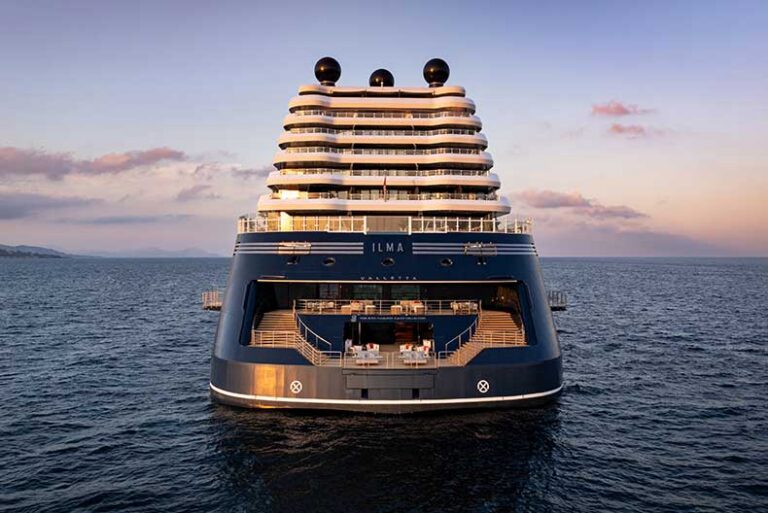
If you love the Ritz-Carlton on land, the yacht delivers exactly the same experience at sea. The fleet — Evrima, Ilma, and the newly delivered Luminara — carries 298–456 guests with crew counts that approach 1:1. Yacht-style itineraries hit marinas the big ships can’t reach (St. Barth’s, Portofino, Mykonos town quay).

Best for: Travelers who want the brand consistency of the Ritz-Carlton on water, with smaller-port access.
Typical 2026 fare: $1,000–$1,800 per person per night.

6. Crystal Cruises — Best Comeback Story

Crystal was reborn under new ownership in 2023, and the relaunched Crystal Symphony and Crystal Serenity have retained the all-suite, all-butler format that made Crystal a legend. Entrée pricing has crept up; the experience justifies it. The Penthouse Suites with butler service are some of the best values in luxury cruising if you book inside the year.

Best for: Travelers nostalgic for the original Crystal experience — and getting it back.
Typical 2026 fare: $700–$1,300 per person per night.

7. Scenic Eclipse — Best Yacht-Style Discovery

Scenic’s two “discovery yachts” — Scenic Eclipse and Scenic Eclipse II — carry just 228 guests and add real toys: a submarine, two helicopters, kayaks, and Zodiacs, all included. Fares are remarkable for what’s included: airfare, unlimited shore excursions, even helicopter and submarine experiences (limited availability) on some sailings.

Best for: Active travelers who want to do things on a luxury cruise, not just dine on them.
Typical 2026 fare: $900–$1,500 per person per night.

8. Oceania Cruises — Best Foodie Value

Oceania calls itself “upper premium” rather than luxury, but on the new Vista and Allura (2025) the gap has narrowed. The food program — six specialty restaurants included on every sailing, no surcharge — is the strongest at sea by reputation. If you want luxury-adjacent at a meaningfully lower price, this is the answer.

Best for: Travelers prioritizing food and itinerary depth over butler service.
Typical 2026 fare: $400–$700 per person per night (more à la carte than true luxury lines).

9. Four Seasons Yachts — Best Future Bet

The first ship (Four Seasons I) enters service late 2026, with sailings already on sale. Suite specs — minimum 581 sq ft, 95 of 95 suites with private terrace, a four-deck owner’s suite of 9,975 sq ft — suggest Four Seasons is targeting the top of the segment outright. Worth booking early if you’re a Four Seasons loyalist; worth waiting for a year of reviews if not.

Best for: Early adopters and Four Seasons loyalists.
Typical 2026 fare: $1,200–$2,500 per person per night.

How to choose between them

If you want maximum value with zero nickel-and-diming, Regent. If you want to step off a Zodiac in Antarctica without giving up your butler, Silversea Expedition. If you want a club-like small ship where the crew remembers your drink by day two, Seabourn. If you’ve never sailed luxury before and want a slower, more European feel, Explora Journeys.

The single best move in 2026 is booking 12–18 months out. Luxury inventory is genuinely scarce — these are 300–700 passenger ships — and the early-booking discounts (often $1,000–$3,000 per couple plus free upgrades) are the only real discounts the category offers.

FAQ

What’s the most luxurious cruise line in the world?
For sheer included value and suite size, Regent Seven Seas is the most consistent answer. For the future top of the market, Four Seasons Yachts is the line to watch.

How much does a luxury cruise cost?
Expect $700–$1,500 per person per night, fully inclusive, on the major luxury lines in 2026. Top-tier suites push past $5,000 per person per night.

Is a luxury cruise worth it over a regular cruise?
If you value time (no waiting for tables, tours, or elevators), space (suites 2–3x larger than mainstream), and inclusion (no surprise bills), yes. If price is the primary metric, no.

Which luxury cruise line is best for first-timers?
Regent Seven Seas — the all-inclusive pricing model removes the only confusing part of luxury cruising for newcomers.


For more luxury travel guides, see our coverage of the best luxury hotels in Paris, the best first-class airlines in the world, and the perennially debated question of Aman vs Four Seasons.

Best Luxury Hotels in London: Top 12 Five-Star Stays in the Capital

London does five-star hotels like no other city on earth. Centuries of aristocratic patronage, the world’s deepest concentration of Michelin stars, and a tradition of afternoon tea that has been refined for two hundred years — all of it converges on a roster of luxury hotels that simply have no peer.

This guide ranks the 12 best luxury hotels in London for 2026, with actual nightly rate ranges in USD, neighborhood context, and what each property does better than its rivals.

How We Ranked These Hotels

The list weights four factors: (1) sustained service excellence as recognized by Forbes Travel Guide, AAA, and Travel + Leisure, (2) consistent guest reviews from verified luxury platforms over the trailing 24 months, (3) facilities and dining (Michelin-starred restaurants on-site count), and (4) the intangible — the feeling that you’ve stepped into something specific to London rather than a global luxury template.

All rates below are in USD, converted at approximately £1 = $1.27. Actual prices on luxgetaway.com may shift with the exchange rate; book in the local currency and confirm your card’s FX policy.

The 12 Best Luxury Hotels in London (2026)

1. Claridge’s — Mayfair

Why it’s #1: The platonic ideal of a London luxury hotel. Art Deco architecture, the most famous afternoon tea in the city, and impeccable service that has been refined since 1856. Two-Michelin-star Claridge’s Restaurant under chef Daniel Humm (of Eleven Madison Park) reopened in 2024.

Rate: $1,200–$3,050 per night for a deluxe room; suites from $4,800.

Best for: First-time London luxury travelers who want the iconic experience.

2. The Connaught — Mayfair

Why it stands out: Claridge’s quieter, more residential sibling. Two-Michelin-star Hélène Darroze restaurant. The Connaught Bar is consistently ranked among the world’s top three bars. Service is precise without being formal.

Rate: $1,150–$2,800; suites from $4,300.

Best for: Repeat London travelers who want a more intimate scale.

3. The Savoy — Strand / Covent Garden

Why it stands out: The grande dame of British hotels, reopened after a $280M restoration. Thames views, Gordon Ramsay’s Savoy Grill, the American Bar (the oldest surviving cocktail bar in London), and theater district at the doorstep.

Rate: $950–$2,400; river-view suites from $3,550.

Best for: Theater lovers, history aficionados, and travelers who value central location.

4. Rosewood London — Holborn

Why it stands out: Set inside the former Pearl Assurance building, a Belle Époque masterpiece in Holborn. Six dining outlets, including the celebrated Mirror Room. Some of the largest standard rooms in central London.

Rate: $890–$2,100; suites from $3,050.

Best for: Travelers who want generous room sizes and architectural drama.

5. The Berkeley — Knightsbridge

Why it stands out: Maybourne Hotel Group’s third Mayfair-adjacent jewel (with Claridge’s and The Connaught). Rooftop pool, Michelin-starred Marcus Wareing restaurant, and the famous Prêt-à-Portea afternoon tea (cakes shaped like the season’s fashion week looks).

Rate: $1,080–$2,650; suites from $4,050.

Best for: Shoppers (Harrods and Sloane Street are minutes away).

6. The Lanesborough — Hyde Park Corner

Why it stands out: Oetker Collection’s London flagship. 24-hour butler service for every room — not just suites. Set in a Regency-era former hospital overlooking Hyde Park. Apsleys, the on-site restaurant, holds two Michelin stars.

Rate: $1,200–$3,175; suites from $5,350.

Best for: Travelers who value formal service and the Hyde Park location.

7. The Peninsula London — Belgravia

Why it stands out: Opened 2023, the newest entry in the absolute top tier. Hong Kong-style precision service, the largest standard rooms of any new London opening (587 sq ft minimum), and a rooftop bar with Buckingham Palace views.

Rate: $1,525–$3,550; suites from $7,000.

Best for: Asia-Pacific travelers familiar with Peninsula service standards.

8. Four Seasons Hotel London at Park Lane — Mayfair

Why it stands out: Four Seasons program consistency in a prime Park Lane location. Spectacular rooftop spa with infinity pool, panoramic city views. Wedding and event reputation is unrivaled in luxury London.

Rate: $1,015–$2,415; suites from $3,550.

Best for: Four Seasons loyalists, wedding parties, families.

9. The Ritz London — Piccadilly

Why it stands out: The hotel that gave its name to “ritzy.” Belle Époque opulence, the most formally-set afternoon tea in London (jacket required), and the only London hotel with a casino on premises.

Rate: $950–$2,285; suites from $3,050.

Best for: Traditionalists, occasion travelers.

10. Mandarin Oriental Hyde Park — Knightsbridge

Why it stands out: Recently restored after a major refresh. Park-view rooms overlook Hyde Park; the spa is considered London’s best. Heston Blumenthal’s Dinner restaurant remains a two-Michelin-star destination.

Rate: $990–$2,540; park-view suites from $4,300.

Best for: Spa-oriented travelers, Hyde Park lovers.

11. The Goring — Belgravia

Why it stands out: The last family-owned five-star hotel in London. The Princess of Wales spent her final night before her wedding here. One Michelin star, an Edwardian dining room, and an English garden that feels stolen from a country house.

Rate: $825–$1,775; suites from $3,050.

Best for: Anglophiles, royalists, travelers who want quiet over grand.

12. Raffles London at The OWO — Whitehall

Why it stands out: Opened 2023 inside the former Old War Office building. Five-Michelin-star total across its restaurants, including Mauro Colagreco’s flagship. Government-quarter location near St. James’s Park.

Rate: $1,145–$3,050; suites from $5,075.

Best for: Diners, architecture lovers, travelers who want a newer luxury experience.

Which Neighborhood Should You Pick?

Neighborhood Vibe Best Hotels Best For
Mayfair Refined, residential, shopping Claridge’s, Connaught, Four Seasons Park Lane First-time luxury travelers
Knightsbridge / Belgravia Old-money, embassies, Harrods Berkeley, Lanesborough, Peninsula, Mandarin Oriental Shoppers, repeat visitors
Covent Garden / Strand Theater, energy, Thames-side The Savoy, Rosewood Theater lovers, sightseers
Whitehall / St. James’s Government, parks, palaces Raffles at The OWO History-focused travelers

When to Visit (and When Rates Drop)

  • Peak: May–July, December (rates 30–60% above baseline).
  • Shoulder: September–November (excellent weather, full theater season, more reasonable rates).
  • Value: January–February (post-holiday, lowest rates of the year — a Connaught deluxe can drop to $825).

Booking Tips That Actually Save Money

  1. Book through Virtuoso, Amex Fine Hotels & Resorts, or AAA Diamond Elite — these programs add room upgrades, $100 hotel credits, and breakfast at no rate premium.
  2. Look for “fourth night free” promotions — common at Maybourne (Claridge’s, Connaught, Berkeley) during shoulder seasons.
  3. Skip Saturday-night-only bookings — Sunday arrivals routinely save 25%+ versus Friday arrivals.
  4. Use Booking.com Genius rates for the smaller five-stars — The Goring and Rosewood frequently match or beat direct rates.

What About Afternoon Tea?

Even if you stay elsewhere, London afternoon tea is its own ranking exercise. The consensus top three: Claridge’s (the most iconic), The Ritz (the most formal — book three months ahead), and The Lanesborough (the most generous). Book at least 6 weeks in advance for any of them.

Frequently Asked Questions

What is the most luxurious hotel in London?

By industry consensus and the recent Forbes Travel Guide ratings, Claridge’s, The Connaught, and The Lanesborough sit at the absolute top, with The Peninsula London joining them since its 2023 opening.

How much should I budget for a luxury hotel in London?

Plan for $950–$1,525 per night for a deluxe room at a top-tier property in 2026. Suites at the very top properties run $3,050–$10,160. Add 20% during summer and December peak.

Which London luxury hotel is best for families?

Four Seasons at Park Lane has the strongest family program (in-room amenities for children, connecting rooms, kids’ menus). Rosewood and The Berkeley are also strong. Avoid The Connaught and The Goring with very young children.

Is Claridge’s worth the price?

For a first London luxury experience, yes — the service, the building, and the location synthesize into something genuinely unmatched. For a third or fourth London trip, The Connaught or Rosewood often delivers more for the rate.

The Bottom Line

London’s five-star hotel market is the deepest in the world, with at least 12 properties capable of competing with anything globally. Mayfair concentrates the icons (Claridge’s, Connaught, Berkeley); Belgravia hosts the newest premium openings (Peninsula, Lanesborough); and the South Bank along the Thames hosts the grande dames (Savoy, Rosewood). Whichever you choose, book through a luxury travel program for upgrades and credits.

For multi-city European trips, pair a London stay with a few nights at an Aman or Four Seasons property on the continent, and consider chartering a private jet for inter-city legs.

Related reading: Aman vs Four Seasons · Best luxury hotels in NYC with Central Park views · Best luxury safari lodges in Tanzania

Best Luxury Safari Lodges in Tanzania: Top 10 Tented Camps and Private Reserves

0

Tanzania is the dictionary definition of a luxury safari destination. The country contains the Serengeti, Ngorongoro Crater, Selous (now Nyerere National Park), Ruaha, and the Tarangire — five of Africa’s great wildlife ecosystems — and the lodges built within them have set the global standard for what a five-star safari experience looks like.

This guide ranks the 10 best luxury safari lodges in Tanzania for 2026, with real per-night pricing, what’s included in each rate, and the exact months you should visit each property.

How We Selected These Lodges

Every property here meets three criteria: (1) recognized by Travel + Leisure, Condé Nast Traveler, or Relais & Châteaux for sustained service excellence, (2) located inside or directly adjacent to a major wildlife area, and (3) offering all-inclusive rates that bundle guides, vehicles, drinks, and meals — the hallmark of a true luxury safari product.

The 10 Best Luxury Safari Lodges in Tanzania (2026)

1. Singita Sasakwa Lodge — Grumeti Reserve

Why it’s #1: Singita’s Edwardian-manor style lodge sits on a hill overlooking the 350,000-acre private Grumeti Reserve, adjacent to the western Serengeti. Twelve cottages, each with private pool, butler, and panoramic plains view.

Rate: $4,200–$6,800 per person, per night, all-inclusive (drinks, two daily game drives, laundry, private guide on request).

Best months: June–October (dry season, western migration corridor); December–March (calving season in Ndutu).

2. Four Seasons Safari Lodge Serengeti — Central Serengeti

Why it stands out: The only major-flag five-star resort inside the Serengeti National Park. 77 rooms with infinity pool overlooking a watering hole that elephants visit daily. Excellent for first-time safari travelers who want familiar service standards.

Rate: $1,800–$3,200 per person, per night, all-inclusive on the safari package.

Best months: Year-round, but June–October for predictable game viewing.

3. &Beyond Klein’s Camp — Northern Serengeti

Why it stands out: A private concession in the northern Serengeti, adjacent to the Mara River — peak migration crossing territory. Ten cottages, intimate atmosphere, walking safaris and night drives permitted (rare inside the park itself).

Rate: $1,950–$2,800 per person, per night, all-inclusive.

Best months: July–October for Mara River crossings.

4. Singita Faru Faru Lodge — Grumeti Reserve

Why it stands out: Singita’s contemporary-design sister property — nine glass-fronted suites stepped down a riverbank. More relaxed than Sasakwa, equally exceptional guiding.

Rate: $3,400–$5,200 per person, per night, all-inclusive.

Best months: June–October.

5. One Nature Nyaruswiga — Central Serengeti

Why it stands out: The newest entrant to the top tier, a Relais & Châteaux property with just 12 tented suites in the heart of the Seronera Valley — the densest year-round game-viewing area in the Serengeti.

Rate: $1,650–$2,400 per person, per night, all-inclusive.

Best months: Year-round wildlife concentration.

6. Asilia Namiri Plains — Eastern Serengeti

Why it stands out: The undisputed cheetah camp. Sits in a remote eastern corner of the Serengeti that was off-limits to tourism for 20 years to allow cheetah populations to recover. Ten tented suites, the most exclusive wildlife experience in Tanzania.

Rate: $1,750–$2,500 per person, per night, all-inclusive.

Best months: June–October, January–March.

7. The Highlands Ngorongoro — Ngorongoro Crater

Why it stands out: Eight geodesic dome suites on the rim of the Ngorongoro Crater. The architecture is unique in African safari, and crater descent is a 20-minute drive away.

Rate: $1,400–$2,100 per person, per night, all-inclusive.

Best months: Year-round (crater has resident wildlife always).

8. Sanctuary Ngorongoro Crater Camp — Ngorongoro

Why it stands out: The only mobile tented camp permitted on the Ngorongoro Crater floor. Falling asleep to lion calls inside the world’s largest intact volcanic caldera is unmatched in African safari.

Rate: $2,200–$3,100 per person, per night, all-inclusive.

Best months: July–March (camp closes during heavy rain).

9. Beho Beho — Nyerere National Park (Selous)

Why it stands out: Off the standard northern circuit, in Africa’s largest game reserve. Eight stone-and-thatch bandas with massive verandahs, hippo-filled river views, and walking safaris that are simply not possible in the busier northern parks.

Rate: $1,500–$2,200 per person, per night, all-inclusive.

Best months: June–October, late December.

10. Jabali Ridge — Ruaha National Park

Why it stands out: Asilia’s southern Tanzania flagship. Ruaha is Tanzania’s wildest park — massive lion prides, large elephant herds, and almost zero other vehicles. Eight suites tucked into a kopje of giant baobabs.

Rate: $1,400–$2,000 per person, per night, all-inclusive.

Best months: July–October.

When to Go: A Month-by-Month Guide

Month Where to Be Why
January–March Ndutu (southern Serengeti) Calving season; ~8,000 wildebeest born per day at peak
April–May Avoid (long rains) Many camps close; deep discounts on those that stay open
June–July Western/Central Serengeti Migration moving north through Grumeti corridor
August–October Northern Serengeti / Mara River Peak migration river crossings
November Central Serengeti, Ruaha Short rains; lush, low-season pricing
December Southern Serengeti, Ngorongoro Migration returning south; holiday premium pricing

The Singita vs. Four Seasons Question

It’s the most common comparison among first-time luxury safari travelers, and a useful proxy for the broader Tanzania lodge spectrum.

Singita is the artisanal, intimate, ultra-personalized end of the spectrum. Twelve cottages, private guides, no menus (the chef cooks what you want), and rates that reflect that scarcity. Best for travelers who’ve been on safari before and want the absolute pinnacle.

Four Seasons is the polished, brand-consistent, larger-resort experience. 77 rooms, kids’ programs, multiple restaurants, infinity pool overlooking the watering hole. Best for first-timers, multi-generational trips, or travelers who value Four Seasons program consistency.

Both are exceptional. Singita is a $5,000-per-night experience for $4,200; Four Seasons is a $2,500-per-night experience for $2,200.

How to Book a Luxury Tanzania Safari

Three booking paths, in order of typical traveler:

  1. Direct via the lodge group. Singita, &Beyond, and Asilia all accept direct bookings and run their own concierge teams. Cleanest path, no commission markup, but limited flexibility for multi-property itineraries.
  2. Via a specialist safari operator. Companies like Roar Africa, Cookson Adventures, and Yellow Zebra Safaris assemble multi-camp itineraries with private bush flights between properties. The right answer for first-time travelers and multi-camp trips.
  3. Via your travel advisor. A Virtuoso or Travel Leaders advisor can layer in benefits (room upgrades, complimentary game drives, early check-in) without changing the price.

What to Budget for a 7-Night Luxury Safari

A representative 7-night, two-camp Tanzania safari for a couple, including international flights, lodging, internal bush flights, and park fees:

  • Entry luxury (Four Seasons + Highlands): $24,000–$32,000 for two
  • Mid-luxury (&Beyond Klein’s + Highlands): $32,000–$42,000 for two
  • Top luxury (Singita Sasakwa + Sanctuary Crater Camp): $58,000–$78,000 for two

For travelers chartering a private jet to Tanzania, expect to add roughly $180,000–$260,000 for round-trip US–Arusha on a Gulfstream G450. Most luxury safari travelers fly commercial first or business class (Qatar Airways Doha–Kilimanjaro, KLM Amsterdam–Kilimanjaro, Emirates Dubai–Dar) and use bush flights or private charter within Tanzania.

Frequently Asked Questions

What’s the most luxurious safari lodge in Tanzania?

Singita Sasakwa Lodge, by consensus of the major travel publications and Travel + Leisure’s annual rankings. Singita’s three Grumeti properties — Sasakwa, Faru Faru, and Sabora — collectively define the top tier of African luxury safari.

Is a luxury safari in Tanzania worth the cost?

For most travelers, yes — but only if you’re willing to commit to 6+ nights. The internal logistics (bush flights, park fees, guide costs) mean a 3-night safari costs nearly the same as a 6-night safari per day. The marginal day of safari is dramatically cheaper than the first.

When is the cheapest time for a luxury Tanzania safari?

April–May (long rains). Lodge rates drop 30–50%, and weather isn’t always as bad as advertised. Game viewing in central Serengeti remains strong year-round.

How does Tanzania compare to Kenya for a luxury safari?

Kenya is more concentrated (the Maasai Mara is a fraction of the Serengeti’s size) and has stronger walking-safari infrastructure. Tanzania has the Serengeti, Ngorongoro Crater, and far less vehicle congestion at sightings. Most luxury travelers do both on separate trips.

The Bottom Line

Tanzania’s luxury safari product is the deepest in Africa, with options from $1,400-per-night intimate tented camps to $6,800-per-night private estates. Singita defines the top, Four Seasons defines the polished mid-tier, and Asilia owns the value-luxury intersection. Book 9–12 months ahead for peak migration months; 4–6 months is enough for shoulder season.

For specific itinerary help, the safari operators above all offer free consultations. Combine your safari with a few nights on Zanzibar for the classic Tanzania honeymoon arc.

Related reading: Private jet charter to Africa: cost guide · Aman vs Four Seasons

Private Jet Fractional Ownership in 2026: Is It Worth the Cost?

For travelers who fly private 50 or more hours per year, private jet fractional ownership sits in the sweet spot between on-demand charter (flexible but expensive per hour) and whole-aircraft ownership (cheapest per hour but operationally complex). In 2026, the major players — NetJets, Flexjet, PlaneSense, AirSprint — collectively serve more than 13,000 fractional owners worldwide. Here’s what you actually get, what it costs, and whether the math works for your travel pattern.

What Is Fractional Jet Ownership?

Fractional ownership is exactly what it sounds like: you buy a share of a specific aircraft, typically 1/16, 1/8, or 1/4. That share entitles you to a fixed number of flight hours per year (50, 100, or 200 respectively), with guaranteed availability typically within 8–10 hours’ notice. You don’t operate the aircraft — the fractional company manages crews, maintenance, scheduling, and ground operations across an interchangeable fleet.

In practical terms: you call your dedicated owner services line, request a flight, and a same-type aircraft shows up at your departure FBO. It may or may not be the exact tail you own a share of.

The Three Real Costs

Every fractional program prices on the same three components:

  1. Acquisition cost — Your share of the aircraft purchase price. A 1/16 share of a new Citation Latitude is roughly $700,000–$850,000 in 2026.
  2. Monthly management fee — Covers crew, hangar, insurance, maintenance, and admin. Typically $15,000–$30,000/month for a 1/16 share.
  3. Hourly occupied fee — Pay-per-flight-hour, covering fuel, catering, landing fees, crew per diem. Roughly $4,500–$6,500/hour for a light jet, $7,500–$10,500/hour for a mid-size, $11,000–$15,000/hour for a super-mid.

Real 2026 Pricing by Aircraft Class

What a 1/16 share (50 hours/year) actually costs over a 5-year contract, all-in:

Aircraft Class Example Acquisition (1/16) Monthly Mgmt Hourly Fee 5-Yr All-In
Light Jet Embraer Phenom 300E $650,000 $16,500 $4,800 ~$2.85M
Mid-Size Cessna Citation Latitude $850,000 $22,000 $7,800 ~$3.95M
Super-Mid Bombardier Challenger 350 $1.4M $28,500 $11,500 ~$6.3M
Heavy Gulfstream G450 $2.6M $38,000 $14,500 ~$10.5M

Important: a fractional share is a depreciating asset. Most contracts include a buy-back clause at fair market value at end-of-term, which typically returns 50–70% of acquisition cost depending on the aircraft and the market.

The Big Three: NetJets, Flexjet, PlaneSense

NetJets

The market leader by a wide margin, with the largest fleet (~770 aircraft) and the widest geographic coverage. Strongest in transcontinental and transatlantic missions. Owned by Berkshire Hathaway since 1998. Best for owners who value scale, fleet redundancy, and consistent international service.

Flexjet

The premium experience play. Smaller fleet (~270 aircraft) but younger on average, and the only major program with dedicated crews assigned to specific aircraft rather than a shared crew pool. The “Red Label” program at Flexjet is widely considered the highest-quality fractional product in North America. Best for owners who prioritize cabin consistency and crew familiarity.

PlaneSense

The light-aircraft specialist, primarily operating Pilatus PC-12 turboprops and PC-24 light jets. Significantly lower entry cost — 1/16 shares from roughly $325,000 — and excellent for regional missions under 1,000 nautical miles. Best for owners flying primarily within a single region.

AirSprint (Canada)

Dominant in Canadian fractional, with Embraer Praetor 500 and Legacy 450 aircraft. The best option for owners based in Canada with frequent US travel.

When Does Fractional Beat Charter?

The breakeven math depends on aircraft class and how you fly, but a useful rule of thumb:

  • Under 25 hours/year: On-demand charter wins. Use empty legs aggressively.
  • 25–50 hours/year: Jet card programs (NetJets Marquis, Wheels Up) usually beat both charter and fractional.
  • 50–150 hours/year: Fractional ownership is the sweet spot. Lower per-hour cost than charter, with guaranteed availability.
  • 150+ hours/year: Consider whole aircraft ownership with a management company — the management fee absorbs into your higher utilization.

Fractional vs. Jet Card: The Real Difference

Jet cards (e.g., NetJets Marquis, Flexjet Access, Wheels Up) are prepaid charter hours — typically sold in 25-hour blocks. They share fractional’s guaranteed availability and consistent pricing, but without the acquisition cost or asset risk.

Jet Card Fractional Ownership
Upfront capital $150K–$300K (25 hours) $650K–$2.6M (50 hours)
Per-hour cost (all-in) $8,500–$15,000 $7,000–$12,000
Asset depreciation None (prepaid only) Yes — you own a share
Term commitment 12–24 months 3–5 years typical
Buyback/residual None 50–70% of acquisition
Tax treatment Operating expense Depreciation eligible

The simplest framing: jet cards convert capital into flight hours. Fractional converts capital into an asset that produces flight hours. For business owners with bonus depreciation strategies, fractional’s tax treatment can swing the math significantly.

The Often-Ignored Costs

  • Federal Excise Tax (FET) — 7.5% on US flights, applied to hourly and management fees.
  • Fuel surcharges — Variable, indexed to Jet A pricing. Currently 8–14% on hourly fees.
  • Peak-day surcharges — 25–50% premium on declared peak days (typically 50–80 days/year, including major holidays and event weekends).
  • Interchange fees — If you fly an aircraft class above your owned share, you pay an upgrade fee.
  • Repositioning — Some programs charge for the empty leg to deliver the aircraft if you’re outside primary service areas.

Tax Treatment: The Quiet Advantage

For business use, fractional ownership shares qualify for accelerated depreciation under current US tax law, including bonus depreciation in many cases. A 1/16 share of a $14M aircraft can generate substantial first-year deductions. The IRS’s 50% business use rule and personal-use imputed income rules are strict, however, and any structuring should be done with a CPA experienced in aviation tax.

Who Fractional Ownership Is Wrong For

  • Travelers flying fewer than 25 hours per year — the management fee overhead dominates.
  • People who need maximum schedule flexibility and don’t mind aircraft variety — on-demand charter is more flexible.
  • Travelers whose routes are highly concentrated in a single region — direct charter with a local operator is often cheaper.
  • Anyone who can’t commit capital for 3–5 years.

Frequently Asked Questions

How much does it cost to buy a fractional share?

A 1/16 share (50 hours per year) of a light jet starts around $325,000 (PlaneSense PC-12) and rises to $850,000+ (mid-size jets). Heavy and super-mid jets run $1.4M–$2.6M for a 1/16 share.

Can you sell a fractional share?

Yes. Most programs offer a buy-back at fair market value at the end of your contract term, or allow you to sell to a qualified third party with the program operator’s approval. Resale typically returns 50–70% of acquisition cost over 5 years.

Is fractional ownership cheaper than chartering?

For 50+ hours per year of flight, yes — per-hour costs are typically 15–25% lower than equivalent on-demand charter, with guaranteed availability. Below 50 hours, charter is almost always cheaper. See our charter pricing guide →

Which fractional program is best for international travel?

NetJets has the deepest international fleet and the most extensive global infrastructure. Flexjet’s heavy jet program (Gulfstream G650, Praetor 600) is the premium alternative for transatlantic missions.

The Bottom Line

Fractional jet ownership in 2026 makes financial sense for travelers flying 50–150 hours per year who value guaranteed availability and cabin consistency more than they value flexibility. Below that range, jet cards win; above it, whole-aircraft ownership wins. For one-off luxury trips, on-demand charter — especially via empty legs — remains the most economical path.

Before committing, get proposals from at least three of NetJets, Flexjet, and PlaneSense, and have an aviation-experienced CPA model the tax treatment against your business structure.

Related reading: Private jet charter cost guide · Empty leg flights guide · Aman vs Four Seasons