
Most guides to the best time to visit Hawaii tell you April–May and September–October, call them shoulder season, and move on. The advice is roughly right and almost entirely unsourced. Hawaii publishes an enormous amount of hard data about itself — monthly visitor arrivals, hotel rates by island, thirty-year climate normals, surf-season definitions, whale counts — and almost none of it makes it into the articles that rank.
So here is the version with the numbers attached, current to late October 2026, including several things that have changed this year and that nothing else has caught up with.
The short answer
September is the cheapest and quietest month in Hawaii, on every single island, and it is not close. It is also, in most years, the tail of hurricane season — and 2026 made that risk unusually concrete.
If you want the one-line version: late April through May is the best balance of dry weather, low crowds, moderate rates and minimal storm risk. September and October are cheaper still, if you will accept the weather risk. December and July are the most expensive and most crowded months of the year.
The money: what Hawaii actually costs by month
Hawaii’s Department of Business, Economic Development and Tourism publishes a monthly hotel performance report compiled by STR, covering 162 properties and 47,767 rooms — about 84% of all Hawaii lodging with 20 or more rooms. This is the real seasonality curve, and it replaces guesswork with a state-published figure.
| Month (2025) | Occupancy | Average daily rate |
|---|---|---|
| January | 73.9% | $384.39 |
| February | 79.3% — highest | $379.26 |
| March | 74.9% | $379.15 |
| April | 73.0% | $365.98 |
| May | 71.4% | $338.61 |
| June | 74.3% | $374.54 |
| July | 77.1% | $386.09 |
| August | 74.1% | $360.89 |
| September | 69.7% — lowest | $314.75 — lowest |
| October | 72.8% | $321.79 |
| November | 70.2% | $344.96 |
| December | 76.1% | $449.12 — highest |
December’s average daily rate was 42.7% higher than September’s. Across the full year Hawaii led every US market on rate, at $367 against New York’s $334.
The island-level picture is more useful still, because the islands are not equally seasonal:
| Island | Cheapest month (ADR) | Dearest month (ADR) | Swing |
|---|---|---|---|
| Maui County | September — $423.67 | December — $689.08 | 63% |
| Hawaiʻi Island | September — $353.83 | December — $595.72 | 68% |
| Kauaʻi | September — $383.51 | December — $490.13 | 28% |
| Oʻahu | September — $259.47 | December — $331.07 | 28% |
Maui is the most price-seasonal island and Oʻahu the flattest and consistently cheapest. If your dates are fixed in December and your budget is not, Oʻahu is the island that punishes you least. For December 2025, resort-region rates ran to $1,059 at Wailea and $826 on the Kohala Coast against $311.95 in Waikīkī; the statewide luxury-class average daily rate was $1,220.62.
The crowds: use average daily census, not arrivals
Most articles quote monthly arrivals. DBEDT also publishes average daily census — “the number of visitors present on any given day” — which corrects for how long people stay and is a far better proxy for how busy a beach feels.
| Month (2025) | Arrivals | Avg daily census |
|---|---|---|
| January | 769,679 | 243,535 |
| February | 747,854 | 238,338 |
| March | 877,072 | 242,038 |
| April | 797,308 | 225,786 |
| May | 764,574 | 208,627 |
| June | 832,586 | 245,053 |
| July | 881,396 | 249,946 — busiest |
| August | 817,504 | 223,317 |
| September | 682,022 | 189,159 — quietest |
| October | 732,466 | 198,760 |
| November | 731,033 | 211,486 |
| December | 862,128 | 247,706 |
July has 32% more visitors on the ground on a typical day than September. And note the distinction the census metric reveals: December ranks only third by arrivals but second by on-the-ground crowding, because December trips are longer. May is the third-quietest month of the year by this measure — which is what makes late spring such good value.
The weather, by island and by month
All figures below are NOAA NCEI 1991–2020 US Climate Normals — genuine thirty-year normals, not period-of-record averages.
| Month | Honolulu high / precip | Kahului (Maui) high / precip | Lihue (Kauaʻi) high / precip |
|---|---|---|---|
| January | 80.5°F / 1.84″ | 82.2°F / 2.42″ | 78.6°F / 2.78″ |
| February | 80.5°F / 1.94″ | 82.2°F / 2.00″ | 78.1°F / 3.63″ |
| March | 81.2°F / 2.36″ | 82.9°F / 2.64″ | 78.5°F / 5.61″ |
| April | 83.1°F / 0.77″ | 84.5°F / 1.32″ | 79.8°F / 2.03″ |
| May | 84.8°F / 0.82″ | 86.5°F / 0.71″ | 81.6°F / 2.18″ |
| June | 86.9°F / 0.50″ | 88.3°F / 0.17″ | 83.3°F / 1.79″ |
| July | 88.1°F / 0.52″ | 89.2°F / 0.53″ | 84.6°F / 1.75″ |
| August | 88.8°F / 0.84″ | 89.9°F / 0.53″ | 85.2°F / 2.33″ |
| September | 88.4°F / 0.88″ | 90.0°F / 0.45″ | 85.3°F / 2.18″ |
| October | 86.9°F / 1.51″ | 88.7°F / 0.83″ | 83.9°F / 3.27″ |
| November | 84.1°F / 2.25″ | 85.8°F / 1.81″ | 81.2°F / 4.03″ |
| December | 81.8°F / 2.18″ | 83.3°F / 2.80″ | 79.1°F / 4.64″ |
Two counterintuitive points. Kauaʻi’s wettest month is March (5.61 inches at Lihue) — which is simultaneously one of the busiest travel months. And Kauaʻi is more than twice as wet as Oʻahu or Maui overall, at 36.22 inches a year against roughly 16.
The Hilo–Kona contrast, which is the most useful fact on this page
Two airports, 63 miles apart on the same island:
| Hilo (east) | Kailua-Kona (west) | |
|---|---|---|
| Annual precipitation | 120.39″ | 9.87″ |
| Wettest month | November — 14.39″ | January — 1.35″ |
| Driest month | May — 6.99″ | July — 0.49″ |
| Annual average temp | 74.0°F — coolest station | 78.2°F — warmest station |
Hilo receives 12.2 times more rain than Kona. Hilo’s wettest month alone is about one and a half times Kona’s entire annual rainfall, and Hilo’s driest month exceeds Honolulu’s wettest. If rain would ruin your trip, this single decision — which side of Hawaiʻi Island you stay on — matters more than which month you pick.
One honest caveat: the Kona station is at Keāhole airport on a lava plain north of town, among the driest spots on the island. Upslope Kona — the coffee belt around Holualoa and Captain Cook — is considerably wetter.
Surf, and why it decides which beach you can use
The State of Hawaiʻi’s ocean safety programme defines the seasons precisely: summer runs May through October, winter November through April.
- North shores, winter: “consistent huge and dangerous swells” — the most hazardous conditions in the islands. Official guidance is that inexperienced swimmers and surfers “should avoid entering the water,” regardless of skill level.
- North shores, summer: flat to small.
- South shores, summer: the big season, with swells generated by winter storms in the southern hemisphere.
- South shores, winter: flat to small.
- East shores: rough year-round from the trade winds.
In practice this means the islands always have a calm side — it just moves. The National Weather Service issues a High Surf Advisory for north-facing shores at 15 feet and a Warning at 25 feet, measured, unusually, as full face height from trough to crest.
Ocean temperature barely moves: roughly 76.6°F in February to 81.3°F in September off Honolulu, a swing of about 4–6°F across the whole year.
Whale season: November to May, peaking January to March
NOAA’s Hawaiian Islands Humpback Whale National Marine Sanctuary states that “humpback whale season in Hawaiʻi generally runs from November through May,” with “the usual peak in humpback abundance… from January through March.” More than half of all North Pacific humpbacks use Hawaiian waters as their primary breeding and calving ground. The 2025 Sanctuary Ocean Count tallied 4,782 whales over three days across six islands.
A correction worth making, because nearly every travel article gets it wrong: the regulation protecting Hawaii humpbacks is 50 CFR 216.19, under the Marine Mammal Protection Act — not 50 CFR 224.103, which is cited constantly and which now reads “[Reserved]” for Hawaii, because the Hawaii humpback population was delisted under the Endangered Species Act in 2016.
Within 200 nautical miles of the islands it is unlawful to approach within 100 yards of a humpback whale by any means, or to operate any aircraft within 1,000 feet of one. That aircraft rule covers drones — a point almost no guide mentions, and an easy and expensive mistake to make from a beach in February.
Storm risk — and why 2026 is not a normal data year
Hawaii sits in the Central Pacific basin, forecast by the Central Pacific Hurricane Center. Its season runs 1 June to 30 November. A normal season brings four to five tropical cyclones. (Articles that quote the eastern Pacific season, which starts 15 May, have the wrong basin.)
NWS Honolulu’s outlook, issued 21 May 2026, forecast 5–13 tropical cyclones with a 70% chance of an above-normal season, citing expected El Niño conditions. That forecast verified:
- Hurricane Lala, 14–16 August 2026 — passed south of the islands, causing extensive flooding, landslides, property and infrastructure damage and power outages statewide, with interisland and transpacific flight delays and cancellations.
- Tropical Storm Moke, 22–24 August 2026 — heavy rain and wind on Hawaiʻi Island and East Maui.
- Hurricane Lowell, 7 September 2026 — landfall on Kauaʻi and Niʻihau, with widespread flooding, strong winds and power outages.
- Hurricane Nolo.
The effect is visible in the state’s own data. August 2026 visitor arrivals fell 5.6% year on year, spending fell 9.7%, and average length of stay dropped from 8.47 to 7.55 days. Kauaʻi hotel occupancy in September 2026 was 47.2%, down 26.9 percentage points, with RevPAR off 43%.
That 47.2% is a storm artifact, not seasonality — and if you see a 2026-based “best time to visit” chart that shows Kauaʻi collapsing in September, that is what you are looking at.
What is closed right now
This section dates quickly; check before booking. As of the Hawaiʻi DLNR notice of 23 October 2026:
- Hāʻena State Park reopened for day use on 15 October 2026.
- All Kauaʻi camping remains closed — including the Kalalau Trail beyond Hanakāpīʻai, which requires a camping permit. An itinerary built around Kalalau right now will not happen.
- All other Kauaʻi state parks remain closed; Kōkeʻe Road is closed until further notice.
- Wailua River State Park partially reopened on 21 September 2026; Fern Grotto is closed to individual kayakers and Uluwehi Falls remains closed.
On the volcano: as of 26 October 2026, USGS has Kīlauea at ADVISORY / aviation code YELLOW — downgraded that morning. The Halemaʻumaʻu eruption is paused after episode 55 fountaining ended on 17 October, with episode 56 forecast between 31 October and 6 November 2026. Mauna Loa is NORMAL / GREEN. Hawaiʻi Volcanoes National Park is open but warns of closures and delays from a two-year summit construction project, and notes parking lots can be full by 10am. Entry is $30 per private vehicle for seven days; the Hawaiʻi Tri-Park Annual Pass is $55 and covers Haleakalā and Puʻuhonua o Hōnaunau too. This is a fast-moving situation — check the USGS Hawaiian Volcano Observatory before you travel.
Maui and Lahaina: the accurate picture
Front Street reopened to vehicular traffic on 1 August 2026, specifically from Pāpalaua to Shaw, with no regularly restricted hours; Dickenson and Prison also reopened. Market Street, Papelekane Street and Mokuhinia Place remain closed for ongoing work including the state’s dredging of Lahaina Harbor. The County asks visitors to stay off private property and out of fenced areas.
Be precise about what that means: a road reopened. It is not accurate to say Lahaina has reopened, or that Front Street is restored as a commercial district.
One widespread confusion is worth clearing up. The County of Maui’s recovery office administers three separate disasters: the August 2023 wildfires, the March 2026 Kona low storms, and the August 2026 tropical storm. A good deal of content conflates the March 2026 flood closures with wildfire recovery. They are different events. (Also note that Maui Nui Strong has been retired and migrated to MauiRecovers.org — any article still linking the old site is out of date.)
Maui’s recovery is real and measurable: September 2026 saw Maui County RevPAR up 21.2% year on year, Wailea occupancy up 14.6 points, and the Lahaina/Kāʻanapali/Kapalua region up 19.1% on RevPAR.
Two rules that changed for 2026
The lodging tax went up on 1 January 2026. Act 96 raised the state Transient Accommodations Tax from 10.25% to 11.00% — the measure widely called Hawaii’s “green fee,” which survived a legal challenge in December 2025. Add the 3% county TAT levied by all four counties and the 4.5% general excise tax and the statutory total is 18.5%. In practice you will see about 18.712% on the bill, because the state’s published maximum GET pass-on rate is 4.7120% rather than 4.5% — businesses are taxed on gross income including the GET they pass on, so the rate grosses up. Act 96 also extended the TAT to cruise fares from the same date.
The sunscreen law is about sales, not use. Act 104 (2018) makes it unlawful to sell, offer for sale, or distribute sunscreen containing oxybenzone or octinoxate in Hawaii without a prescription, effective 1 January 2021. It does not make it illegal to bring or wear such a sunscreen. Buy mineral sunscreen anyway — but the common claim that you are breaking the law by packing the wrong bottle is simply wrong. Maui County has its own stricter ordinance.
Dates worth planning around
Merrie Monarch Festival 2027 runs 28 March to 3 April in Hilo — the 64th annual festival, and the most significant hula event in the world. Ticket requests open on Monday 16 November 2026, and requests postmarked before that date are not accepted. Tickets are mail-order only, two per person, by cashier’s check or money order with a stamped self-addressed envelope. The festival does not sell or guarantee ticket blocks to any tour group or travel agency, so be sceptical of any package claiming otherwise. If Merrie Monarch matters to you, that window opens in about three weeks.
Other fixtures: the JAL Honolulu Marathon on 13 December 2026; the Hapalua Half Marathon on 11 April 2027; Aloha Festivals in September on Oʻahu. The Ironman World Championship has returned to Kona as a single-day event from 2026, ending the Kona/Nice alternation — but no 2027 date has been published, so treat any you see with caution.
Three reservation systems to book in advance:
- Haleakalā sunrise: a reservation is required for entry between 3am and 7am, daily, year-round.
- Hanauma Bay: closed Mondays and Tuesdays. Entry 6:45am–1:30pm; $25 for non-residents, free for children 12 and under; parking $3 cash. Reservations open two days ahead at 7am Hawaii time. Every visitor watches the educational video on every visit.
- Nāpali Coast / Kalalau: day-use and parking reservations required at Hāʻena; camping permits ($25 per night residents, $35 non-residents, five-night maximum) release 90 days ahead — though all Kauaʻi camping is closed at the time of writing.
Month by month: the verdict
| Period | Go if | Avoid if |
|---|---|---|
| Jan–Mar | You want whales at peak, and big-wave north shores | You want Kauaʻi in the dry, or low rates — February is the busiest month by occupancy |
| Apr–May | You want the best all-round balance: dry, quiet, moderate rates, no storm season | You want whales — the season is ending |
| Jun–Aug | You want the driest weather and warm water; Maui’s June is the driest month in the islands | You mind crowds or cost — July is the busiest and among the dearest |
| Sep–Oct | Value is the priority: cheapest rates and fewest people on every island | You cannot tolerate storm risk — this is the back half of hurricane season |
| Nov–Dec | You want whale season opening and holiday atmosphere | Budget matters — December is the most expensive month of the year by a wide margin |
Frequently asked questions
What is the cheapest month to visit Hawaii?
September. It had both the lowest statewide occupancy (69.7%) and the lowest average daily rate ($314.75) of 2025, and it was the cheapest month on every individual island. December’s average rate was 42.7% higher.
What is the best month to visit Hawaii overall?
Late April and May. Rates are below the annual average, May is among the quietest months by visitors-on-the-ground, the leeward sides are entering their dry season, and it falls entirely outside hurricane season.
When is hurricane season in Hawaii?
1 June to 30 November, in the Central Pacific basin — not the Atlantic or eastern Pacific seasons other articles sometimes quote. A normal season brings four to five tropical cyclones. 2026 was forecast above normal and delivered four systems affecting the islands directly, including Hurricane Lowell making landfall on Kauaʻi on 7 September.
When can you see whales in Hawaii?
November through May, peaking January through March. It is illegal to approach within 100 yards of a humpback, or to fly any aircraft — including a drone — within 1,000 feet of one.
Which Hawaiian island has the best weather?
For reliable sunshine, the west side of Hawaiʻi Island: Kailua-Kona averages 9.87 inches of rain a year against Hilo’s 120.39 on the same island. Maui’s Kahului and Honolulu are both around 16 inches. Kauaʻi is the wettest of the main visitor islands at 36.22 inches.
How much is hotel tax in Hawaii?
About 18.712% as billed: an 11% state transient accommodations tax (raised from 10.25% on 1 January 2026), a 3% county TAT, and general excise tax at the published maximum pass-on rate of 4.7120%.
Is Lahaina open to visitors?
Partly. Front Street reopened to vehicular traffic from Pāpalaua to Shaw on 1 August 2026, and Dickenson and Prison reopened with it. Market Street, Papelekane Street and Mokuhinia Place remain closed. Lahaina has not reopened as a commercial district.
Can you hike the Kalalau Trail right now?
Only as far as Hanakāpīʻai, about two miles in, with a Hāʻena day-use and parking reservation. All Kauaʻi camping remains closed following Hurricane Lowell, and a camping permit is required to go beyond Hanakāpīʻai.
Related reading: the best luxury hotels in Maui, Hawaii all-inclusive resorts, the Big Island of Hawaii and the best pools in Maui.
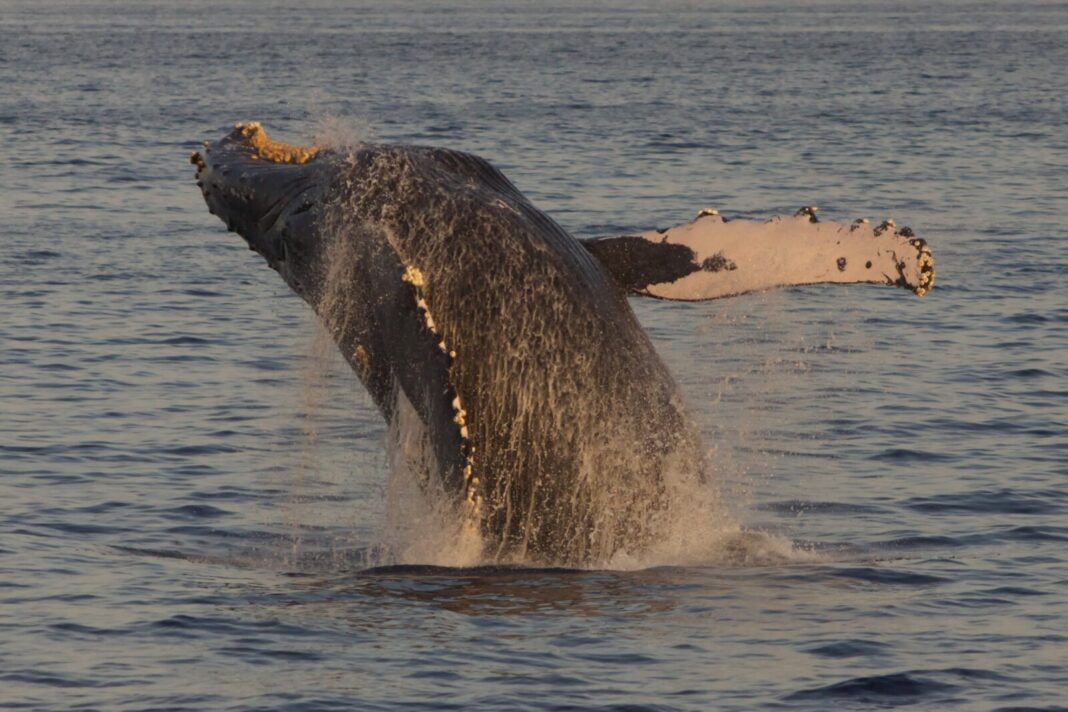
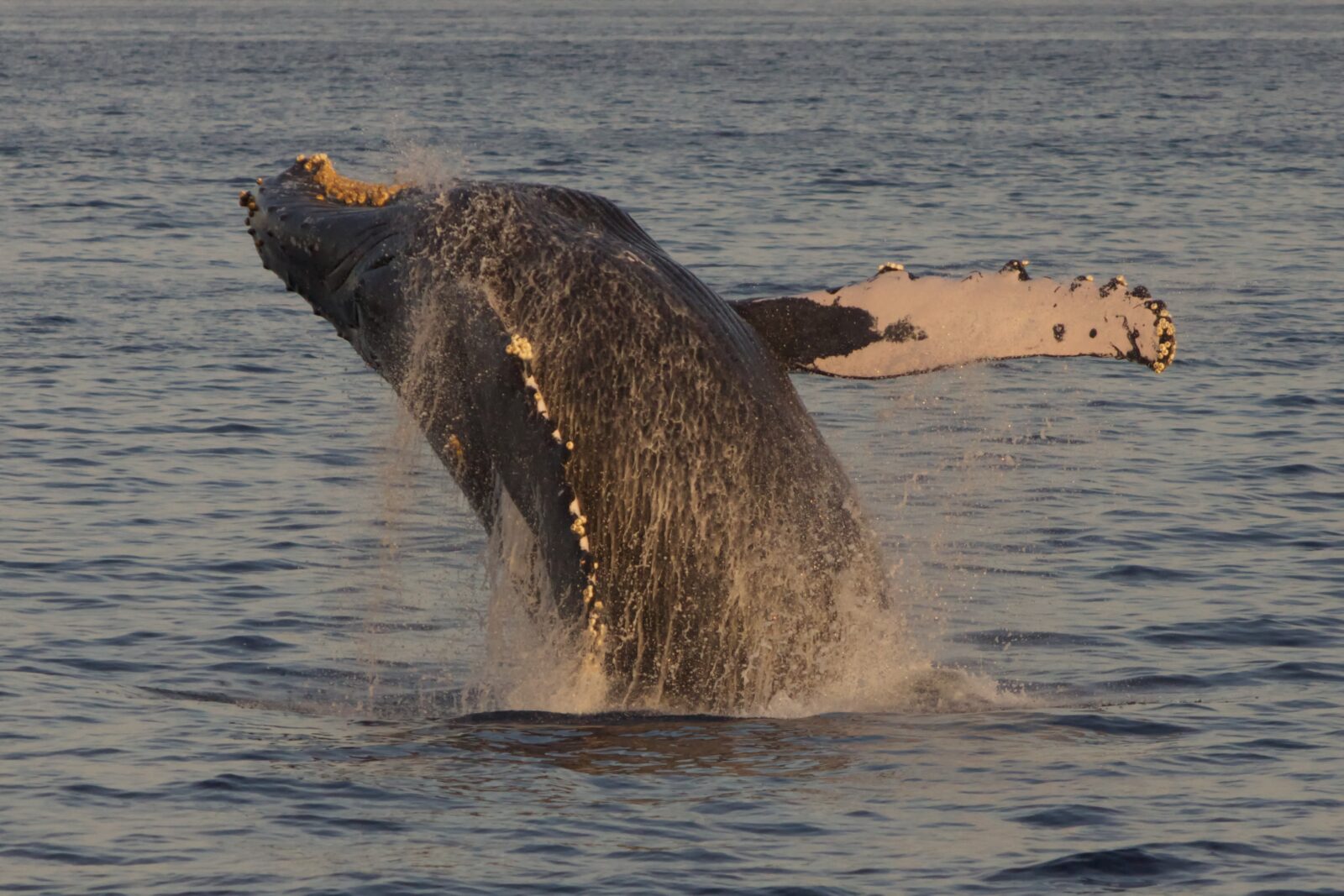
Image: a humpback whale breaching off the Maui coast — photograph by Jkrauska, licensed CC BY-SA 3.0 via Wikimedia Commons.