




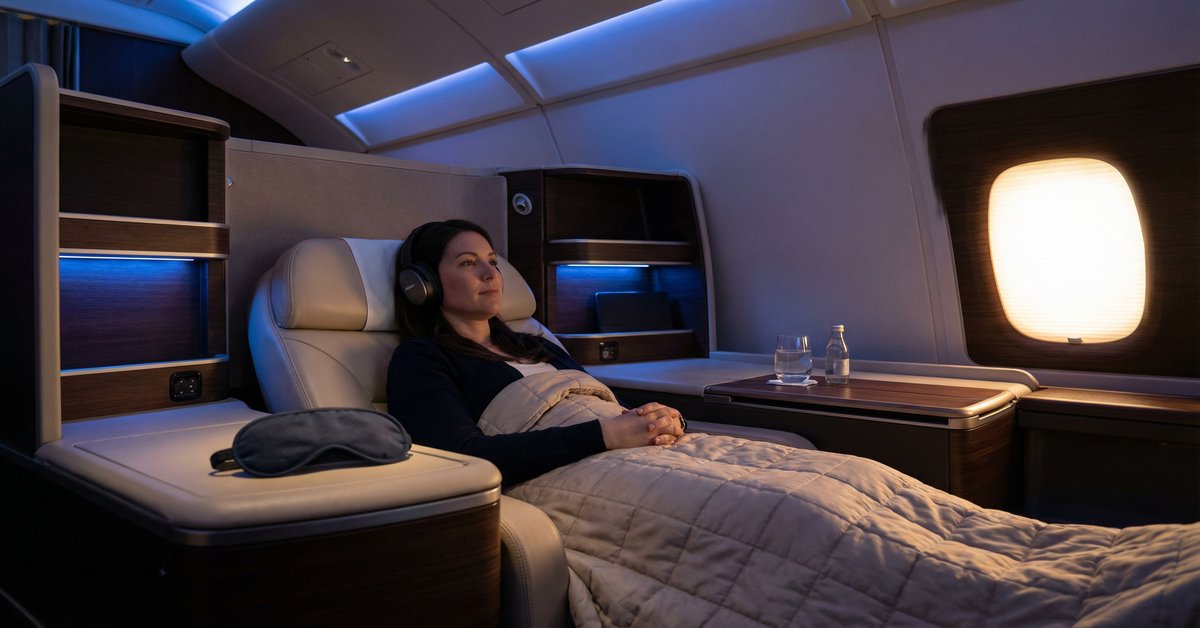
You pay for comfort, privacy, and a seamless experience—yet jet lag can still throw off even the best-laid plans. Crossing time zones messes with your circadian rhythm, leaving you exhausted when you should be sharp. Shouldn’t luxury travel feel, well, luxurious from the moment you land?
The key to dodging jet lag on ultra-long-haul flights? Adjust your sleep schedule before you leave, control your exposure to light and food timing in the air, and get strategic about rest from takeoff to touchdown. When you sync your body clock with your destination and use your cabin environment with intention, you actually arrive ready to go, not wiped out.
Refined travel isn’t just about lie-flat seats and Dom Pérignon. You manage hydration, movement, sleep, and post-flight recovery with the same precision you expect from a five-star crew.
Key Takeaways
- Start shifting your body clock before you fly, and reinforce it in the air with light and meal timing.
- Use the perks of premium cabins—hydration, space, and movement—to support deep sleep.
- Stick to a structured arrival routine that helps your body snap to local time.
Understanding Jet Lag and Circadian Rhythm
Jet lag scrambles your internal clock, messing with your sleep, mood, and performance after a long-haul. If you know how your circadian rhythm reacts to time zone jumps, you can plan your rest and light exposure with almost scientific precision.
What is Jet Lag?
Jet lag is what happens when your internal clock and the local time at your destination are completely out of sync. Medical experts call it a temporary sleep and performance disorder, but anyone who’s landed in Singapore at 6 a.m. after a red-eye knows it’s more than just feeling tired. The Cleveland Clinic breaks it down well.
Your circadian rhythm is a 24-hour cycle running in every cell, telling your body when to sleep, eat, and release hormones. It’s mostly locked onto light and darkness.
When you cross three or more time zones, your body doesn’t just “catch up” overnight. It lags—sometimes by a full day per time zone. So you’re stuck living on two clocks, and your body is stuck somewhere over the Atlantic.
How Circadian Rhythm is Disrupted by Long-Haul Flights
Planes move fast. Biology? Not so much. Shifting time zones throws your circadian rhythm out of whack, which can mess with everything from your sleep to your metabolism. There’s some solid science on this—see the research on maintaining circadian health.
Light is the main culprit. Morning light pushes your clock forward; evening light drags it back. When you land, the local daylight might be telling your brain it’s time to wake up, even if your cells are screaming for bed.
Cabin life doesn’t help. You’re sitting for hours, surrounded by artificial light, and often trying to sleep at a time your body thinks is lunch. Eastward flights are usually tougher—you have to sleep earlier than your body wants. Westward, you need to stay up later.
Symptoms and Impacts on Wellbeing
Jet lag’s not just about sleep. The Sleep Foundation lists common issues: insomnia, waking up too early, daytime tiredness, brain fog, and even digestive weirdness.
You might also notice:
- Sluggish reflexes
- Irritability or mood dips
- Physical performance drops
- Weird hunger at odd times
For high-end travelers with packed schedules, these symptoms can sabotage important meetings or once-in-a-lifetime experiences. If you want to stay sharp, balanced, and on rhythm, you need to treat jet lag as a circadian problem—not just “being tired.”
Pre-Trip Preparation for Luxury Travelers
Jet lag prevention starts days before you board. With a little planning—think sleep tweaks, meal timing, and a few smart apps—you can get your circadian rhythm lined up with your destination before you even buckle in.
Gradually Adjusting Your Sleep Schedule
Your body clock needs gentle nudges, not a sledgehammer.
Start shifting your sleep and wake times 3–5 days out. Move in 30–60 minute increments toward your new time zone. Eastbound? Bed earlier. Westbound? Stay up later.
Light is your secret weapon. Early daylight helps you shift east; evening light helps you shift west. If you’re headed east, get outside early and avoid late-night screens. Going west? Keep things bright in the evening and dim it down in the morning.
Luxury travelers thrive on routine. Book spa sessions, workouts, and meals according to your destination’s clock a few days before you leave. It’s not always convenient, but it pays off.
Pre-Flight Nutrition and Meal Timing
When you eat tells your body what time it “thinks” it is.
Start eating on destination time 2–3 days before you fly. If you’re landing in London at 7 a.m., have breakfast at London time—even if you’re still in New York. This helps your metabolism catch up.
Stick to:
- Lean protein and veggies for stable energy
- Complex carbs at dinner to help you sleep
- Steady hydration; go easy on the booze and coffee
Skip heavy, late-night dinners before your flight. Big meals close to bedtime tank your sleep and slow your clock shift.
Eat on destination time during the flight too, even if the crew serves meals on their own schedule. The LA Times guide is spot-on: meal timing is part of the secret sauce.
Using Technology: Jet Lag Apps and Timeshifter
No need to guess when to nap or seek sunlight. Good jet lag apps do the heavy lifting.
Timeshifter is a favorite. Plug in your flight, cities, and sleep habits, and it spits out a custom plan: when to sleep, when to avoid light, when to take caffeine, and when (if ever) to use melatonin.
Here’s what matters:
| Factor | Why It Matters | How to Use It |
|---|---|---|
| Light exposure | It’s the main circadian driver | Stick to the app’s timing |
| Sleep timing | Reinforces your new clock | Nap only if/when it says so |
| Caffeine/melatonin | Fine-tunes alertness/sleep | Only as scheduled |
Stick to the plan. Half-measures get you half-results.
For ultra-long-haul trips, letting science steer your schedule is just as important as picking the right seat.
Seat Selection and Cabin Comfort Strategies
Your seat isn’t just about legroom—it’s about how well you’ll sleep, how good your circulation stays, and how fast you’ll bounce back. Get this right, and you’re halfway to conquering jet lag.
Choosing the Right Seat for Rest and Comfort
Before you worry about supplements, nail your seat selection. On a 12-hour flight, the wrong spot can mean a rough arrival.
Lie-flat business or first class seats are a game-changer for jet lag. They let you sleep on your destination’s schedule—huge advantage. The DesmoTravel guide nails it: flat is best, angle-flat is second-best, and everything else is a compromise.
If you’re in premium economy, go for:
- Window seats—better head support, fewer interruptions
- Spots away from galleys and toilets
- Rows with extra legroom
A window seat also gives you more control over light, which is critical for melatonin.
Utilizing SeatGuru and Bulkhead Seats
Don’t trust airline seat maps blindly. Use SeatGuru to check for hidden annoyances like limited recline, bassinet rows, or high-traffic zones.
Bulkhead seats mean more knee room, which is great for circulation. Downside? Sometimes they’re near bassinets or restrooms, so noise can be an issue. If leg space trumps quiet for you, go for it.
Exit rows have loads of pitch but often narrower seats due to fixed armrests. On overnight flights, prioritize seat width and recline over legroom if you want real sleep.
Crafting a Deluxe In-Flight Sleep Environment
Once you’re in your seat, it’s time to take control.
Bring a structured travel pillow—memory foam or a wraparound style works best. Keeps your neck happy and your sleep deep.
Set up your sleep zone:
- Silk or padded eye mask to block light
- Noise-canceling headphones to drown out the engines
- Lightweight cashmere or merino wrap (way better than airline blankets)
Drink water steadily but start tapering off about 90 minutes before you plan to sleep—no one wants to wake up for the lav. Make your seat feel like nighttime, and your body will start to believe it.
Mastering In-Flight Wellness
Cabin pressure, bone-dry air, and hours of sitting hit hard. But you can fight back with a few simple moves—hydration, movement, and some biohacker tricks.
Staying Hydrated in Style
Airplane humidity is a joke—usually under 20%. That means dehydration sneaks up fast.
Aim for 250 ml of water every hour. Electrolyte tablets (like Nuun or LMNT) or mineral water help keep things balanced.
Keep booze and coffee to a minimum, especially if you’re fighting jet lag. Both mess with sleep and dry you out, which just makes everything worse.
Eat light, favoring protein and produce. Flight attendants swear by simple meals and steady hydration—see these Lufthansa tips.
Bring your own glass or stainless bottle. It’s a little thing, but it makes a difference.
Luxury In-Seat Exercises and Stretching
Sitting still for hours is brutal for your body. Counter it with in-seat moves every hour or so.
Try:
- Ankle circles: 10 times each direction
- Heel lifts/toe taps: 20 reps
- Seated knee lifts: 10 per leg
- Shoulder rolls/neck stretches: 5 slow reps
When you can, stand and walk the aisle. Even two minutes helps with blood flow and swelling.
Athletic travel pros swear by syncing movement and light with your destination—see these strategies.
Wear breathable, tailored travel clothes. Comfort makes it easier to stick to your routine.
Compression Socks and Circulation Health
Compression socks are a must for long-haul. Graduated compression (15–20 mmHg is standard) keeps blood moving and fights swelling.
They’re especially useful on flights over six hours. Most frequent flyer guides—like these recommendations—put them near the top of the list.
Fit matters: snug at the ankle, not too tight at the calf. Combine with in-seat moves and hydration for best results.
Optimizing Sleep and Relaxation Techniques
You can get ahead of jet lag by taking charge of your in-flight sleep environment. The right tools and a bit of structure help you fall asleep faster and stay asleep longer—even if the cabin’s buzzing and the lights never really go out.
Essential Sleep Accessories: Eye Masks and Earplugs
Light and noise sabotage melatonin and shatter sleep cycles—especially at 38,000 feet. On a long-haul, you need to take both seriously.
Opt for a contoured eye mask that blocks cabin glare without squishing your eyelids. Adjustable straps and breathable fabric are non-negotiable if you want to wear it for hours without that sticky, claustrophobic feeling.
Cabin lights, seatback screens, and those abrupt breakfast services become non-issues with complete darkness. It’s oddly empowering.
Pair your mask with high-quality earplugs. Foam works, but many of us swear by silicone or custom-molded options (try Decibullz or Mack’s Pillow Soft) for a tighter seal and less pressure.
Insert them before the meal service wraps up—don’t wait until the clatter starts. Give them a moment to expand and settle.
For best results:
- Put your eye mask on before the lights dim.
- Earplugs in before the crew rolls out the trays.
- Recline fully, neck pillow on, and get your alignment right.
A tiny ritual, but it tells your body: time to sleep, never mind what your watch says.
Noise-Canceling Headphones for Tranquility
Cabin noise isn’t just a nuisance—it hovers around 75–85 decibels, which is enough to keep your brain on edge. Noise-canceling headphones (think Bose QuietComfort Ultra or Sony WH-1000XM5) cut the engine drone and create a cocoon.
Go for over-ear, active noise cancellation, and a battery that’ll last the flight. Wireless is less hassle, but always pack a cable for the entertainment system. I put mine on during boarding—instant buffer from the chaos.
Use them wisely:
- Low-volume white noise or ambient music.
- No true crime podcasts or action movies before you plan to sleep.
- Combine with your eye mask—sensory deprivation, but make it luxury.
Science backs this up: managing light and sound is central to resetting your clock (Stanford Sleep & Travel). Headphones help you control your world, not just react to it.
Relaxation Techniques and Progressive Muscle Relaxation
Stress is jet lag’s accomplice—cortisol spikes, sleep tanks. Lowering your body’s arousal is non-negotiable.
Start with progressive muscle relaxation: tense your feet for five seconds, release for ten, then move up. Calves, thighs, stomach, shoulders, jaw—slow and methodical.
Add in:
- Slow breathing: inhale four, exhale six.
- Guided meditations (Calm or Headspace, downloaded before you board).
- Quick body scans—notice tension, let it go.
Experts are adamant: these techniques improve sleep quality on the road (how to avoid jet lag). Practice at home so it’s second nature at altitude.
Managing Light, Meal Timing, and Technology
Jet lag isn’t fate. Direct your light, tweak your meals, and be strict with screens—you’ll shift your internal clock with surgical precision.
Strategic Light Exposure to Reset Your Body Clock
Light exposure is the main lever for your circadian rhythm. Cross time zones, and your brain needs clear signals for when to be alert and when to wind down.
Traveling east? Chase morning light at your destination, avoid brightness in late afternoon and evening. That’s how you nudge your body clock forward (light travel guide).
Flying west? Bask in late-afternoon or early-evening light—delay your rhythm. Either way, skip the bright cabin lights and screens when it’s “night” at your destination.
Onboard, eye mask on and reading light dimmed once it’s “night” where you’re headed. In business or first, ask the crew to skip unnecessary wake-ups. Protect your dark window.
Aligning Meals and Snacks With Destination Time
When you eat tells your body what time it is almost as much as when you sleep. Use it to reinforce your new schedule.
Set your watch to destination time the second you board. Eat like you’re already there—even if it feels weird.
If it’s night at your destination, skip the multi-course meal and stick to water or herbal tea. If it’s morning, go for protein (eggs, yogurt, nuts). Research supports syncing meals and hydration with local time (circadian health).
Keep in mind:
- Hydrate—more than you think, especially on ultra-long flights.
- Caffeine only in the first half of your destination’s day.
- Skip heavy, high-fat meals before sleep.
In the lounge, choose lighter fare before a red-eye. Your body will thank you.
Avoiding Screens Before Bed and Downloading Entertainment
Blue light from screens is the enemy of melatonin. If you want to sleep, you’ve got to ditch the screens before bed—no exceptions.
Shut down phones, tablets, and seatback screens at least an hour before you plan to sleep. Switch to an audiobook or mellow playlist.
Download your entertainment ahead of time so you’re not scrolling through glaring menus at midnight. There are also specialized apps (apps to help you beat jet lag) for personalized sleep and light schedules—worth a look if you’re serious.
Use tech on your terms: movies and emails during “daytime” at your destination, then power down for sleep. It’s not always easy, but it pays off.
Arrival and Post-Flight Recovery Rituals
Your first few hours on the ground set the tone for recovery. Light exposure, strict timing, and a controlled sleep environment—these are your tools for a quick reset.
Staying Awake Until Local Bedtime
Land in the morning or early afternoon? Stay up until local bedtime, no matter how tired you are. This is the single most effective move you can make.
Set your watch and phone to local time right away. Don’t even peek at what time it is back home; it’s irrelevant now.
Get outside within an hour of arrival. Natural daylight tells your brain to kill melatonin and speeds up your adjustment (Rick Steves’ advice).
If you’re fading in the afternoon, move—don’t nap. A brisk walk, stretching, even a swim—all better than collapsing in bed.
Aim for a realistic local bedtime, usually between 9:00 and 10:30 p.m. Resist crashing at 6:00 p.m.—that just means you’ll be up at 2:00 a.m. staring at the ceiling.
Taking Short Naps and Adjusting Activity
Short naps can work, but only if you’re strict. Cap them at 20–30 minutes, and never after 2:00 p.m. local time.
Set an alarm, nap in a chair or on top of the covers—avoid deep sleep. Longer naps just make things worse.
Balance rest with movement. Light activity during the day keeps stiffness at bay—compression socks (like Bombas or CEP) can help with circulation (compression socks for flyers).
Try this:
- Morning arrival: Stay active, eat light, nap only if desperate.
- Afternoon arrival: Skip naps, have an early dinner, slow down in the evening.
- Evening arrival: Light meal, hydrate, bed close to local time.
Skip intense workouts, big meals, and heavy drinking—none of those help.
Establishing a Restful Sleep Environment at Your Destination
Where you sleep matters—sometimes more than when. Aim for darkness, cool air, and quiet.
Set your room to 60–67°F (15–19°C). Blackout curtains closed, electronics covered or unplugged. If you need to, keep your mask and earplugs handy.
Luxury hotels usually offer turndown service, pillow menus, even aromatherapy sprays. Use them. Ask for your preferred pillow firmness, adjust bedding layers—don’t just accept what’s there.
Screens off at least an hour before bed. Blue light is still blue light, no matter how nice the suite.
Hydrate, but ease up 60–90 minutes before bed to avoid midnight bathroom runs. If you wake up at 3 a.m., keep it dark and skip the phone.
Perfection isn’t required—consistency is. Control your environment, and you’ll bounce back faster than most.
Frequently Asked Questions
You can outsmart jet lag by prepping your sleep schedule, managing light, staying hydrated, and using targeted tools like timed melatonin or in-flight protocols. Direction, cabin, and arrival habits all play their part.
What are the most effective strategies for mitigating jet lag on eastbound luxury flights?
Eastbound flights are brutal—you lose hours and your body wants to rebel. Most experts agree: shifting your bedtime earlier by 30–60 minutes for several nights before departure helps.
Eat dinner early, dim the lights, and cue melatonin before you even leave home. Onboard, sleep during the destination’s night (even if it feels off). Eye mask, noise-canceling headphones, no alcohol—arrive ready to stay up until a proper local bedtime (proven tips).
How can travelers minimize jet lag symptoms when flying west on opulent journeys?
Westbound is easier—you gain time, so staying up late feels natural. But you still need to manage light and avoid overdoing it on arrival.
Stay awake during the first part of the flight if it’s “day” at your destination. Cabin lighting or reading light helps. After landing, soak up afternoon sun and don’t hit the sack before 9 or 10 p.m. local time. This keeps your clock from snapping back to old habits.
What premium comfort measures can one take to prevent jet lag on transcontinental voyages?
Start shifting your sleep and meal times toward your destination before you even pack (10 pro tips). Even a small adjustment helps.
In first or business class, turn your seat into a flat bed as soon as it’s night at your destination. Change into sleepwear (Lunya or Sleeper make great travel sets) and ask for mattress pads or extra pillows if available.
Stay hydrated—water and electrolyte packets (try LMNT or Nuun). Caffeine only early in the flight, and keep meals light before sleep.
What are expert tips for managing time zone changes when flying luxury class from Europe to the US?
Treat westbound Europe-US flights like an endless afternoon. Stay up for most of the flight, maybe a short nap if you must.
Circadian experts stress: manage light, sleep timing, and routine (complete guide). Use bright light in the late afternoon, keep it dim late at night.
Eat dinner at a normal local time after landing. A short outdoor walk before bed helps anchor your body clock.
What luxe wellness practices aid in jet lag recovery post long-haul travel?
Book a private yoga or gentle stretching session on arrival. It’ll boost circulation and signal your body it’s daytime, but won’t spike stress hormones.
Hydrate, eat balanced meals on local time, and avoid long daytime naps. Even seasoned flyers lean on structure: sleep, light, and measured caffeine (advisor report). Consistency, not heroics, wins recovery.
Are there bespoke tactics involving melatonin that the affluent traveler can use to combat jet lag?
Low-dose melatonin—think 0.5 to 3 mg—is your go-to, but it’s all about timing. Take it 30 to 60 minutes before your target bedtime at your destination, not haphazardly mid-flight.
Don’t mix melatonin with alcohol or sedative sleep meds unless your doctor gives the green light. Getting the timing wrong? That can actually nudge your internal clock in the wrong direction, which is the last thing you want after a long-haul.
Pair it with total darkness and a disciplined sleep window. If you’re in a first-class suite, use that lighting control to your advantage and block out every stray photon. Commit to a full, uninterrupted sleep period that matches your arrival city’s night—no cheating with mid-flight naps if you can help it.