



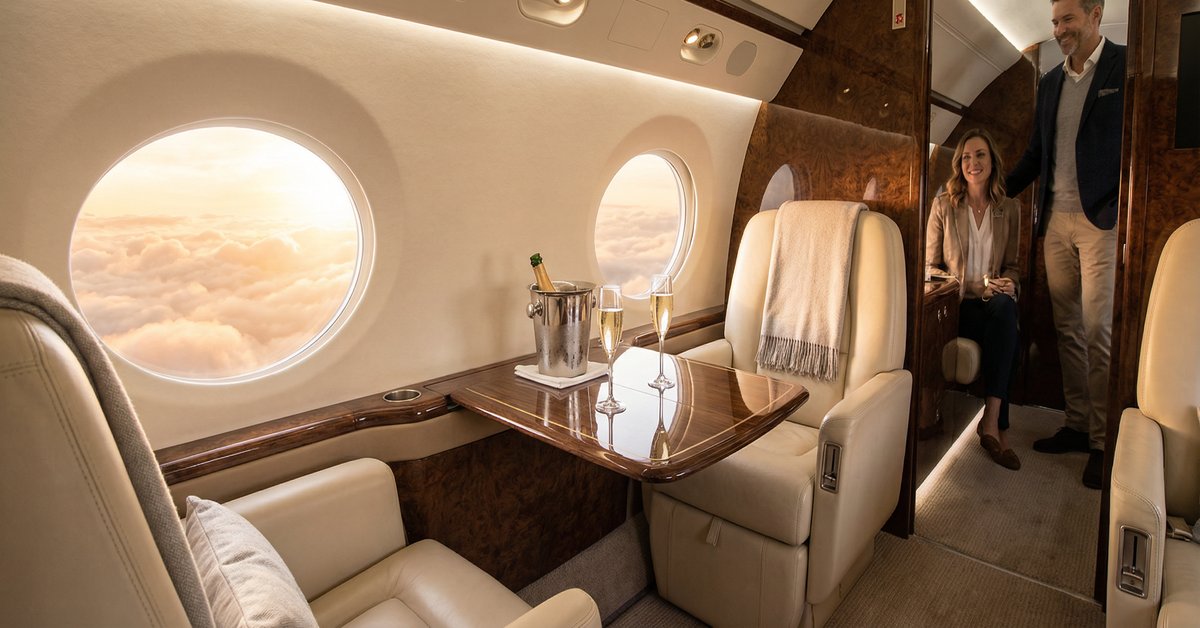
Flying private really does change everything about how you travel. You skip the crowds, breeze through a quiet terminal, and set your own schedule—no more rushing for boarding calls or standing in endless lines.
To fly private for the first time, you’ll pick a charter company or membership, choose the right jet for your group and route, confirm all pricing and ID details, and arrive at the private terminal just before departure. Once you get the hang of how booking, aircraft selection, and terminal access fit together, it’s surprisingly straightforward.
You’re in control here—not just of when you leave, but of the cabin size, amenities, and level of service. Whether you’re flying for business or a weekend escape, private aviation’s about tailoring the experience to you. For a broader view of how aviation fits into a luxury itinerary, see our Ultimate Guide to Luxury Travel 2026.
Key Takeaways
- Book through a charter, broker, or membership, and select an aircraft based on distance and group size.
- Arrive at a private terminal shortly before departure with proper ID—no waiting around.
- Confirm safety standards, operator credentials, and all-in pricing before you step on board.
Understanding Private Aviation
Private aviation hands you the keys to your travel schedule, aircraft, and onboard vibe—commercial airlines just can’t compete. To fly private with confidence, you’ll want a grip on how services are structured, what drives pricing, and the lingo operators toss around.
What Sets Private Jet Travel Apart
With a private jet, you depart from a Fixed Base Operator (FBO) instead of the usual terminal chaos. You can show up minutes before takeoff, walk straight to your jet, and forget about TSA lines or crowded gates. There’s a solid overview of this process in this guide to flying private for the first time.
You call the shots on timing. The jet waits for you, and you can often tweak departure times if needed.
Cabins run the gamut—most offer club seating, a real lavatory, and enough space to relax or work in peace. Privacy, time savings, and direct routes to airports airlines ignore are the big draws. Branded options like the Four Seasons private jet take this further, pairing flight with curated hotel-managed itineraries.
Efficiency is the real currency here. You cut out security lines, layovers, and boarding bottlenecks, which can shave hours off your total travel time.
Types of Private Aviation Services
Private aviation comes in three main flavors:
- On-demand charter
- Jet card membership
- Fractional or full ownership
On-demand charter is usually the way to go if you’re new to this. You book a specific flight for a specific trip, pay for just that, and that’s it. There’s a handy breakdown of the process in this guide. To compare operators side by side, our roundup of the leading private jet charter companies is a good starting point.
Jet cards require an upfront deposit for guaranteed hourly rates and access to a set fleet. Fractional ownership means you buy a slice of a specific aircraft, while full ownership means, well, it’s all yours—along with every responsibility. The big fractional player is NetJets, and their pricing model is worth understanding before you commit.
Each model changes the game on flexibility, price predictability, and availability. Compare contracts, peak-day restrictions, and cancellation terms before you jump in.
Key Industry Terms and Concepts
Private flying has its own language—might as well get comfortable with it.
Charter agreement: the contract spelling out terms, cancellations, and liability.
Empty leg: a repositioning flight, often discounted, when the jet needs to move without passengers.
FBO (Fixed Base Operator): the private terminal where you’ll check in and board.
Picking your jet matters. Light jets are perfect for short hops with minimal luggage. Midsize and heavy jets offer more range, stand-up cabins, and extra perks.
Hourly billing is standard. Operators charge from engine start to shutdown. Watch for extras: crew overnight fees, catering, de-icing, and international handling. Knowing these basics keeps you from getting blindsided by surprise fees.
Preparing for Your First Private Flight
You’ll want to lock in the right jet, make sure your documents are in order, and pick airports that actually make sense for your schedule. A little planning up front means a seamless first experience.
Booking Process and Options
Decide how you want to get in the game. Most first-timers go for on-demand jet charter—no need to lock yourself into a membership or ownership yet.
A solid charter provider will lay out your options based on route, passenger count, bags, and range. Expect real details on cabin size, flight time, Wi-Fi, and catering before you commit.
Insist on transparent pricing. Your quote should break down flight time, fuel surcharges, crew costs, repositioning fees, and taxes. If it’s vague, walk away.
If your dates are flexible, ask about empty leg flights. These can save you a chunk of change, but you’ll need to work around fixed departure times and routes.
For a more structured look at the process, check out this complete 2025 guide to your first private jet flight.
Essential Documentation and Requirements
You still need proper ID, even if you’re skipping the commercial chaos. Domestic flights? Bring a government-issued photo ID. International? Passport, and double-check visa rules.
Your charter company takes care of flight plans, permits, and landing slots, but you’ll need to provide full legal names and birthdates—exactly as they appear on your ID.
International trips might mean dealing with customs. Most private terminals offer expedited processing, but you’re still subject to the same entry rules as everyone else.
Baggage limits vary. Light jets are more restrictive than midsize or heavy jets, so confirm with your provider.
Want a deeper dive? This guide on how to prepare for your first private flight covers what your operator will handle for you.
Choosing Departure and Arrival Airports
This is where private aviation really shines. You can fly out of smaller regional airports, often much closer to home or your office, and cut out the long drive to a big hub.
Private flights run from FBOs—not the main terminal. Show up 15–30 minutes before departure, meet your crew, and you’re off.
When picking airports, think about:
- Runway length (not every jet fits everywhere)
- Operating hours and possible slot limits
- Customs (for international arrivals)
- Ground transportation options
Your charter provider will suggest airport pairs, but you always have the final say. For a step-by-step look at what happens on flight day, this guide covers FBO procedures and timing.
Pick the right airports and your schedule stays in your hands—not the airline’s.
Selecting the Right Private Jet
You’ll want to match your jet to the trip distance, group size, and your own standards for comfort. Aircraft size, range, seating, and onboard features all play into your experience—and your final bill.
Aircraft Types and Cabin Classes
Private jets break down into clear categories. Don’t get distracted by the brand—focus on range and cabin size first.
A light jet usually seats 6–8, ideal for short routes (two to three hours). They’re efficient, great for smaller airports, but don’t expect to stand up straight or bring a ton of luggage.
Midsize and super-midsize jets step it up with more headroom, longer range, and real lavatories. They’re perfect for cross-country flights with 7–9 people.
Heavy and ultra-long-range jets are built for international travel. Full stand-up cabins, big galleys, and real baggage space.
For a rundown of categories and options, see this private aviation fundamentals and aircraft types guide.
Start with your route, then refine based on what you want inside the cabin.
Popular Jet Models for First-Time Flyers
Specific models help set expectations. Operators tend to recommend proven jets with strong safety records and steady availability.
The Hawker 800XP is a classic midsize choice for domestic trips. Seats eight, has a stand-up cabin, and can handle coast-to-coast with a fuel stop.
For nonstop international range, look at the Gulfstream G650 or Global 7500. These are the heavy hitters—multiple cabin zones, beds, and the legs for intercontinental routes.
When comparing, use a practical approach like this guide: passenger count, range, runway requirements, and baggage space all matter more than the paint job.
Pick the jet that fits your mission, not just the biggest one on the tarmac.
Evaluating Amenities and Range
Cabin features can make or break your flight. Check seating layout, Wi-Fi, and storage before you sign anything.
Most jets offer reclining leather seats, fold-out tables, and club-style setups that work for meetings or meals. Larger cabins might have divans that turn into beds.
Wi-Fi varies a lot—ask about speed, coverage, and whether it’s included or billed hourly. Long-range jets usually have better connectivity.
Entertainment can be anything from shared screens to full personal streaming setups.
Range is non-negotiable. A jet might technically reach your destination, but full passengers and bags can limit that. Confirm true nonstop capability under expected loads and weather.
Getting the right jet is about balancing distance, comfort, and features—don’t leave it to guesswork.
Private Flight Membership and Ownership Models
There are structured programs that give you access to private jets without outright ownership. The right choice comes down to how often you fly, how much capital you want to commit, and how hands-on you want to be.
Jet Cards and Membership Programs
A jet card buys you prepaid flight hours (usually 25 at a time) in a specific jet category—light, midsize, or super-midsize. You pay upfront, lock in hourly rates, and usually get guaranteed availability with as little as 24–72 hours’ notice.
Most jet cards offer:
- Guaranteed access
- Fixed hourly rates
- No long-term ownership
- Access to a vetted operator network
A private plane membership program can bridge the gap between charter and ownership. Some charge initiation and monthly fees, others just require a deposit.
You skip maintenance and crew headaches. Just watch for peak surcharges, fuel adjustments, and blackout dates—they can affect price and availability.
Fractional Ownership Overview
Fractional ownership means buying a share (often 1/16 or 1/8) of a specific jet. Your share equals a set number of flight hours a year—usually 50 to 100.
You’ll sign a multi-year contract and pay:
- An upfront acquisition fee
- Monthly management fees
- Hourly operating costs when you fly
This gets you consistent access and full support from a managed fleet, but with less capital risk than buying outright.
Major providers position fractional as a middle ground. For a side-by-side look, check out this comparison guide.
Expect to commit for three to five years. At the end, you resell your share at market value, which can go up or down.
Full Aircraft Ownership Considerations
Full ownership means it’s your jet, your schedule, your branding, your crew. You decide how it’s run, within regulations.
But you also take on:
- Purchase price
- Crew salaries and training
- Maintenance and inspections
- Insurance and hangar
- Fuel and operating costs
Ownership only makes sense if you’re flying at least 200 hours a year. Most first-timers start with charter or jet cards before even thinking about owning. If you want a deep-dive, this beginner’s guide is a good place to start.
If you want total control and don’t mind the investment, ownership delivers. If you want flexibility and less hassle, structured programs are usually smarter.
Arriving and Boarding at the Private Terminal
You’ll show up just before departure, stroll through a calm terminal, and step straight onto your jet from the ramp. The whole process revolves around the FBO, minimal security, and seamless ground transport.
What to Expect at the FBO
Your flight doesn’t begin at the chaos of the main terminal. Instead, you’ll head to an FBO (fixed-base operator)—think of it as your private gateway, tucked away from the crowds and lines.
Most are located on the quieter edges of airports, whether you’re flying out of a boutique airfield or a major city hub.
Arrive just 10 to 15 minutes before wheels-up. That’s not a typo; private aviation respects your time, not the other way around.
Plenty of operators spell out this timing—here’s a straightforward FBO overview if you want a preview.
Inside, you’ll find a reception desk, a calm lounge, restrooms, and usually a spread of snacks and drinks. Staff will greet you by name, sync with your crew, and keep an eye on weather or routing changes as you relax.
When your jet’s ready, you simply stroll out across the ramp—no boarding groups, no gate announcements, no jet bridge shuffle. It’s refreshingly direct.
Security, Check-In, and VIP Lounges
Security at an FBO is, thankfully, nothing like TSA. You’ll still show ID and confirm your details, but the process is smooth and discreet.
For domestic flights, check-in is as simple as giving your name at the desk and flashing a driver’s license. International trips mean a passport check—your operator or crew usually handles customs in advance.
Most FBOs offer a VIP lounge for charter and jet card clients. Expect comfortable seating, fast Wi-Fi, workspaces, and light bites.
You set the pace. As this boarding guide explains, there’s no rush—boarding starts when you and your crew are ready.
Ground Transportation and Valet Services
Ground transfers matter, and the best FBOs know it. Valet parking is standard at most, so you can step from your car straight into the lounge.
If you’d rather not drive, the FBO or your charter company can arrange executive sedans, SUVs, or even chauffeured limos—often staged right at your plane.
At select airports, your car can meet you planeside. That means you step off the jet and into your vehicle, skipping the terminal entirely.
For seamless transfers, share your driver’s contact info ahead of time and double-check pickup details with your crew. It’s a small step that saves hassle.
Onboard Experience and Comfort
The first time you board a private jet, it’s a revelation. The difference in space, privacy, and control is immediate—there’s a reason this is the gold standard.
From plush leather seats to Wi-Fi and personalized meals, every detail is about your comfort and schedule. You’re in charge, not the airline.
Cabin Environment and Seating
The cabin is quiet, climate-controlled, and feels more like a high-end living room than a plane. Light and midsize jets typically seat 4–9, often in club layouts, while larger models add divans, conference tables, and crew rest areas.
You’ll get reclining leather seats with adjustable headrests and serious legroom. Seats swivel and slide, so you can face your travel partners or stretch out solo.
Cabin altitude is lower than commercial, which helps keep you feeling sharp after longer flights. The windows are bigger, and you can control the light with shades or electronic dimmers.
Storage is within arm’s reach. No wrestling with overhead bins—your essentials stay close.
If you want a full breakdown of the private flight experience, check this what to expect when flying private guide.
In-Flight Services and Custom Catering
You call the shots on food and drink before departure. Most operators source from top local restaurants or upscale caterers, not mystery airline kitchens.
Short hops might mean artisanal snacks, fruit, and a curated drink list. Longer routes? Multi-course meals on real plates—yes, it’s as good as it sounds.
Flight attendants are standard on midsize and larger jets. On smaller planes, pilots may step in for light service, but safety always comes first.
You can request:
- Special diets (gluten-free, vegan, you name it)
- Your favorite Champagne or wine
- Kid-friendly meals
- Celebration touches—think birthday cakes or flowers
For a practical take on booking and what to expect, this first-timer’s guide covers the essentials.
Connectivity and Entertainment Options
Most midsize and large jets offer onboard Wi‑Fi—often included in your charter. Speeds vary, so if you need to stream or video call, ask about bandwidth before booking.
You can work, send big files, or join meetings confidently. Outlets and USB ports are usually at every seat.
Entertainment? Some jets have built-in screens; others let you stream to your own device. Cabin systems often let you set lighting, temperature, and media with a touchscreen or app.
Want to dig deeper into perks and booking? This comprehensive guide lays out the private jet experience from start to finish.
Private Jet Etiquette and Best Practices
Private aviation is built on discretion and respect—for the crew, the aircraft, and your fellow passengers. Knowing the basics of etiquette makes the whole experience smoother (and, frankly, more enjoyable).
Passenger Conduct and Dress Code
Punctuality matters. Arrive at the FBO when your operator suggests—usually 15–20 minutes before takeoff. Last-minute changes are best avoided unless absolutely necessary.
Dress smart, but don’t overthink it. Business casual is the sweet spot: tailored trousers, a blazer, a sharp dress, or elevated leisurewear. Skip flip-flops, wrinkled clothes, or loud graphics.
Once on board, treat the cabin as a refined shared space.
- Keep your stuff contained.
- Use a moderate speaking volume.
- If seating isn’t assigned, let the aircraft owner or principal guest pick first.
For a deeper dive, this etiquette guide is worth a look.
Respect privacy—don’t snap photos of the cabin, other guests, or tail numbers without a clear okay.
Interaction with Crew and Flight Staff
Crew are there for your safety first, service second. Address them professionally, listen to safety briefings, and follow instructions promptly.
Be direct and polite with requests: “Could I get sparkling water with ice?” or “Would you mind lowering the temperature a bit?” Clear communication helps everyone.
Discretion is non-negotiable in private aviation. This Travel + Leisure guide has useful insights on tone, seating, and behavior.
If you’re the charter client, share special requests in advance with your broker or operator. Surprises are better left for parties, not flights.
Tipping and Service Expectations
Tipping customs vary. If you’re chartering, it’s standard to discreetly tip the cabin attendant for excellent service—usually after landing.
If it’s an owner-flown trip, follow your host’s example. Don’t tip unless you’re sure it’s appropriate for that situation.
Service is personal but always professional. For a quick primer on dos and don’ts, check this etiquette list.
Avoid excessive or last-minute requests that disrupt crew schedules. Respecting their time shows you get how this world works.
Safety, Compliance, and Choosing a Provider
Flying private means you’re in control—not just of timing, but of who you trust with your safety and experience. It pays to be a little picky.
Regulatory Standards and Certifications
In the U.S., private charters run under FAA Part 135—strict rules for pilot training, duty hours, maintenance, and operations. In Europe, it’s EASA regulations, which are equally rigorous.
Always confirm your operator holds a current Air Operator Certificate (AOC). That’s your proof they meet national safety standards and can legally fly you.
Top-tier operators stick to manufacturer maintenance programs and document every inspection. For a closer look at the regulatory side, see this private jet regulations primer.
International flights add layers: customs, overflight permits, and cabotage rules. Your provider should handle these directly—not outsource without oversight.
Safety Ratings and Audits
Third-party audits are your friend. Groups like ARGUS and Wyvern dig deep into operator records, pilot hours, and safety protocols.
An ARGUS Platinum rating means on-site audits and continuous monitoring. It’s a serious badge of quality, not just a rubber stamp.
Ask pointed questions:
- When was your last third-party audit?
- What’s your current safety rating?
- Are all flights under your own AOC?
Some brokers resell flights run by others. Always know exactly who’s flying you, and check their credentials. For more on this, here’s a safety regulations breakdown.
Evaluating Charter Providers
Charter providers come in two flavors: some own or manage jets, others are just brokers. The difference matters.
Request:
- The operator’s legal name
- Aircraft tail number
- Proof of insurance
- A copy of the AOC
Get clear on cancellation terms, peak surcharges, de-icing, and international fees before signing. Transparent contracts mean fewer surprises.
If you’re new to private flights, this cost, safety, and etiquette guide is a smart place to start.
When you pick a provider, you’re choosing a risk manager as much as a travel partner. Prioritize transparency, compliance, and proven safety over mere convenience.
Frequently Asked Questions
Flying private is a world apart, but it comes with its own set of decisions—booking, pricing, airport routines, and membership options. Knowing what to expect helps you get the most from your first flight.
What are the steps involved in booking a private jet for the first time?
Start with the basics: your route, dates, passenger count, and luggage needs. This info determines your aircraft category—light, midsize, or heavy jet.
Request quotes from a broker or operator. This full guide walks through paperwork, aircraft selection, and pricing.
Once you pick an option, you’ll sign a charter agreement and send in passenger details. The operator handles flight planning, crew, catering, and ground arrangements—just watch for your terminal instructions.
How do I find the best deals on flying private without compromising luxury?
Compare one-way charters, jet card rates, and memberships before committing. Flexibility with dates and times can trim costs.
Keep an eye out for repositioning deals and always get multiple quotes for your route. This cost and etiquette guide explains price differences by jet size and trip length.
Luxury isn’t about the lowest price—it’s about verified safety, newer aircraft, and top-tier amenities. Don’t settle.
What should I expect regarding customs and immigration when flying internationally on a private plane?
Customs and immigration are still required, but the process is usually private and efficient at the FBO. Submit passport info ahead so authorities can pre-clear you.
On arrival, officers may board your jet or guide you to a private inspection room. This international guide covers required documents and arrival steps.
Double-check visa and entry requirements well in advance. It’s the one detail you don’t want to leave to chance.
Can I calculate estimated flight times before booking a private jet?
You can get a ballpark idea of flight times by looking at the route distance and the cruising speed of the aircraft. Light jets tend to be a bit slower than midsize or heavy jets, so there’s a difference in total travel time—sometimes it’s more than you’d expect.
Most operators will show you a preliminary estimate during the quoting process. This First Private Jet Flight Complete 2025 Guide covers how booking platforms give you a sense of timing before you commit.
Of course, weather, ATC routing, and the odd fuel stop can nudge your schedule a bit. Still, you’ll usually know what to expect before you sign anything.
What are empty leg flights, and how can they benefit my private travel experience?
Empty leg flights happen when a private jet has to reposition—say, flying back to base or heading to pick up another client—without any passengers on board. Operators will often slash prices for these empty segments just to recover some costs.
If your plans are flexible and you can work with the set route and departure time, you can score charter pricing that’s dramatically lower than usual. The Complete Guide to Flying Private for the First Time breaks down how to book these and why a little flexibility can go a long way.
But don’t expect to tweak the itinerary; you’ll need to adapt to the operator’s timing. That’s the trade-off for the savings.
How do exclusive private jet membership programs work?
Membership programs usually ask for an upfront deposit or an annual fee. In return, you get guaranteed access to jets at set hourly rates—sometimes those rates are locked in for a year or two, which can be a lifesaver if you’re flying often.
You’ll pick your flight hours as you need them, and the provider just deducts them from your balance. If you’re curious about the ins and outs, this First Time Flier’s Guide To Flying On A Private Jet covers how these access models really work for frequent travelers.
Before you sign up, it’s smart to take a close look at blackout dates, peak surcharges, and cancellation policies. Small details, but they matter more than you’d think.