
Search for Tulum all-inclusive resorts and you will be shown a dozen properties. Most of them are not all-inclusive, not in Tulum, or neither.
One widely circulated roundup lists twelve “Tulum all-inclusive resorts.” Check the addresses and nine of them are somewhere else — Akumal, Xpu-Ha, Kantenah, Puerto Aventuras, Playa del Carmen. One of the resorts marketed hardest as Tulum, Catalonia Royal Tulum, has Tulum in its name and sits at Km 264.5 in Xpu-Ha, which is a 79-minute drive from Tulum’s own airport.
This guide sorts out which resorts are genuinely all-inclusive, where they physically are, and the practical realities of the Tulum beach road that almost nothing else tells you.
Why “Tulum all-inclusive” is mostly a misnomer
Tulum’s famous hotel strip — the Carretera Tulum–Boca Paila, the single road running along the beach — is a line of small boutique eco-hotels. They are beautiful, expensive, and almost none of them are all-inclusive. Many of them run on solar panels and generators with air conditioning available only part of the day.
Meanwhile, the large resorts that can actually deliver an all-inclusive product need scale, reliable grid power and a big flat site. Those exist 15 to 80 minutes north, along the Riviera Maya corridor. So the all-inclusive industry sells the Tulum name from outside Tulum.
The ones that genuinely are in Tulum
| Resort | Where it actually is | Distance |
|---|---|---|
| Kore Tulum | Km 3.85, on the beach road | On the Hotel Zone |
| Hilton Tulum Riviera Maya | Tulkal, Chemuyil | About 8 miles north of Tulum |
| Conrad Tulum Riviera Maya | Tulkal, Chemuyil — next door to the Hilton | ~1 hour from Tulum airport |
| Dreams Tulum | Km 236.7, Tankah | 15 min north of town |
Kore Tulum is the genuine exception and worth knowing about. A 94-room adults-only all-inclusive at Km 3.85 on the beach road itself, about nine minutes from the town centre. What makes it notable is mundane: it has 24-hour air conditioning and electricity, which reviewers single out as unusual for this stretch of coast. Its beach is rocky and windy and swimming is not generally advised; in-room Wi-Fi costs extra; and some rate plans are all-inclusive while others are not, so read what you are buying.
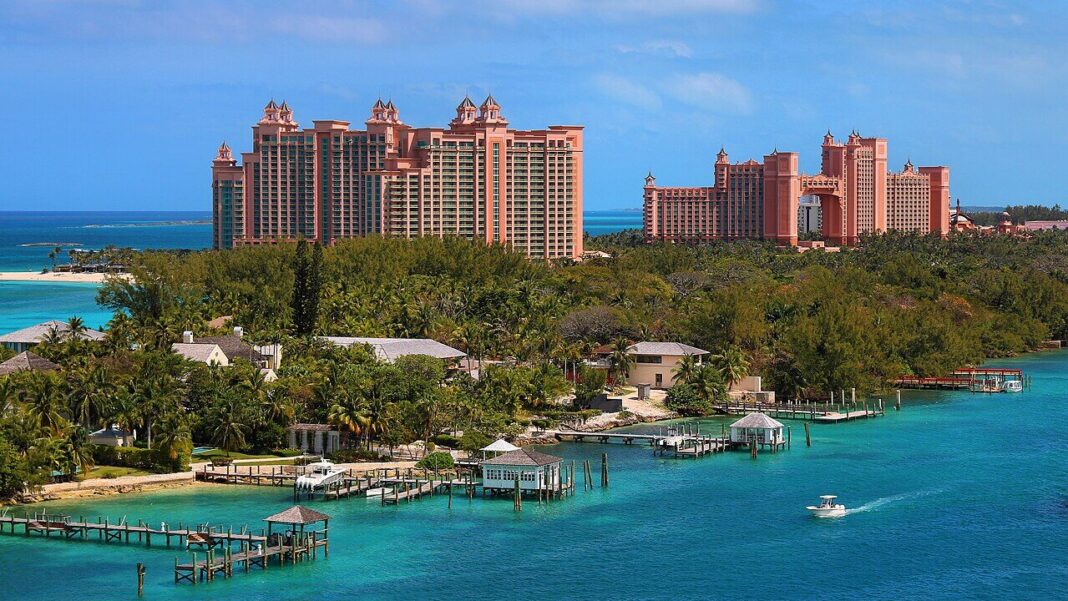
Hilton Tulum Riviera Maya opened in May 2022 with 735 rooms, 13 restaurants and eight pools — Hilton’s largest resort in the Caribbean and Latin America. Conrad Tulum Riviera Maya, 349 rooms, shares the same site next door.
Dreams Tulum is the honest illustration of the problem. It is in Tulum municipality, it is a real all-inclusive, and its own listing on a major booking site tells you that Tulum Beach is a 19-minute, 11.2-mile drive away.
The Conrad and Waldorf story, corrected
Two things are widely misreported here and both are worth getting straight.
Conrad Tulum and Waldorf Astoria Riviera Maya became all-inclusive on 1 October 2026. Not 2027. Several outlets ran headlines saying 2027, conflating the conversion with a separate date.
That separate date is 10 January 2027, when Waldorf Astoria Riviera Maya goes adults-only, 18 and over. On the same date Conrad Tulum opens Ceiba Club, an adults-only section within the wider resort — so Conrad stays open to families while adding an adult enclave. If you are holding a family booking at the Waldorf for after 10 January, that is a hard deadline with a real consequence.
There is no Waldorf Astoria Tulum. The property is Waldorf Astoria Riviera Maya, formerly Waldorf Astoria Cancún, at Kanai — address in Cancún 77580, which is the Puerto Morelos area, and by Hilton’s own description “just 15 minutes from Cancun International Airport.” That is more than 100 kilometres north of Tulum. One major booking site lists it with “Tulum” in the address line and “10 miles from Cancun International Airport” in the body, which is a live demonstration of exactly the mislabelling this article is about.
Conrad Tulum’s all-inclusive covers six restaurants, 24-hour in-room dining, a daily-refreshed minibar, a kids’ club that is always included, five “experience collections,” and private round-trip transfers from both Cancún and Tulum airports on eligible direct bookings — plus one excursion on stays of four or more consecutive nights. The Waldorf’s version includes a personal concierge and transfers from Cancún only.
The off-grid problem
This is the most useful section in this article and the one almost no roundup includes.
The Tulum beach road has long had no community power supply. Hotels run on solar, wind and generators, with candlelight as backup. Rooms frequently have no televisions and no phones, and often no reliable Wi-Fi or round-the-clock air conditioning. Some properties draw water from cenotes, which can mean a salty shower and low pressure.
That is the general picture. Here is the property-level evidence, which is what makes it credible:
- Papaya Playa Project: electricity is available 24 hours a day via generators, but its use is limited for sustainability reasons. Guests are advised to carry a flashlight when going out late in the evening. Air conditioning is only in oceanfront suites, and when electricity is limited guests may be unable to use it at all. Plumbing is described as sketchy.
- Zamas: largely unplugged, generator-operated. The generator will not support hairdryers without advance notice to increase voltage. One air-conditioned room, with more being added. No in-room Wi-Fi or phones — common areas only.
- Nueva Vida de Ramiro: runs almost exclusively on solar, with a generator used only to recharge at night and on cloudy days. Air conditioning runs only from late evening to early morning. Most rooms have fans only.
- La Posada del Sol: switched to solar in 2017. No air conditioning at all — electric fans instead. No TVs, mini-fridges or kettles.
- Ahau Tulum: air conditioning in all rooms except the Bali Huts, and mostly only available at night. Cell reception is poor; the lobby is the only place with signal.
Beyond the beach strip, the wider regional grid has its own problems. Tulum and Playa del Carmen saw recurring blackouts through 2025, with hoteliers demanding a plan from the national utility; outages of 12 hours or more were reported in some neighbourhoods, and a mass blackout hit Mexico’s southeast in March 2025. Hotels across the region are installing battery banks in response.
None of this makes Tulum a bad destination. People pay a great deal to stay in these hotels precisely because they are unplugged. But if you are booking an “all-inclusive beach holiday” and picturing a cold room and a working hairdryer, you need to know which kind of hotel you are buying.
Tulum’s airport is shrinking, not growing
Tulum International (TQO), properly Felipe Carrillo Puerto International, opened in December 2023 about 20 kilometres southwest of central Tulum — and it is actually in the neighbouring municipality of Felipe Carrillo Puerto.
Drive times from TQO: 30 to 35 minutes to Tulum town (add 15 to 30 at peak, as the bypass road is unfinished), about 45 minutes to the Hotel Zone, 45 to 50 to Akumal, and roughly 2.5 hours to Cancún.
The airline situation has deteriorated sharply and this is current as of November 2026:
- United ends all Tulum flights in January 2027 — Newark on 2 January, Houston on 4 January. It had already dropped Chicago and Los Angeles.
- JetBlue and Copa have already withdrawn.
- Aeroméxico and Volaris have announced suspensions.
- Delta has dropped Detroit and Minneapolis–St Paul but kept Atlanta.
- American has dropped Charlotte and reduced its schedule.
- A Miami nonstop ends 5 January 2027.
- US–Tulum flights are down more than 50 percent versus two years ago, with major carriers cutting roughly 27 to 30 percent of Tulum capacity in 2026 alone.
We are deliberately not publishing a current route list, because sources from October and November 2026 directly contradict each other. The direction is unambiguous: the network is contracting fast, so check live schedules at the moment of booking.
Practically, Cancún remains the most sensible gateway for most Tulum trips. CUN to Tulum is 1.5 to 3 hours depending on traffic and roadworks. For the Chemuyil cluster — Hilton, Conrad, Dreams — CUN is around 90 minutes and TQO around an hour, so it is close to a wash. TQO only clearly wins for the Hotel Zone and the town itself, and only if a flight exists.
Visitax, and the mess around it
Quintana Roo charges every foreign visitor a state tourist fee, Visitax. The statutory basis is 2.50 UMA — the inflation-indexed unit Mexico uses for statutory amounts — which means the fee re-prices every 1 February when the national statistics institute updates the UMA.
The 2026 UMA is 117.31 pesos per day. Multiply by 2.50 and you get roughly 293 pesos. That is arithmetic, not a published figure, which matters because the published figures are all over the place. In December 2025 one state source described the fee as “almost 283 pesos”; on the same day the state tourism secretary said it was 224 pesos; a December 2025 report put it at 224 pesos for visitors over 15; and a November 2026 report said authorities had announced 285 pesos for 2026. The official portal does not display an amount at all, and states that all foreign tourists must pay, including children and infants — which itself contradicts the “over 15” claim.
So: budget roughly 285 to 295 pesos, about $15, per person, and check visitax.gob.mx at the time of travel.
The fraud problem, and the official overcharging problem
Quintana Roo authorities have identified at least 20 fraudulent Visitax websites charging over 500 pesos against the real fee. One named clone is visitaxmex.com. The rule to follow: the only official portal is visitax.gob.mx, and anything not ending in .gob.mx is fake. Do not pay intermediaries and do not yield to pressure at the airport.
And then there is the official-side version. As of 8 November 2026, travellers have reported state tax personnel approaching passengers in Cancún airport departure areas with card terminals and asking for up to 550 pesos per person — around 265 pesos above the announced rate. Some say they were warned of difficulty re-entering the state if they left without paying; others dispute that any legal mechanism compels payment at the airport. Pay online, in advance, at the official site, and keep your QR receipt.
The rest of the cost stack
- IVA: 16 percent.
- ISH (Quintana Roo state lodging tax), 2026: 3 percent of room value, excluding food, extra services and tips.
- Derecho de saneamiento ambiental (environmental sanitation), 2026: 30 pesos per room per night. Single-sourced; the municipal revenue law is not publicly fetchable.
- Tulum airport environmental sanitation fee: 15 percent of one UMA, around 16 pesos, charged to flight passengers at TQO. Critics have flagged this as double taxation for air arrivals who then also pay the hotel fee.
And the one that has genuinely jumped. From 1 January 2026, foreign admission to the Tulum archaeological zone more than doubled. The breakdown for a foreign visitor: 210 pesos to the national institute of anthropology (up from 100), 190 pesos for Parque del Jaguar, and 125 pesos to the national parks commission — 515 pesos in total, against 260 pesos for a Mexican national.
Beach access: the real picture
The story about Tulum hotels blocking the beach has calmed down considerably, and the current arrangement is clearer than most coverage suggests.
Two free public access points were formalised in 2025 in the Hotel Zone, both with public parking, no fee, no consumption requirement and no gate:
- Playa Conchitas, around Km 4.5
- Playa del Pueblo, around Km 5.5
Shade, food, drinks and coolers are permitted at both.
Separately, 15 hotels and beach clubs signed voluntary free-access agreements in 2025: Ana y José, Casa Gitano, Casa Violeta, Ahau, Delek, Alaya, Coco Unlimited, Hotel Nest, Hotel Sana, Dos Ceibas, Villa Alquimia, Papaya Playa Project, Hotel Maxanab, La Eufemia and Fara Fara. These corridors grant passage and use of the public sand only — not chairs, umbrellas, shade, bathrooms or showers — and outside food and drink are not allowed on hotel corridors, though they are fine at the two public points. The agreements are voluntary, so call ahead.
No, hotels have not lost their beach. The federal maritime zone, from the waterline to 20 metres inland, is public by law and no hotel or beach club can legally block access to it. Hotels keep their own land and amenities. Enforcement carries fines of up to a million pesos and possible closure.
Getting there from town: a taxi runs 150 to 200 pesos and takes 10 to 15 minutes; by bicycle about 20 minutes. There is no regular bus along the Hotel Zone road.
Parque del Jaguar, created in 2022 and administered by the Ministry of National Defense, covers around 2,260 hectares around the archaeological zone and has tiered pricing with residency discounts. Enforcement has been inconsistent — in April 2026 visitors were refused entry when perimeter security accepted an expired driving licence that ticketing staff then rejected — and local operators have been calling for published entry criteria.
Sargassum: 2026 was the worst on record
There is no soft way to put this. The 2026 season was the most severe ever recorded for Mexico’s Caribbean coast, with around 90,538 tons floating off Quintana Roo in early August. Mexico’s federal environment secretary described the volume as four times the previous year’s and 27 times the historical average. The University of Florida’s observatory put roughly five million tons across the Caribbean by June 2026. The navy had collected 96,151 tons by early August, against 92,782 for all of 2025, with collection capacity running at about 30 percent of what arrives.
Tulum was the hardest-hit destination in the country between January 2022 and July 2026, per Mexico’s national sargassum monitoring system. And the 2026 season started in January instead of the usual April — municipal crews removed over 2,800 metric tons from public beaches by mid-July, nearly double the same period in 2025, and that excludes what hotels cleared themselves. In February 2026 alone Tulum collected 244 tons against 59 tons in February 2025.
The Tulum Hotel Association reports that daily beach cleaning now costs many hotels roughly as much as their electricity bill. The containment barriers that exist are in Playa del Carmen, not Tulum; some Tulum hotels have installed their own.
Historically November through March is the clearest window, and that remains the best guidance available — but note that 2026 broke that pattern by arriving in January. Ask your hotel directly what its beach looked like in the equivalent week last year, and what cleaning it does.
Cenotes and the Maya Train
The cenotes are the genuine reason to be in Tulum rather than anywhere else on this coast, and prices as of November 2026 run from about 100 pesos at the Cobá cenotes to 500 pesos at Gran Cenote. Calavera is 300, Cristal 250 with Escondido included on the same ticket, Zacil-Ha 200. Casa Cenote, Carwash and Dos Ojos run roughly $15 to $30.
The rules matter: biodegradable sunscreen only, and most cenotes require you to shower first. Regular sunscreen, makeup and insect repellent will get you turned away. Stay inside the roped zones, do not touch or stand on formations, and never enter a cave section beyond daylight without a certified guide. Bring pesos in cash.
The Tren Maya is now usable, with 34 operational stations across 1,554 kilometres and about 20 daily runs, targeting 32 by the end of 2026. An April 2026 fare restructure introduced a “Turista México” rate that cut the foreigner price by up to 30 percent: Mérida–Cancún is now around 547 pesos (about $27), Cancún–Chichén Itzá around 351 pesos. Mérida–Cancún runs six times daily, roughly 3.5 hours.
It is good for day trips to Chichén Itzá, Valladolid and Mérida. It is not a practical airport transfer: the Cancún airport station sits next to the airport but is not walkable, requiring a separate 35-peso shuttle that is poorly signposted and sometimes unstaffed, and tickets are valid only for the specific train booked — which does not mix well with unpredictable immigration queues.
Safety
The US State Department places Quintana Roo at “Exercise Increased Caution” due to crime. Its Tulum-specific wording is worth quoting directly: “Violent crime, including homicides and assaults, has increased in Tulum,” and it advises travellers to “exercise increased caution after dark in Cancun, Playa del Carmen, and Tulum,” staying on well-lit pedestrian streets and in tourist zones.
Resorts that are neither in Tulum nor all-inclusive
Ahau Tulum and Mezzanine a Colibri both appear on “Tulum all-inclusive” roundups. Neither is all-inclusive — Ahau includes free water, morning bread and coffee, Wi-Fi and parking, and that is it.
Catalonia Royal Tulum genuinely is all-inclusive and genuinely is not in Tulum: Km 264.5, Xpu-Ha, 79 minutes from Tulum airport, roughly midway to Playa del Carmen.
Bahia Principe Grand Tulum has rebranded to Bahia Principe Explore Tulum, and its listed address at Km 250 is the Akumal stretch.
Several other Riviera Maya resorts carrying “Tulum” in their marketing — Grand Oasis Tulum, Grand Sirenis, Bahia Principe Sian Ka’an, Secrets Akumal — are in Akumal. Sian Ka’an is particularly misleading: the biosphere reserve it is named after is roughly 40 kilometres south of the resort.
How to book this properly
Decide first what you are actually buying.
If you want a true all-inclusive with reliable power, a kids’ club and a swimming beach, book the Chemuyil cluster — Hilton, Conrad or Dreams — fly into Cancún, and accept that you will drive 15 to 20 minutes to see Tulum itself. That is a good holiday and an honest one.
If you want Tulum — the beach road, the cabanas, the cenotes, the light — then book a boutique hotel, pay for your meals, ask explicitly about air conditioning hours and Wi-Fi before you book, and stop looking for an all-inclusive, because with one 94-room exception it is not there.
What you should not do is book something called Tulum, arrive, and discover you are 80 minutes away in Xpu-Ha.
For the rest of the region, see our guides to Cancun all-inclusive resorts and the best luxury all-inclusive resorts in Mexico.
Image credits
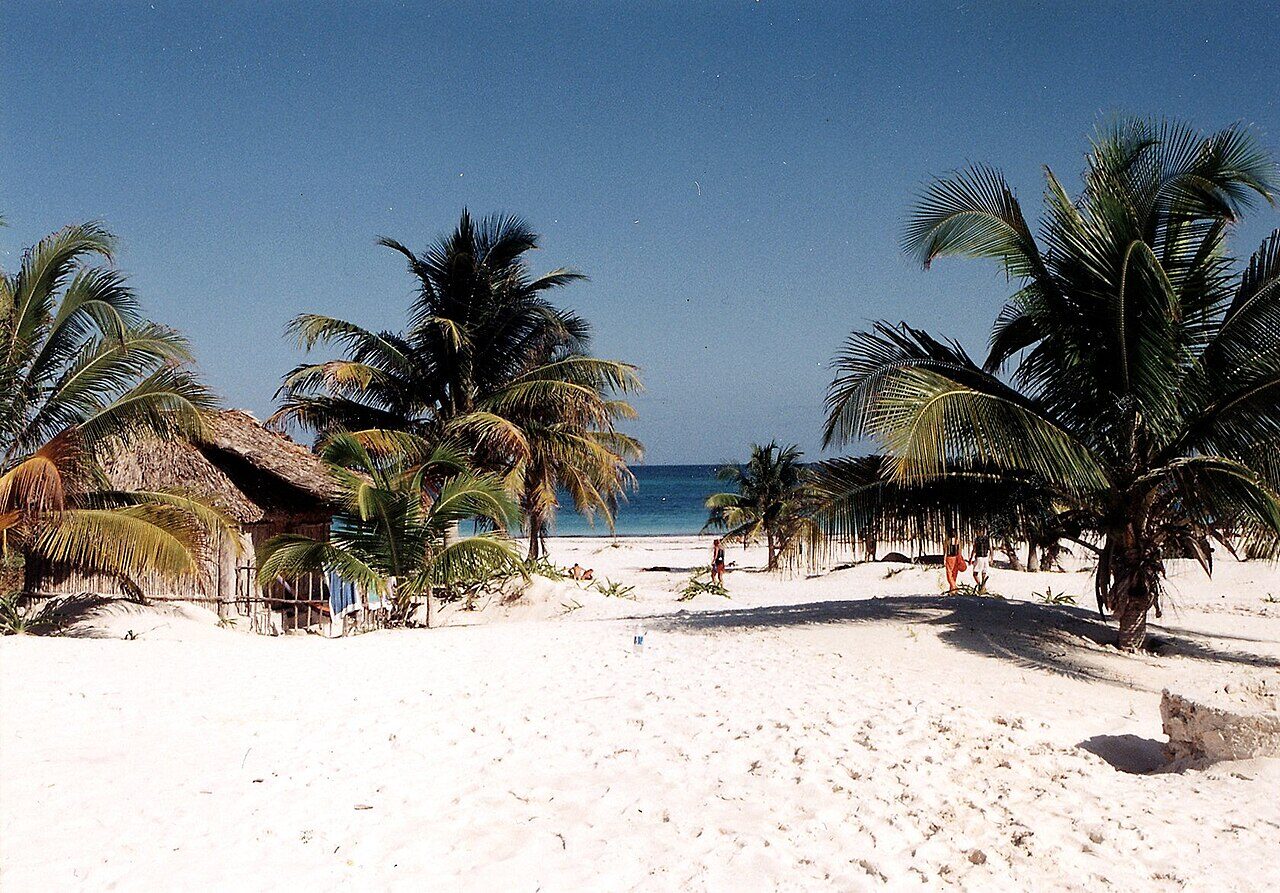
Playa Paraiso: photo by Erik Cleves Kristensen, CC BY 2.0. Tulum beach cabanas: photo by Blair Stirrett, CC BY 2.0. Both via Wikimedia Commons.